Tech Interviews
STARKEY OMEGA AI – ONE OF THE MOST POWERFUL AND ADVANCED HEARING TECHNOLOGY TO EVER REACH MEA PATIENTS

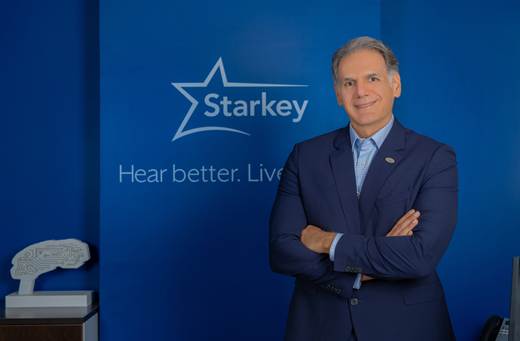
In this exclusive interview, Giscard Bechara, Director of Starkey Middle East & Africa, reveals how Omega AI, the company’s most advanced hearing technology to date, is set to transform the lives of patients across the region, from smarter connectivity and real-time AI support to breakthrough health monitoring features.
Giscard, Starkey has just unveiled Omega AI, a bold claim to call it ‘superhuman.’ For patients here in the Middle East and Africa, what does that word actually mean in everyday life?
“Superhuman” isn’t marketing language for us, In the MEA region, our patients navigate some of the world’s most complex listening environments: bustling souks, multi-language family gatherings & noisy cities . Omega AI is engineered to mimic the auditory system in these very settings. When DNN 360 delivers 28% better speech intelligibility in a noisy environment, your brain is receiving a signal that is cleaner and crisp than ever before. That, to me, is a superhuman advantage, and it is now available to anyone wearing a Starkey hearing aid.
Tell us about DNN 360, the deep neural network at the heart of Omega AI. How is it different from the AI that patients may have heard about in other hearing aids?
Most hearing aids apply AI to a single task, perhaps noise reduction or voice enhancement. DNN 360 is the world’s first deep neural network that powers both directionality and spatial awareness simultaneously. Think of it this way: when you are in a restaurant in Dubai or a busy market in Egypt, you do not just want to hear the person in front of you, you want to know where every sound is coming from, so your brain can make sense of the scene around you. Our brain naturally detects sounds and acoustic queues to understand the environment that we are facing. DNN 360 provides up to 8 dB signal-to-noise ratio improvement for spatial awareness. That is a meaningful, real-world difference. And crucially, we achieve all of this without sacrificing battery life and performance.
For many patients in the MEA region, connectivity is critical, streaming TV, phone calls across different networks, even video consultations with specialists abroad. How does Omega AI address this?
Connectivity is a lifeline. We have made two significant advances. First, streaming via the StarLink Edge TV Streamer now starts and reconnects automatically for the TV, no more fumbling with settings or missing the beginning of a show. Second, and this is an industry first, we have introduced TeleHear AI. This feature uses generative AI to help patients resolve common hearing issues in real time, directly from their smartphone, with 93% predictive accuracy. For a patient in a remote area or in a country where specialist hearing clinics are hours away, this means they can troubleshoot and optimise their hearing experience without having to travel. That is transformative access.
You mentioned TeleHear AI, a 93% predictive accuracy rate is remarkable. Can you walk us through what that looks like for a patient who, say, notices their hearing feels muffled after a long flight from Riyadh to Johannesburg?
Absolutely. That patient opens the My Starkey app, describes what they are experiencing, and TeleHear AI analyses the situation using generative AI. It might recommend a specific listening programme for their current environment. the issue can be resolved without any professional intervention needed at that moment. In a region where patients often travel vast distances and cross multiple time zones, that kind of intelligent self-sufficiency is worth a lot.
Durability is a significant concern in our climate, from the humidity of coastal cities like Abu Dhabi and Lagos to the dust of the Sahara. How has Starkey engineered Omega AI for these realities?
We took this very seriously. Omega AI features waterproofing that has been tested to last 10 times longer than our previous coatings under the most demanding conditions, moisture, sweat, dust, temperature extremes. The MEA region presents environments that can be punishing for delicate electronics. Whether a patient is in a humid coastal city, working outdoors in the Gulf heat, or living in a dry, dusty climate, Omega AI is built to perform reliably day after day. This is not lab performance, it is field-tested durability. A hearing aid that fails in difficult conditions is not a solution; Omega AI is engineered to be there when patients need it most.
There are also new LED indicator lights, something that might seem like a small detail, Can you explain why they are there?
The LEDs are a helpful guide. The green and red indicator lights on our RIC RT and mRIC R devices confirm power status and Bluetooth connection briefly, simple, practical, and reassuring for patients and caregivers. Those same LEDs now double as a find-my-hearing-aid tool, an absolute industry first. If a patient misplaces a device, common in multi-room homes, during prayer, or when grandchildren are visiting, they can trigger the LEDs remotely through the app to locate it. For our older patients in the MEA region, and for the family members who support them, this feature provides real peace of mind.
Starkey has positioned Omega AI as a ‘healthable’, going beyond hearing to monitor overall wellness. Why is this vision particularly relevant for MEA patients?
The MEA region carries a significant burden of non-communicable disease, cardiovascular conditions, respiratory illness, balance disorders. These are the very health areas where Omega AI’s new wellness features add value beyond hearing. The automatic respiratory rate monitor is an industry first: it works silently in the background, tracking breathing patterns without the patient having to do anything. This can provide early indicators of conditions that affect breathing. Balance Builder, accessed through the My Starkey app, delivers targeted at-home exercises for stability and coordination, relevant for older adults at risk of falls, a major health concern across our region. We are not asking patients to add another wearable device. They are already wearing their hearing aids. We are simply making those hours work harder for their health. Omega Ai also counts your daily steps activity and motivates you to move and be active.
Access to specialist audiological care is uneven across the MEA region. How does Omega AI help bridge that gap, and what role does your team play on the ground?
This is a question close to my heart. In countries where audiologists are concentrated in major cities, patients in rural or underserved areas have historically faced significant barriers. Omega AI addresses this on two levels. Technologically, TeleHear AI means that a patient does not need to visit a clinic every time they have a question about their hearing aids. The generative AI guides them through real-time troubleshooting. And when remote fine-tuning is needed, our TeleHear platform connects them with their professional remotely. On the ground, Starkey MEA is committed to expanding our network of trained hearing professionals, our authorised partner clinics, and our educational programmes across the region. The technology opens the door, our people make sure patients can walk through it.
We know hearing loss carries a social stigma in certain communities across the Middle East and Africa. How does the design philosophy of Omega AI address that reality?
Stigma is real, and we design with that awareness. Omega AI devices are engineered to be discreet, modern, and, for those who prefer invisibility, designed to be worn comfortably without drawing attention. At the same time, we believe the best answer to stigma is performance. When a patient discovers they can follow a conversation at a family gathering for the first time in years, when they can engage fully in a business meeting, the hearing aid stops being something they hide and becomes something they value. Omega AI’s performance is so compelling that patients want to wear it. That shift in attitude is the most powerful antidote to stigma we have.
Finally, Giscard, what is your message to patients across the Middle East and Africa who are sitting on the fence about hearing care, or who have dismissed it as something for ‘other people’?
Hearing loss is not a sign of ageing or weakness, it is a health condition that affects one in five people globally, and the MEA region is no exception. Leaving it untreated has consequences that go far beyond the ears: increased social isolation, cognitive decline, missed opportunities at work and at home. Omega AI represents the most advanced hearing technology ever created, it gives patients a superhuman advantage in every listening environment they encounter. My message is simple: do not wait. A hearing assessment is the first step. Hearing tests are cheap, fast and not painful. It can change your life and save you money if you address your hearing loss early. In case hearing technology is needed, Omega AI is proof that it can be powerful, intelligent, beautiful, and life-changing. Visit your audiologists. Your world deserves to be heard fully.