Financial
HOW GLOBAL SECURITY AND VALUABLES LOGISTICS PROVIDERS ARE ADAPTING OPERATIONS AMID RISING GEOPOLITICAL TENSIONS


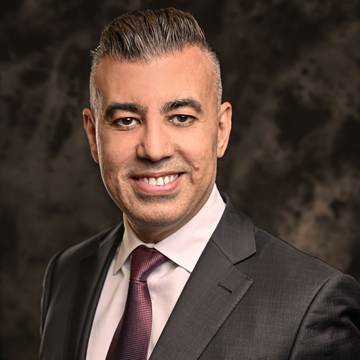
Nader Antar, EVP & President – APAC, IMEA & Brink’s Global Services
Much like a stable internet connection or accessibility to clean water, when we consider global finance we tend to take continuity for granted – until it is tested. Capital moves, liquidity flows, and billions in high-value assets cross borders each day, all with an expectation of certainty. Yet courtesy of the ongoing conflicts across the region, that certainty is being challenged in real time.
The Iran war is both reshaping geopolitical dynamics and disrupting the very corridors through which global trade and financial flows depend. Volatile energy markets, heightened concerns about broader economic spillovers, and early signs of how critical trade arteries such as the Strait of Hormuz can suddenly turn stability to systemic risk have sharpened the focus on resilience across the Gulf.
Of course, even amid these heightened tensions, the region continues to project stability, with governments advancing long-term infrastructure and supply chain strategies. Saudi Arabia’s new Logistics Corridors Initiative – which among its objectives aims to establish Red Sea routes capable of bypassing Hormuz entirely – reflects a deliberate approach to ensure the movement of goods, and especially the movement of value, remains uninterrupted.
Within this environment, the transport of high-value assets – banknotes, precious metals, and other commodities – has come under increased scrutiny. These flows are deeply embedded in the functioning of financial systems, linking central banks, commercial institutions, and global markets. When disruption occurs, the consequences extend beyond delayed shipments and can impact everything from liquidity to market confidence to operational continuity.
The question then, during a period of geopolitical conflict, is not whether disruption will occur, but how quickly and smoothly systems can adapt when it does. At Brink’s, our approach to this particular challenge is anchored in three core principles: Infrastructure, diversification, and visibility.
Infrastructure is the foundation of resilience. A globally distributed network of high-security facilities across major trade hubs ensures continuity by allowing rapid shifts when disruptions occur. Whether that is in the UAE, Switzerland, Singapore, or the United States, these facilities enable valuable commodities to be securely stored, repositioned, and mobilised as conditions evolve. In an unpredictable environment, the ability to absorb shocks and shift assets quickly without compromising security or compliance is crucial.
Diversification ensures flow flexibility. Traditional logistics models, often optimised for efficiency along fixed corridors, are no longer sufficient. Today’s operating environment demands multi-route, multi-modal strategies that allow shipments to be rerouted rapidly when disruptions occur. By integrating storage and transport into a single, coordinated system, it becomes possible to maintain continuity even as specific routes or markets face constraints.
Visibility, however, is what brings resilience into focus. Real-time monitoring across operations provides the situational awareness needed to anticipate risks and respond proactively. Through centralised platforms, our teams maintain continuous oversight of shipments, facilities, and transport networks. This level of transparency goes far deeper than simply tracking assets; it is about enabling faster, more informed decision-making in moments where timing is critical.
The UAE offers a compelling example of how these principles come together in practice. As one of the most stable and strategically positioned logistics hubs in the world, the Emirates has built an ecosystem defined by advanced infrastructure, strong regulatory frameworks, and deep connectivity across global trade corridors. In many respects, operations remained business as usual throughout these past couple of months. Yet this continuity is not accidental; it is the result of deliberate investment in systems designed to withstand disruption — even when the country found itself pulled into what might yet be one of the most consequential conflicts in recent history.
Beyond transport, the scope of secure logistics continues to expand. From safeguarding high-value assets at major international exhibitions to ensuring the uninterrupted availability of cash through extensive ATM networks, resilience must be embedded across the entire financial ecosystem. In markets such as India, innovation is also reshaping how cash and digital systems interact, creating new models that enhance both security and accessibility.
None of this happens in isolation. Secure logistics operates within a broader framework that depends on close coordination with regulators, customs authorities, and law enforcement agencies. These partnerships are essential to maintaining compliant, uninterrupted cross-border flows, particularly during periods of heightened geopolitical tension.
What we are witnessing today is a broader transformation in how the logistics sector approaches risk. The emphasis is moving from efficiency to adaptability, from linear supply chains to dynamic, interconnected networks. Resilience, flexibility, and visibility are now considered non-negotiables.
Global trade will continue to evolve, shaped by shifting geopolitical dynamics and emerging economic corridors. But one constant will remain: The need for trust. It is only with this that assets will move securely, that systems will hold under pressure, and that continuity will be maintained.
In the end, the true measure of a network — be it global finance, logistics, or indeed telecommunications — is not how it performs when conditions are stable, but how effectively it responds when they are not.