Uncategorized
WHY PERSONALISATION IS THE NEW CURRENCY IN WEALTH MANAGEMENT


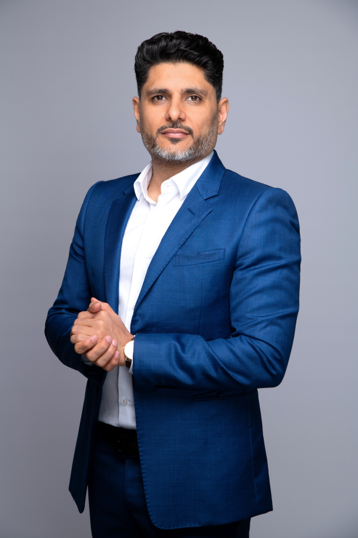
By Kalpesh Khakhria, Group Chairman at Klay Group
Everyone in the wealth management industry claims to offer “personalisation.” Yet, for most traditional institutions, it remains a hollow buzzword, a superficial exercise of sorting investors into predefined “conservative” or “aggressive” risk boxes. This transaction-led and product-pushing model is fundamentally broken for today’s ultra-high-net-worth families, whose lives, businesses, and assets span multiple global jurisdictions. Real personalisation is a structural necessity that requires a radical overhaul of how advice is delivered.
We are operating in an era where wealthy families are building complex, cross-border portfolios. A business might be headquartered in the GCC, hold properties in Europe, and have beneficiaries residing across continents. The most critical point is “What does this capital need to achieve across generations?” Traditional banking silos, driven by high client-to-advisor ratios and transactional commissions, simply lack the agility and independence to answer this effectively.
While personalisation is a growing trend across the broader service industry, in wealth management, it has become the new currency. It is the primary driver of growth and retention, shifting the industry standard from generic products to trust-based, tailored advice. The future of wealth management will be exclusively influenced by trust and deep customisation. True personalisation relies on two specific, uncompromising differentiators: structural independence and relationship-plus-data intelligence.
First, it is impossible to fully understand a family’s cross-border tax realities, liquidity needs, or succession plans if an advisor manages multiple different accounts. Personalisation requires time and undivided attention. That is why boutique advisory models that deliberately cap an advisor’s roster, such as limiting it to just 20 families, are so critical. By removing the pressure of aggressive sales targets and replacing transaction-led commissions with a transparent advisory fee structure, advisors gain the freedom to ask the “why” behind a client’s wealth. This structural independence aligns the advisor’s interests directly with the client’s long-term outcomes, enabling the advisor to act as a true partner.
Second, modern personalisation demands the seamless integration of advanced financial technology. We have entered the era of “Wealth 3.0,” where artificial intelligence and data analytics are fundamentally changing how the industry forecasts risk and segments clients. AI must be utilised to codify a family’s complex constraints, such as multi-currency exposures, jurisdictional rules, and legacy holdings, into actionable, real-time portfolio adjustments and proactive stress testing.
However, the industry must draw an uncompromising line between automation and autonomy. While AI powerfully accelerates scenario analysis, it cannot replace the human connection. The nuanced human judgment, discretion, and contextual understanding required to navigate complex, multi-generational wealth remains absolutely irreplaceable. Technology provides the speed and the insight, but seasoned human strategists must retain ultimate autonomy to ensure that personalisation scales without compromising suitability or compliance.
Wealth management today must transcend simple market timing. It is about actively building multi-generational partnerships. The families that succeed over time are those who partner with independent advisors who are unconditionally in their corner. By combining bespoke human expertise with cutting-edge data intelligence, true personalisation transforms wealth from a static collection of assets into a powerful, coherent legacy that thrives across generations.