Automotive
The Next Generation of Automotive Retail Starts with Connected Data

As customer expectations evolve and digital technologies reshape the automotive landscape, dealerships are moving beyond one-off vehicle sales towards connected, data-driven customer relationships.

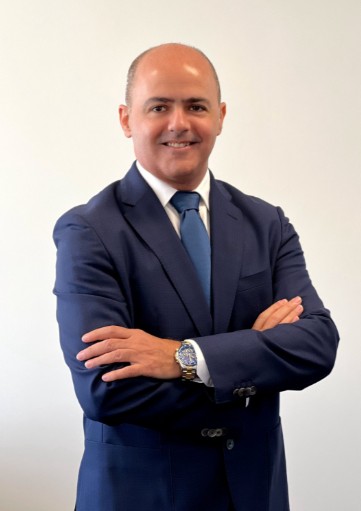
In this exclusive interview with Monzer Tohme, Managing Director, MEA & APAC, Keyloop explores how unified platforms, AI, and customer intelligence are redefining the future of automotive retail across the Middle East.
What is the fundamental change happening beneath the surface that most people are still underestimating within the automotive retail space?
The shift from selling cars to selling continuous experiences, and the data layer that makes it possible.
The change most people miss is this: automotive retail is quietly moving from a transactional model to a data-driven relationship model. Every interaction a customer has, a service visit, a finance inquiry, a test drive generates a signal. For decades, those signals were lost. Today, the dealers and OEMs who are winning are the ones connecting those signals into a single customer intelligence layer.
What’s underestimated is the compounding effect of that data. It’s not just about personalisation or marketing. It’s about predicting the next need before the customer voices it, whether that’s a service upsell, a renewal, or a new vehicle. The dealers who build that capability now will have a structural advantage that’s very hard to close later.
We often hear about digital transformation in automotive retail. In reality, what does that mean for a dealer on the ground here in the UAE?
It means removing the friction between the customer’s expectation and the dealer’s ability to deliver in real time, at every touchpoint.
UAE customers are among the most digitally sophisticated in the world. They research online, compare across brands, and expect a seamless handoff when they walk into a showroom. So for a dealer on the ground, digital transformation is not a back-office project. It is the front line of the customer experience.
In practical terms, it means a sales executive knowing a customer’s full history before the conversation starts. It means a service advisor being able to book, update, and close a job card without paper. It means the dealer principal seeing their whole business, inventory, pipeline, aftersales revenue, on a single screen, not ten spreadsheets. At Keyloop, that is exactly what we are enabling: systems that make the dealer faster, smarter, and more connected to their customer than they have ever been.
We have a sales-driven dealership model here. Do you think we will soon move towards a lifecycle or ownership-driven model?
Yes, and the smarter dealers in this region are already making that move. The question is not if, but how fast.
The traditional Gulf dealership model was built on volume, conquest, and the next sale. That worked when customers had fewer choices and lower expectations. Today, with more brands, more channels, and more informed buyers, holding on to a customer through the entire ownership journey, service, insurance, accessories, finance, trade-in, next vehicle, is far more valuable than winning them once and losing them to a competitor two years later.
The region also has some natural tailwinds. Vehicle ownership periods here are longer than many markets. Loyalty programmes are becoming more sophisticated. And OEMs are starting to push dealers toward customer lifetime value metrics, not just unit sales. The dealers who will lead the next decade are the ones who start treating the delivery of a car not as the end of the sale, but as the beginning of a relationship.
At Keyloop, our entire platform philosophy is built around that lifecycle view, giving dealers the tools to stay relevant and valuable to their customers long after the keys are handed over.
Fusion is positioned as an end-to-end platform. What was broken in the traditional dealership tech stack that required this kind of unified approach?
The old stack wasn’t one broken thing, it was five or six disconnected systems that were never designed to talk to each other.
If you walked into most dealerships in this region five years ago, you would find a DMS handling stock and invoicing, a separate CRM for sales leads, another tool for workshop job cards, a standalone finance and insurance module, and often a completely manual process for parts ordering. Each system had its own database, its own logic, its own version of the customer record. The result was that a dealer could sell a car, service it three times, and still not know the customer’s name when they called in.
◈ Fragmented customer identity: Sales, service, and finance held separate customer records with no unified view across departments.
◈ Data trapped in silos: Actionable insights sat locked inside individual systems, reporting required manual consolidation, often in spreadsheets.
◈ eInvoicing introduction: Every new tool added another point-to-point integration to maintain, creating fragility and escalating IT costs over time.
◈ Slow, error-prone workflows: Re-keying data between systems introduced errors and added minutes to every customer interaction, multiplied across thousands of transactions.
Keyloop Fusion was built to eliminate that entire class of problem. When sales, aftersales, parts, finance, and CRM all run on a single data model, the customer record becomes the source of truth that every team works from. A service advisor can see the customer’s purchase history. A sales executive can see their service loyalty. The dealer principal can see the whole business in one place. That is not a feature, it is a fundamentally different architecture that changes how a dealership operates.
For the Middle East specifically, this matters even more. Our dealership groups here are large, multi-brand, multi-site operations. The complexity they carry is enormous. A unified platform is not a nice-to-have for them, it is the only way they can scale without proportionally scaling their headcount and risk.
What kind of partnerships or ecosystem play is Keyloop looking to build here in the Middle East in 2026–2027?
We are building an open ecosystem, not a walled garden. The partnerships we are focused on fall into four areas that directly amplify what dealers and OEMs in this region need most.
Digital retail & mobility platforms: Connecting to regional marketplace and mobility platforms so dealers can manage online inventory, leads, and digital retailing from inside Fusion without channel switching.
AI and data intelligence partners: Working with analytics and AI providers to layer intelligence on top of Fusion’s data, predictive service reminders, demand forecasting, and customer churn signals.
OEM & manufacturer integration: Deeper real-time connectivity with OEMs on warranty claims, vehicle data, and campaign management, reducing friction between the factory and the showroom floor.
Financial services & insurance: Embedding regional finance and insurance providers, including multiple finance options, natively into the sales workflow, so F&I becomes seamless rather than a separate conversation.
Beyond technology, we are also investing in our implementation and consulting partner network in the region. The Middle East has some of the most ambitious dealership groups in the world. Groups that operate across the GCC, into Africa, and into South Asia. Supporting their scale requires a strong local partner ecosystem, not just a product.
The strategic intent is clear: Keyloop becomes the platform that other automotive technology companies want to connect to, not the system that sits in isolation. We want to be the operating system of the dealership, with a marketplace of capabilities around it. That is the direction for 2026 and into 2027, and the Middle East is a priority market for proving that model out.