Hospitality
CREATING DESTINATIONS WITH A SENSE OF PLACE

Exclusive interview with Holly Hallam, Holly Hallam is Co-Owner of DLSM Studio
DLSM Studio recently completed NAC Kuwait, the sixth NAC venue you’ve delivered across the Middle East. As a brand expands across multiple markets, how do you maintain consistency while ensuring each location feels authentic to its destination?
Design is an opportunity to be curious and creative, to tell a unique story by creating an emotional and physical environment whether you are working on a standalone concept or a brand expansion.
Defining the design DNA is a vital component of designing for multi-site brands, curating a connective thread that unites each site without becoming repetitive, supporting long-term growth whilst still retaining a core identity.
As design guardians for NAC, we’ve developed a deep understanding of the brand’s defining character: its relaxed European elegance, social energy and sense of familiarity. This foundation informs every project whilst each new location interprets the brand through the lens of its surroundings.
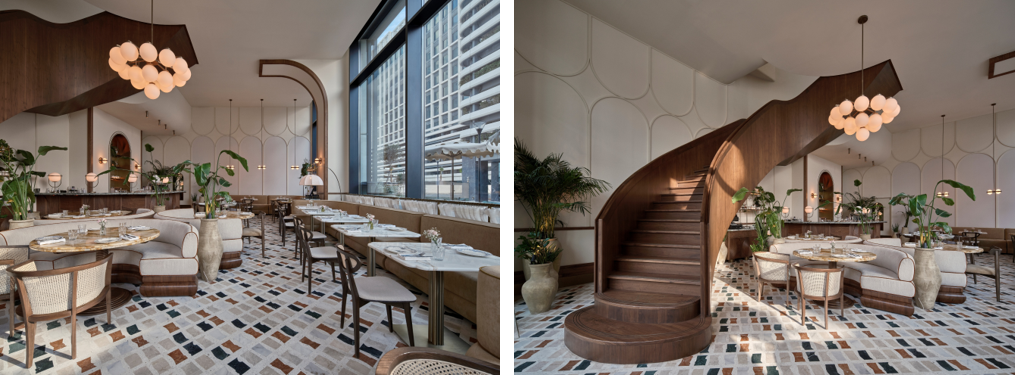
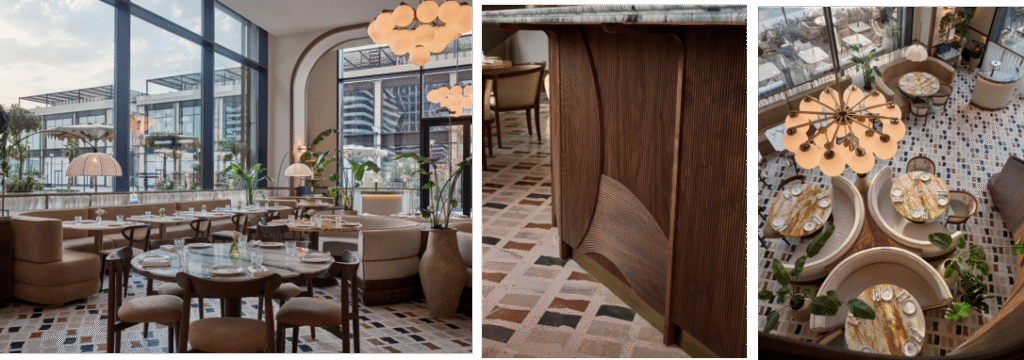
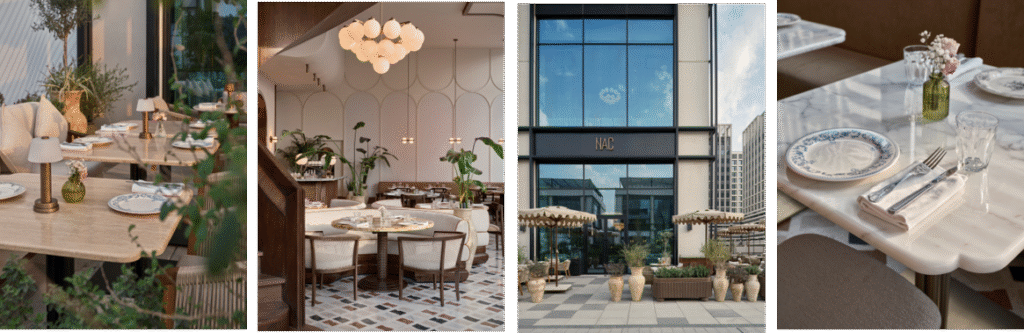
For NAC Kuwait, our design draws inspiration from the energy of the Hessah District and its waterfront setting. Through expansive glazing, open terraces, natural materials and a muted palette, we created a seamless connection between the interior and the coastal landscape, delivering an experience that feels both locally relevant and unmistakably NAC.
Before entering design, you spent years understanding audiences and consumer behaviour. Do you think that perspective gives you an advantage when creating spaces that need to emotionally connect with guests?

Absolutely. Design has always been about people first.
Understanding consumer behaviour taught me to look beyond the aesthetics and ask why people make decisions, what influences them emotionally and what creates lasting memories. That strategic thinking still underpins every project we undertake. Before we even start our design process we’re asking questions about the guests, their journey, the brand values and the emotional response we want people to leave with.
Beautiful spaces are important, but beautiful spaces with purpose are what create commercial success. When you truly understand your audience, you’re able to design experiences that feel intuitive, meaningful and memorable.
Your recent work on The Trafalgar St. James and Radisson RED Twickenham demonstrates two very different approaches to hospitality design. How do you decide which stories are worth telling within a space?
Every project begins with curiosity.
We spend time understanding what’s behind our clients’ ambitions and brands, their commercial objectives, KPI’s, the people, personality, and intended audience, before we begin designing.
Combining this knowledge with our anthropologic research – studying the historical, architectural and cultural landscape of the site – helps us to build and ultimately reveal the narrative.
As with The Trafalgar St. James, it was rooted in the building’s heritage intertwined with a contemporary sense of luxury to create a stylish destination. Other times, it’s about creating a sense of community by capturing the energetic personality of the Alliance Twickenham Stadium combined with the bold brand of Radisson RED.
The story you choose to tell should always feel authentic to the operator and guest. Once you’ve found that truth, every design decision becomes much clearer because it all supports the same narrative.

DLSM Studio has worked across a diverse portfolio that includes luxury hotels, destination restaurants, branded residences and mixed-use developments. Have you noticed a shift in what clients are asking for compared to five years ago, and what does that tell us about where hospitality is heading?
Without question. Five years ago, conversations often centred around creating visually impressive destinations that felt rooted to the locality of the property. Today, clients are thinking much more holistically.
They’re asking how design can speak on both an emotional and physical level. Considering a more sensory and personalised experience that resonates with guests on a deeper level.
We are designing in stronger brand identifiers and looking at a greater focus on niche pillars – such as health and wellbeing. These elements are truly integrated into the property, not just positioned in the Spa or Gym, but across the food and beverage menus, in room amenities and guest touch points.
Hospitality is becoming increasingly layered. It’s no longer just about what a space looks like, it’s about how it performs and how it connects with people. That’s exactly where we believe the industry is heading, and it’s very much aligned with the way we’ve always approached design.
- The brand has built a reputation for creating spaces rooted in narrative. Why do you think storytelling has become such a powerful differentiator in a competitive evolving market?
Sharing stories builds deeper connections.
Storytelling is the ancient method of unifying people. It helps to create personality and purpose and intrigue. When guests become curious to explore and discover the story of a property it builds a deeper, positive emotional connection.
For us, storytelling isn’t about adding decorative references or themed moments. It’s about creating a coherent experience where every detail, from branding, interiors, operational delivery and guest journey, enhances and speaks to the same idea. When every touchpoint works together, the experience feels effortless, authentic and ultimately much more memorable.

Many designers focus on what a space looks like. You often speak about how a space feels. Why do you think emotion has become such an important design metric?
Because people don’t remember every material specification, they remember how a place made them feel.
Hospitality is an emotional industry. Whether someone is celebrating, travelling, relaxing or connecting with others, the environment plays an enormous role in shaping that experience. As designers, we’re creating spaces that appeal to the senses, support wellbeing and encourage genuine human connection.
When emotion becomes part of the design process, the outcome is far richer than aesthetics alone. Studies show that positive emotions toward a brand have a greater influence on loyalty than trust and other judgments, with emotionally connected guests having a 306% higher lifetime value towards the brand.
It’s those emotional moments that create loyalty, advocacy and lasting memories, which are ultimately the true measure of successful hospitality design.
What lessons from working with global luxury hospitality brands do you believe can be applied to residential living today?
The boundaries between hospitality and residential design are becoming increasingly blurred.
People want their homes to offer the same sense of luxury, comfort and considered experience they enjoy when staying in a great hotel. It is the considered nature of a hospitality experience that people are bringing into their houses that enhance the way they move and live at home.
Thoughtful planning, intuitive functionality, wellbeing, craftsmanship and a strong sense of place all contribute to a richer everyday experience. Great design should improve people’s lives, support their routines and create moments of joy.
As we say in our studio, it’s about designing beyond the aesthetic and creating environments that people genuinely love spending time in.