Hospitality
Why Luxury Hospitality Is Moving from Spectacle to Storytelling


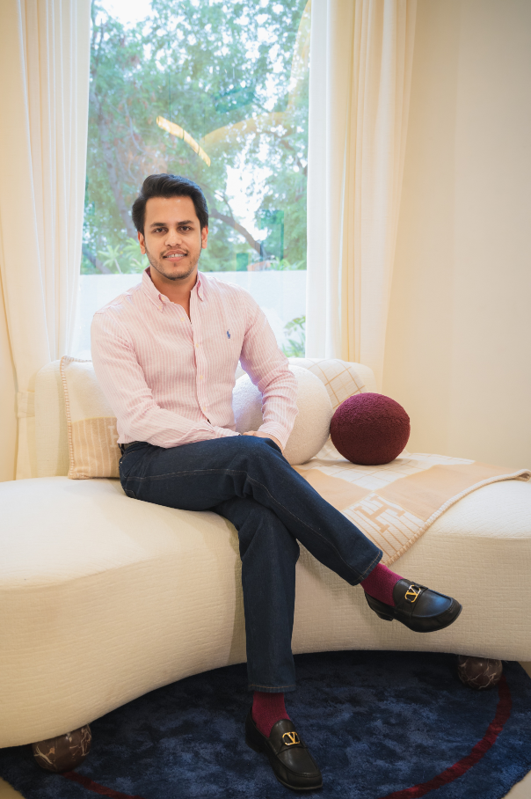
Exclusive interview with Jai Sharma, Founder, Envelop Designs Arabia
Envelop has worked with major hospitality names including Taj Hotels, Rambagh Palace, Fairmont Udaipur, Ananta Hotels & Resorts and Emaar. What does a hotel or hospitality brand typically come to you wanting, and how does that differ from what a private client wants?
The starting point is actually the same, we begin with the story. Before we think about the space or the visual language, we want to understand who we’re designing for, their personalities, their values, what makes them different from everyone else in the room.
With a private client, that story is personal, a couple’s journey, their relationship, their families. With a hospitality brand, the story belongs to the property itself, its history, its guests, what it wants to be remembered for. The questions we ask change, but the process doesn’t. We’re still uncovering the emotional core before a single design decision gets made.
Hospitality brands are increasingly investing in “experience” as a differentiator rather than just service or amenities. From where you sit, is that a genuine shift in the industry or more of a marketing trend?
I’d call it a genuine shift, and it mirrors what we’ve seen happen with weddings over the last decade. The biggest change has been from display to meaning. Earlier, everything was about grandeur, now it’s increasingly about intention. Guests want experiences that reflect a place’s personality and values, not just its amenities.
The common thread across hospitality, weddings and brand experiences is emotional storytelling. People remember how something made them feel far longer than they remember what it looked like. We call it the memory economy, and hotels are starting to design for it the same way we’ve always designed celebrations, around recall, not just service.
You’ve now partnered with Rayqube to launch Envelop Designs Arabia in the UAE. What made Rayqube the right partner, and what does the division of expertise look like between design and technology in that partnership?
Rayqube brings nearly a decade of expertise in events, exhibition build-outs and technology-driven experiences, and that’s exactly the layer we needed to build properly in this market. Our strength has always been narrative, understanding a story and translating it into a spatial and experiential journey. Rayqube’s strength is production and technology, the infrastructure that makes ambitious ideas actually executable at scale.
Bringing that philosophy into the UAE through Envelop Designs Arabia let us build for a market that’s hungry for experiences with real cultural depth, and Rayqube is the right partner to help us do that. Design and technology under one roof means we’re not compromising on either side.
Hospitality operators think in terms of repeat guests and brand loyalty, not just single events. How do you design an experience that serves that longer-term relationship rather than just the moment itself?
A single celebration has one goal, to be remembered by the people in the room that night. A hospitality brand needs something that keeps working long after the guests have left, that makes them want to come back, or tell someone else about it.
What we’ve found is that the two aren’t actually in conflict. If an experience is built around genuine narrative rather than spectacle, it tends to create exactly the kind of memory that brings people back. We’re not designing for one night when we work with a hotel group, we’re designing for how that property wants to be felt every time someone walks through it.
The UAE hospitality and events market is famously competitive at the luxury end. What gap did you see here that made you confident there was still room for a studio built around narrative rather than décor?
We didn’t come to the UAE because it was the obvious next step. We came because I believe this region understands what it means to design a moment rather than just produce an event. There’s a real appetite here for depth, for culture, for experiences that are felt rather than simply seen.
Much of the region’s industry has been built around production and décor, and it’s genuinely excellent at that. What we saw was a different question waiting to be asked, not what a space should look like, but how it should make guests feel, treating every project as a complete sensory experience and reading psychology, pacing and emotion as real materials of design, alongside light, sound and space.
You’ve said Envelop deliberately limits itself to seven or eight social projects a year. Does that same discipline apply to hospitality partnerships, or does a longer-term brand relationship with a hotel group work differently from a single wedding or celebration?
The discipline is the same, even if the shape of the relationship is different. A hospitality partnership isn’t one project, it’s an ongoing one, so the depth we’d normally put into a single celebration gets spread across a longer relationship instead. That actually suits us. We’re not interested in taking on every hotel group that approaches us, we’re interested in the ones where there’s real alignment on what an experience should be.
The seven or eight number applies specifically to social projects, but the underlying principle, depth over volume, is what governs every relationship we take on, hospitality included.
With Envelop Designs Arabia, you’ve mentioned engaging in early conversations around Dubai’s real estate sector alongside hospitality and brand work. How closely connected are real estate and hospitality experience design from where you sit, and do they draw on the same process?
They’re closer than people assume. A real estate launch and a hospitality brand are both, in a sense, asking people to imagine a feeling before they’ve fully experienced the place, whether that’s living somewhere or staying somewhere. Both are memory economy exercises.
We’re already engaged in conversations for potential pitches with the city’s rapidly evolving real estate sector, and the process we’d bring to that is identical to what we bring to hospitality, understand the story, understand what feeling needs to be associated with the brand, then build the experience backward from there.
Technology is becoming a bigger part of how hospitality brands design guest experiences, from immersive installations to digital touchpoints. How do you decide when technology adds to a narrative versus when it distracts from it?
Technology can accelerate research, visualisation and execution, and we use it for exactly that. But it can not sit with a guest and understand what a particular moment means to them. That part of the work, empathy, intuition, storytelling, will always be human.
The test for us is simple, does the technology serve the story, or is it there because it looks impressive. If it’s the latter, we leave it out, no matter how capable it is. Technology should disappear into the experience, not announce itself.
Looking at Envelop’s growth trajectory, from Jaipur to Abu Dhabi to a full-time UAE presence, what does success in this market look like for you three to five years from now, beyond revenue targets?
The numbers matter, and we’ve set clear targets as part of that growth. But if I look at it purely through revenue, I’d be missing the point of why we came here in the first place.
Success for me looks like the UAE becoming a place where we get to attempt ideas we simply couldn’t have executed before, projects that need this scale, this appetite for depth, this cultural richness. If in three to five years people in this market associate Envelop with experiences that are felt rather than seen, that’s the real marker, the revenue will follow that, not the other way around.