Home Feature
THE 2026 REAL ESTATE TRENDS EVERYONE CALLED AND HOW THEY’RE PLAYING OUT

By Eddy Nemri, Vice President at Object 1
Dubai closed the first half of 2026 with roughly AED 420 billion in real estate transactions across more than 112,000 deals, a pace that puts the year on track to beat 2025’s record. Heading into 2026, the consensus among analysts and developers was that this momentum would deepen rather than plateau. Six months on, the numbers back that up, and in several areas the market has moved faster than most predictions anticipated. Here’s how each widely-forecast trend is actually playing out.


Abu Dhabi’s Breakout Is Confirmed, Not Just Forecast
Abu Dhabi was widely tipped as the next investor hot spot. It has arrived ahead of schedule: property sales reached AED 84.5 billion in H1 2026, up 174% year-on-year and putting the emirate on course for a record year. Al Reem Island led on sales volume, Hudayriyat Island led on value, and together with Yas Island and Saadiyat Island the four districts accounted for roughly two-thirds of both deals and value in the emirate. Off-plan sales dominated activity, and repeat sales prices climbed double digits for both apartments and villas — evidence that this is broad-based demand, not a single-project spike.
Tokenization Has Moved From Pilot to Live Market
Of everything flagged industry-wide at the start of the year, this trend has advanced the furthest. What was a concept in most outlooks is now operational infrastructure: the Dubai Land Department’s tokenization pilot closed out its first phase in February 2026 and opened a regulated secondary market for the tokens issued during it. VARA has since published formal guidance clarifying how tokenized property is regulated as a security at the federal level — the framework younger, cost-conscious buyers need to trust the model is now in place, not just promised. The long-range projection stands: tokenized assets could represent close to 7% of Dubai’s real estate transactions by 2033.

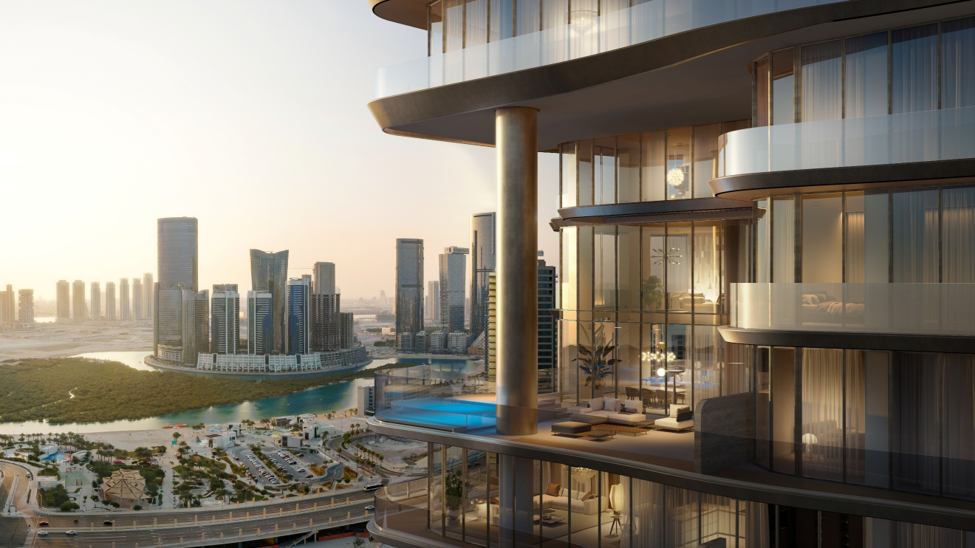
Hybrid Living Keeps Reshaping What Buildings Need to Offer
The shift toward co-working lounges, private meeting pods and serious digital infrastructure inside residential buildings has held steady through the first half of the year. Hybrid work remains structurally embedded in the UAE’s working patterns, and mixed-use communities built around the Dubai 2040 Urban Master Plan’s people-centric principles continue to outperform standard apartment stock on occupancy.
Smart Technology Is No Longer a Differentiator — It’s the Baseline
This trend has accelerated faster than the “becoming standard” framing most predictions used at the end of 2025. Automated systems, data-driven design and energy optimization are now table stakes in new launches rather than a selling point layered on top. The projects gaining the most attention in 2026 are the ones pairing that technical intelligence with genuinely human-centred design, not the ones leading with specs alone.
Connectivity Is Already Repricing Neighbourhoods
The Dubai Metro Blue Line has gone from groundbreaking to visible construction: tunnelling is underway, excavation milestones have been hit ahead of pace, and the RTA has the line on track for roughly 30% completion by the end of 2026, with opening set for September 2029. The RTA’s own modelling points to property values near stations rising by up to 25%, and early anticipation is already visible along parts of the corridor, well before a single station opens.

Wellness Remains a Non-Negotiable, Not a Trend
Buyer priorities haven’t shifted here — clean air, natural light, communal space and access to active living are still deciding factors, and biophilic design continues to move from amenity to expectation across new developments.
Regulation Has Tightened Exactly as Predicted
Oversight has strengthened on schedule. At the federal level, the Securities and Commodities Authority was reconstituted as the Capital Markets Authority on 1 January 2026 under new decree-laws, adding a clearer national layer to how capital markets — including tokenized real estate — are supervised. Dubai’s RERA and Abu Dhabi’s regulatory bodies have continued tightening escrow, disclosure and developer-accountability standards alongside it, reinforcing the market’s stability story for global investors.
Where This Leaves the Rest of 2026
Halfway through the year, the story isn’t “will these trends materialize” — it’s how quickly they have. The developers who benefit most through year-end will be the ones who’ve already built for this market rather than the one the industry was forecasting for twelve months ago.