Tech Interviews
Building Digital Sovereignty Through Operational Control


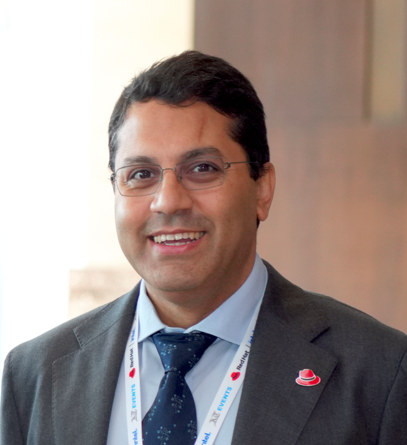
Exclusive interview with Anirban Mukherjee, Director of Solutions Architecture, Red Hat
Digital sovereignty is increasingly moving beyond data residency. What does genuine operational control look like for organisations that need to retain control over their data, applications and infrastructure?
Data residency answers where information sits. Operational control answers who can run, inspect, recover, and change the stack when it matters.
In practice, that means organisations can choose where workloads run – on premises, sovereign cloud, or public cloud – without rewriting applications every time. It means they can audit the software supply chain, keep recovery paths under their own governance, and decide which models, tools, and partners sit in their AI and application environments.
For many MENA enterprises and public-sector bodies, the test is simple: can you keep serving citizens and customers if a single vendor, region, or connectivity path is constrained? Open hybrid platforms give you that room to manoeuvre because the control plane and the open source components stay portable.
As organisations continue to rely on hyperscalers, where do you see the strongest case for combining public cloud with sovereign cloud and on-premises environments?
Hyperscalers remain excellent for elasticity, global reach, and certain managed services. The strongest case for a mixed model is when data sensitivity, latency, or regulatory expectations vary across the same organisation.
We routinely see customer data, AI inference close to the data, and regulated workloads stay in sovereign or on-premises environments, while less sensitive or bursty workloads use public cloud. The point is not to reject public cloud. It is to stop treating it as the only place innovation can happen.
An open hybrid cloud approach lets MENA organisations keep one consistent platform experience across those footprints, so teams are not rebuilding skills and tooling for every environment.
Could the growing AI infrastructure requirement actually increase technology concentration, and what can organisations do to avoid creating a new form of dependency around AI platforms?
Yes, the growing AI infrastructure requirements can actually increase technology concentration, – if every AI workload is tied to one model provider, one accelerator vendor, or one proprietary stack, concentration risk simply moves up a layer.
Organisations reduce that risk by treating AI like the rest of enterprise IT: multiple models for multiple jobs, open tooling where possible, and a platform that can run across hardware and clouds. Smaller, purpose-built open models are often a better fit for specific enterprise tasks than relying on one giant external model for everything.
In the Middle East, where national AI strategies are accelerating investment, the winners will be the ones who can innovate quickly without locking the next decade of infrastructure decisions into a single vendor path.
Open hybrid cloud is often positioned as a way to balance control with access to innovation. What does a mature open hybrid cloud strategy look like in practice?
Maturity looks like consistency. Same platform, same security and policy controls, same developer experience – whether the workload sits in a national data centre, a partner sovereign cloud, or a hyperscaler.
It also looks like deliberate placement: you put each application and AI workload where it creates the best outcome for cost, performance, and governance, and you can move it when those conditions change.
For solution architects in this region, the practical question is: can the customer ship new services without creating a parallel stack every time? If the answer is yes, the hybrid strategy is working.
Vendor dependency is difficult to eliminate entirely. How should organisations assess concentration risk and maintain credible alternatives without creating unnecessary complexity?
You will always have dependencies. The goal is to make them conscious and reversible.
Assess concentration by asking: what breaks if this vendor changes pricing, exits a market, or restricts a capability? Which workloads have no second path? Where does your data or model IP become hard to extract?
Credible alternatives do not mean running five of everything. They mean open standards, portable workloads, and a clear exit or dual-run plan for the few systems that truly matter. Complexity comes from unmanaged sprawl. Discipline comes from a shared platform and clear ownership of what must stay portable.
Red Hat’s role is to help customers keep that optionality – from infrastructure through to AI – so strategic independence is designed in, not bolted on after a crisis.