Home Feature
THE STORIES BEHIND THE MATERIALS SHAPING UAE INTERIORS


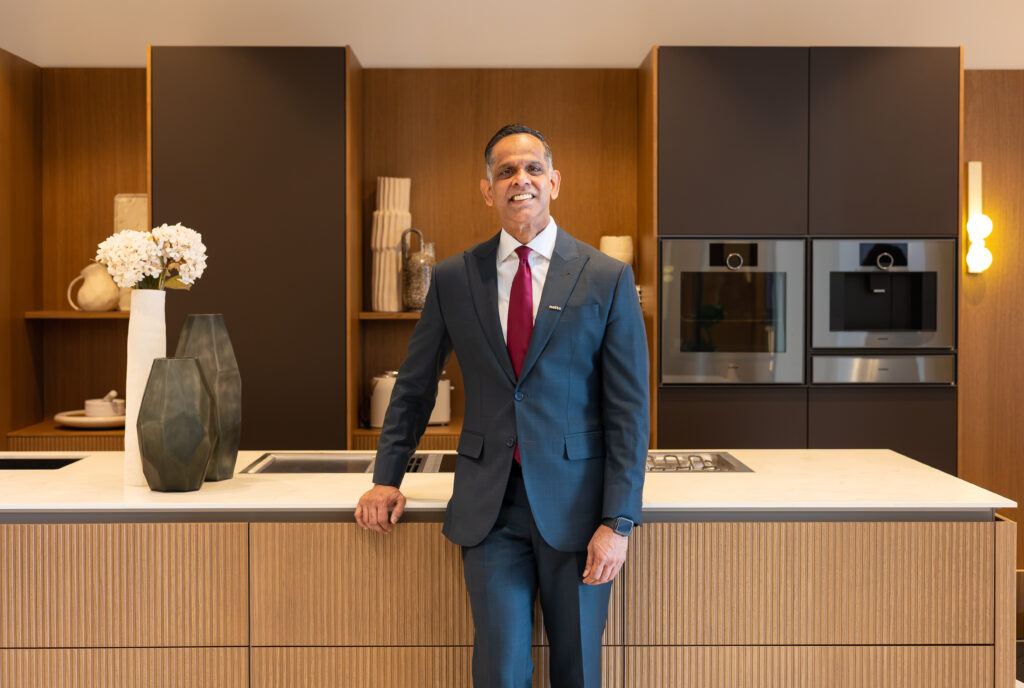
by Selva Kumar Rajulu, Managing Director & Senior Vice President – Middle East, Asia & Africa, Nolte FZE
A beautiful material can catch the eye, but it is the story behind it that increasingly captures a buyer’s attention. Customers today are more knowledgeable about their homes and increasingly interested in the finer details behind the products they choose. Where was the material sourced? How will it perform overtime? And what effect could it have on the people living around it?
For manufacturers and designers, this creates a responsibility to explain the thinking behind every material choice. Storytelling is becoming an important way to do that, connecting aesthetics with provenance, performance, sustainability, and wellbeing. And like any good story, this too begins with its origins.
Origin Is Adding New Value To Premium Interiors
A material’s origin tells us more than where it comes from. It can influence how sustainably it is produced, how well it performs, and the character it brings into a home.
Stone from a particular quarry, responsibly sourced timber, and traditionally woven textiles each carry a sense of place and craftsmanship. These qualities are particularly valuable in premium interiors, where homeowners are looking for substances beyond surface appearance. However, these stories also need to be supported by evidence. At Nolte Küchen, more than 99% of the wood we use meets our sustainable wood criteria, with FSC and PEFC certifications prioritized in procurement.
We are seeing this emphasis on transparency reflected in our work with UAE developers, where project briefs increasingly look beyond the appearance of kitchen materials to consider sourcing, durability, and consistency across multiple units. For manufacturers, responsibly sourcing materials, backed by recognized certifications and produced to consistent quality standards, will set them apart. It also allows customers to make more informed choices by showing where materials come from and how they are made.
Regional identity is influencing design trends
Beyond its origin, a material must also suit the region’s environment and culture. In the UAE, extreme heat, humidity, and strong sunlight make durability a key consideration. Material choices can also influence how much heat enters a building and, in turn, the energy needed for cooling.
A 2026 study of Dubai’s Al Fahidi district highlighted how traditional homes used coral-stone walls and wind towers to regulate indoor comfort naturally. Today, that same principle of environmental adaptation applies to modern interiors: cabinetry, adhesives, and surface finishes must be engineered to withstand the UAE’s coastal humidity, intense UV light through floor-to-ceiling windows, and constant exposure to indoor air conditioning without losing their structural integrity.
Cultural identity matters, too, with some homeowners looking for ways to reflect the region’s heritage in their spaces. For example, Al Sadu is a traditional Emirati weaving technique featuring geometric patterns inspired by grasslands, sand dunes, and the waves of the Arabian Gulf. These cultural influences can be incorporated into contemporary homes through traditional geometric detailing, sand-toned finishes, and textured stone.
From our experience, no single style defines the UAE market. With people from over 200 nationalities coming here to live, work, and build families, homes naturally reflect a wide range of cultures and personal tastes. This is especially evident in kitchen design, where some buyers prefer clean, minimalist European styles, while others are drawn to warmer wood finishes, earthy tones, and textured surfaces. We are also seeing growing interest in combining contrasting materials and finishes, such as natural wood textures with matt cabinetry or stone surfaces, to create more unique kitchens.
Sustainability is at the center of material choices
PWC found that more than half of Middle Eastern consumers surveyed are changing their purchasing habits by buying more sustainable products. This growing awareness is also influencing how people choose materials for their homes, with greater attention to what products contain, how they are made, and how long they will last.
For manufacturers, this means supporting sustainability claims with evidence. Using recycled wood in particle boards, sourcing certified timber, and reducing waste during production are some ways the industry is responding. However, sustainability goes beyond material sourcing. Durability and repairability are equally important to reduce the need for frequent replacements.
In kitchens, these considerations are particularly important. With frequent everyday use, buyers increasingly look for materials that can withstand wear and tear while retaining their appearance over time. This is why advancements in surface engineering—such as anti-fingerprint matt lacquers, UV-resistant laminates, and highly durable stone reproductions—have become central to the sustainability conversation.
What lies ahead for 2027
As homeowners pay closer attention to materials, trends such as natural wood finishes, statement stone surfaces, and textured cabinetry are gaining ground across the UAE.
More importantly, the kitchen is no longer treated as an isolated workspace. Heading into 2027, we are seeing a decisive shift toward integrated living ecosystems, where identical material stories, warm timber cabinetry, layered textures, full-height stone backsplashes, and earthy colors extend seamlessly from the kitchen into dining and living areas, paired with fully integrated built-in appliances.
This has made customisation increasingly important, as customers want cohesive colours, textures, and layouts that reflect their personal identity across the entire home. As buyers increasingly seek to experience these materials first-hand, showrooms are becoming an important part of the decision-making process, letting them see and feel differences in texture, finish, and quality. Beyond appearance, however, sustainability and provenance will become essential considerations in material selection, with customers expecting greater transparency around responsible sourcing, durability, environmental impact and long-term value.