Tech Interviews
Building the Infrastructure Behind the UAE’s AI Ambitions


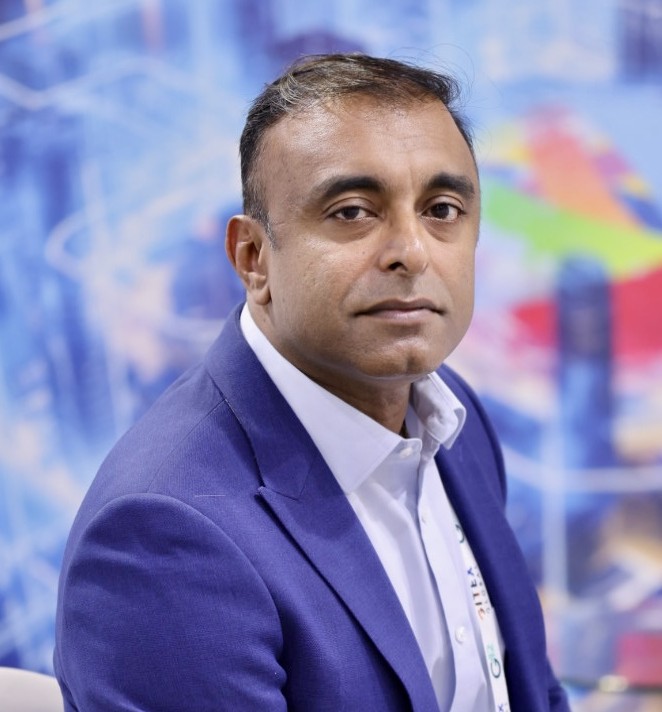
Attributed to Jeff Jacob, Regional Business Development Lead – ISBG at ASUS
What does the UAE’s strong AI skills ranking mean for ASUS, and why an AI-ready market matters for the region?
The UAE’s strong AI skills ranking is an encouraging sign of how quickly the country is building the capabilities needed to turn its AI ambitions into reality. What’s particularly significant is that this talent development is happening alongside substantial investment in research, technology and digital infrastructure, creating an environment where businesses are increasingly equipped to move from exploring AI to putting it into practice.
For ASUS, this makes the UAE a particularly exciting market to be part of. As more organizations develop the skills and confidence to adopt AI, demand for the infrastructure needed to support it will continue to grow. The conversation is shifting from what AI can do to how businesses can deploy it effectively, securely and at scale. That requires more than computing power. Organizations need reliable, high-performance infrastructure that can support increasingly complex workloads, manage costs and evolve alongside their needs.
With a regional presence in the UAE, we’re well positioned to understand these changing requirements and work closely with businesses and government entities as their ambitions evolve. This helps us ensure our computing solutions keep pace with the market, while supporting the UAE’s wider ambition to turn AI innovation into real economic value.
This is also important for the wider region. The UAE is demonstrating what becomes possible when talent, investment and infrastructure develop together, helping establish a model for AI adoption that can encourage innovation, accelerate digital transformation and create new economic opportunities across the Middle East.
How is the fast-growing use of AI among UAE businesses driving demand for AI computing power?
As AI adoption grows among UAE businesses, so does the need for computing infrastructure that can keep up with their day-to-day operations and increasingly demanding workloads. Almost three-quarters (72%) of UAE businesses are now classified as AI adopters, highlighting how quickly AI is becoming part of the business landscape. This is driving demand for infrastructure that can deliver the performance, efficiency and scalability businesses need.
Meeting this demand requires more than powerful processors. Businesses need sufficient memory, fast storage and high-speed networking to handle increasingly complex workloads, while also managing power consumption, cooling and operating costs.
The key is to match infrastructure to the work it needs to do. Adding more computing capacity won’t necessarily improve performance if storage or networking becomes a bottleneck. Businesses need to look at the entire system and understand what it takes to deliver useful results efficiently. This makes choosing the right computing solutions essential to scaling AI sustainably.
How is ASUS meeting this demand, from AI servers and workstations to edge computing?
At ASUS, we recognize that every enterprise applies artificial intelligence in its own way, and that no single solution can serve all. We therefore work closely with our customers to understand their objectives, the workloads they must run and the infrastructure they already have in place. On that foundation, we tailor our computing solutions to their needs, whether they require greater processing power, additional memory and storage, or the capacity to scale as their AI applications mature.
For organizations running the most demanding workloads, our AI POD solutions unite computing, storage and high-speed networking within a single, integrated system, while our NVIDIA HGX-based servers deliver the performance required for intensive AI training and inference. We also take the broader view, giving due attention to cooling, power efficiency and system management, so that these systems continue to perform reliably as demand grows.
Nor does every application belong in the data center. Our workstations and edge computing solutions enable organizations to process data closer to its source, a consideration of real importance where rapid response is essential. Ultimately, our purpose is to help every customer strike the right balance between performance, efficiency and flexibility, with infrastructure that evolves alongside their AI ambitions and with support that extends well beyond installation.
How can ASUS infrastructure support the UAE’s goal to build and scale AI companies across key sectors?
As the UAE advances its ambition for AI sovereignty, the priority is to build the capabilities needed to develop and deploy AI solutions locally. With sectors such as energy, logistics, healthcare and cybersecurity among the country’s AI priorities, this requires infrastructure that can support everything from secure computing and AI model development to practical applications at scale.
At ASUS, we have been developing sovereign AI infrastructure and delivering tailored AI solutions since 2018, when our first project resulted in Taiwan’s first AI supercomputer, Taiwania 2. Building on this experience, Taiwan AI Cloud (TWCC) was established in 2021 as an ASUS subsidiary to advance public-private collaboration with the government on large-scale AI projects.
Our Five-Layer AI City Architecture builds on this experience and offers a concrete framework that could be adapted to support the UAE’s National AI Strategy 2031. By connecting sovereign computing, sovereign models, platforms, applications and innovation, it brings together the capabilities needed to move from AI infrastructure to real-world deployment. Combined with our experience integrating these technologies and delivering solutions for applications such as smart transportation, healthcare and energy management, this approach can help the UAE develop a connected, scalable AI ecosystem tailored to its national priorities.
How can companies scale agentic AI, physical AI and digital twins with the right infrastructure?
Scaling these technologies begins with sound foundations. Agentic AI requires sustained inference capacity and swift access to enterprise data. Physical AI depends on powerful training environments in the data center, paired with responsive computing at the edge, where decisions must be made in real time. Digital twins demand high-performance simulation and visualization, continuously refreshed with live data. Enterprises that plan for these distinct needs early will move from pilot to production with the greatest confidence.
The right infrastructure is therefore integrated and adaptable: servers built for training and large-scale inference, validated systems that shorten the path to deployment, workstations for development and simulation, and edge platforms that process data at its source. Cooling, power efficiency and system management matter just as much, ensuring that performance remains reliable as workloads grow. At ASUS, this is the philosophy behind our AI POD solutions and NVIDIA HGX-based servers, complemented by workstations and edge computing that bring intelligence closer to where it is needed.
Such thinking resonates across the Gulf, where national ambition is matched by action. In the United Arab Emirates, the UAE Strategy for Artificial Intelligence 2031 sets the direction. In Abu Dhabi, the Artificial Intelligence and Advanced Technology Research Council, ALERIA , MBZUAI, G42 and Khazna Data Centers are building sovereign capability, while ADNOC and Masdar stand to gain from digital twins and physical AI in energy and sustainable development. In Dubai, Digital Dubai, the Dubai Future Foundation, the Roads and Transport Authority, DEWA and DP World are advancing smart-city services, autonomous mobility and intelligent logistics.
In the Kingdom of Saudi Arabia, Vision 2030 provides a similarly bold framework. The Saudi Data and AI Authority is shaping national policy, HUMAIN is building AI infrastructure and services at scale, and KAUST is nurturing world-class research. Saudi Aramco is applying advanced analytics and digital twins across its operations, while giga-projects such as NEOM and Red Sea Global are conceived as intelligent, data-driven environments from the outset. ASUS is proud to support our customers across the UAE and the Kingdom of Saudi Arabia on this journey, with infrastructure that evolves in step with their ambitions.
What key developments will shape AI infrastructure over the next three to five years?
Over the next three to five years, AI will move from something businesses experiment with to something they rely on every day. In the UAE, where building home-grown, sovereign AI capability is a priority across many industries, that shift will drive demand for more computing power, more data center space and more storage.
As AI tools become part of daily work, the big question will be how to run them day in, day out. Using a trained AI model to answer questions and make decisions, known as inference, will matter more and more, and so will keeping the cost of doing it under control.
This will also change how AI systems are built. Simply adding more computing power will not be enough. Businesses will need setups that can handle different kinds of work and adjust as needs change. That means thinking of the whole system as one: the processors, the power supply, the cooling and the overall design all have to work together to keep things reliable and ready to grow.
Energy will be at the heart of all this. The more AI is used, the more electricity it consumes, the more heat it creates and the more it costs to run. The challenge is to get the performance AI needs while using energy wisely and limiting the impact on the environment. In our region, keeping systems cool will be especially important as more powerful, tightly packed AI equipment is installed.
In short, the next chapter of AI infrastructure is about balance: strong performance, the flexibility to adapt and the sustainability to last. The aim is systems that are secure, efficient and able to grow, so that every dirham invested in AI delivers lasting value to the business.