Automotive
Beyond Braking: Asad Badami on ASIMCO’s Next Chapter

Exclusive interview with Asad Badami, Managing Director, Badami Holding
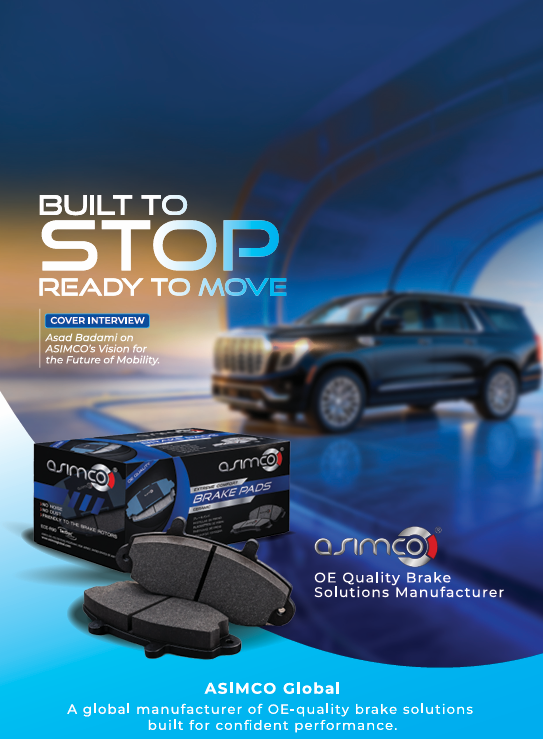
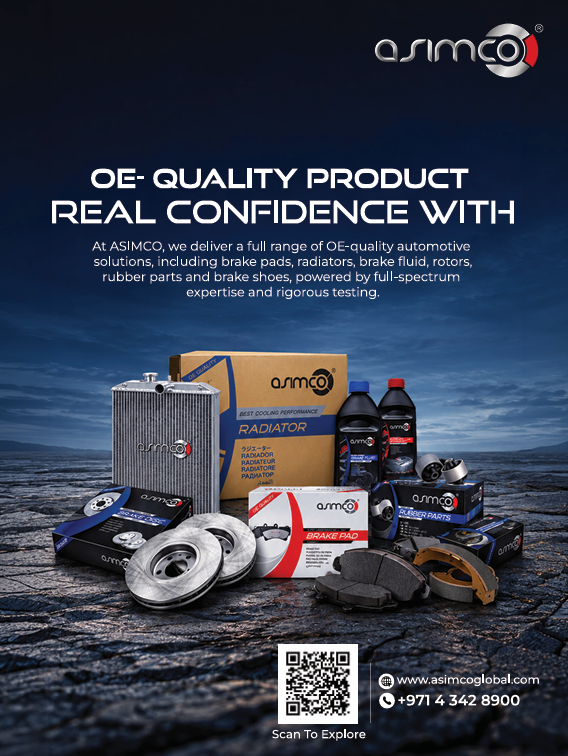
As Chinese automotive brands gain ground and electric vehicles become increasingly prominent on UAE roads, the aftermarket is facing a new set of technical and commercial challenges. For braking specialist ASIMCO, adapting to these changes means investing in research, developing EV-specific ceramic brake pads and testing products across diverse driving environments.
Ahead of Automechanika Dubai 2026, Automotive Integrator speaks with Asad Badami, Managing Director of Badami Holding, ASIMCO’s parent company, about the changing UAE aftermarket, the importance of manufacturing expertise and R&D, and the opportunities shaping the next phase of global automotive growth.
How have you seen the UAE automotive aftermarket evolve over the past few years, and what key changes are shaping the market today?
The UAE automotive aftermarket has evolved significantly in recent years, particularly with the rapid growth of Chinese vehicle brands on UAE roads, the increasing role of digital channels in how customers research and purchase automotive parts, and a stronger focus on product standards and quality.
Customers have changed too. They are far more informed today and have much higher expectations of the brands they buy from.
The UAE is also one of the region’s most open and competitive automotive markets, with products and brands from around the world readily available. This gives consumers a very wide choice and pushes every brand to continuously improve product performance, quality and the overall value it delivers to the end user.
We see this as a positive development. Stronger competition encourages innovation, raises industry standards and ultimately creates a better and more professional aftermarket.
As a global aftermarket brand, what is ASIMCO’s strategy for strengthening its position across the UAE, the GCC and international markets?
From the start, our aim has been to build a brand that partners and markets can rely on for the long term, and most of what we do follows from that.
Our OE background is a big part of it. We supply components to some of the world’s leading vehicle manufacturers, and that experience gives us valuable insight into where automotive technology is heading and what drivers expect from braking products.
We also learned early that one approach does not work everywhere. What works in the GCC is not necessarily what works in Africa or Latin America. The vehicle parc, buying habits and customer expectations are different, so we adapt our strategy to each region.
The UAE plays an especially important role for us. With our regional team based in Dubai, we work closely with our distribution partners across the UAE and wider GCC, using Dubai as a hub to stay close to the market, understand changing customer needs and support the continued growth of the ASIMCO brand across the region.
Underneath all of this are our distribution partnerships, technical training, product development and the marketing we do on the ground in each market. Being available on a shelf is the easy part. What we want is for ASIMCO to be a brand that people in each market know and trust.
Research and development plays an increasingly important role in the automotive aftermarket. How does ASIMCO approach R&D, product development and continuous improvement to meet changing vehicle and market requirements?
R&D has been part of ASIMCO’s business from the beginning. Vehicle technology has changed enormously over the past two decades, and our answer has been to keep investing in the capabilities we need to stay ahead of it.
That investment runs into millions of dollars over the years, in our R&D facilities, testing equipment and technical staff. We don’t treat this as optional. When the product is a brake, you cannot cut corners on testing.
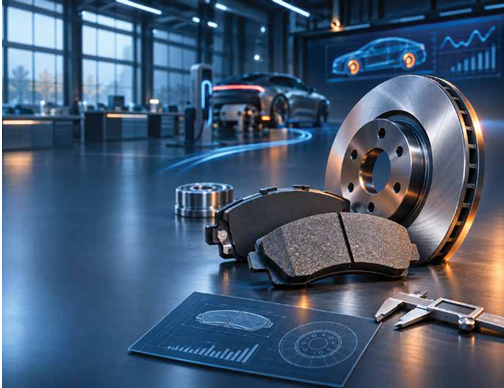
Our laboratories use inertia dynamometers and highly specialized equipment to measure friction stability, thermal resistance, fade, noise and durability. Lab results don’t tell us everything, though, so we also run real-world evaluations in the United States, Germany, Spain and China, where driving conditions and climates differ widely.
Our distributors give us feedback on what they see in the field, and we use that to refine formulations based on how the product performs for actual customers rather than only on test rigs.
New products matter, of course, but for us the bigger job is making everything we already sell perform better, more safely more consistently year after year.

With the growing adoption of electric, hybrid and technologically advanced vehicles, how is ASIMCO preparing its product portfolio for the next generation of mobility?
The move to electric and hybrid vehicles is a real technical shift for the aftermarket, and it is one we have been preparing for over several years.
An electric vehicle (EV) brakes differently from an internal combustion engine (ICE) vehicle. Regenerative braking takes much of the load, so the friction brakes are used less often, and when they are needed, they have to stop a heavier vehicle. Brakes that sit unused for long periods are more prone to corrosion, and with no engine sound to cover it, any brake noise is far more noticeable to the driver. That puts new demands on the friction material, particularly around corrosion resistance, consistent performance and quiet operation.
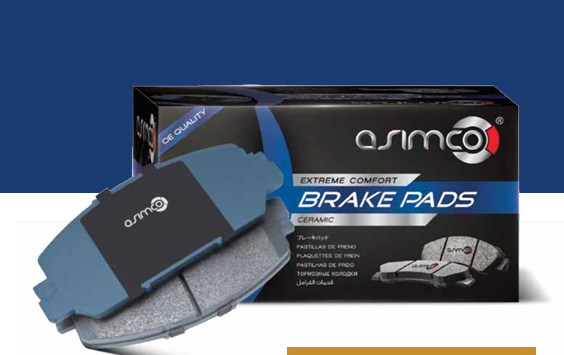
So, we invested in developing ceramic brake pad formulations specifically for EV applications. We now have a dedicated EV brake pad range, and it keeps growing as new models arrive in the market.
Our job is to make sure the aftermarket keeps pace with the vehicles on the road. As an established manufacturer with our own R&D, we can develop products for these new requirements rather than wait for someone else to.

Beyond supplying automotive components, what responsibility do aftermarket brands have in promoting road safety, product quality and greater awareness among distributors, workshops and end users?
When you make braking components, you carry a responsibility that comes with the product. Brakes are central to road safety, and that is not something we are prepared to compromise on.
It starts in development. We invest heavily in testing, manufacturing processes and quality control so that our products meet international standards, including certification where it applies.
A reliable product is only part of the job, so across our markets, our teams work directly with distributors, mechanics and workshops on technical training and product education. A good brake pad installed badly, or on worn hardware, is still a safety problem, so we spend time on installation and maintenance practices as well as on the product itself.
We take pride in this work. It lets us contribute something to the industry beyond what we manufacture, and it is part of what we want the ASIMCO name to stand for.
What major trends are currently reshaping the global automotive aftermarket, and which developments do you believe will have the greatest impact over the next three to five years?
Three things stand out to me: electrification, the international growth of Chinese vehicle manufacturers, and the growing importance of environmental standards and product safety.
Electrification brings new technical requirements, as I mentioned earlier. Meanwhile, Chinese brands are changing the make-up of vehicle fleets in many markets. Regions that were dominated by Japanese, European and American cars for decades now have a far more mixed parc, and any aftermarket brand has to keep adapting its range to match what is actually on the road. Our range already covers many of these newer brands, and we keep adding more as they arrive.
Environmental standards are a growing factor too, especially in friction materials, including copper-free formulations and technologies that reduce brake-related emissions. We have been constantly adapting to these changes so that our development stays in step with where the industry is going.
Over the next three to five years, I think the advantage will go to brands that have real R&D, real manufacturing experience and the ability to move quickly when the market shifts.
Looking ahead, what are ASIMCO’s key priorities in terms of innovation, product portfolio development and global brand growth?
ASIMCO is now present in more than 80 countries, and that footprint gives us a solid base for the next phase of growth.
Our priorities are to strengthen our technological capability, widen our product portfolio and build our presence in new international markets.
On the product side, we are continuing to invest in advanced braking technology, environmentally responsible formulations and broader application coverage, particularly for EVs and newer automotive brands.
Geographically, we see considerable opportunity in emerging markets, particularly Africa, Latin America and Southeast Asia, where vehicle populations are changing and demand for reliable aftermarket products keeps rising.
When we enter a market, the focus is on building a sustainable distribution network, understanding local requirements and giving partners the technical and commercial support they need to succeed over the long term.
Growth for us also means being a stronger brand in every market where we are already present, and the UAE is a good example. Vehicles from every major manufacturing region share the road here, which makes it one of the best places to see where the aftermarket is heading. We plan to keep building on that with our partners across the GCC.