
 Have a question? +971 56 404 0503




Tech News
AUS and Transgulf sign MoA to boost industry-academia collaboration for engineering students


American University of Sharjah (AUS) has formalized a Memorandum of Agreement (MoA) with Transgulf Readymix Concrete Co LLC as part of the AUS College Engineering’s (CEN) Al Nukhba Program.
The MoA represents an important advancement in promoting collaboration between industry and academia, emphasizing research, development, internships and hands-on training opportunities for AUS students, preparing them to excel in their careers and contribute meaningfully to their fields.
The collaboration with Transgulf will enable CEN students to acquire essential industry experience, meeting course requirements through internships and structured field excursions. These programs aim to offer practical insight into Transgulf’s activities, allowing students to gain a more profound understanding of real-world applications in the cement products and construction industries. Moreover, the partnership will include shared research and development initiatives focused on the design, manufacturing and supply of ready-mix concrete, tackling current issues within these sectors.
“Our partnership with Transgulf Readymix reflects our ongoing commitment to connecting academic achievement with professional expertise,” stated Dr. Fadi Aloul, Dean of CEN. “With this collaboration, we will provide our students with hands-on learning experiences that combine practical skills with theoretical instruction. Through internships, fieldwork and collaborative research, this partnership supports our mission to nurture skilled innovators who engage in applied projects, address real-world challenges and develop creative solutions that meet critical local needs while contributing to the UAE’s and GCC’s economic and industrial advancement. Together, we will enable our students to emerge as leaders in engineering and technology, in harmony with the country’s vision for a sustainable, innovative future.”
“Transgulf is honored to be part of the CEN Al Nukhba Program, collaborating with faculty from the AUS College of Engineering to provide students with in-action opportunities to explore engineering applications in the ready-mix concrete industry and its critical role in construction delivery. Aligned with the UAE’s vision, we are committed to inspiring future engineers and transforming the construction industry through innovation and the adoption of sustainability initiatives and artificial intelligence. Transgulf’s internship programs go beyond civil and materials engineering, offering practical exposure to industrial fields including supply chain management, manpower planning, predictive maintenance, renewable energy, waste management and digital engineering. In this partnership, AUS and Transgulf are paving the way for the next generation of technical talent to build a brighter, smarter and more resilient future,” said Yasar Abualrous, General Manager of Transgulf Readymix Concrete Co LLC.
The CEN Al Nukhba Program has consistently sought to improve student employability by fostering collaboration between academia and industry.
By aligning its objectives with national priorities, the program not only equips AUS students with vital skills for their careers but also supports the UAE’s wider ambitions in innovation and building a knowledge-driven economy.
Tech News
Middlesex University Dubai’s inaugural Digi-Health Lab Symposium explores the future of tech-driven healthcare
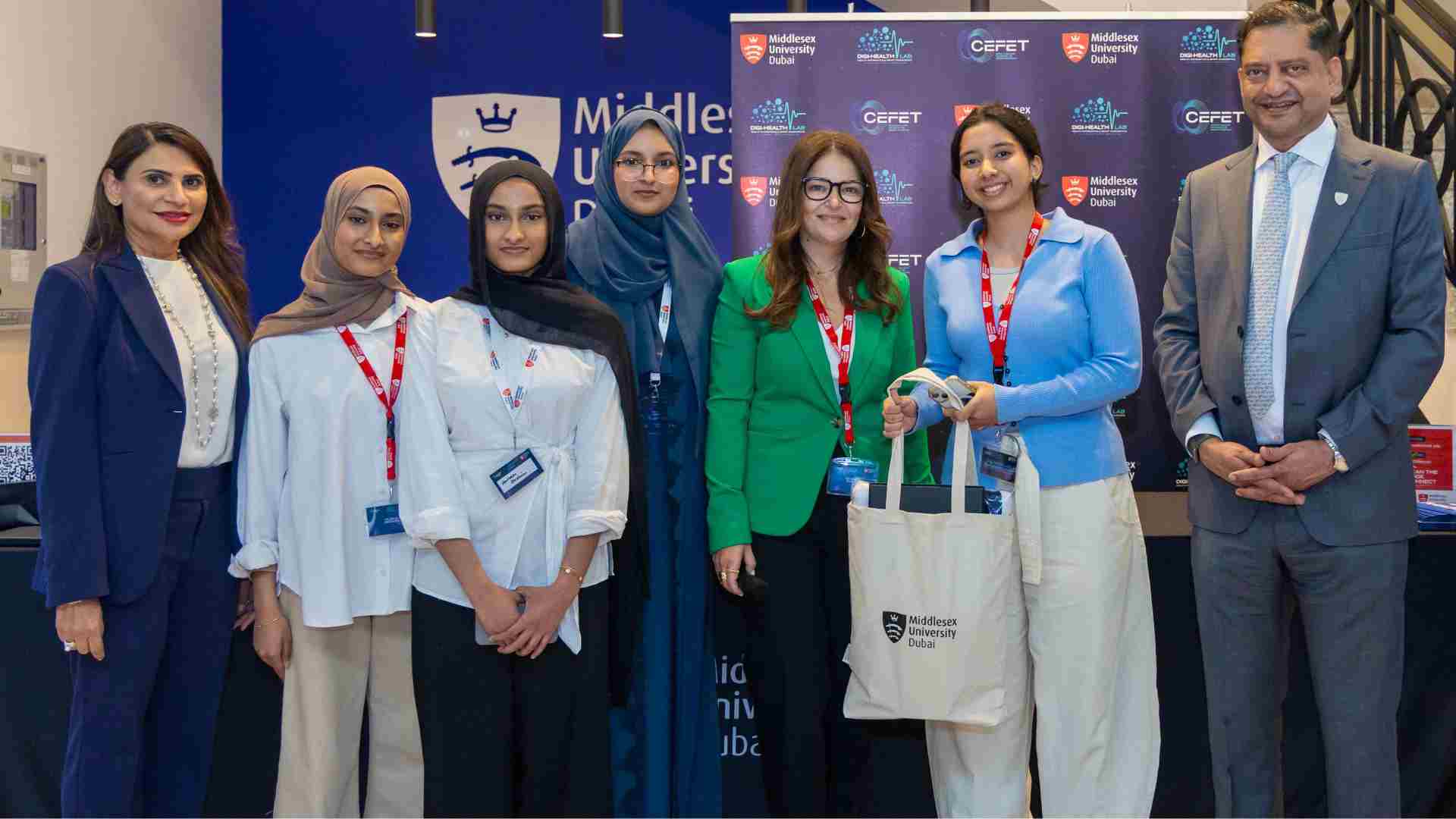
Leaders and experts from healthcare, government, academia, and industry gathered at Middlesex University (MDX) Dubai for the inaugural Digi-Health Lab Symposium 2026, examining how digital health, artificial intelligence and connected technologies are contributing to more preventive, personalised, and accessible healthcare.
Hosted by MDX Dubai’s Digi-Health Lab, the one-day Symposium on Thursday 10 September brought perspectives from across healthcare delivery, government, public health, academia and technology into one forum. With discussions spanning everything from how responsible AI can improve medical staff workflows to the advantages – and limitations – of wearables and other health informatics in preventive care, as well as the benefits of ambient listening, the day aimed to help drive the sector’s continued development.
The Digi-Health Lab is a recently launched interdisciplinary research initiative within the University’s Centre of Excellence for Foresight and Emerging Technologies (CEFET), established to explore how emerging and digital technologies can be applied to address current and future challenges across health and healthcare. Its inception comes as healthcare systems increasingly look towards technology to support earlier intervention, more personalised care, and better use of health information.
Among those contributing to the Symposium were Sandip Kumar, Chief Digital and Innovation Officer at King’s College Hospital London Dubai; Dr Narges Sheikhansari, Executive Advisor and Public Health Expert; Mariam Mubarak Alkarbi, Head of Health and Nutrition for UAE Ministry of Family; Dr Amber Rashid, Director of Preventative Healthcare at King’s College Hospital London Dubai; Ahmad Awada, Director of Innovations and Digital Health of Mediclinic Middle East; and Professor Moustafa Nasralla, Head of the Smart Systems Engineering Lab at Prince Sultan University.
Officially opened by Professor Cedwyn Fernandes, Provost & Director, Middlesex University Dubai, the Digi-Health-Lab Symposium comes at a significant point for healthcare innovation in the UAE. In May 2026, the UAE Cabinet approved the National Policy for Advancing Digital Healthcare Services and Artificial Intelligence in the Healthcare Sector. The policy closely aligns with We the UAE 2031, which calls for a future-ready healthcare system and specifically identifies predictive healthcare, innovative health technologies, and AI as areas of national importance.
Dr Ikram Rehman, Head of the Digi-Health Lab at MDX Dubai, said the shift creates an important opportunity to examine not simply what emerging healthcare technologies can do, but how they can translate into meaningful improvements in health and care.
“For decades, we have said prevention is better than cure. What is changing is our ability to make that principle much more actionable,” said Dr Ikram. “AI, health data, remote monitoring and connected tech are creating new possibilities to identify risk earlier and intervene sooner. The challenge now is ensuring these technologies are clinically useful, trusted, secure and capable of being integrated into healthcare at scale.”
A real-life example was provided by Dr Rashid of King’s College Hospital London Dubai, who presented the transition from traditional snapshots of health data to continuous monitoring via wearables. “The stethoscope was invented 200 years ago to listen to the human body for the first time,” she said. “Now we have digital health, which tells you, constantly, every heartbeat, every detail of your life, your sleep schedule, your glucose, every minute, 365 days a year. But just getting that data is not enough, our job is to change that data into decisions – decisions that will make sure people don’t end up in the ICU.”
During the first of two insightful panel sessions, entitled From Reactive Care to Prevention, Early Intervention & Personalised Healthcare, Dr Rashid was joined by Dr Narges Sheikhansari, Executive Advisor and Public Health Expert, and Mariam Mubarak Alkarbi, Head of Health and Nutrition for UAE Ministry of Family.
Dr Sheikhansari outlined three key messages that must be remembered by those involved in the digital healthcare ecosystem. “Firstly, prevention is the highest return investment policy in healthcare – it’s already proven, so let’s do more of that. Second, technology only serves at the level of the system it was built for, so we need good infrastructure for the technology. And finally, we must build for adaptability, not permanence: Whatever we put in place today has to still be relevant in 10-20 years’ time.”
Professor Fehmida Hussain is Deputy Director, Head and Founder of the Centre of Excellence for Foresight and Emerging Technologies (CEFET), and Head of the Computer Engineering and Informatics Department at MDX Dubai. Professor Fehmida said: “Universities must not simply study technological change; we must help shape it. The future of healthcare will not be shaped by technology alone, but through collaboration between clinicians, researchers, government, industry, technologists, patients and communities. Through the Digi-Health Lab, we want to bring these perspectives together and translate promising ideas into practical solutions.”
The event closed with a showcase of MDX Dubai student research projects into digital health, AI, and related areas, including Mega Glasses – an AI-enabled wearable assistive system for visually impaired users – and Autonomous Elderly Guardian & Intelligent Sensing (AEGIS), which uses Wi-Fi sensing and mmWave radar to continuously monitor without cameras nor the user being required to wear a device.
Maleesha Chamodi Kottage Rajapaksha showcased her project, SignBridge, which uses an AI model to recognise American Sign Language (ASL) finger-spellings and convert them into text. The innovation is aimed at removing communications issues for deaf or hard of hearing patients when they need emergency care.
“This was such a great opportunity to showcase my project in front of industry experts,” said Rajapaksha. “I’m a fresh graduate and it’s very difficult for us to actually go into the job market, show our skills, and network with such high-level people – especially in the tech sector, which is very competitive. To be able to do that here at the Digi-Health-Lab Symposium was amazing.”
Tech News
Cloudera and Mistral Partner to Bring Specialized, Sovereign Intelligence to Enterprise Data
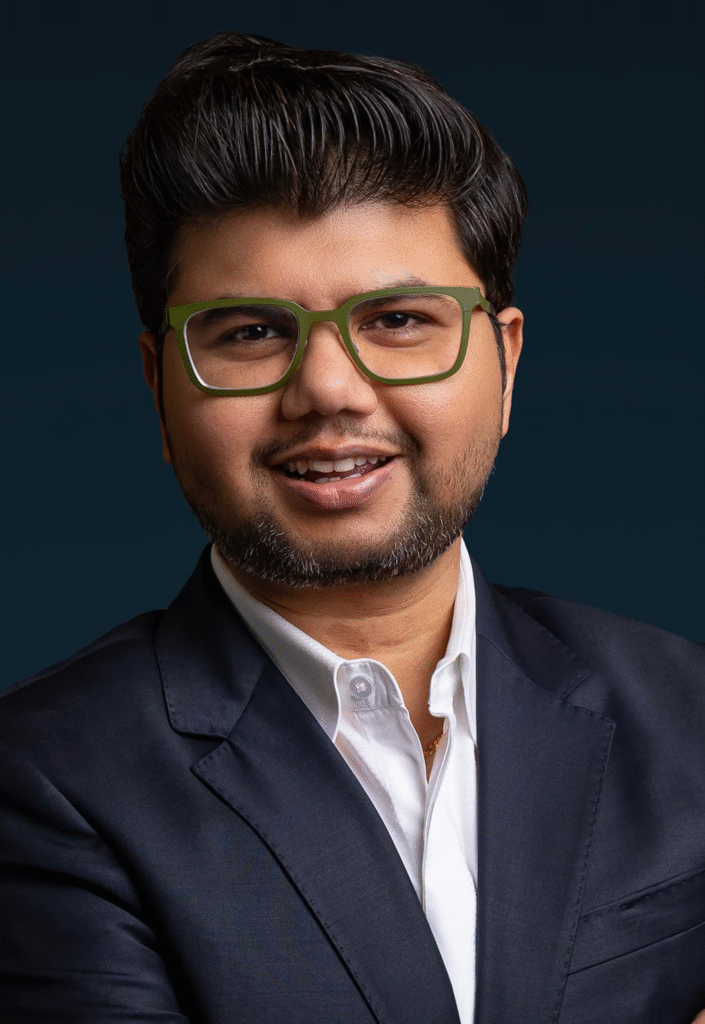
Cloudera, the only company bringing AI to data anywhere, and Mistral, a global frontier AI lab, today announced a landmark strategic partnership to bring secure, sovereign AI directly to enterprise data wherever it resides.
Cloudera and Mistral will combine Cloudera’s hybrid data and AI platform with Mistral’s sovereign AI models to give enterprises a secure path to build, customize, and run AI using their own private data. The collaboration will enable organizations to bring intelligence directly to their data across cloud, on-premises, edge, sovereign, and air-gapped environments—without requiring sensitive information to leave their control.
For enterprises managing the world’s largest and most sensitive data estates, this approach provides greater control, choice, and flexibility over how and where AI runs. Organizations can run inference privately, customize AI using proprietary data, and deploy AI applications within their existing security and governance boundaries, while gaining greater control over the economics of AI at scale.
“Enterprise AI is entering a new phase where organizations need more than access to powerful models, they need the freedom to unlock specialized intelligence using their data, on their terms,” said Abhas Ricky, Chief Business Officer & GM, Applied AI at Cloudera. “Together with Mistral, we are giving enterprises the ability to run AI where their data lives, customize it with their own intellectual property, and maintain control over their data, infrastructure, and economics. That combination of intelligence and control is essential to moving AI from experimentation into production.”
Bringing Intelligence to the Data
For enterprises operating in highly regulated and data-intensive industries, moving sensitive or proprietary information to external AI services can introduce regulatory, security, and operational challenges.
Cloudera and Mistral are addressing these challenges by bringing secure, sovereign AI directly to the enterprise data perimeter.
Mistral’s suite of frontier models and tools will be integrated with Cloudera’s hybrid data and AI platform, enabling customers to run their own custom AI models and applications across 30 exabytes of data. Enterprises will have the deployment flexibility across public, private, on-premises, and fully air-gapped environments, while maintaining consistent governance and control over their context.
The partnership will span Mistral’s broad portfolio of frontier AI models and tools, including reasoning, chat, coding, document intelligence, and voice, giving Cloudera customers greater choice in how they apply AI to their enterprise data.
By enabling organizations to run inference within their own environments, the collaboration also gives customers greater flexibility over the economics of AI. Enterprises can choose the deployment model and infrastructure that best fit their workloads rather than depending exclusively on public API consumption models as AI usage scales.
From Private Inference to Proprietary Intelligence
Through the integration of Mistral Forge, a system for enterprises to build frontier-grade AI models grounded in their proprietary knowledge, organizations utilizing Cloudera’s platform will be able to customize and train models against large volumes of private enterprise data within controlled environments. For enterprises with petabytes of proprietary information, this creates an opportunity to transform decades of institutional data and domain expertise into differentiated AI while maintaining ownership and sovereignty over both the data and resulting intelligence.
Developers and practitioners will also be able to securely build AI-powered experiences using private enterprise data within local environments—from conversational access to governed data to AI-assisted software development and agentic workflows—without exposing sensitive business context or intellectual property to external environments.
Cloudera and Mistral also intend to collaborate on the next generation of AI at the edge, bringing increasingly capable inference closer to where enterprise data is created. This will enable organizations to explore intelligent applications across disconnected, latency-sensitive and resource-constrained environments where relying on centralized cloud infrastructure is not practical.
“Our mission is to make frontier AI available to enterprises without requiring them to give up control over their data, infrastructure, or intellectual property,” said Kamal Brar, SVP of Partnerships and Alliances at Mistral. “Cloudera manages some of the world’s most valuable enterprise data estates, making this partnership a powerful opportunity to bring our technology directly to where that data lives. Together, we can give customers the ability to build AI that reflects their own data and expertise and deploy it securely wherever their business requires.”
Expanding Choice for Enterprise AI
The partnership also expands the Cloudera Enterprise AI Ecosystem, through which Cloudera works with leading AI models, infrastructure, application, and technology providers to give customers flexibility in how they build and deploy enterprise AI.
Mistral adds a significant new dimension to that ecosystem by enabling customers to access and customize its models and AI capabilities directly alongside their governed enterprise data. The partnership reinforces both Cloudera’s and Mistral’s commitment to an open approach to enterprise AI, giving customers choice across models, infrastructure, and deployment environments rather than locking their data or AI strategy into a single technology stack.
The joint Cloudera and Mistral solutions will be available through Cloudera’s enterprise sales team and partner ecosystem, with additional integrations and capabilities rolling out over time.
Spotlight
New Cequence & EMA Research: 94% of Enterprises Trust Their AI Agents Aren’t Over-Provisioned. Only 33% Actually Enforce It.
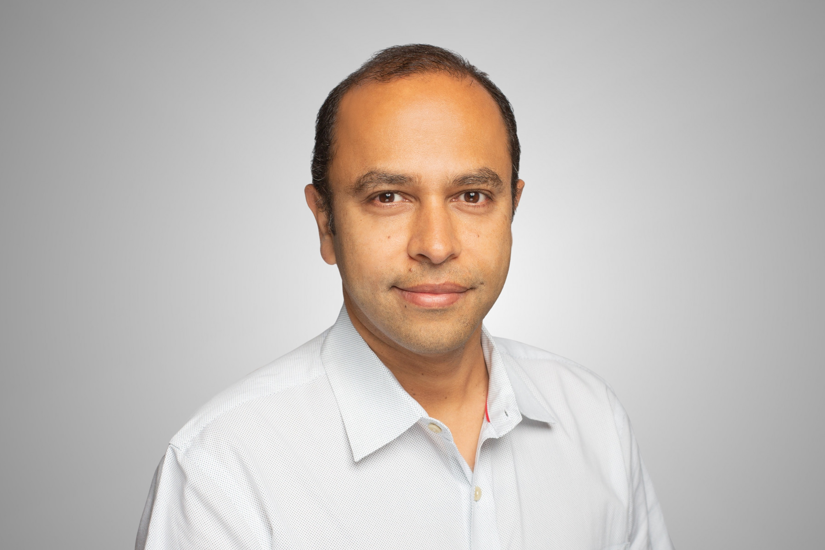
Nearly every enterprise believes its AI agents are properly scoped. Only a third have actually made sure of it.
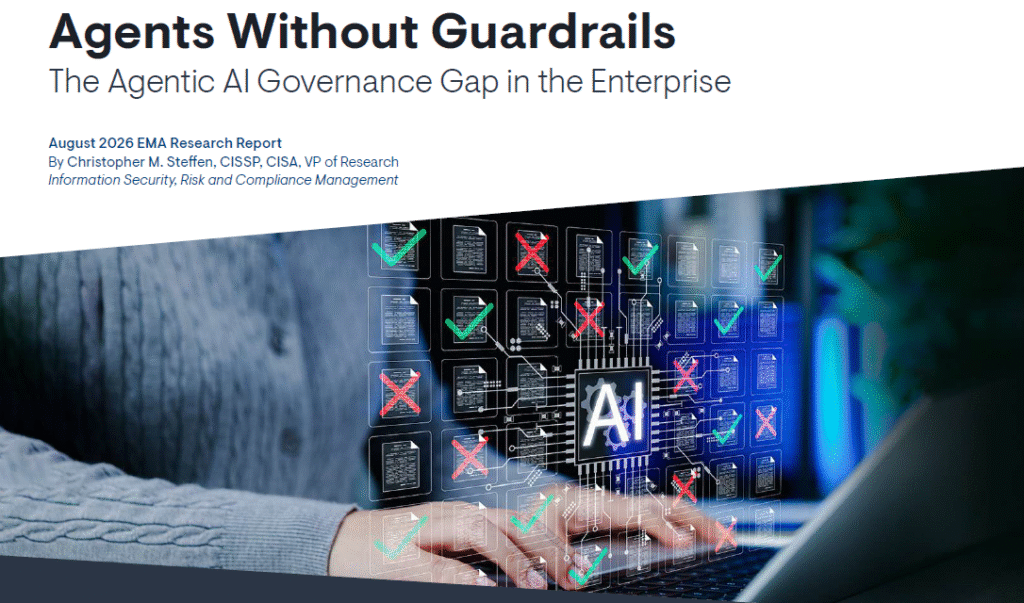
Today, new research from Cequence Security, the leader in application, API, and agentic AI protection, and Enterprise Management Associates (EMA) found that 94% of enterprise IT and security leaders are confident their AI agents do not have more access than they need, yet only 33% actually provision agents with least-privilege access. The remaining two-thirds run on broad standing permissions that are reviewed periodically, rarely reviewed, or never reviewed at all.
That gap between confidence and practice is already showing up in production, not a theoretical risk, but as incidents enterprises are living with right now. Among the organizations surveyed:
- 65% have experienced an AI agent take an action outside its intended scope, including 29% with measurable business impact, including data exposure, financial loss, operational disruption, or reputational damage. Another 36% caught a near-miss before it caused damage.
- Only 32% can detect and contain an out-of-scope agent action within minutes through automated means; 55% need hours and manual steps to respond.
- In approximately 4% of organizations surveyed, the first sign of trouble came from a customer or outside partner, not an internal system.
The findings point to one clear story. Governance has not kept pace with the speed of agentic AI deployment, and that gap is showing up at every stage of the agent lifecycle, from how agents are provisioned, to how their actions are authorized, to how they are decommissioned once a pilot ends. Other key findings from the report include:
Enterprises Have Moved Past the Pilot Stage
The scale of deployment makes the gap more urgent. 46% of organizations report they are already scaling agentic AI across multiple departments and production workflows, and 79% are running generative and agentic AI simultaneously. Further, more than 92% report an increase in AI and bot-driven traffic targeting customer-facing applications and APIs.
Authorization is Checked at the Wrong Time, Or Not At All
That governance gap extends to how access is enforced in the moment an agent acts. Only 34% of organizations evaluate an AI agent’s authorization at the moment it attempts a specific action. The majority rely on periodic policy reviews or standing permissions set once at provisioning and never revisited, meaning an agent’s access can quietly outlive the task it was originally granted for, and keep working long after anyone signed off on it.
Abandoned Pilots Are Leaving Live Credentials Behind
Additionally, there’s an increasing risk in how enterprises manage agents that don’t make it to production. 31% of agentic AI pilots have been paused indefinitely, discontinued, or abandoned. Many were real deployments with real system access and credentials that were never cleaned up. Every abandoned pilot with live credentials is exposure nobody is actively watching.
External Connectivity Carries the Same Risk
14% of organizations allow AI agents to connect to outside tools and data sources via the Model Context Protocol (MCP) without restriction. Among the majority who do limit those connections to an approved list, fewer than half, just 49%, have a dedicated team actively maintaining and auditing that list on a regular basis.
Christopher M. Steffen, CISSP, CISA, VP of Research at EMA, said: “This research shows enterprises have moved well past experimentation with agentic AI right into production, and governance has not kept pace with that shift. The gap isn’t a lack of awareness; most organizations have policies in place and express real confidence in them. The gap is between what’s written down and what’s enforced when an agent takes an action nobody approved. That disconnect shows up most clearly in how organizations authorize agent actions and monitor them once they’re live, and it’s the reason incidents are happening at a rate the industry hasn’t fully reckoned with.”
Shreyans Mehta, Co-founder and CTO at Cequence, said: “The number that jumped out to me is the 92% being confident in their governance frameworks. Confidence like that is a trap; it’s exactly why organizations stop looking for problems, stop investing in monitoring, and let authorization checks lapse until an incident forces the conversation. This is the exact blind spot Cequence is built to close, giving security teams real-time visibility into what AI agents are actually doing and enforcing authorization at the moment an agent acts, not after the fact.”


Cities are learning to predict problems. The harder question is whether they can act on them.
Start Your Day with an Authentic Emirati Breakfast at ANA
HushDay Launches Its First-Ever HOME EDIT in Dubai with Up to 90% Off Premium Home & Lifestyle Brands



-
News11 years ago
SENDQUICK (TALARIAX) INTRODUCES SQOOPE – THE BREAKTHROUGH IN MOBILE MESSAGING
-

 Trending11 months ago
OPPO A6 Pro 5G Review: Reliable Daily Driver
-

 Tech News2 years ago
Denodo Bolsters Executive Team by Hiring Christophe Culine as its Chief Revenue Officer
-
 VAR1 year ago
Microsoft Launches New Surface Copilot+ PCs for Business
-

 Automotive2 years ago
AGMC Launches the RIDDARA RD6 High Performance Fully Electric 4×4 Pickup
-
Tech Interviews3 years ago
Navigating the Cybersecurity Landscape in Hybrid Work Environments
-

 Tech News1 year ago
Nothing Launches flagship Nothing Phone (3) and Headphone (1) in theme with the Iconic Museum of the Future in Dubai
-
 Tech News2 years ago
Toshiba Announces MG10-D Series of Enterprise HDDs with Capacities up to 10TB