
 Have a question? +971 56 404 0503





Hospitality
ACQUASALE BY CUCINA REOPENS ITS TERRACE FOR THE SEASON


Acquasale by Cucina, the open-air, piazza-style terrace at Palm West Beach, welcomes guests back as its terrace reopens for the season, just in time for Dubai’s cooler weather.
Born as the playful sister to Cucina, Acquasale brings the charm and warmth of an authentic Italian piazza, where friends and families gather to enjoy wood-fired pizza, refreshing spritz, and relaxed conversation under olive trees and twinkling lights. Overlooking Palm West Beach and the Dubai skyline, the terrace provides the perfect setting for golden-hour cocktails, breezy afternoons, and lively evenings.
The menu, led by Cucina’s much-loved Chef Marco Deriu and his talented team, stays true to its Italian roots. Guests can enjoy classic favourites like Margherita, Cacio e Pepe and the signature Acquasale pizza, Fico e Caprino. That’s not all – defying tradition with a pineapple topping, the Ananas Pizza, priced at AED 1,000, adds a playful twist to the dining experience.
At the heart of the terrace, Acquasale’s lively Spritz Bar brings the Italian aperitivo tradition to life. From the timeless Aperol Spritz to playful twists such as Peach and Strawberry Rose, each cocktail is crafted to delight the senses and complement the vibrant, Italian-inspired terrace atmosphere.
Whether it’s catching the sunset, enjoying a casual gathering or lingering over a leisurely evening, Acquasale is where authentic flavours, golden-hour spritzes and the vibrant energy of Italy come together.
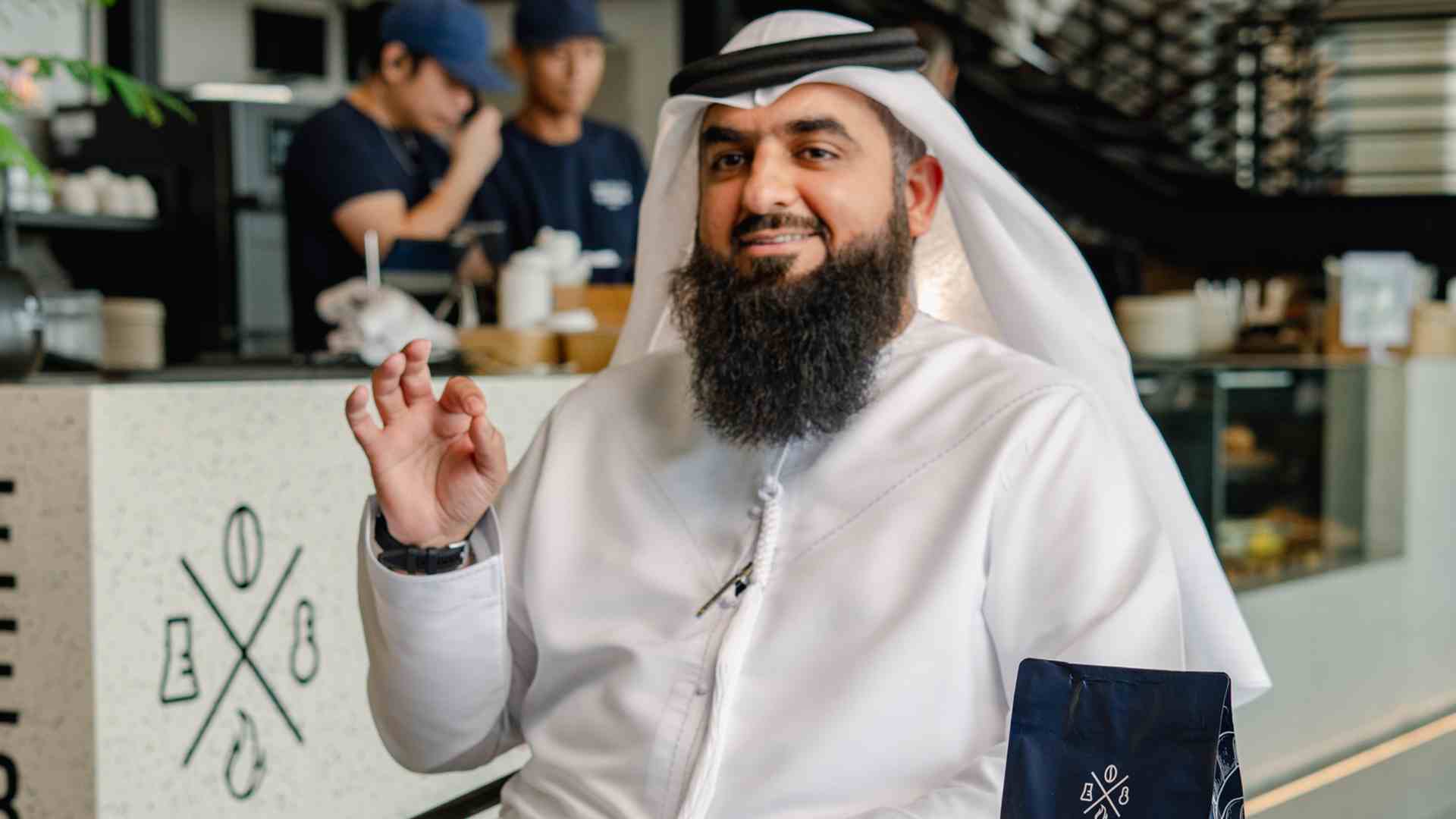
Exclusive interview with Osama Belshalat, Founder, The Coffee Lab, From Scratch and Cocoa Pod
The Coffee Lab began as a personal passion project in 2015 and grew from a home-based roastery into a recognised specialty coffee brand. What inspired you to take that leap, and what has been the defining factor behind its growth?
My passion for coffee began long before 2015. I have always appreciated good coffee and believed that the quality available in the market could be significantly improved. At the time, I noticed a gap between what consumers were looking for and what was being offered, particularly when it came to high-quality specialty coffee.
I initially started experimenting with coffee at home, sharing it with family and friends. Their response was incredibly encouraging. They appreciated the quality and repeatedly suggested that I turn my passion into a business, as they wanted access to this standard of coffee in the UAE.
That encouragement, combined with my personal passion, led me to establish The Coffee Lab in 2015. For me, the defining factor behind our growth has always been an uncompromising commitment to quality. I wanted to create something that people would genuinely appreciate, while building a positive working environment around a shared passion for coffee.
You founded three distinct ventures – The Coffee Lab, Cocoa Pod and From Scratch. What connects these concepts, and how does your philosophy of quality and craftsmanship translate across coffee, chocolate and food?
The common philosophy connecting all three brands is simple: quality should never be compromised, regardless of what we create.
The Coffee Lab began with my obsession with making the perfect cup of coffee. I would happily spend 20 to 30 minutes preparing my morning coffee, paying attention to every detail to achieve the best possible result. Eventually, I wanted to share that experience with others, which became the foundation of the business.
Cocoa Pod followed a similar journey. At the time, most chocolate available locally was commercially produced, with limited access to high-quality, bean-to-bar chocolate. We wanted to introduce a different experience, where customers could appreciate single-origin cacao from countries such as Ecuador, Brazil or the Philippines, while exploring different cocoa percentages and flavour profiles.
From Scratch applies that same philosophy to food. We prepare as much as possible ourselves, including baking our own burger buns. This gives us complete control over freshness, recipes and ingredients, while avoiding unnecessary preservatives and additives.
Across all three concepts, we create products that we would genuinely enjoy consuming ourselves. That personal responsibility towards quality is what connects everything we do.
The Coffee Lab brings together specialty coffee and traditional Emirati coffee culture. How do you preserve local coffee traditions while introducing modern brewing techniques and evolving flavours to today’s consumers?
Traditional Emirati coffee has always been an important part of our culture. It is typically prepared using lightly roasted coffee beans, complemented by ingredients such as cardamom and saffron. Rather than changing this tradition, we wanted to elevate the quality of the coffee while preserving its familiar preparation and flavour.
At The Coffee Lab, we follow the traditional Emirati approach but use specialty-grade coffee beans instead of conventional commercial-grade beans. The difference lies in the quality of the raw ingredients, which results in a cleaner, more refined cup with fewer undesirable flavours.
For me, innovation does not necessarily mean reinventing something. Sometimes, it is about respecting an existing tradition and improving the ingredients behind it. By combining specialty-grade beans with traditional Emirati preparation methods, we can offer a familiar cultural experience while introducing consumers to a higher standard of coffee.
Coffee culture in the UAE has evolved significantly, with consumers becoming more aware of bean origins, roasting methods and brewing techniques. How has this shift influenced the specialty coffee market, and what are customers looking for today?
The transformation of coffee culture in the UAE has been remarkable. Specialty coffee, which was once considered a niche offering, has gradually become the expected standard across much of the market.
Today, consumers are far more knowledgeable about what they drink. They understand the differences between brewing methods, have preferences for particular origins and are increasingly selective about the quality of their beans.
It is now common for customers to specifically request a V60 or a flat white, or express a preference for Brazilian or Ethiopian coffee beans. This growing awareness is a very positive development because it encourages businesses to continuously improve their offerings.
Customers today are not simply looking for a cup of coffee. They are looking for consistency, quality and a flavour experience that reflects their personal preferences. I believe this shift has helped raise the overall standards of the UAE’s coffee industry.
From specialty coffee and craft chocolate to freshly prepared food and chai karak, your ventures place strong emphasis on ingredients and preparation. How do you identify opportunities to turn familiar everyday products into distinctive consumer experiences?
I usually begin by identifying something people already enjoy but feel could be improved. My approach is to take a familiar product and elevate it through better ingredients and more thoughtful preparation.
A good example is our fresh milk chai karak. Karak has been part of our lives since childhood, but it is traditionally prepared using canned milk. We wanted to create a higher-quality alternative using fresh milk, whole cardamom pods instead of powdered cardamom, and carefully sourced premium ingredients.
These changes may seem small, but they make a noticeable difference to the final product. Today, many of our customers appreciate that difference, and our fresh milk chai karak has become part of their daily routine.
Craft chocolate was another example. I initially started making chocolate simply out of curiosity. Once I tasted my first successful batch, I realised how different it was from commercially produced chocolate. That experience convinced me that consumers would appreciate the same quality.
Ultimately, I believe opportunities come from questioning how everyday products are made and exploring how we can make them better.
With ambitions to expand The Coffee Lab across the UAE and GCC, what are your priorities for growth, and how do you plan to preserve the brand’s identity as it enters new markets?
My biggest priority when it comes to expansion is maintaining the same level of quality and consistency that customers experienced at our very first branch.
I have seen businesses with excellent concepts expand too quickly, only to struggle with maintaining their standards. When quality begins to decline, it affects customer trust and, eventually, the reputation of the entire brand.
For me, opening more branches is not necessarily a measure of success. I would rather operate two branches that consistently deliver an exceptional experience than open 20 locations in a short period and compromise what made the brand special in the first place.
As we look towards opportunities across the UAE and GCC, our approach will always be measured and thoughtful. Every new location must reflect the same attention to detail, product quality and commitment to craftsmanship.
Growth is important, but protecting the values that built The Coffee Lab will always come first.
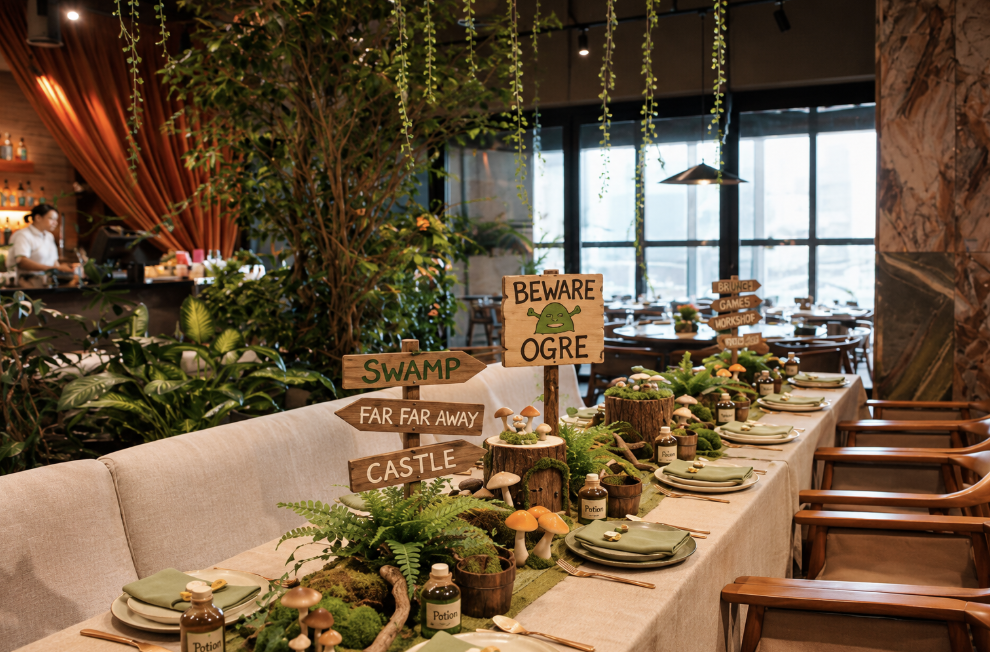
Once upon a time, in a land not so far away, a rather unusual party was taking place. This November, Ribambelle at Bluewaters invites families to step into the world of Far Far Away, where ogres are taking over the evening with a playful brunch inspired by a much-loved fairytale.
Taking place on Friday, November 20 and 27, from 5PM onwards, the Far Far Away Brunch promises an immersive experience for both little ones and grown-ups, bringing together themed dining, interactive entertainment and plenty of opportunities for families to get involved.
The evening begins with a sweet welcome inspired by Duloc, setting the scene for the adventures ahead. From there, little guests can set off on the Swamp Quest, a playful challenge for the little frogs, before stepping into the kitchen for an Ogre Dessert Cooking Class, where they can get creative and whip up something delicious of their own.
Throughout the evening, Ribambelle’s immersive show programme will bring the fairytale to life, with entertainment and surprises unfolding along the way. And when it’s time to turn up the fun, the Green Paper Disco will invite everyone to dance, celebrate and let loose, making sure the grown-ups are just as much part of the adventure as the little ones.
With a brunch inspired by a favourite story, imaginative activities and an evening filled with playful surprises, Far Far Away promises a chance for families to leave the everyday behind and step into a world where a little ogre magic goes a long way.
So gather your little adventurers and get ready for a fairytale evening at Ribambelle. After all, every great story deserves a party!
- What: Far Far Away Brunch | Where: Ribambelle, The Wharf, Bluewaters, Dubai | When: Friday, November 20 and 27, from 5PM
Hospitality
When Plan A Disappears: What UAE Travellers Should Pack, Check and Know Before the Holiday Rush

By Gillan McNay, Global Security Director, Assistance, International SOS
A disrupted journey rarely begins as a crisis. It may start with a cancellation notification, an airport queue or an app that offers no workable alternative. The situation becomes more serious when a traveller is abroad, medication is running low, children need accommodation, or the proposed route passes through changing airspace.
For UAE travellers heading overseas during the holiday rush, Plan B should therefore be more than another flight number. It should cover three things: a safe alternative route, continued access to personal essentials, and a clear understanding of who to call when the situation becomes more complex than a booking problem.
Route Plan B: look beyond the ticket before you book
Start by examining the whole route, including every connection and transit stop. Restrictions on airspace in one nation can have repercussions that extend well beyond its boundaries, placing pressure on neighbouring airports and the alternative routes that travellers frequently choose. You may encounter new challenges if you only assume that a different airport will provide a simple backup. Know your alternative hubs in advance, check the transit requirements for each one, and find out whether any alternative route crosses higher-risk locations.
Personal Plan B: pack what you cannot afford to be without
Your Plan B should be small enough for your hand luggage. Keep copies of your passport, ID and other critical documents close at hand. Keep essential contact details available offline too, including your airline, insurer and assistance provider, so you are not dependent on mobile data or an app working when you need help.
Medication requires special attention. Keep essential medication in your hand luggage in case your checked bag gets lost or you need to remain longer. Bring a backup supply and the necessary prescription or medical documentation in case of an unforeseen delay, if permitted by local legislation.
Support Plan B: when the trip falls apart, who comes first?
There is no single answer, because it depends on what has gone wrong. As a simple rule of thumb, your call order should be:
Airline: For confirmed status, rebooking and operational alternatives.
Insurer: Before paying for major accommodation or replacement travel, where circumstances allow.
Assistance provider: When medical needs, security concerns, changing airspace or uncertain routes are involved.
Check your insurance before you travel. It is not just about whether you have cover; it is also about what the policy covers and what it does not. Read the wording carefully and ask your insurer whether it covers trip-specific scenarios such as airspace closures, airline cancellations, geopolitical events, disruption caused by conflict or war, additional accommodation and replacement transport.
Policies vary, so it is unwise to assume that every cost arising from a security-related cancellation will be refunded. Confirm your insurance, your documents and the requirements for any alternative or cross-border movement before the need arises.
Check the flight and airport status before you set off for the terminal. During major disruption, airports, airline websites and call centres can all be overwhelmed, so do not depend on a single source.
An assistance provider matters most when the problem goes beyond the booking: a security concern, airspace that keeps shifting, a medical issue, doubt about whether an alternative route is safe, or simply no clear way forward. Specialists can help work out which options are realistic. International SOS’ travel guidance centres on real-time intelligence, visibility of where travellers are, route changes, accommodation options and coordinated support when conditions shift.
Above all, do not mistake speed for safety. When security conditions are changing, the quickest-looking alternative is not always the safest. Decisions about movement should rest on current conditions, workable routes and verified information, not on pressure to keep going at any cost.
Some travellers need more
Families should plan around the needs of the whole group, particularly children or anyone who may need additional support. Consider food, medication and essential supplies, how family members will stay in contact, and what you would need if an unexpected overnight stay became necessary.
Older travellers, and those with health issues, should go even further, taking into account whether medicines can be continued, how they would get medical assistance, and the potential consequences of a protracted delay for their treatment.
The psychological side should not be overlooked either. Uncertainty, repeated cancellations and fast-changing information can raise stress and lead to poorer decisions. Clear information, predictable communication and knowing where support will come from can noticeably ease that pressure.
Digital Plan B: stay connected when plans change
Technology helps, but it should not be your only plan. A few practical steps:
- Download the airline app, but do not rely on it as your only source of information.
- Save policy numbers and emergency contacts offline, including your airline, insurer and assistance provider.
- Keep encrypted digital copies of essential documents.
- Carry a power bank and charging cable in your hand luggage.
- Make sure international roaming or an alternative way to get online is available.
- Agree a family communication and meeting plan in case phones or networks fail.
- Understand whether the disruption is a straightforward operational cancellation or part of a wider security or airspace incident. The former may primarily require rebooking; the latter may affect whether alternative routes are advisable.
- The best Plan B is not necessarily the fastest route home. It is the option that is safe, workable and appropriate for the people travelling. A few checks before departure, combined with reliable information and access to the right support, can prevent a cancelled flight from becoming a medical, security or family crisis.


Quality First: Why Great Products Start With Better Ingredients
Your Ultimate #FestiveGiftGuide: Consider This Your Festive Cheat Sheet

Women Entrepreneurs in the Age of AI: Opportunities, Innovation and New Challenges

OPPO A6 Pro 5G Review: Reliable Daily Driver

Denodo Bolsters Executive Team by Hiring Christophe Culine as its Chief Revenue Officer

Microsoft Launches New Surface Copilot+ PCs for Business

2026 in Review: Is AI Becoming More of a Management Problem Than a Technology Problem?

Inside XPENG Brand Night: AI Mobility Lands Centre Stage in Dubai

Chinese Cars Are Reshaping the GCC Market, but Resale Value Could Be the Next Battleground

-
 Trending1 year ago
OPPO A6 Pro 5G Review: Reliable Daily Driver
-
 Tech News2 years ago
Denodo Bolsters Executive Team by Hiring Christophe Culine as its Chief Revenue Officer
-
VAR2 years ago
Microsoft Launches New Surface Copilot+ PCs for Business
-

 Automotive2 years ago
AGMC Launches the RIDDARA RD6 High Performance Fully Electric 4×4 Pickup
-

 VAR11 months ago
Huawei Nova 14 Pro Review: Where Camera Excellence Meets Ecosystem Evolution
-
Tech Interviews3 years ago
Navigating the Cybersecurity Landscape in Hybrid Work Environments
-

 Hospitality2 years ago
Gulfood 2025 30th Edition Kicks Off Today, Setting New Benchmarks in F&B Growth and Innovation
-
News4 years ago
BenQ ZOWIE : First TN 360Hz DyAc+ Gaming Monitor