
 Have a question? +971 56 404 0503




Tech News
VAST Data Partners with Google Cloud to Enable Enterprise AI at Scale Across Hybrid Cloud Environments

VAST Data, the AI Operating System company, today announced an expanded partnership with Google Cloud, the first fully managed service for the VAST AI Operating System (AI OS), enabling customers to deploy the AI OS and extend a unified global namespace across hybrid environments. Powered by the VAST DataSpace, enterprises can seamlessly connect clusters running in Google Cloud and on-premises locations, eliminating complex migrations and making data instantly available wherever AI runs.
Enterprises want to run AI where it performs best, but data rarely lives in one place and migrating can take months and costs millions. Fragmented storage and siloed data pipelines make it hard to feed the AI accelerators with consistent, high-throughput access and every environment change multiplies governance and compliance burdens.
VAST and Google Cloud address this challenge by making data placement a choice rather than a constraint. In this recorded demonstration, VAST showcased the power of the VAST DataSpace to connect clusters across more than 10,000 kilometers, linking one in the United States with another in Japan. This configuration delivered seamless, near real-time access to the same data in both locations while running inference workloads with vLLM, enabling intelligent workload placement so organizations can run AI models on TPUs in the US and GPUs in Japan without duplicating data or managing separate environments.
“Together with Google Cloud, VAST is building a unified data and computing environment that extends to wherever a customer wants to compute and unleashes the potential of AI by unlocking access to all data everywhere,” said Jeff Denworth, Co-Founder at VAST Data. “Delivered as a managed AI Operating System on Google Cloud, customers can go from zero to production in minutes – we’re turning hybrid complexity into a single, intelligent fabric that provides fast access to data, regardless of where it resides to accelerate time to value for agentic AI.”
“Bringing VAST AI Operating System to Google Cloud Marketplace will help customers quickly deploy, manage, and grow the data solution on Google Cloud’s trusted, global infrastructure,” said Nirav Mehta, Vice President, Compute Platform at Google Cloud. “VAST can now securely scale and support customers on their digital transformation journeys.”
Powering Google Cloud TPUs with seamless data access and near-local performance
Recent performance results also show how the VAST AI Operating System connects seamlessly to Google Cloud Tensor Processing Unit (TPU) virtual machines, integrating directly with Google Cloud’s platform for large-scale AI. In testing with Meta’s Llama-3.1-8B-Instruct model, the VAST AI Operating System delivered model load speeds comparable to some of the best options available in the cloud, while maintaining predictable performance during cold starts.
These results confirm that the VAST AI OS is not just a data platform but a performance engine designed to keep accelerators fully utilized and AI pipelines continuously in motion.
“The VAST AI OS is redefining what it means to move fast in AI, delivering model load speeds comparable to cloud-native alternatives while providing the full power of an advanced, enterprise-grade AI platform,” said Subramanian Kartik, Chief Scientist at VAST Data. “This is the kind of acceleration that turns idle accelerators into active intelligence, driving higher efficiency and faster time to insight for every AI workload.”
With VAST on Google Cloud, customers can benefit from:
- Deploy AI in Minutes, Not Months: Organizations can run production AI workloads on Google Cloud today against existing on-premises datasets without migration planning, transfer delays, or extended compliance cycles. Using VAST DataSpace and intelligent streaming, they can present a consistent global namespace of data across on-prem and Google Cloud instantly.
- Reduce Data-Movement Costs: Stream only the subsets that models require to avoid full replication and reduce egress – cutting footprint and redirecting budget from data movement to AI innovation with infrastructure that is future-ready for the demanding AI pipelines in genomics, structural biology, and financial services.
- Maximize Google Cloud Innovation with Flexible Data Placement: Choose what to migrate, replicate, or cache to Google Cloud while keeping one namespace and consistent governance by applying unified access controls, audit, and retention policies everywhere to simplify compliance and reduce operational risk. Leverage VAST DataStore and VAST DataBase to unify prep, training, inference, and analytics without rewiring pipelines.
- TPU-Ready Data Path: Feed TPU VMs over validated NFS paths with optimized model loading and metadata-aware I/O, delivering fast, consistent warm-start performance and predictable behavior during cold-starts.
- Build on a Unified Platform: The VAST AI Operating System delivers a DataStore, DataBase, InsightEngine, AgentEngine and DataSpace that scales across on-premises and Google Cloud environments and adapts to changing business needs without architectural rewrites, enabling data scientists to use a variety of access protocols with a single solution.
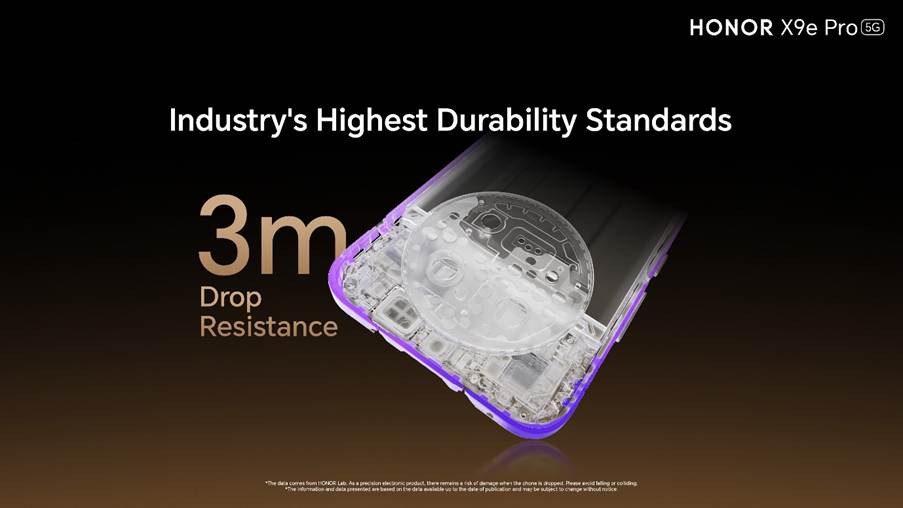
Building a smartphone with a larger battery is relatively straightforward. Making that battery fit into a slim device while reinforcing its structure against drops, water and everyday wear presents a more complex engineering challenge.
For the unbreakable HONOR X9e Pro, that challenge shapes the device from the inside out. From advanced battery chemistry and reinforced materials to specialized bonding techniques and rigorous durability testing, every element is designed to contribute to long-term reliability.
Engineering More Into Less Space
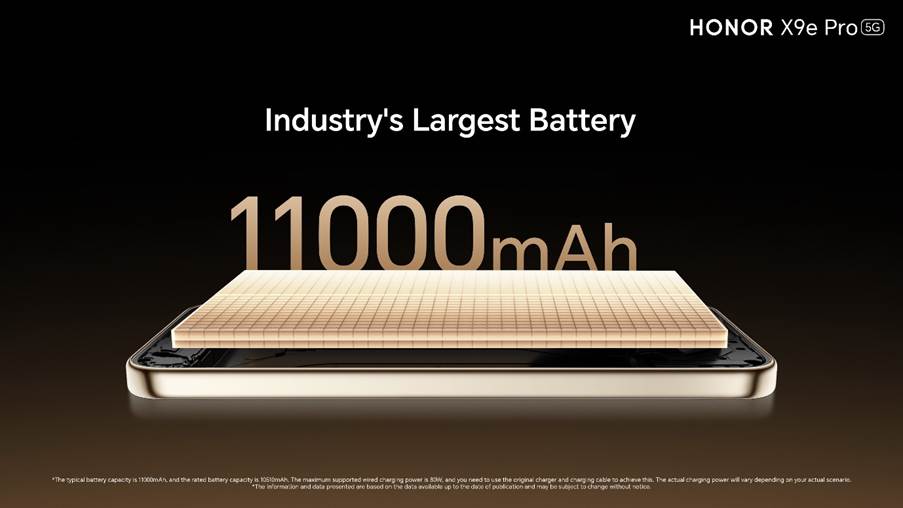
At the centre of the HONOR X9e Pro is a fourth-generation silicon-carbon battery. By increasing the silicon content in the battery anode, HONOR improves energy density, allowing greater capacity within limited internal space.
The result is an 11,000mAh typical battery – the largest in the industry – housed in a body measuring just 8.08mm thick and weighing 203g.
Accommodating this capacity required HONOR to optimize the mainboard, secondary board, display structure, back cover and mid-frame, creating additional internal space without significantly increasing the device’s dimensions.
For consumers, this means enjoying up to two to three days of typical use between charges, reducing charging interruptions without sacrificing portability. It’s worth noting that HONOR has designed the battery to deliver up to six years of reliable performance, offering greater longevity and long-term durability.
Materials Engineered for Impact Resistance
The materials surrounding the battery and core components play an equally important role in durability.
HONOR incorporates arch-shaped structures around the phone’s corners and perimeter, supported by high-strength metal reinforcement embedded within the mid-frame. Together, these elements help distribute impact forces, reducing pressure on sensitive components.
The display receives additional protection through PUR shear-resistant adhesive, creating a continuous three-dimensional bonding structure around its edges. According to HONOR laboratory testing, this delivers approximately ten times the shear resistance of conventional backing adhesive solutions.
For consumers, these reinforcements provide greater confidence when accidental drops occur, potentially reducing damage-related repairs and associated costs.
Protection Built into Every Layer
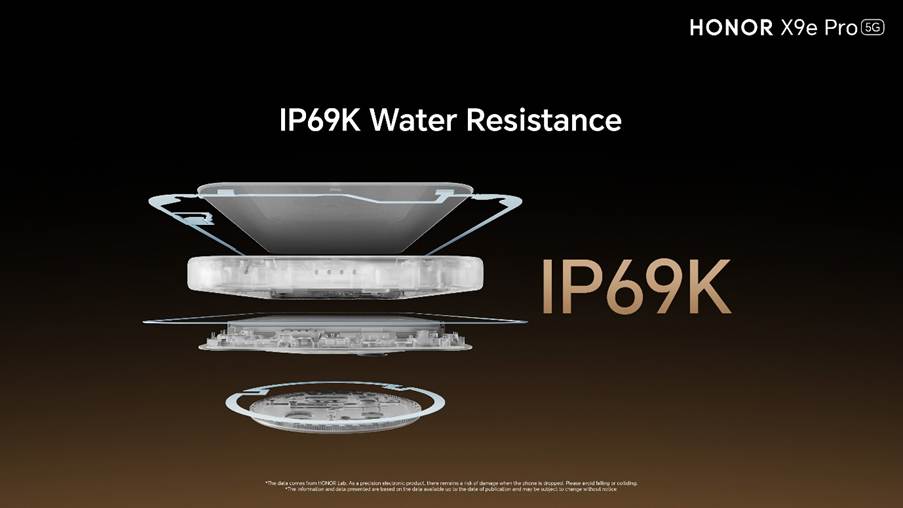
Water and dust resistance are addressed through a compartmentalized sealing architecture.
The display and mid-frame form one protected zone, while the mid-frame and back cover create another. Openings including the USB port, speakers, buttons and SIM tray receive dedicated protective treatments.
Continuous adhesive, localized seals and drainage channels provide additional barriers, helping prevent moisture from reaching sensitive internal components.
This construction supports IP68, IP69 and IP69K ratings, covering dust protection, immersion and high-pressure water exposure and submersion in water at depths of up to 10 metres.
For consumers, these protections offer reassurance against accidental spills, dust and water exposure, although water resistance is not permanent.
Tested and Certified for Durability
Beyond material selection and structural design, HONOR validates the device through laboratory testing. The HONOR X9e Pro has received the five-star SGS Premium Performance Certification for Drop Resistance in Harsh Scenarios, providing independent recognition of its durability performance.
In separate HONOR laboratory tests, the device was evaluated against drops from multiple angles, including heights of up to 3 metres. Its water-protection system underwent 100,000 immersion cycles, alongside 24-hour salt-spray exposure testing. Battery endurance was also evaluated across temperatures ranging from -20°C to 50°C.
These results offer consumers greater confidence in everyday use, potentially reducing the inconvenience of accidental damage and premature replacement, although actual performance varies by conditions.
Engineering Beyond Durability
Reliability also extends to imaging. The device incorporates a 108MP main camera with CIPA 6.0-level optical image stabilization, helping reduce motion blur during handheld photography, particularly in low-light environments.
A Connected Approach to Manufacturing
The HONOR X9e Pro demonstrates how manufacturing decisions contribute to overall device reliability.
By integrating advanced materials, structural reinforcement, protective sealing and rigorous validation, HONOR aims to deliver a smartphone that offers fewer interruptions, greater peace of mind and dependable performance throughout everyday use.

For the second time, Moscow will bring the international video game industry together at Moscow Game Hub, from October 29 to November 1, 2026, developed by the Agency of Creative Industries.
Over four days, players, developers and investors from more than 25 countries will discuss how games, alongside animation, film and literature, are becoming part of the creative economy. The event will also provide a platform for new projects and partnerships.
International participants will be able to meet Russian studios and discuss opportunities to co-produce and promote content. This year’s theme, “Beyond the Industry,” explores how video games connect with animation, film, literature and other areas of the creative economy.
Opportunities for companies from Türkiye and the MENA region
The event will give companies from Türkiye, the Middle East and North Africa a chance to learn about the Russian market, showcase their projects and find partners. Expected delegates include a representative of Digital Dunes, a Qatari mobile game developer and publisher.
For companies from Türkiye and the MENA region, Moscow International Game Week will be an opportunity to connect with Russian developers, publishers and technology partners, discover new projects, and discuss collaboration in game development, localization and distribution.
Moscow is open to international cooperation, exchange of expertise and joint projects. The city is building an environment for the gaming and animation industries by bringing together support programs, technology, skilled professionals and access to new markets.
Moscow Game Hub provides companies with infrastructure for developing, producing and promoting projects. Moscow International Game Week will introduce international participants to these opportunities and serve as a working platform to showcase projects, find partners and discuss agreements. Guests can also look forward to an extensive business program.
International exhibition
More than 85 companies will take part in the exhibition. Brazil’s national stand will be presented by Brasilia Game Hub, while the India group stand will feature projects by BUZZEDMEN STUDIO, ABRACA DABRA SOFTWARE SOLUTIONS and Nilee Games. The exhibition will also include stands by Chingmu from China, BURNING SOUL and BEAR&SKUNK from the Republic of Korea, and Experimental Design Team (EDT) from Malaysia.
Visitors will discover projects from Russian publishers and gaming platforms. Independent developers will showcase their games in the indie alley, while the residents’ alley will feature studios from Moscow Game Hub. A marketplace for themed merchandise will also be open to visitors.
The exhibition will give the wider public a chance to experience the industry firsthand: play new projects, meet their creators and learn more about game and animation development.
International tournament
One of the highlights of Moscow International Game Week will be the LAN finals of the Moscow Cyber Games 2026, an international Counter-Strike 2 tournament. The finals will take place on October 31 and November 1 at Moscow Game Hub. A total of 956 teams from Europe and Asia took part in the open qualifiers.
Tournament results count toward the Valve Regional Standings, which are used to allocate invitations to CS2 tournaments. Holding the event at the end of the ranking cycle gives Russian teams an additional opportunity to earn points and improve their standings. Spectators will be able to watch the professional teams’ final matches online and at the venue.
The finals will be part of Moscow International Game Week’s international program and will showcase Moscow Game Hub’s capacity to host major esports events.

Rentify today introduced Ally, the maintenance agent in its Earn AI workforce, to help property managers reduce routine coordination and give owners clearer visibility into repair costs. Ally connects tenant requests, maintenance contract checks, approvals, vendor dispatch and invoice matching through a workflow that starts on WhatsApp.
The launch targets rental maintenance within the UAE’s broader facilities management market, which was valued at USD 6.56 billion in 2024 and is forecast to reach USD 10.95 billion by 2030, according to a TechSci Research report available through Research and Markets. Within this sector, Ally focuses on the coordination of rental repairs, connecting tenant requests, spending approvals, vendors and invoices.
A repair can involve a tenant, contractor, property manager and landlord before work even begins. Ally brings those exchanges into one process. Tenants report issues by text, photo or video. Ally classifies the request, checks the unit’s maintenance contract, estimates the cost and applies the property manager’s approval rules before dispatching a vendor. It then matches the invoice against the approved estimate, keeping the repair linked to the unit’s operating record.
Property managers set the rules for approvals and escalation. Routine coordination is automated within those rules, while decisions requiring judgment, higher spending or safety oversight are referred to people. Emergency requests are routed to the on-call vendor. Actions are logged with the rule applied and a timestamp, giving teams a record of how each request was handled.
“Our ambition is a rental unit that can collect its rent, renew its lease and arrange its repairs, with people retaining control over the decisions that matter,” said Rajneel Kumar, Co-Founder, Rentify. “Each completed job adds to the unit’s operating history. Connecting that history across collections, renewals and maintenance is how we build towards autonomous renting. Ally takes us another step in that direction.”
Ally is the fourth agent in the Earn AI workforce. According to Rentify, customer portfolios associated with Earn AI represent more than 180,000 units and USD 3.4 billion in annual rent roll. Ally adds maintenance coordination and repair costs to the platform’s wider view of rental operations.
“For a property manager, growth should not mean an equivalent increase in time spent chasing repairs,” said Rashed Hareb Al Mheiri, Co-Founder & CEO, Rentify. “We built Ally to reduce that coordination burden while keeping teams in control of spending and service decisions. For owners, it brings a clearer record of what was approved, what was charged and how maintenance costs build up across their portfolio.”
Landlords receive approval requests with photos, the quote and their share of the cost. A maintenance cost history for each unit helps them understand expenditure alongside rental income. Vendors receive structured job cards, while invoice matching helps property teams check charges against the approved work.
Ally is designed to work alongside existing property management systems and spreadsheet-based processes, with tenants interacting through WhatsApp. Deployment requirements depend on the customer’s systems, data and approval workflows.
The launch addresses a recurring operational need in a substantial rental market. Dubai recorded 1.38 million tenancy contracts worth AED 126.4 billion in 2025, according to the Dubai Land Department, spanning residential and commercial activity.


SUGEE GROUP & WYNDHAM HOTELS & RESORTS PARTNERS TO DEVELOP THE WORLD’S FIRST VIENNA HOUSE RESIDENCES BY WYNDHAM ON AL MARJAN ISLANDS, RAK
RECHITTA SURPASSES 100,000 MINUTES OF REAL-WORLD USE AS IT LAUNCHES NEXT-GENERATION V2 PLATFORM
Above the City with CRANK at Level 43



-

 Trending12 months ago
OPPO A6 Pro 5G Review: Reliable Daily Driver
-

 Tech News2 years ago
Denodo Bolsters Executive Team by Hiring Christophe Culine as its Chief Revenue Officer
-
 VAR2 years ago
Microsoft Launches New Surface Copilot+ PCs for Business
-

 Automotive2 years ago
AGMC Launches the RIDDARA RD6 High Performance Fully Electric 4×4 Pickup
-
Tech Interviews3 years ago
Navigating the Cybersecurity Landscape in Hybrid Work Environments
-

 Hospitality2 years ago
Gulfood 2025 30th Edition Kicks Off Today, Setting New Benchmarks in F&B Growth and Innovation
-

 VAR11 months ago
Huawei Nova 14 Pro Review: Where Camera Excellence Meets Ecosystem Evolution
-

 Tech News1 year ago
Nothing Launches flagship Nothing Phone (3) and Headphone (1) in theme with the Iconic Museum of the Future in Dubai