Home Integrator
THE QUIET POWER OF ARCHITECTURE

Exclusive interview with Simone Micheli, Chief Architect and Co-Founder of Simone Micheli Architectural Hero
You describe hospitality architecture as a space for guests to “feel” and not just “stay”. When you approach designing a hotel or resort, what is the first sensory impression you aim to deliver?
- I never think of a space as a simple container, but as a living organism, capable of welcoming and, at the same time, revealing.
The first impression must be that of a place that listens and allows itself to be listened to: a luminous synthesis of matter, light, and form, where every detail exists to evoke a sense of deep, quiet, authentic well- being.
Your portfolio includes major hospitality projects. Could you walk us through a recent hotel or resort and share one design decision you believe made the biggest difference in guest experience?
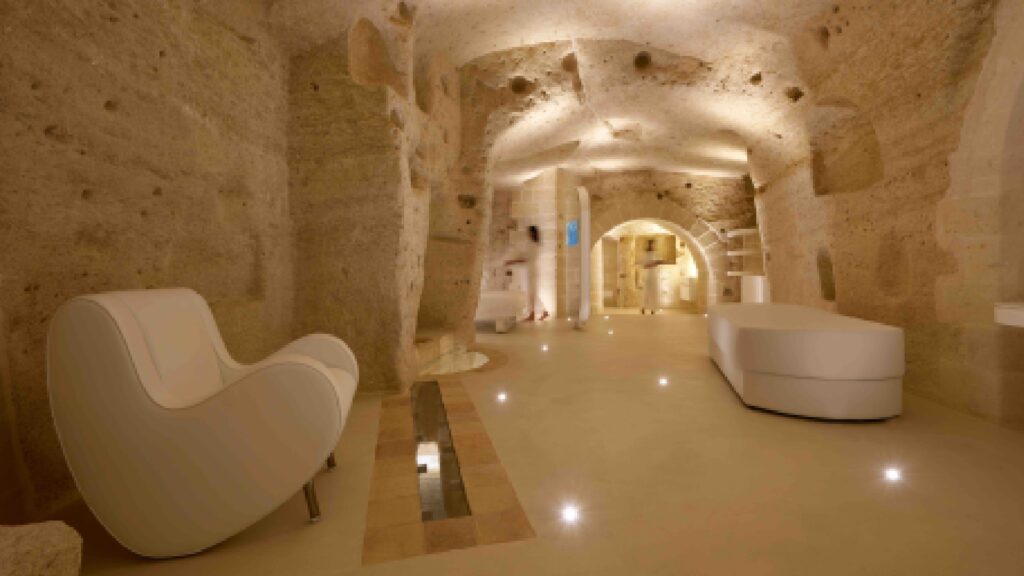
I will mention two, both emblematic of my approach to design. The first is Aquatio Cave Luxury Hotel & SPA in Matera, a place where architecture does not impose itself, but listens.
Here, the choice that transformed the guest experience was creating a dialogue between the primordial strength of the stone and the purity of contemporary form. I worked as if the “drop,” with its silent power, were shaping every environment: fluid lines, furnishings that seem suspended, light rising from below like a breath.
In this way, guests do not simply observe the space, they feel it flowing, perceiving it as a living organism capable of generating profound well-being. The second project is i-SUITE Hotel in Rimini, a manifesto of my vision of hospitality as a sensory, future-oriented experience.
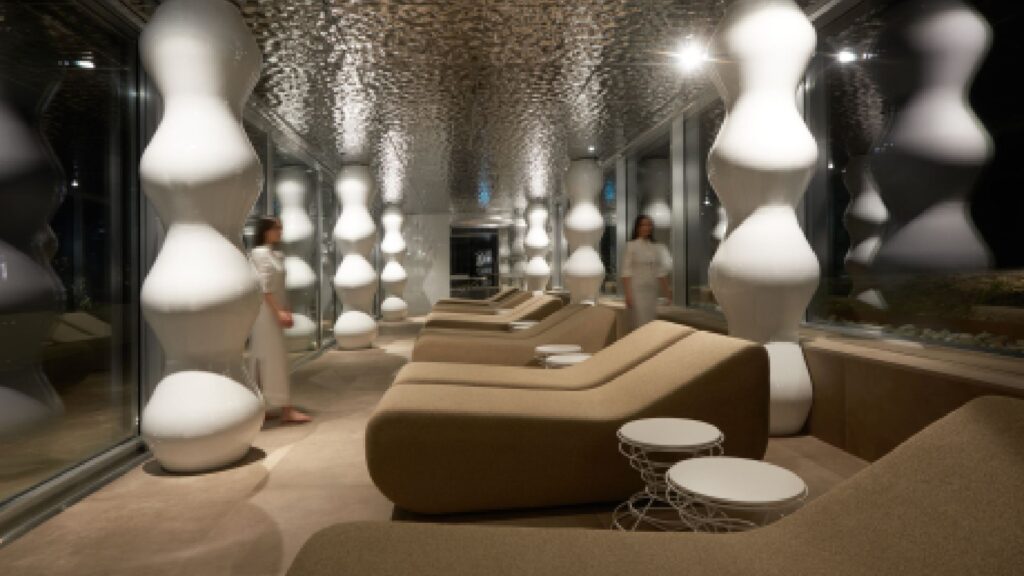
The decisive choice here was to eliminate functional rigidity and create a continuum of organic forms where body and mind can move freely. The rooms become inhabitable sculptures, the wellness area transforms into a liquid and enveloping experience, and light builds emotional landscapes that shift over the course of the day.
I wanted guests to experience a fragment of the future, an iconic, immersive environment capable of leaving an indelible trace in memory. In both cases, the design choice that makes the difference is always the same: placing the human being at the center and shaping around them a sensorial universe that not only welcomes but elevates.

In your 1990–2021 monograph you talk about “the soul of architecture” — how has your vision of that evolved in the last few years?
Today, design must be an act of responsibility toward the planet, toward communities, toward the future. The soul of authentic architecture lies in its ability to improve human life, generating cultural and social value, not merely formal value.
Working globally (including the UAE) means navigating different cultural contexts. How do you adapt your signature style for local vernaculars while maintaining brand integrity?
Longevity in design means more than durability: it’s about lasting relevance. How do you ensure your designs don’t feel dated after just a few years?
The key is dialogue, not imitation. Every cultural context carries symbols, rituals, sensitivities: I embrace them as starting points, not final destinations.
Longevity comes from intelligent simplicity: pure forms, flexible spaces, materials capable of lasting and telling a story. I do not chase trends. A project is truly contemporary only when it already contains its own future.
For brands and manufacturers working with your studio, what’s the most important attribute you look for: innovation, material quality, service or something else?
I look for partners who share a vision: responsible innovation, respect for the process, openness to dialogue, authentic quality. Technology is essential, materials are fundamental, service is crucial.
But above all, I seek collaborators who believe that design is a cultural commitment, not merely a commercial one.
Looking back at your 30+ years in architecture, is there a project you’d revisit and do differently today— why or why not?
No. Not because I consider my past projects perfect, but because each one belongs to the time, the people, and the vision that generated it. Every work is the result of a specific moment in my research, my inner evolution, and the dialogue with a place, a client, an energy.
If you had to sum up your legacy in one sentence as you look toward the next decade, what would it be?
My works are born with the intention of transforming the complexity of our time into simplicity.