Tech Features
The Bold AI Rewrite of Enterprise Software!

By Srijith KN, Senior Editor, Technology Integrator
Celebrating more than two decades in the region, and backed by over 800 enterprise customers, Ramco Systems is not merely expanding; it is doubling down on its presence. With a 50-member local team and a roadmap anchored in deep product localization, the company’s strategy is clear: build for the region, in the region. Local language support, government-portal integrations, and strict alignment with regional data privacy laws form the foundation of Ramco’s next chapter.

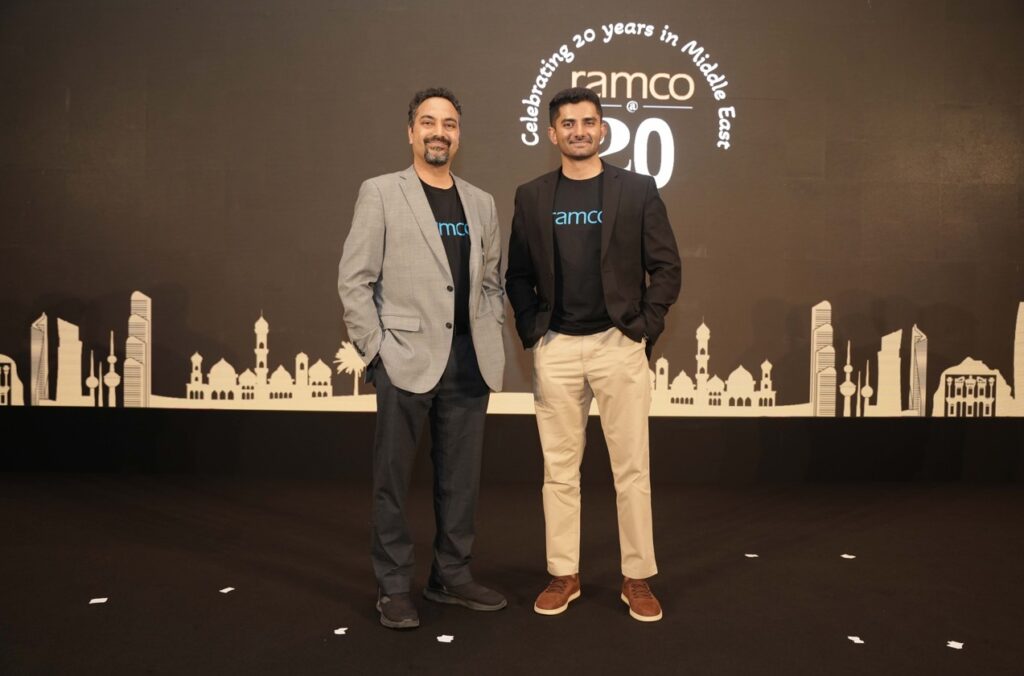
At the media roundtable held in Dubai as part of Ramco@20, Integrator had a front-row view into the company’s transformation; one that is not just incremental but architectural. From pioneering client-server systems to shaping modern SaaS platforms, Ramco has long played in the innovation lane. But what they are now setting their sights on could reshape the enterprise software landscape once again: AI-native enterprise systems.
From System of Record to System of Intelligence
Ramco’s next strategic leap is a shift from traditional enterprise software—rigid, transactional, and complex, to a fluid “system of intelligence.” Imagine an enterprise app that doesn’t wait for instructions but proactively surfaces insights, flags anomalies, and allows employees to manage operations through natural conversation. That is the future Ramco is building toward.
One of their strongest verticals HR and payroll, illustrates this ambition. They already support organizations with massive workforce structures, including companies with over 100,000 employees and more than 1,000 pay components. Under an AI-powered interface, many of these complicated workflows will compress into simple prompts, removing friction from one of the most complex business domains.
A ChatGPT-Like Canvas for Enterprise Work
The company demonstrated an early preview of its conversational interface; a clean, unified canvas where users can query pending purchase requests, generate reports, or even create purchase orders using a single natural language prompt. The UX remains consistent for all, but the underlying workflows, context, and AI-generated outputs adapt to individual users and company-specific processes.
But the most compelling use cases emerged when the discussion shifted to aviation; a sector where Ramco already has deep domain expertise.
AI on the Hangar Floor: A Glimpse into Aviation’s Future
Picture a technician standing beside a massive aircraft engine, disassembling components, identifying faults, replacing parts, and logging every detail meticulously. Aviation is unforgiving—every part must meet airworthiness standards, track flying hours, and comply with stringent regulations. Only certified personnel can work on the engine, and even the tools they use must be OEM-mandated.
Now layer AI into that setting.
As a technician opens an engine and reports an issue—say, a damaged blade—the AI instantly scans 15–20 years of historical maintenance data. It recognizes patterns and alerts the technician:
“John, you’re replacing this blade on an A380. Historically, whenever this part is replaced, another related fault tends to appear within eight months. Would you like to inspect that area as well?”
This is not a textbook recommendation. It is institutional memory, decades of real-world faults and fixes, surfacing as real-time intelligence. The system becomes a second expert on the floor, conversing with technicians, guiding actions, and ensuring nothing slips through the cracks. This simple conversational canvas, Ramco argues, has the potential to reshape ground-level operations in one of the world’s most complex industries.
The Critical Question: What About Data Privacy?
As enterprise AI evolves, the most pressing concerns are no longer about innovation; they’re about protection. So, we asked the question that matters most: How does Ramco secure customer data in an AI-driven future?
Their answer was reassuringly clear:
- All AI workloads are hosted locally within the customer’s private environment.
- Data never leaves the region. Workloads are deployed in the customer’s local data center.
- Every customer gets an isolated AI instance. No shared environments, no cross-pollination of data.
- No external web calls, ensuring full containment and compliance.
In an era where enterprises fear the opacity of AI, Ramco is betting on transparency and regional sovereignty.
The Road Ahead
Ramco’s mission is ambitious: to redefine enterprise apps through AI and shift the industry from systems that store data to systems that think. And based on what we witnessed at Ramco@20, this is not a distant vision; it is already taking shape on factory floors, in payroll departments, and inside aircraft hangars.
The next era of enterprise software won’t just automate processes. It will understand them. And Ramco is positioning itself to become one of the first global players to make that leap—from record-keeping to intelligence-building—right here in the region.