Home Integrator
A FRESH PERSPECTIVE ON RESIDENTIAL DESIGN

Exclusive interview with Noor Al Muhaideb, founding partner, Opaal interiors.
Noor, you’ve been designing since your AUSD days and now lead Opaal Interiors, what was the pivotal moment when design switched from passion to purpose in your life?
Design has been an enduring passion from an early age, where I found myself drawn to patterns, spaces, and materials. This soon became a professional purpose during my formative years at the American University of Sharjah (AUSD) and subsequently throughout my tenure at Emaar Properties. At AUSD, I refined my technical skills, deepened my understanding of spatial planning, and cultivated a disciplined approach to design. This foundation allowed me to transform instinctive creativity into a structured, impactful practice.
Earlier in my career, I witnessed firsthand how interiors influence lifestyle, wellbeing, and daily experience, far beyond aesthetic considerations. Leading complex residential and hospitality projects revealed the profound effect of thoughtful planning and detailing on occupants’ quality of life. Today, I always look forward to creating environments that are emotionally resonant, where every detail contributes to a meaningful, lived experience.
As founding partner and a lead creative designer, how do you balance executive leadership with creative direction?
At Opaal, leadership and creativity are inseparable yet distinct. My role requires overseeing the strategic growth of the firm including, client engagement, project delivery and operational excellence, while simultaneously shaping the creative vision of every project.
Creativity is the core of our work, which is why nurturing talent is a priority. We encourage young designers to contribute ideas boldly, experiment within project parameters, and take ownership of their work. By fostering this sense of responsibility and creative autonomy, we maintain innovation at the core of our practice while ensuring that every project meets Opaal’s high standards of quality and refinement.
From a business perspective, launching Opaal in a competitive market demanded patience and deliberate strategy. Building a credible client base and reputation took time, particularly when established firms dominated the landscape. By emphasizing meticulous planning and team work, we gradually established trust and credibility.
Adapting to this approach is important for the industry and it is slowly aligning in this direction. For instance, in 2025, over 65 per cent of mid-sized GCC design firms reported collaborative leadership models to balance operational efficiency with creative excellence.
In our industry, this focus ensures that our company remains both a strategically robust business and a leading creative force in the region’s interiors sector.
Opaal emphasizes spaces that feel personal and emotionally grounded. How do you translate a client’s inner world into physical form without losing authenticity?
At Opaal, translating a client’s inner world begins with deep engagement and collaboration. We invest time in understanding their lifestyle and emotional priorities, refining ideas together from concept through execution. Every decision we make, whether it is layout and lighting or materials and textures, it is guided by their identity, ensuring that the space feels authentic and personal. Through this, we create interiors that are functional and refined as well as emotionally resonant, supporting wellbeing and leaving a lasting impression.
As Juan Montoya notes, “A room should never allow the eye to settle in one place. It should smile at you and create fantasy.” This mindset allows our work to remain timeless and meaningful.
Can you walk us through a design decision you made recently, maybe a material, custom joinery piece, or lighting solution, and why it was pivotal to the space’s narrative.
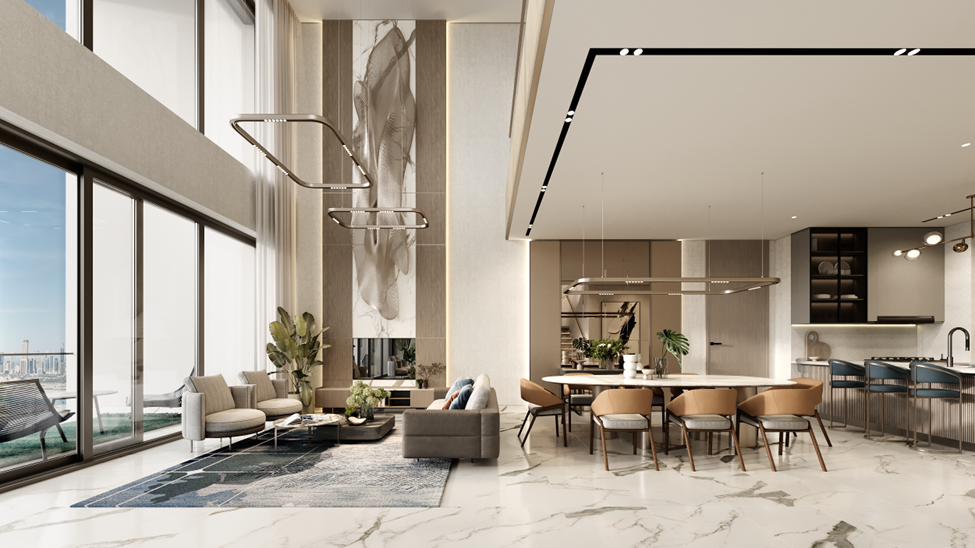
At the MANSORY Residences, we reinterpreted the precision of automotive craftsmanship within a refined residential setting. A custom chaise-like sofa, with a contoured profile inspired by grand tourer seating, anchors the living space with sculptural presence and everyday comfort. The surrounding joinery layers charcoal and graphite tones with cognac leather inlays and brushed metal detailing, balancing strength with warmth. Concealed coves and integrated lighting introduce a soft, ambient glow reminiscent of a luxury dashboard. The result is a composed, immersive environment where bold design is thoughtfully softened for daily living.

How do you balance aesthetic boldness with comfort and emotional resonance, especially in private residential spaces?
Residential design is uniquely distinctive and requires particular care because we are shaping spaces where people live, and rest. For me, bold design is always in service of the people who inhabit a space. Every material, texture, and detail is considered should be more than a visual impact and should focus on how it affects mood and daily life. We firmly believe that a striking feature is only meaningful if it makes the space feel welcoming and emotionally supportive.
We start by understanding how people interact, and experience their homes, then integrate statement elements with restrained palettes, tactile finishes, and bespoke detailing. The goal is to ensure that every home feels personal, which is bold yet restorative.
In an age of fast aesthetic trends, how do you resist momentary visual noise and maintain integrity in your designs?
Maintaining design integrity begins with a clear vision and a deep understanding of each project’s context. We ensure that every decision aligns with the story and purpose of the space, rather than short-lived trends. Moreover, we treat design as a living dialogue between people and their environment.
For example, in the MANSORY Residences by Amaal, Opaal focused on automotive-inspired luxury elements that deliver a consistent, sensory-rich experience throughout the space. The interiors combine bespoke materials, precise detailing, and a thoughtful layout that elevates the concept without resorting to superficial visual effects.
This approach is reinforced by wider industry behaviour where more than 55 per cent of interior designers report that minimalistic and purposeful design is increasingly popular among clients, reflecting a preference for authenticity and longevity over short‑lived trend cycles.
Your recent partnerships, like with MANSORY Residences by Amaal, blend iconic brand identities, how do you approach co-design with global lifestyle brands?
Collaborating with global lifestyle brands requires respecting the brand’s identity while translating it into a tangible, human-centered environment. For MANSORY Residences, our approach began with understanding the brand’s automotive-inspired luxury ethos and the expectations of its residents. We then translated those values into the interiors through bespoke materials, tailored detailing, and spatial planning that reflects both the brand and the lived experience of occupants. We are working closely with the brand, the developer, and other stakeholders to ensure that we meet their standards while keeping our timeless elegance and design elements.