
 Have a question? +971 56 404 0503





Home Integrator
ATARA DEVELOPMENT LAUNCHES THE RESIDENCES AT SHERATON AL MARJAN ISLAND RESORT, GCC’S FIRST SHERATON BRANDED RESIDENCES

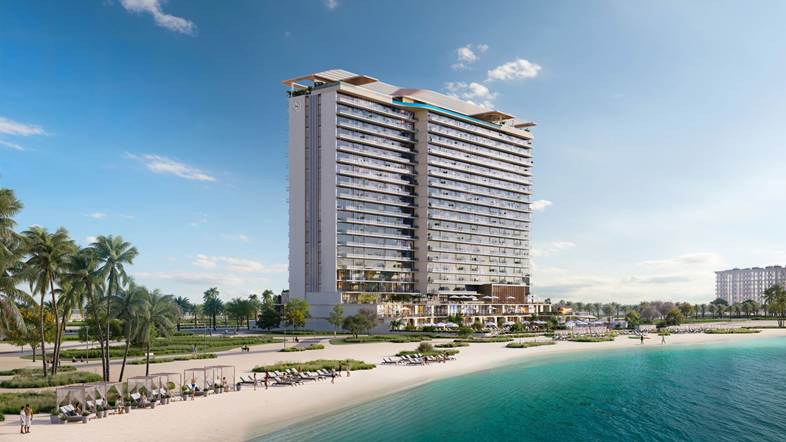
Following its strategic collaboration agreement with Marriott International, ATARA Development has officially launched The Residences at Sheraton Al Marjan Island Resort. The development represents the GCC’s first Sheraton-branded residences, featuring 159 branded apartments scheduled for completion in Q3 2028.
Located on Al Marjan Island, the project blends a refined island lifestyle with exclusive hotel privileges. Positioned near the UAE’s first integrated resort, it places residents at the center of a premier entertainment hub. With sales now officially open, prices for these exclusive waterfront residences start from AED 2.4 Million.
Arch. Abdullah Al Abdouli, Group CEO of Marjan, said, “The launch of The Residences at Sheraton Al Marjan Island Resort represents another significant milestone for Al Marjan Island’s evolution as a premier coastal destination. Developments of this calibre reinforce Ras Al Khaimah’s growing global appeal and demonstrate how branded residential concepts are shaping the future of waterfront living. By bringing together ATARA’s development expertise and Sheraton’s hospitality legacy, this project offers a compelling proposition for residents.
The Residences introduce an elevated waterfront lifestyle, thoughtfully designed to combine resort-style leisure, holistic wellness, and curated social experiences in a vibrant community. Residents enjoy direct access to a private beach and a variety of pools, including a signature rooftop infinity pool, alongside a wellness hub featuring a 9,000 sq. ft. gym, yoga studios, and a spa. Social experiences are centered around a sky kitchen, rooftop lounge, and a 7,000 sq. ft. nightclub, providing vibrant entertainment while preserving residential tranquility. Family-friendly amenities, including indoor and outdoor kids’ play areas, a gaming zone, and an outdoor cinema, complete the offering, supporting modern multi-generational living while reflecting Sheraton’s commitment to comfort, hospitality, and welcoming spaces for all.
Beyond the residence itself, ownership is elevated through ONVIA, Marriott International’s owner recognition platform, which provides exclusive global privileges that take effect immediately upon purchase. Homeowners enjoy instant access to Marriott Bonvoy membership, curated experiences aboard The Ritz-Carlton Yacht Collection, up to 20% off resort dining, and best-in-class concierge services, delivering seamless travel, tailored experiences, and effortless lifestyle management from day one.
Umid Bazarov, Chief Operating Officer of ATARA Development, added, “With the launch of The Residences at Sheraton Al Marjan Island Resort, we are introducing more than a residential project, we are delivering a complete lifestyle ecosystem. Every element, from design and amenities to services and location, has been curated to reflect what today’s discerning buyers expect from branded living. This project is a defining step in ATARA’s journey, strengthening our presence in Ras Al Khaimah while setting new standards for resort-style residences in the region.”
Backed by ATARA’s in-house construction and development expertise, the residences ensure meticulous execution across architecture, interiors, and operational excellence, while benefiting from Sheraton’s globally recognised hospitality DNA.
Jaidev Menezes, Regional Vice President, Mixed-Use Development, EMEA atMarriott International, commented, “The Residences at Sheraton Al Marjan Island Resort brings the Sheraton brand’s rich heritage of service, connection, and comfort into a residential format tailored for modern living. As demand for branded residences continues to grow, this launch reflects our commitment to creating spaces where owners experience a sense of belonging and elevated lifestyle every day. We are pleased to collaborate with ATARA Development to bring this vision to life in one of the UAE’s most promising destinations.”
The launch further reinforces Ras Al Khaimah’s position as a high-growth investment and lifestyle destination, as Al Marjan Island continues to attract globally recognised brands and landmark developments.

by Maria Petrova, co-founder of Zahar Paints
When people think about designing a home, they tend to begin with the big decisions: flooring, furniture, lighting and colour palettes. Art, however, is often treated as something to fill an empty wall, but I have always felt this is one of the biggest missed opportunities in creating a home.
After nearly three decades of working with homeowners and interior designers, I have come to believe that the things we surround ourselves with should reflect who we are.

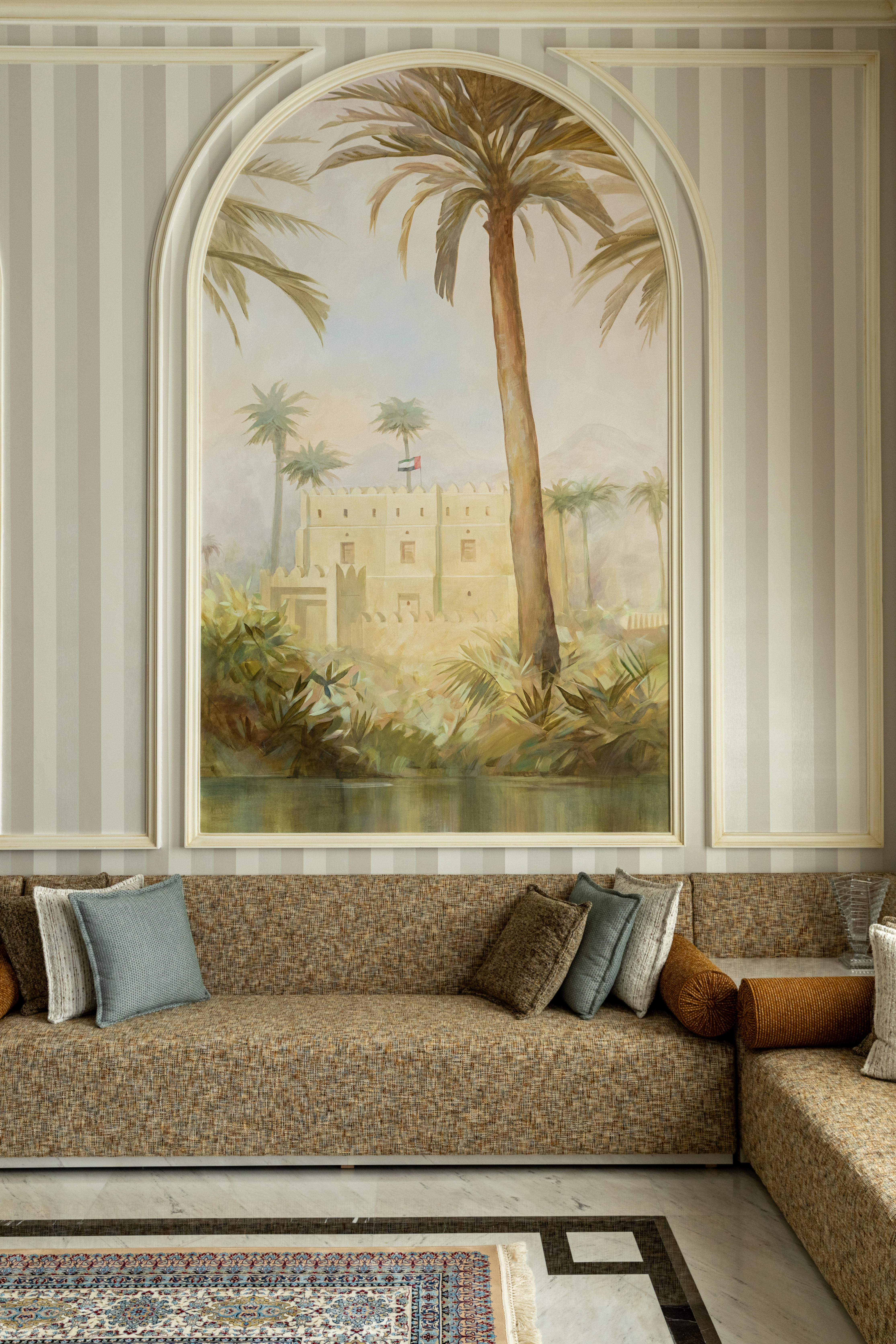
Start looking for art before you build your home
I am often asked when a homeowner should involve an artist in a new build or renovation. My answer is that there is no strict timeline. We can begin working with a family while their home is being designed, or come in after they have moved in and everything is already in place. A good piece of art will always be a great addition.
What matters more is the homeowner’s willingness to participate in the creative process. Sharing references, talking about what inspires you and being open about what you like and dislike can make a tremendous difference to the final result. Equally, if you would rather leave the creative decisions to the artist, you can rely on their experience or explore existing designs that can be recreated in different sizes and colours to suit your interior. My advice is to start looking for art long before you build a home of your own. Visit galleries, explore artists’ work and collect pieces that speak to you. You do not have to know exactly where they will go. Sometimes the home finds its way around the art.
Give the creative process some time
Commissioning a bespoke piece requires communication and a little patience. Photographs or renders of the space, along with references of work you like, are usually a good starting point. A proposal with one or more creative options typically takes three to four working days. Once you have selected a direction, the quotation can be prepared within a day. The artwork itself may take another seven to ten days, with framing requiring an additional two to three days.
A straightforward commission can therefore be completed in around 15 days, provided the client is responsive with feedback and approvals. Larger projects, such as a series of murals or a substantial bas-relief created on site, can take up to two months. I also believe that artists and artisans deserve the time to do their best work. Shipping, schedules and urgent projects can sometimes affect timelines, so if you have a fixed deadline, communicate it from the beginning.
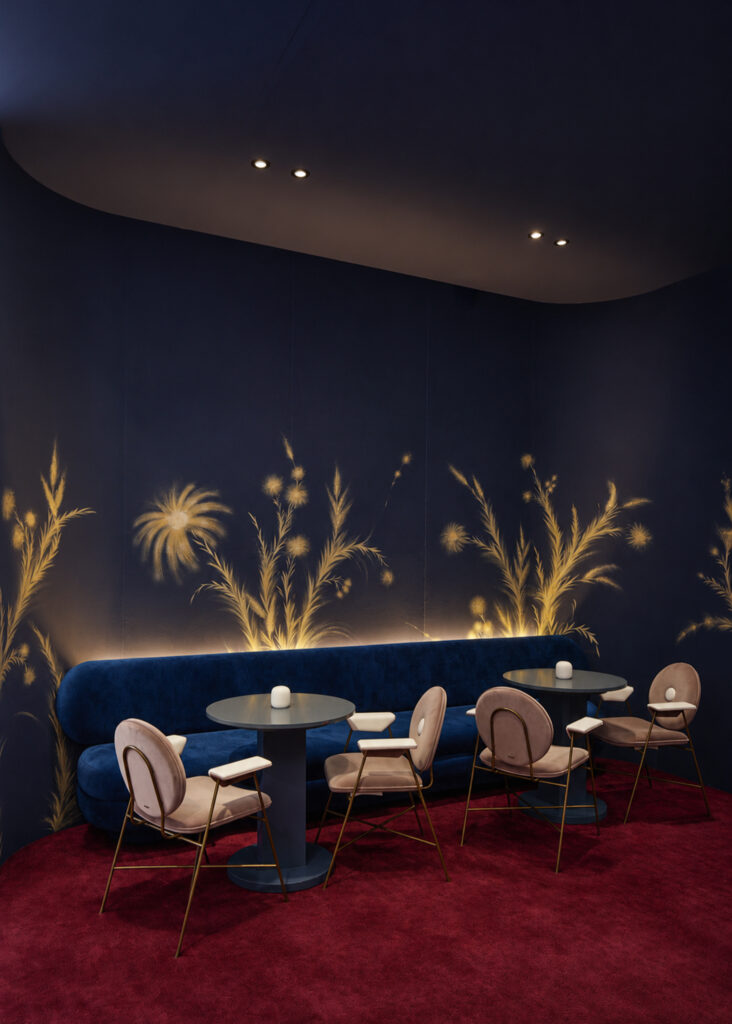
Think about how you will live with it
Homeowners sometimes worry about whether hand-finished artwork is practical for everyday living. Our murals and framed artworks use washable acrylics over a strong canvas fabric, and do not require special care, and the colours do not fade with time or crack. It is also worth thinking about artwork when planning the practical details of a home. I would suggest keeping sockets and screens to a minimum on a mural or bas-relief. Where necessary, sockets can sometimes be made less noticeable with clear finishes, while hand-painted details can be adjusted to accommodate their placement. Lighting is another consideration that is often overlooked. A well-placed lighting point can make all the difference to how an artwork is experienced.
When needed we return to our old clients and extend our support to repair damage caused by leaks, cracks or renovations. The oldest artwork of ours that we are still in contact with dates back to 2003, and it continues to look beautiful.
Build a collection, not just a room
One of the most common surprises when people approach us for bespoke decorative work is the price. There is often an expectation that a unique hand-painted artwork or custom-made mural should cost roughly the same as something purchased from a home store or ordered online. It can’t, for obvious reasons. However, bespoke art doesn’t have to break the bank.
Hand-painted wallpaper panels from houses such as De Gournay or Fromental can be framed and hung as individual artworks. Watercolours, prints, seashells and wood carvings can all find a place in interesting frames. Do reach out to artists, the prices may pleasantly surprise you.
I would leave homeowners with one little piece of advice: please keep a certain percentage of your decoration budget aside for the things that make the interior feel personal. The furniture, marble and joinery may set the scene, but it is always the art, the accessories and the little details that make you feel that your home truly belongs to you.
Home Integrator
Construction Professionals Trust AI with Complex Work, but Confidence Falls by Around Half When AI Decides

New research from PlanRadar, a leading AI-powered platform for 360° digital documentation, communication and reporting in construction, facility management and real estate projects, suggests that construction professionals are confident in AI taking on complex project work, as long as a person makes the final decision. Confidence falls by around half when AI makes a project decision itself, compared with when AI prepares the work or advises on it.
Yet only one in five respondents have built AI into how the work runs, through automated workflows or AI agents, at a time when the experienced professionals that complex project work depend on are increasingly hard to find.
The research measures confidence through the Construction AI Confidence Index, which scores respondents’ confidence in AI performing 18 everyday project tasks on a scale from −100 to +100. In tasks where AI prepares the work or advises on a decision, including demanding tasks such as building the case in a delay dispute or optimizing the project schedule, the average confidence score is +43. In tasks where AI makes the decision itself, for example signing off a defect fix, the average confidence score falls to +20. Confidence stays on the positive side in both cases, but drops once AI, rather than a person, makes the final call.
The reasons respondents give for low confidence help explain why it falls where AI makes the decision. Concerns about AI’s accuracy and the need for human judgement are the two most cited, with 70% of respondents naming one or both. When AI prepares the work or advises on it, a person reviews the output and can catch a mistake before it affects the project. When AI makes the decision itself, there is no person in between to review it before the work moves on.
“Experienced construction professionals carry the decisions that determine whether a project succeeds, and they are right to want those decisions to stay with them. Our research indicates that the line they draw is about who decides, not how difficult the work is. AI should do the groundwork, so that their years of learned judgement go into the decisions only they can make. In an industry where experienced people are increasingly hard to find, organizations that do not use AI in this way are asking their best people to spend time on work that AI could take on,” said Ibrahim Imam, PlanRadar Group Co-CEO.
GCC is the most confident market in the survey, with an overall Construction AI Confidence Index score of +49, compared with +35 globally. Confidence in AI deciding is +43 in the GCC, around twice the global figure of +20. GCC respondents also name fewer reasons for low confidence than in any other market: 59% cite trust in AI’s output and 38% cite AI not knowing the site, compared with global figures of 70% and 53%. They expect a broad range of gains from AI: 79% name efficiency, 65% better quality, 59% gains for people and 29% enabling scale; the last three are above the global figures.
According to the Royal Institution of Chartered Surveyors (RICS), a shortage of mid-career and experienced professionals is the most cited cause of skills shortages in every region, named by 60%¹ of the surveying professionals worldwide in its research. In Europe, 61%² of respondents to its Global Construction Monitor cite skills shortages as a factor holding back construction activity, a share that rose over the previous quarter. For organizations facing that pressure, PlanRadar’s research points to help that professionals are ready to accept, but most have not yet built it into how the work runs.
Progress in adopting AI is slow even among teams that already work digitally. Of the respondents who manage construction and handover processes in a central digital platform, two in five report integrated AI functionality, little more than in PlanRadar’s previous survey nine months earlier³.
Respondents also identify what AI needs before it can take on more of the work. More than half (53%) cite AI not knowing the construction site as a reason for low confidence, whether because of poor or incomplete project data, doubts about AI’s ability to interpret 3D models or site imagery, or both. In other words, confidence in AI also rests on the quality of the project information it works from.
“For AI to earn its place on a construction project, it has to understand the project as it really is, not just the documents it is handed. That means knowing its plans, what is happening on site, and the company and industry standards the work has to meet. Even in the GCC, where confidence in AI is the highest, 38% of respondents cited AI’s lack of site knowledge as a reason for low confidence. This highlights the importance of AI tools having access to accurate, up-to-date project information to deliver reliable results,” continued Ibrahim.
For businesses planning to implement AI into their operations, industry expectations can help shape key performance indicators. In the GCC, 79% expect efficiency gains, 65% better work quality, 59% employee benefits and 29% greater scalability, providing clear priorities for measuring success.
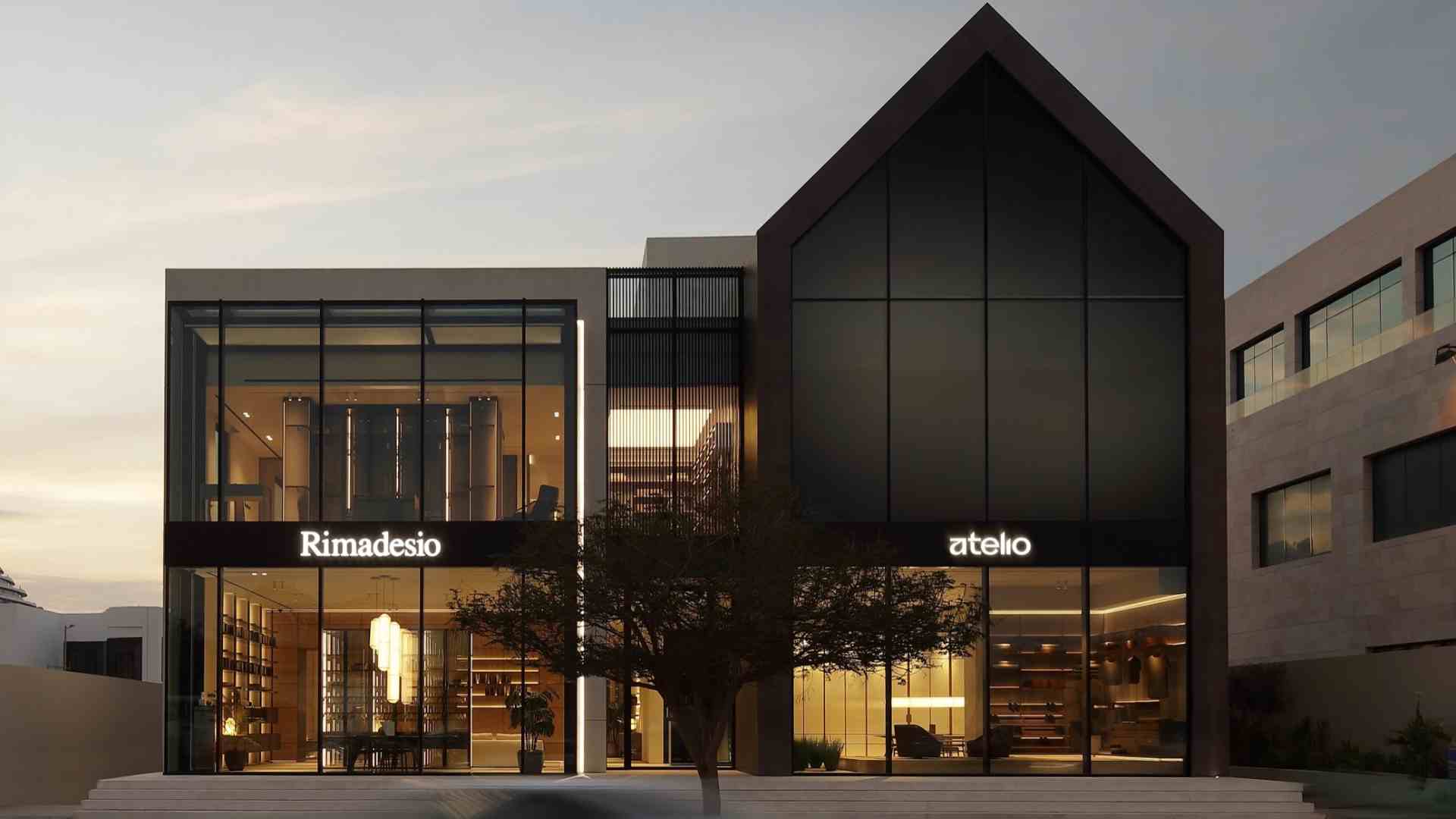
Atelio, the region’s leading destination for design furniture and collectible design, announces the opening of the UAE’s first monobrand showroom dedicated to Rimadesio, the Italian design company renowned for its integrated approach to interiors. Funded, developed and operated by Atelio, the showroom marks a new chapter in Rimadesio’s international expansion and reflects Atelio’s continued investment in bringing exceptional design brands to the region.
Founded in 1956 in Desio, Italy’s Brianza furniture district north of Milan, Rimadesio combines seven decades of manufacturing expertise with a culture of continuous research and product development. Still led by the Malberti family, the company brings together precision engineering, a Made in Italy heritage and a commitment to sustainability that informs its choice of materials, production processes and enduring design.
Located on Jumeirah Street, in Dubai’s prestigious coastal district, an established destination for luxury interiors, the new 700 sqm showroom joins Rimadesio’s international network of more than 90 monobrand showrooms and six flagship stores, including Milan, London, Paris, New York, Miami and Shenzhen.
“Rimadesio is a natural addition to the Atelio portfolio, with its systems-based approach closely aligning with our vision of creating complete, integrated interior environments,” comments Elie Khouri, Founder of Atelio and Chairman of Vivium, the family office behind Atelio. “Its arrival in Dubai reflects our commitment to bringing exceptional international brands to the Middle East, contributing to the region’s evolving design culture and enriching the way architecture and interiors are experienced.”
“Opening a monobrand showroom in Dubai marks an important milestone for Rimadesio,” adds Davide Malberti, CEO of Rimadesio. “The city has become one of the world’s most dynamic centres for architecture and design, making it the ideal location for our latest opening in the region. Together with Atelio, we look forward to sharing our design philosophy with an audience that values quality, craftsmanship and considered design.”
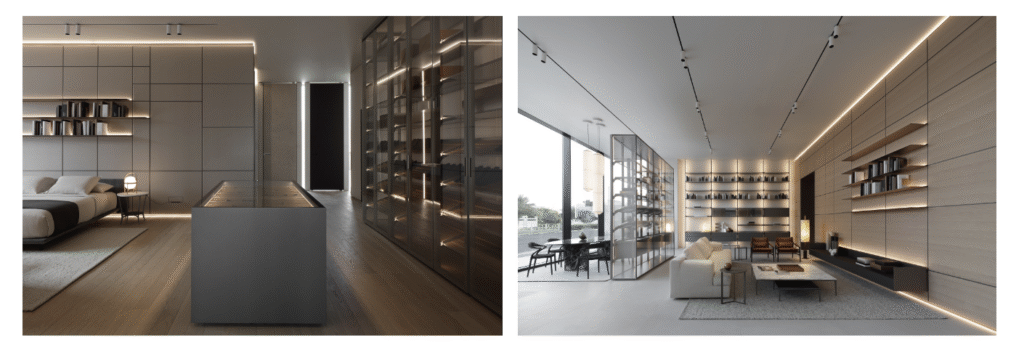
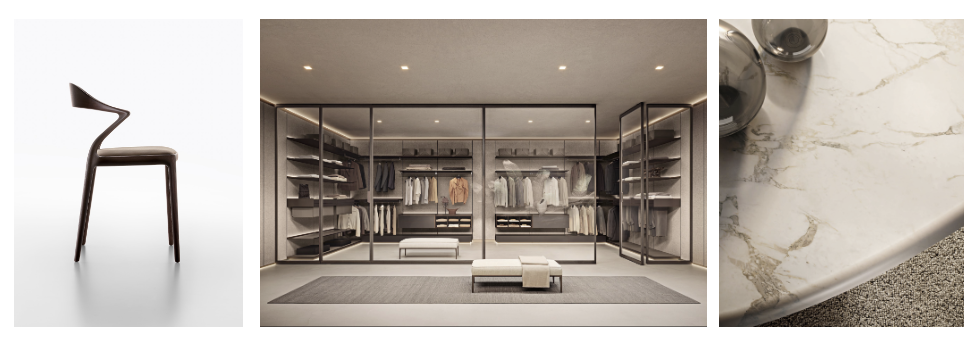
New introductions include the Air Regular Syncro sliding system and Air Plus pivot doors, alongside seating designs ranging from the visual lightness of Wabi to the softness of the Nest swivel chair. Ground-floor window displays feature the Hedon walk-in closet and a three-metre Lambda table in Verde Lepanto marble. Upstairs, a master bedroom setting combines Cover, the Altair double-sided cabinet system and Modulor wall panelling, illustrating the versatility and sophistication of Rimadesio’s design language.
Environmental responsibility remains fundamental to Rimadesio. The company uses recyclable aluminium and glass, Ecolorsystem lacquered glass finished with water-based paints, and packaging made from 90% recycled cardboard. Its use of solar energy in manufacturing further supports this commitment to reducing its environmental impact.
“Today, expectations around interior design have evolved significantly,” comments Ruggero Ottogalli, CEO of Atelio. “Clients are increasingly looking for solutions that are tailored to their individual needs and that adapt to the way they live. Having a dedicated showroom allows private clients and the design community to experience Rimadesio’s architectural approach firsthand, creating a place for inspiration, collaboration and specification.”


WebEngage international market hits 3x in ARR, five months ahead of its FY27 exit target

How Siyam World Built a Maldivian Resort Around Play

The Art of Making a House Your Own

OPPO A6 Pro 5G Review: Reliable Daily Driver

Denodo Bolsters Executive Team by Hiring Christophe Culine as its Chief Revenue Officer

Microsoft Launches New Surface Copilot+ PCs for Business

2026 in Review: Is AI Becoming More of a Management Problem Than a Technology Problem?

Inside XPENG Brand Night: AI Mobility Lands Centre Stage in Dubai

Chinese Cars Are Reshaping the GCC Market, but Resale Value Could Be the Next Battleground

-
 Trending1 year ago
OPPO A6 Pro 5G Review: Reliable Daily Driver
-
 Tech News2 years ago
Denodo Bolsters Executive Team by Hiring Christophe Culine as its Chief Revenue Officer
-
VAR2 years ago
Microsoft Launches New Surface Copilot+ PCs for Business
-

 Automotive2 years ago
AGMC Launches the RIDDARA RD6 High Performance Fully Electric 4×4 Pickup
-

 VAR12 months ago
Huawei Nova 14 Pro Review: Where Camera Excellence Meets Ecosystem Evolution
-
Tech Interviews3 years ago
Navigating the Cybersecurity Landscape in Hybrid Work Environments
-

 Hospitality2 years ago
Gulfood 2025 30th Edition Kicks Off Today, Setting New Benchmarks in F&B Growth and Innovation
-
News4 years ago
BenQ ZOWIE : First TN 360Hz DyAc+ Gaming Monitor