Financial
RISK, RESILIENCE AND A 96 PERCENT: WHAT ACCA’S TOUGHEST PAPER TAUGHT ME ABOUT STRATEGY


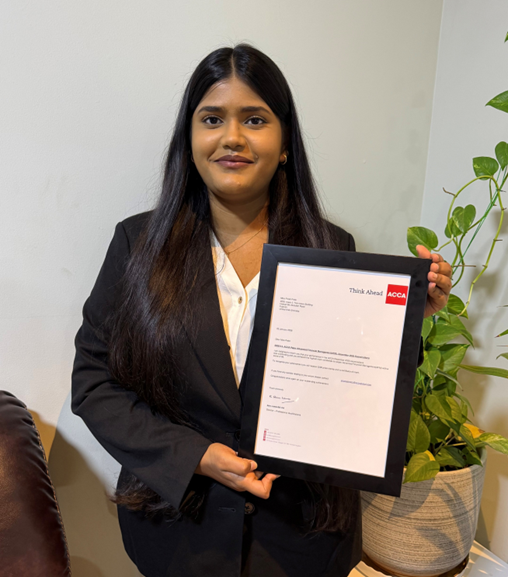
Preeti Peter, student – BCom ACCA – MAHE Dubai
Advanced Financial Management is a paper that separates theoretical knowledge from applied thinking. It tests your ability to make strategic decisions under uncertainty, weighs competing risks in real time, and defends your reasoning when there is not one right answer. The pass rates reflect that difficulty. When I sat for the exam, World Rank 1 was never the target, surviving the paper with credibility was. I scored 96 out of 100. But the number, on its own, tells you very little. What matters is what the journey demanded: a complete rewiring of how I approached preparation, pressure, and failure.
Treating preparation like a financial model
Early on, I made a decision that changed everything: I would stop following a generic study plan. Instead, I approached my preparation the way an analyst might approach a sensitivity analysis. I tested variables by studying at different times of the day, experimenting with visual mapping versus deep reading. Each iteration helped me identify what produced the best results for my learning style.
This was about precision, not volume. In finance, we talk about capital allocation, where you deploy resources matters more than the sheer amount available. I applied the same logic to my time. High-yield areas got the most attention. Weak spots got targeted effort. Comfortable topics got less.
Strategy is not a luxury reserved for boardrooms. It belongs in every decision you make.
The negative cash flow phase
There is a phase in every long-term project, financial or otherwise, where the output does not match the input. In corporate finance, we call this negative cash flow. You are investing, and the returns have not materialised yet.
My first few weeks of AFM preparation felt exactly like that. I was putting in the hours, but comprehension was patchy. It would have been easy to panic or abandon ship for a different approach.
Instead, I recognised the phase for what it was: temporary. Every business that reaches breakeven has survived this stage first. I leaned into discomfort, trusted the process, and kept showing up. Slowly, the fog lifted.
That early patience was critical. If I had changed course every time results lagged behind effort, I would never have built the understanding that carried me through the exam.
Discipline over motivation
There is a popular idea that success comes from being motivated. I found the opposite to be true. Motivation is unreliable, it fluctuates with your mood, your energy, a difficult question that throws you off balance.
What carried me was routine. I built a daily structure that operated regardless of how I felt on any given morning. Good days and bad days received the same treatment: sit down, open the material, work through the plan.
During my time at Manipal Academy of Higher Education Dubai, I learned to value consistency over intensity. Resilience, I realised, is not about gritting your teeth and pushing through pain. It is about designing a process robust enough to function even when you are running on empty.
Confronting discomfort deliberately
One of the more counterintuitive lessons AFM taught me was about comfort zones. When preparing for a high-stakes exam, there is a strong temptation to practise what you already understand. You move through questions quickly, confidence builds, and the work feels rewarding.
But that feeling is misleading. The topics I avoided, the ones that made me uneasy, the questions I got wrong repeatedly were precisely where the growth was. I started restructuring my study sessions to front-load the most difficult material. If a topic made me uncomfortable, it went to the top of the list.
Over time, those uncomfortable sessions became the foundation of my exam performance. The questions that would have caught me off guard were the ones I was most prepared for.
Managing pressure, not just content
I remember finishing a mock exam and feeling genuinely defeated. The time pressure had overwhelmed me. I knew the material but knowing the material and performing under timed conditions are two very different skills.
That experience changed my approach. I began treating exam technique as its own discipline, separate from subject knowledge. I practised under strict time limits and developed a method for approaching unfamiliar questions: pause, outline, then write.
On exam day, there were moments where questions looked unfamiliar at first glance. Instead of panicking, I paused, outlined a structure, and worked through each part methodically. I finished on time, with every question addressed.
The real lesson: stress does not disappear because you have prepared well. You simply get better at functioning within it.
Feedback as fuel
A score of 96 percent might suggest a clean, linear path to the top. The reality was messier. Mock results were humbling. Feedback on practice answers was sometimes blunt.
But I made a conscious decision early on, I would treat every piece of critical feedback as information, not as judgement. If a mock answer missed the mark, I wanted to understand why so, to close the gap between where I was and where I needed to be.
That openness to correction was, I believe, one of the most important factors in my result. The students who improve fastest are rarely the most talented. They are the ones willing to be told they are wrong and to adjust accordingly.
Beyond the exam
World Rank 1 was a rewarding outcome. But the rank is a snapshot, a single data point from a single day.
Structured thinking. Disciplined preparation. The ability to remain calm when the stakes are high. A willingness to sit with discomfort rather than avoid it. These are not exam skills. They are life skills.
AFM taught me that risk is not something to fear. It is something to understand, to price, and to manage. That principle holds whether you are valuing a derivative or deciding how to spend your next hour. The same applies to every challenge worth pursuing.