Hospitality
HOW CHEF DHIMAS SHAPES MODERN ASIAN FINE DINING


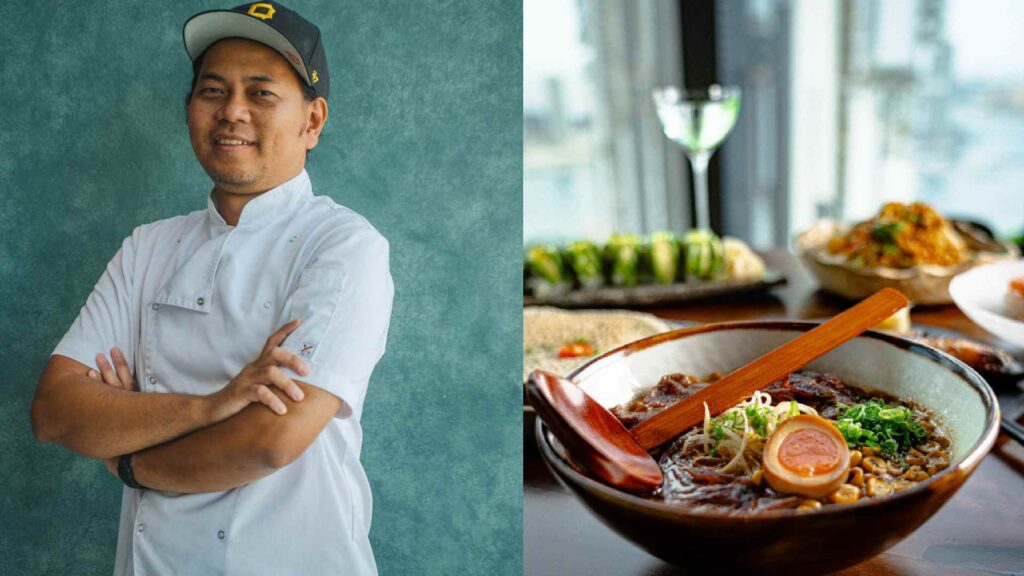
Interview with Chef Dhimas, Head Chef (Papafuku, Velvet Social & The Office)
Your career spans luxury resorts, high‑volume kitchens, and fine‑dining concepts across the world. Which early experience most shaped your culinary philosophy today?
The experience that shaped me most was working in my early years within disciplined luxury resort kitchens where precision was everything. In those environments, you learn quickly that consistency is not optional – it is the foundation of credibility. When you are cooking for guests who have travelled across the world, expectations are high and there is no room for ego.
At the same time, growing up in Indonesia surrounded by bold Southeast Asian flavours gave me a deep emotional connection to food. Food was never just about presentation; it was about memory, warmth, and generosity. That contrast between strict classical techniques and deeply rooted Asian flavours shaped my approach today.
I believe great cuisine must balance discipline and soul. Technique builds structure, but flavour tells the story. Whether I am working on an elevated Asian fine-dining plate or a more accessible concept, that philosophy remains the same: respect ingredients, respect the guest, and respect the craft.
Pre‑opening kitchens are high‑pressure environments. Beyond menu development, what does your role truly involve during a launch?
Menu creation is actually the smallest visible part of a pre-opening role. Pre-opening is about building culture before the first guest walks through the door. It involves recruitment, training, supplier alignment, cost engineering, kitchen layout planning, workflow efficiency, tastings, standard operating procedures, and creating systems that allow creativity to survive under pressure.
You are not just designing dishes; you are designing an ecosystem. At Papafuku, Velvet Social, and The Office Restaurant, my responsibility is to ensure that each kitchen operates with clarity from day one. That means mentoring young chefs, setting standards for hygiene and discipline, aligning with procurement teams, and constantly testing recipes to ensure scalability without compromising quality.
Opening multiple venues simultaneously requires emotional resilience. There are long days, shifting timelines, and constant problem-solving. But if the foundation is strong: the right team, the right systems, the right mindset, service becomes an execution of preparation rather than a reaction to chaos.
Each of your venues has its own identity. How do you ensure every menu communicates a unique story without overlap?
For me, a menu must feel like a reflection of the venue’s identity, not just a collection of dishes. At Papafuku, the approach is bold, modern Asian with an edge, refined yet playful. The menu leans into vibrant flavours, dynamic plating, and a social dining, designed to feel exciting, expressive, and layered.
Velvet Social, on the other hand, carries a more elevated, atmospheric personality. The dishes are more crafted to complement the mood and experience.
The Office Restaurant is structured differently as well. It requires comfort, accessibility, and familiarity while maintaining quality and creativity.
To keep these identities distinct, I begin by asking: What emotion should the guest feel here? Is it nostalgia? Excitement? Intimacy? Celebration? From there, flavour profiles, plating style, portioning, and even ingredient sourcing evolve accordingly. The discipline lies in ensuring there is no overlap in personality. Each venue should feel like stepping into a different chapter, not a repetition of the same idea.
You’ve cooked for royalty, global icons, and large‑scale banquets. How have these experiences influenced your leadership style and composure in the kitchen?
Cooking for royalty and high-profile guests teaches you that pressure is part of the profession, but panic should never be. When preparing for a banquet of several hundred guests or a private dinner for dignitaries, there is no second chance. Every plate must be identical. Every timing must align. That environment trains you to stay calm under scrutiny.
The biggest lesson I learned is that the kitchen mirrors its leader. If the head chef loses composure, the team follows. If the leader remains steady, the team feels secure. Today, regardless of whether we are serving a celebrity, a corporate group, or a family celebrating a birthday, I treat each service with the same respect. True professionalism is consistency under all circumstances.
What is one common misconception about chefs that you feel needs to be corrected?
The biggest misconception is that chefs are driven by ego or personal creativity alone. In reality, great chefs are service-driven. Our work exists for the guest. Creativity is important, but it must be functional. A beautiful dish that disrupts service flow or confuses the guest is not successful.
Another misconception is that leadership in the kitchen means being aggressive. Modern kitchens require emotional intelligence. Mentorship, communication, and psychological safety create stronger teams than fear ever could. The industry has evolved. Today, strength in the kitchen is defined by discipline, empathy, and accountability.
You’re known for mentoring young chefs. What is the first lesson you instil in your team when they join your kitchen?
The first lesson I instil is humility. No matter how talented you are, there is always more to learn. Technique can be taught. Attitude cannot. I encourage my teams to understand that repetition builds mastery. Cutting vegetables perfectly every day may seem simple, but that consistency defines professionalism. Small details compound into excellence.
I also emphasise ownership. Every dish leaving the pass represents the entire team. When young chefs begin to take pride not only in their station but in the overall success of service, they grow much faster.
Quick Questions
One word that best describes your cooking philosophy?
Balance.
What’s the biggest challenge when opening multiple venues simultaneously?
Maintaining consistency across different concepts while building separate team identities at the same time. It requires clarity of vision and strong delegation.
One ingredient you can’t live without in the kitchen?
Soy sauce. It is foundational in many Asian cuisines, and its depth, saltiness, and umami can transform even the simplest preparation into something memorable.
A cuisine outside Asia that inspires you most?
French cuisine. Its structure, sauces, and classical techniques provide a strong backbone that complements Asian flavours beautifully.