Home Feature
WHY THE UAE REAL ESTATE MARKET REMAINS RESILIENT

By Twinkle Aswani, editorial division, Integrator Media
Every time global headlines turn uncertain, the same question quietly returns to the real estate conversation, will the market slow down?
In many parts of the world, the answer is often yes. Investor sentiment can shift quickly, projects pause, and transactions begin to reflect caution. Yet the UAE, has consistently demonstrated that its property market behaves differently. What we are seeing today is not a market reacting to short-term events, but one operating on a longer, more confident trajectory.
The numbers alone tell an important story. Dubai recorded more than 270,000 real estate transactions worth AED917 billion in 2025, marking its strongest year on record. But beyond the headline figures lies something more significant — a market built on structural confidence rather than speculative momentum.
“The UAE real estate market is staying resilient because it is built on strong fundamentals, clear regulation, and long-term confidence rather than short-term sentiment,” explains Ibrahim Imam, Co-CEO of PlanRadar. “In Dubai alone, the market recorded more than 270,000 transactions worth AED917 billion in 2025, its strongest performance to date, which shows the depth of investor confidence entering this period.”
Those fundamentals are hard to overlook. The UAE has spent years building a real estate ecosystem that prioritises transparency, investor protection, and strategic urban planning. It’s a framework that allows the market to continue moving forward even when external factors shift.

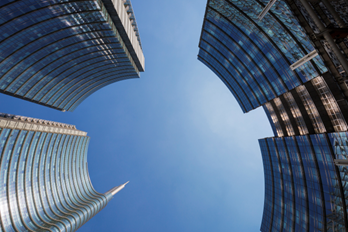
Another reason the sector remains steady is the way developments are planned. Unlike speculative markets that rely heavily on rapid cycles, major projects in the UAE are typically structured years in advance, both financially and operationally.
“Dubai’s real estate market continues to demonstrate resilience, supported by strong economic stability, investor-friendly regulations, and long-term development planning,” says Michael Belton, CEO of MERED. “Most large-scale projects are financed and scheduled years in advance, allowing construction and delivery timelines to proceed regardless of short-term regional developments. The emirate also benefits from a highly international investor base, which helps diversify demand across different geographies and economic cycles. While some investors may temporarily adopt a wait-and-see approach, particularly during seasonal travel periods, long-term confidence in Dubai remains strong. Design-led developments with strong investment horizons continue to attract globally diversified buyers focused on stability and long-term value.”
This long-term outlook has created a development environment where momentum rarely depends on immediate sentiment. Even when some investors adopt a temporary wait-and-see approach, often influenced by travel seasons or global headlines, the broader market remains active.
Equally important is the diversity of buyers entering the UAE market. Investors today come from a wide range of international markets, which naturally spreads demand across different economic cycles. That global mix has helped the sector maintain stability in moments where other property markets might experience sharper fluctuations.
At the same time, the conversation around real estate in the UAE is no longer limited to transactions and investment returns. Increasingly, it is also about the evolution of design, sustainability, and how people want to live in rapidly growing cities.
“The UAE’s architecture and design sector remains resilient and continues to prosper,” notes Nataliia Melnyk, Founder of NKEY Architects. “Ongoing projects across the country reflect the industry’s stability and commitment to innovation.”
Architects are increasingly integrating sustainable materials, smart technologies, and more thoughtful spatial planning into developments across the region. Melnyk points out that this momentum is reflected in the firm’s own growth, with more than 200 projects currently underway in the UAE as part of a global portfolio of over 500.
For many international firms, Dubai has become more than just a market — it has become a strategic base for long-term regional expansion.

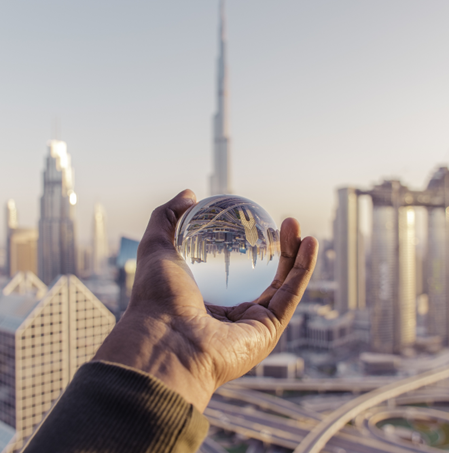
All of this points to a larger shift in how the UAE real estate sector is evolving. The market is no longer defined by cycles of rapid booms and corrections. Instead, it is gradually maturing into a globally integrated property ecosystem shaped by infrastructure investment, population growth, and a steady pipeline of design-led developments.
Resilience, here, is not just about weathering uncertainty. It is about continuing to build and rise above it. From progressive policy frameworks to sustained infrastructure investment and strong investor confidence, the country has cultivated a stability that reassures markets and encourages long-term commitment.
And perhaps that is why the UAE’s property sector continues to stand apart during moments when other markets hesitate. The foundations supporting it – strong regulation, global investors, and a clear long-term vision were designed precisely for times like these.