Hospitality
KERTEN HOSPITALITY ON CRAFTING EXPERIENCES ROOTED IN STORYTELLING, CULTURE AND COMMUNITY


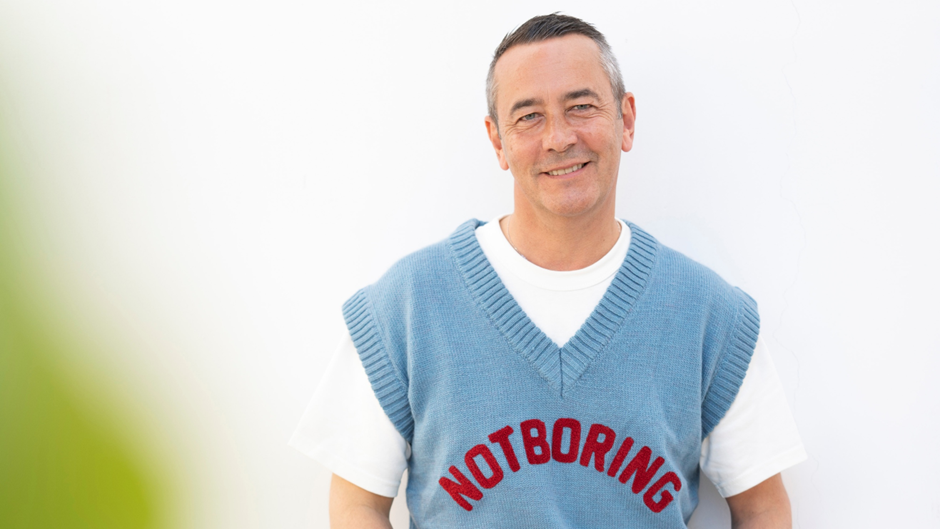
Exclusive interview Antony Doucet, Chief Experience Officer, Kerten Hospitality
You were part of the editorial team for the Louis Vuitton City Guide. How did storytelling shape your philosophy around guest experience today?
While I was in Istanbul, I had the opportunity to be part of the editorial team of Istanbul Louis Vuitton City Guide for the food scene. What I learned from this experience is that places are never just places; they are layered stories. At Louis Vuitton City Guide, the work was not simply about listing where to go or eat, but about understanding a destination through its people, rituals, textures and contrasts. That shaped the way I think about hospitality today. A hotel or branded residence should not feel like an isolated object dropped into a location. It should feel like an entry point into a wider cultural narrative – as an integrated part of a lifestyle ecosystem where people live, work, socialise, shop and dine.
Storytelling is what transforms a stay into a memory, an emotional experience. Guests may remember a beautiful room or a good meal, but what stays with them is often the feeling that they touched something real: a local craft, a neighborhood rhythm, a conversation, a point of view. That is why I believe guest experiences must have emotional depth. Design, music, food, art and community programming are all narrative tools. When used well, they create belonging, curiosity and connection. That is the kind of hospitality we aim to build at Kerten Hospitality: not generic luxury, but meaningful immersion.
Winning Hospitality Executive of the Year in KSA recognizes leadership impact, what leadership philosophy has guided your journey?
My leadership philosophy is built around three principles: honesty, generosity, and cultural curiosity. Honesty matters because hospitality is a business of many moving parts, and people need a clear sense of purpose. Generosity matters because our industry is about people taking care of people: guests, teams, owners and communities. Cultural curiosity matters because we operate across very different markets, each with its own codes and aspirations.
I do not believe leadership in hospitality should be purely top-down. The strongest ideas often come from listening closely to local teams, artisans, residents and guests. You can only create relevant hospitality if you are paying attention to what already exists around you. I also believe in building brands with soul and meaning. Commercial success is key, but the most successful projects are the ones that create emotional relevance.
Kerten Hospitality entered 2026 with the signing of over 1,000 new keys and multiple openings planned across MENA and Europe. From an experience perspective, how do you scale growth without losing emotional authenticity?
Scaling without losing authenticity requires discipline. The mistake many hospitality groups make is replicating formulas too literally. At Kerten Hospiltality, we scale through principles, not through sameness. We have a framework of guidelines, not brand standards, on top of which we curate bespoke features for each project. We never copy-paste previous successes; we curate new ones.
What remains constant is our approach: community integration, design with local relevance, experiences rooted in culture and a strong sense of place. A property in AlUla should not feel like one in Cairo, Zanzibar or in Rome. Each project needs its own local language, social rhythm and ecosystem. To preserve authenticity, we spend time understanding the DNA of each location before finalizing the experience framework. Who are the local artisans What is the creative scene? What are the culinary references? How do residents gather? What can we add of new and fresh value to the destination? These questions matter as much as room typologies or F&B positioning.
How important is cultural adaptability when designing experiences for the Middle East’s diverse audience?
It is essential. The Middle East is often seen as one market, but in reality, it is deeply nuanced. The expectations of a guest in Kuwait, Riyadh, Dubai, Jeddah, Aqaba or Cairo can differ significantly in terms of social behavior, privacy, family dynamics, pace and the elements of hospitality itself.
Cultural adaptability does not mean diluting a brand. It means interpreting it intelligently. In practice, that can influence everything from spatial planning to programming, dining formats, wellness, music, service tone and operating hours. Guests want fresh experiences, but they also want to feel respected and understood. Adaptability is not a compromise; it is a sign of understanding, respect and relevance.
Have guest expectations in the UAE shifted toward more meaningful cultural immersion rather than luxury alone?
Luxury remains important in the UAE, but it is no longer enough on its own. Today’s guests are more informed, well-travelled and selective. People still appreciate beauty, comfort and service, but they also ask: what is distinctive here, what can I discover, what story am I part of? There is a growing appetite for experiences that feel curated rather than polished. Value is shifting from display to depth. This is especially true for younger travelers and regional audiences, who often seek places with personality, cultural relevance and emotional credibility.
In lifestyle destinations, community is woven into the experience through curated programming, cultural partnerships, local dining concepts, and shared social spaces, effectively function as neighborhood hubs. For developers, the advantage comes from attracting locals as well as travelers, fostering stronger loyalty and repeat visits. Also, mixed-use lifestyle developments support year-round activity, increasing ROI and resilience.
Ramadan transforms social rhythms across the region. How does hospitality design adapt to slower, more reflective guest experiences during this period?
Ramadan requires hospitality to become more intuitive, respectful and emotionally aware. The rhythm of the day changes, and with it the tone of the guest experience. Energy becomes softer, evenings become more social, and moments of gathering take on deeper meaning. From a design and programming perspective, this means adapting pace, lighting, sound, dining flow and social spaces. Public areas need to feel calmer by day and warmer by sunset. F&B becomes less about volume and more about rituals, generosity and togetherness. Iftar and suhoor are not simply meal periods, they are cultural moments that deserve sensitivity and care. Ramadan is also an opportunity for hospitality to reconnect with values that matter all year: reflection, community, humility and generosity.
With global economic uncertainty and shifting travel patterns, how resilient is lifestyle hospitality compared to traditional luxury models?
Lifestyle hospitality can be extremely resilient when it is rooted in relevance. Traditional luxury often depends on a narrower set of signals: formality, exclusivity and status. Lifestyle hospitality is more adaptive in responding to changing traveler behaviors because it is built around flexibility, social energy, local connection and mixed-use value.
A strong lifestyle property can attract not only overnight guests, but also residents, remote workers, diners and event audiences. That creates a broader ecosystem and a more diversified demand base. When anchored in place, culture and community, a lifestyle hotel becomes a destination.