Cover Story
AI Moves from Experiment to Essential in UAE’s Advertising Landscape



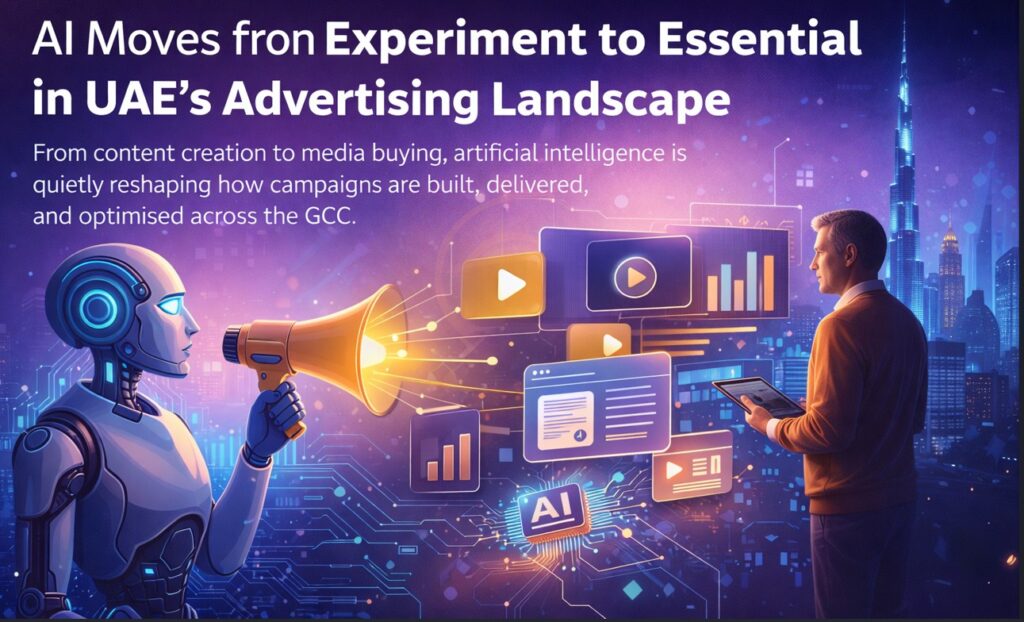
From content creation to media buying, artificial intelligence is quietly reshaping how campaigns are built, delivered, and optimised across the GCC.In the UAE and across the GCC, artificial intelligence has moved well beyond the stage of experimentation. What was once a buzzword discussed in boardrooms is now deeply embedded in the day-to-day execution of advertising. Brands are no longer testing AI—they are relying on it to run campaigns, generate content, and make increasingly precise decisions about audience targeting and timing.
On the creative front, the shift is particularly visible. AI-powered tools are now capable of producing ad copy, visuals, and even short-form video content at a pace that would have been unthinkable just a few years ago. For marketers operating in a market like the UAE—where campaigns often need to speak to audiences in both English and Arabic, while also resonating across a diverse mix of nationalities, this level of speed and adaptability is more than a convenience. It is becoming a necessity.
Behind the scenes, machine learning has also transformed how media buying is approached. Traditional methods that relied heavily on instinct or retrospective performance reports are steadily being replaced by systems that analyse audience behaviour in real time. These platforms continuously optimise campaign performance, adjusting budgets and placements based on how users interact with content.
In the UAE’s PR ecosystem, brands are already leveraging platforms such as Meltwater, Brandwatch, and Sprout Social to better understand media performance, audience sentiment, and the broader buying landscape.

A practical example of this shift can be seen in platforms like Skyscanner, where advertising systems respond dynamically to user intent. Instead of targeting broad demographic groups, campaigns are triggered by actual search behaviour and travel patterns, allowing for more relevant and timely engagement.
AI is also influencing emerging advertising formats. Digital billboards, for instance, are becoming more responsive, using live data inputs to tailor content based on factors such as time of day, location, and audience movement. Similarly, augmented reality experiences are beginning to incorporate behavioural insights, offering more contextual and interactive brand engagements.
Looking ahead, the trajectory appears clear. Advertising is moving towards deeper automation, more intelligent recommendations, and tighter integration between creative tools and analytics platforms. The industry is shifting from a model centred on broadcasting messages to one that focuses on responding to audiences in real time, with context and precision.
In this evolving landscape, AI is no longer just an enabler, it is becoming the foundation on which modern advertising is built.