Tech Interviews
ARCERA Accelerates Life Sciences Growth in Middle East


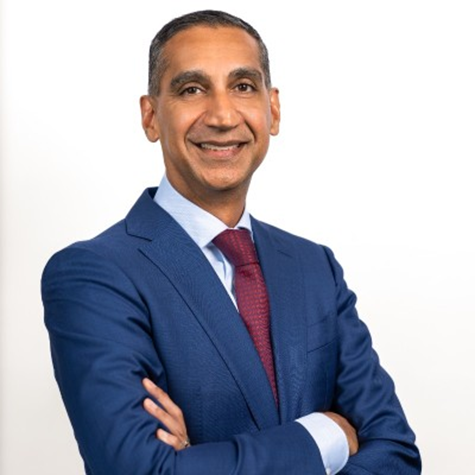
Exclusive interview with Sunil Bhilotra, Chief Investment Officer, Arcera
Why is life sciences emerging as a priority asset class in the Middle East?
Life sciences is becoming a priority asset class because it sits at the intersection of healthcare resilience, industrial development and long-term economic value creation. Across the Middle East, governments are looking beyond healthcare delivery alone and asking how they can build deeper capability in clinical research and development, and manufacturing of innovative medicines. That shift is being driven by rising prevalence of acute and chronic diseases, greater focus on medicine security, and the need to reduce exposure to global supply disruptions.
From an investment perspective, the sector has attractive fundamentals. Demand is structural, the region’s population needs are evolving, and governments are creating the policy conditions for long-term growth. The UAE’s focus on genomics, pharmaceutical manufacturing and innovation is one example of how life sciences is becoming part of the wider economic diversification agenda.
Arcera was established within this context. By bringing a number of life sciences companies including Acino, M8 Pharmaceuticals and Amoun Pharmaceutical Company together under one company headquartered in Abu Dhabi, we have formed an integrated platform that employs more than 6,000 people across 90 markets, with a META footprint spanning 13 countries and more than 500 commercial colleagues on the ground. This reflects a broader regional shift toward building globally competitive life sciences platforms that combine strategic healthcare priorities with sustainable growth.
How is Arcera’s investment strategy driving resilience and long-term returns?
Our investment strategy is focused on building the conditions for durable long-term growth: scale, control, and relevance. By bringing complementary businesses together under one Abu Dhabi-headquartered platform, Arcera has created a stronger base from which to manage supply continuity, expand market reach, and invest with a longer horizon than a standalone pharmaceutical company could typically support.
That resilience is also what strengthens the return profile. We are not relying on one product, one market, or one growth lever. Our strategy combines an established portfolio with targeted investment in priority therapeutic areas, manufacturing capability, partnerships, M&A, and in-licensing. This gives the business a balanced model that enables stable revenue today, with room to capture future growth in areas where regional demand and global innovation are moving quickly.
Healthcare demand is structural, but returns depend on execution, access, and the ability to operate reliably across business and economic cycles. At Arcera, our strategy is designed around those fundamentals. It builds a platform that can absorb disruption, support national healthcare resilience, and create long-term value by connecting Abu Dhabi’s patient capital with real operating capability across the life sciences sector.
What role do M&A and in-licensing play in scaling across key therapeutic areas?
M&A is what built our foundation. When we brought together the businesses we acquired, we built a unique life sciences business with global regulatory, commercial, market access, supply chain and manufacturing capabilities that would take decades to build from scratch. That kind of scale gave us the operational base to run a leading global business structured in deeply rooted regional relevance, with the credibility to attract global partnerships.
But scale is not enough on its own. The portfolio has to evolve, and that is where in-licensing becomes critical. As an example, our licensing agreement with AriBio for an investigational oral Alzheimer’s therapy was a deliberate move into a disease area where the regional need is significant and the science is genuinely exciting. Another example is the collaboration agreement we signed with Fosun Pharma recently that takes that a step further, exploring licensing opportunities across oncology, neuroscience, rare diseases, and cardiometabolic health, and potentially localising advanced biotechnology in the UAE. These activities demonstrate how we are building scientific know-how on top of the commercial platform we already have.
Ultimately, M&A gives you the platform, and in-licensing gives you the future. Global innovators are looking for partners who can actually deliver their therapies to patients in complex markets. If you demonstrate track record and have the capabilities and experienced commercial teams on the ground, you become a genuinely attractive partner of choice for biotechs and multinationals. That is the position Arcera is building toward, and deals like the ones we are doing now are how you get there.
What makes Abu Dhabi a strong hub for patient capital and healthcare investment?
Abu Dhabi is a unique place where sovereign and commercial ambitions are highly aligned. Guided by the Department of Health – Abu Dhabi’s vision for preventative and personalised care at scale, as well as the Abu Dhabi Industrial Strategy’s ambition to position the Emirate as a leading industrial hub, the government has made healthcare and life sciences a strategic priority. This has enabled faster policy decisions, investment in infrastructure, and regulatory reform, creating a highly supportive foundation for long-term sector growth.
The ecosystem being built around sovereign capital is also maturing quickly. Organisations across the ecosystem are deeply engaged in developing healthcare and life sciences in the UAE and are playing active roles in driving its growth. At Make it in the Emirates for example, Arcera is announcing a number of collaborations that reflect the depth of collaboration taking shape across healthcare, manufacturing, and innovation. These are practical examples of how Abu Dhabi is creating the conditions for businesses to build, expand, and create long-term value within a supportive national framework.
What ultimately makes Abu Dhabi unique is that it is not trying to necessarily replicate what exists elsewhere, it is building its own model where sovereign capital, clinical capability, manufacturing infrastructure, and global partnerships come together in one place. For investors and companies like Arcera, this creates an environment where capital can be deployed with long-term confidence, while actively contributing to the development of a globally competitive life sciences ecosystem.
What does it take to build a globally competitive life sciences platform from the Gulf?
I believe it takes three things: scale, reputation and execution. Scale gives a company the footprint to compete internationally. Reputation comes from maintaining a high bar on quality systems, regulatory discipline, manufacturing standards and trusted partnerships. Execution is what connects those capabilities to patients.
For a UAE-based company, the opportunity is to combine regional proximity with global capability. Arcera is doing this by building from Abu Dhabi while operating across international markets, strengthening in key therapeutic focus areas such as cardiometabolism, neurosciences, oncology and rare disease, and investing in digital, data and AI to improve how we operate. The region has ambition, but ambition has to be matched by the patient, detailed work of integration, governance, quality and access.
What are your plans for the next few years?
We are in our second year as a fully integrated company, and we are committed to scaling our enterprise and deepen our commitment to bringing innovation, both in our day-to-day operations as well as in our portfolio of medicines. We will keep elevating our performance and expanding our long-term partnerships to strengthen global impact, while remaining steadfast in our support of Abu Dhabi and the UAE’s ambition to build a global life sciences and healthcare hub.
Our recent collaborations also open significant new possibilities, from licensing assets in advanced clinical development to potentially incubating new biotechnology capabilities on the ground in the UAE. Alongside that, we are deepening our digital and AI capabilities to drive greater speed and precision across everything from manufacturing to medical engagement.
Above all, we remain close to the needs of the patients and stakeholders who place their trust in us and remain focused on building for the next generations. The foundation is in place. The next phase is about translating it into lasting impact for patients and sustained value for our stakeholders.