Hospitality
LIVING REEFS AS THE HIDDEN INFRASTRUCTURE OF ISLAND HOSPITALITY

By Twinkle Aswani, Editorial Division, Integrator Media
There is a reason why travellers continue to connect emotionally with island destinations long after a holiday ends. Perhaps it is the feeling of freedom and tranquil escape, where solitude gently intertwines with one’s own thoughts. Or perhaps it is the destination itself; the stillness, the sanctuary, and the profound sensation of being surrounded by crystal-blue waters, moving to a naturally slower rhythm in ways modern city life can no longer accommodate.

Into The Deep
Beyond their visual beauty and coastal landscapes, island destinations leave a lasting impression because they offer something deeper than scenery. They create sensory experiences that subtly influence pace, behaviour, and perception. In destinations such as the Maldives, there exists a unique relationship between personal wellbeing, ocean environments, and hospitality. Together, they shape journeys that become deeply personal, transforming destinations into immersive experiences that remain present long after the moment has passed.
Beneath the surface of the Maldivian way of life lies a reality seldom brought into focus. The turquoise waters that surround the islands are not simply picturesque backdrops for luxury resorts; they are living ecosystems that support the very foundations of island hospitality. Coral reefs serve as natural infrastructure, shaping the underwater landscape, protecting shorelines, supporting marine biodiversity, and influencing the conditions that define the guest experience.

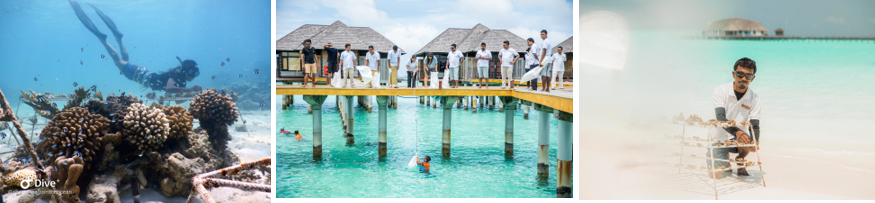
Across the Maldives, reef ecosystems quietly determine much of what visitors associate with island living. The calmness of sheltered lagoons, the clarity of the water, the abundance of marine life, and even the soothing sounds of shallow waves moving across reef formations are all connected to the health of these underwater environments. Much of what travellers perceive as tranquillity is, in reality, the product of living ecosystems working continuously beneath the surface.
Seeing The Unseen
For hospitality groups such as Sun Siyam, whose portfolio spans some of the Indian Ocean’s most ecologically immersive destinations, the relationship between hospitality and marine ecosystems extends far beyond conventional sustainability narratives. Here, the philosophy reaches beyond architecture and service. It is about understanding that every island experience exists within a broader ecological framework. Coral reefs, lagoons, and shoreline environments are not simply features surrounding a resort; they are integral to the destination itself, influencing its identity, heritage, and long-term resilience.
Each element within the landscape quietly shapes the rhythm of the guest experience, influencing traveller psychology, experiential value, and the wider sense of place. This relationship is increasingly reflected through conservation initiatives that invite guests to become active participants in protecting the environments they have come to enjoy.
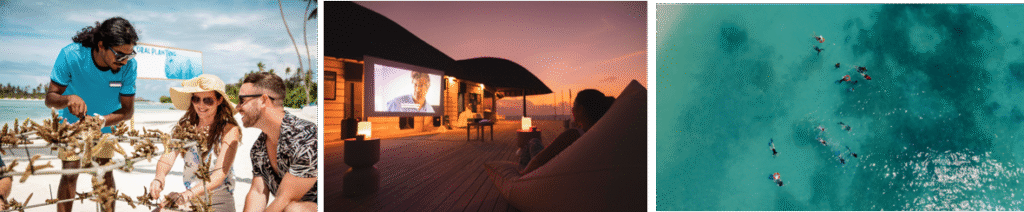
At Sun Siyam Olhuveli, the recently introduced Adopt-A-Coral Frame programme allows guests to contribute directly to reef restoration efforts by attaching healthy coral fragments onto specially designed frames before placing them within the resort’s coral garden. Participants receive updates on the growth of their adopted coral, creating a lasting connection to the destination that extends well beyond their stay.

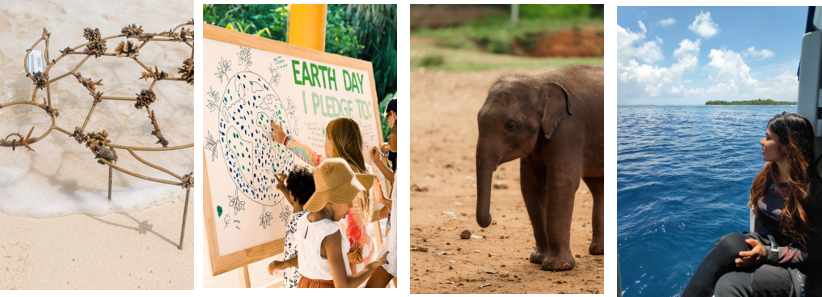
Sun Siyam’s commitment to reef development also extends into more innovative marine projects. At Siyam World, a former Maldivian tuna freighter has been intentionally transformed into Noonu Atoll’s newest shipwreck dive site and future artificial reef. Once used to transport tuna across the Maldivian archipelago, the vessel now begins a second life beneath the ocean surface as a living marine habitat.
Already attracting reef sharks, rays, turtles, schools of jackfish, and countless reef fish species, the wreck demonstrates how carefully managed interventions can create new opportunities for marine biodiversity while enhancing destination experiences. Through Siyam World’s newly launched Wreck to Reef initiative under the Sun Siyam Cares platform, coral fragments are being cultivated directly onto the vessel, gradually transforming the structure into a thriving underwater ecosystem.
The project illustrates a powerful shift in how hospitality can engage with conservation. Rather than simply protecting existing environments, resorts can also contribute to creating new habitats that support marine life, expand reef ecosystems, and strengthen environmental resilience for future generations.
Through programmes such as these, environmental stewardship becomes more than a corporate responsibility. It becomes a shared relationship between traveller and destination, where every coral planted, every reef monitored, and every conservation effort contributes to the long-term health of the ecosystems that support both marine life and island hospitality.
Symphony In Simplicity
Coral reefs play a far greater role than simply supporting the economic infrastructure of island destinations. They form the ecological foundation that sustains marine biodiversity, coastal protection, and the environmental character of the islands themselves. Recognising this, Sun Siyam incorporates marine conservation into a hospitality approach that moves beyond passive observation of nature and towards active engagement.
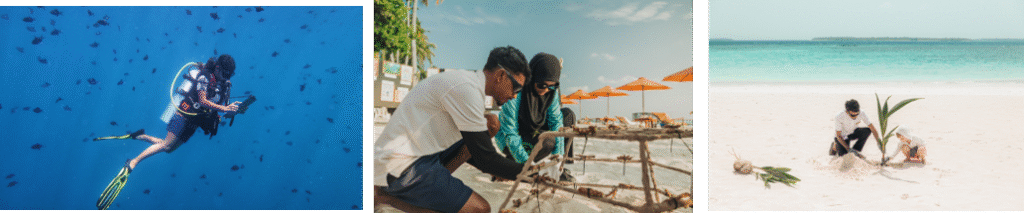
This reflects a broader evolution within luxury travel. Today’s travellers increasingly seek experiences that offer purpose alongside relaxation. They are drawn not only to beautiful destinations but also to opportunities for meaningful connection. Marine education sessions, guided reef explorations, coral restoration initiatives, and conservation-led experiences provide visitors with a deeper understanding of the ecosystems that sustain island life while fostering a greater appreciation for the natural world.

Luxury island hospitality has traditionally been defined by panoramic ocean views, expansive villas, private pools, architectural grandeur, and world-class dining. While these elements remain important, guest expectations are evolving. Increasingly, travellers are seeking experiences that feel authentic, emotionally enriching, and connected to the destination itself.
It is within this shift that island hospitality takes on a more integrated identity. Across Sun Siyam’s destinations, guests are offered opportunities to reconnect with nature and with themselves, rediscovering a slower pace of life shaped by the rhythms of the ocean. Encounters with reef sharks, manta rays, vibrant coral formations, and thriving marine ecosystems create moments of wonder that cannot be replicated through design alone. For brands such as Sun Siyam, this creates a more layered definition of luxury. One where value is measured not solely by exclusivity or physical space, but by the depth of immersion offered within the surrounding natural environment.
Across Sun Siyam’s island portfolio in the Maldives and Sri Lanka, reef ecosystems function as an underlying environmental framework that directly influences how each resort is experienced and structured. The natural depth of lagoons, coral formations, currents, and tidal patterns subtly shape spatial planning, from the positioning of overwater villas to the placement of dining venues, wellness spaces, and marine activity zones.
Yet these ecosystems are not merely accommodated; they are actively nurtured. Through coral propagation projects, reef restoration programmes, marine education initiatives, and environmental conservation efforts under the Sun Siyam Cares platform, the group continues to invest in the health and resilience of the environments that define its destinations.
The result is a form of island hospitality where ecological preservation, guest experience, and resort operations function as a continuous system. Guests move through environments shaped equally by nature and thoughtful design, experiencing destinations where the reef is not simply part of the view but part of the story itself. In doing so, they become more than spectators of the natural world. They become participants in its future.