
 Have a question? +971 56 404 0503





Financial
RAKBANK LAUNCHES THE “SHE MEANS BUSINESS” PACKAGE TO BACK FEMALE ENTREPRENEURS AT EVERY STAGE OF THEIR JOURNEY

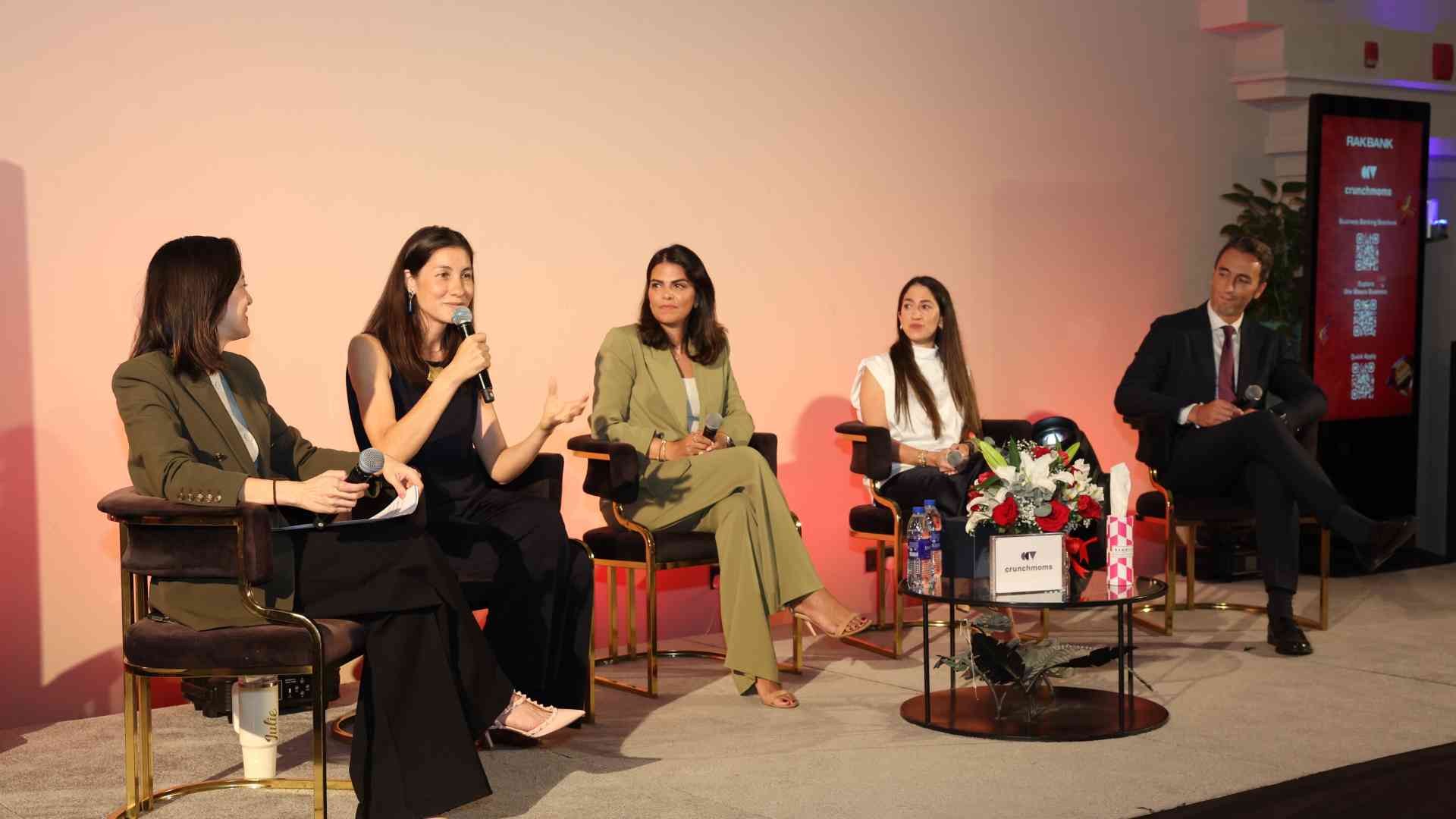
As RAKBANK marks its 50th anniversary year, the Bank has launched a one-of-a-kind Female Entrepreneurs Package in celebration of International MSME Day, reinforcing its long-standing commitment to empowering female entrepreneurs.
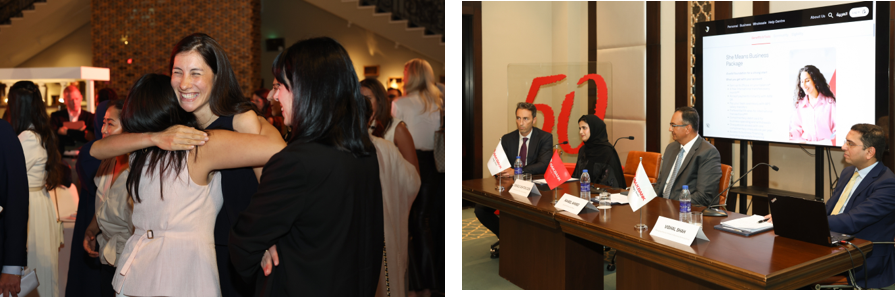
Beyond just Banking
Launched under the theme “Empowering Women to Start, Grow and Scale with Confidence” the She Means Business Package reflects the growing contribution of female entrepreneurs to the UAE economy and the need for solutions that support them across different stages of their business journey. From managing banking costs, accessing finance and day-to-day operations, female founders often require support that goes beyond traditional banking. RAKBANK brings together its best-in-business banking solutions, practical business tools, financial protection and community support into one integrated package designed to simplify banking, reduce friction and enable female entrepreneurs to grow with confidence.
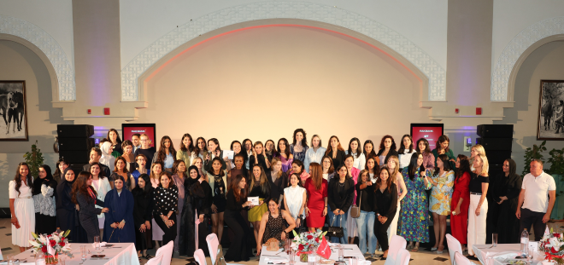
Limited time offer: As part of the launch, female entrepreneurs who activate their account by 10 December 2026 can enjoy the She Means Business package free for 12 months, subject to terms and conditions.
What entrepreneurs get:
1. Digital banking foundation
- A zero-balance business account, available in both Islamic and Conventional variants
- Multi-currency capability in AED, USD, GBP and EUR
- Digital onboarding in as little as 48 hours, enabling faster speed to market and seamless access to banking services
2. Everyday business tools
- WPS-enabled payroll processing
- QR-based payments powered by AANI
- Complimentary access to a cloud-based app for up to four users, helping entrepreneurs manage accounting, banking, payroll and VAT from a single platform.
3. Cost savings and financial benefits
- Four complimentary international remittances per month
- Preferential USD foreign exchange rates
- Monthly maintenance fees fully covered for 12 months, supporting early-stage growth
4. Built-in protection in Partnership with RAKInsurance
- Essential insurance/Takaful coverage including:
- Workmen’s compensation (including employer liability)
- Public liability protection of up to AED 1 million
5. Community, learning and growth – Beyond banking, the package extends into capability building and community engagement, with access to:
- Learning and business development opportunities, covering topics such as AI, leadership, pricing, cash flow management, marketing and business growth
- Curated networking opportunities and knowledge-sharing forums with ecosystem partners and industry experts
- AED 1,500 off the annual CrunchMoms membership — a community that connects female entrepreneurs with like-minded women, mentors, and new opportunities.
- A complimentary Personal Banking Financial Needs Assessment to help founders align their personal finances with their business ambitions
Who the Package is for
The package is available to new RAKBANK customers who are female founders operating as Sole Proprietors and Individual LLCs.
How to apply
Eligible founders can apply by visiting quickapply.rakbank.ae and selecting the RAKStarter Account.
Vishal Shah, Managing Director & Head of Business Banking Group, RAKBANK, said:
“For 50 years, RAKBANK has supported over 250,000 SMEs across the UAE, helping founders transform ambition into action and we proudly bank over 20,000 female-led businesses.
Female entrepreneurs are playing an increasingly important role in shaping the UAE’s economic future, contributing to the country’s entrepreneurship agenda, and access to the right ecosystem makes a meaningful difference in enabling founders toreach their full potential. Understanding the needs of entrepreneurs has long been at the heart of how we design and evolve our propositions, reinforcing our commitment to being the financial partner of choice for SMEs across the UAE. Through She Means Business, we are bringing Digital with a Human Touch to life by combining seamless digital banking, relationship-led financial partnership and ecosystem access.”
Financial
The UAE’s Gold Advantage: Exploring Dubai’s evolving position in global bullion trade and financial markets

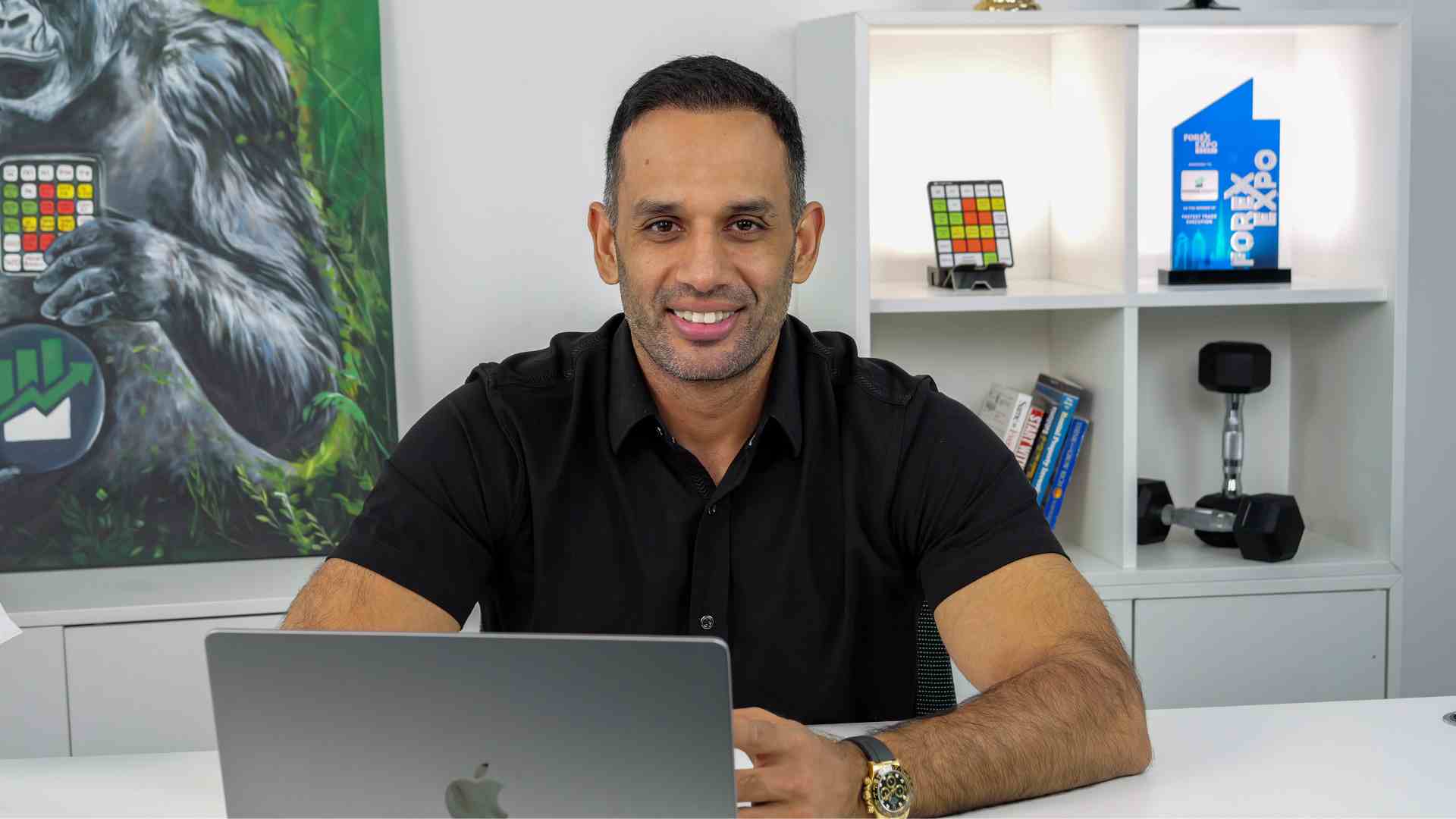
By Raja Zahoor, CEO and Founder of Dominion Markets.
Byline: Raja Zahoor, known as Raja Banks, CEO and Founder of Dominion Markets, followed by more than 2 million people across his platforms, on Dubai’s gold advantage, the digital gold boom, and why saving alone is no longer enough.
Gold Kept Our Money Safe. It Didn’t Make It Grow.
Growing up, the rule in our house was simple: when you have extra money, you buy gold. For my parents’ generation, gold was the financial plan. You could hold it, pass it down, and sell it in an emergency. Banks came and went. Gold stayed.
They weren’t wrong. Gold has protected families through inflation, wars and currency crises for centuries, and recently it rewarded that faith in a big way. After its strongest year in decades in 2025, gold hit a record of around US$5,595 an ounce in January 2026. In Dubai today, a gram of 24K costs roughly AED 485 to 499.
Why Dubai sits at the centre of it
Dubai has no gold mines, yet around 2,750 tonnes of physical gold moved through the UAE last year, and the emirate’s foreign gold trade reached about AED 1 trillion in 2025. That comes down to geography and infrastructure. We sit between the mines of Africa and the buyers of India and Asia, with refineries, vaults, a gold futures exchange and 0% VAT on investment gold, all in one city. Stricter standards, like the UAE Good Delivery Standard, have added the credibility. With the new Dubai Gold Strategy, the ambition is now to help set gold’s price, not just move the metal.
Technology has changed who owns gold
My parents bought gold in grams at the souk. Today, anyone can buy 0.1 grams inside an app on their phone. Gold-backed tokens have grown from about US6 billion since late 2024. The barriers to owning gold have almost disappeared. But easy access is not the same as a strategy.
Safe, but at what cost?
This is what my parents never had to question. Gold doesn’t pay you. There’s no dividend, no rent and no interest. It sits. Buy it as jewellery and you pay 5% VAT plus making charges, so you start at a loss. And it isn’t risk-free: since January’s peak, gold has fallen to around US$4,100, more than a quarter off its high. Bitcoin, often sold as “digital gold”, is down roughly 40% from its 2025 peak. No asset only goes up, and money sitting in a drawer doesn’t pay your bills.
Make your money work for you
My career in the stock market changed how I see money. Saving protects what you have, but it doesn’t create anything new. What I tell my community every day is that savings can become a tool. Active trading, whether in stocks or in gold itself, lets you profit from prices moving up or down instead of waiting years for them to rise. The volatility that scared so many savers this year is exactly what a trained trader works with.
But let me be honest: trading is a skill, not a lottery ticket. Most people lose money because they start without education, without a plan, and with money they can’t afford to lose. The path I recommend is simple:
- Learn first. Understand charts, risk and how markets move before using real money.
- Start small. Practise on a demo account, then trade with an amount you’re comfortable risking.
- Protect your capital. Risk only a small, fixed share of your account on each trade.
- Set a realistic first goal. Aim to cover one bill, like your phone or utilities, before thinking bigger.
My parents’ gold taught me discipline. The markets taught me that money standing still slowly falls behind. Keep some gold, because it’s still excellent insurance. But don’t stop there. The goal isn’t just to save your money. It’s to make it earn.
1. Why Dubai has become one of the world’s key gold trading hubs
Dubai has no gold mines, yet roughly 2,750 tonnes of physical gold moved through the UAE last year, and the emirate’s foreign gold trade hit around AED 1 trillion in 2025, up 60% in a single year. That tells you this is a hub built on position and trust, not on resources.
Three things explain it.
First, geography that matches where gold is moving. Gold is mined heavily in Africa and consumed heavily in India, China and the wider Middle East. Dubai sits in the middle of that corridor, a few hours’ flight from both, in a time zone that bridges Asian and European trading. As gold demand has shifted east, Dubai has become its natural meeting point. The UAE overtook the UK in 2023 to become the world’s second-largest gold trading hub, behind only Switzerland.
Second, a complete ecosystem in one place. London is mainly a financial benchmark market. Zurich is a refining and vaulting centre. Dubai combines all of it: refineries, vaults, bullion banks, a futures exchange in DGCX, more than 1,500 precious-metals companies inside DMCC, and the retail power of the Gold Souk, now expanding into the new Dubai Gold District. Add 0% VAT on investment-grade gold and no personal capital gains tax, and the cost of doing business is hard to beat.
Third, the shift from scale to standards. For years the criticism of Dubai was about transparency. That has changed. The UAE Good Delivery Standard now sets binding rules on responsible sourcing and anti-money-laundering, and in 2026 India’s MCX began accepting UAE Good Delivery bars for settlement. The UAE has also exited both the FATF grey list and the EU high-risk list. Credibility is now part of the product.
The next chapter is the Dubai Gold Strategy, approved in October 2026. It targets financing, storage, price discovery and digital tokenisation. The goal is clear: to stop being only the place where gold passes through, and become a place that helps set its price.
2. How technology is changing the way people buy, trade and hold gold
For most of history, buying gold meant three frictions: a high minimum ticket, a dealer’s spread, and the problem of where to store it. Technology is removing all three.
Fractional, app-based gold. In the UAE you can now buy gold from 0.1 grams inside everyday apps. O Gold, which says it has more than 800,000 users, partnered with botim to put digital gold in front of millions of residents. Neobanks like ABHI have added similar products. This changes who buys gold. It is no longer only a wedding purchase or a bar in a safe. It is becoming a monthly savings habit for younger investors who would never walk into a bullion dealer.
Tokenised gold. Gold-backed tokens, where each token represents physical gold held in a vault, have grown from about US6 billion since late 2024, according to the World Gold Council. Dubai is positioning itself at the centre of this through the DMCC and VARA partnership on tokenised commodities. A token can be traded 24/7, split into tiny units, and used as collateral in ways a bar in a vault cannot.
Faster institutional plumbing. In June 2026, DGCX launched a same-day settled, physically backed spot gold contract using UAE Good Delivery bars. That cuts settlement risk and frees up capital faster. It is less visible to the public, but it is what makes a hub more competitive.
Traceability. Blockchain and digital records are also being used to prove where gold came from. In a market that has been criticised for opacity, provenance data is becoming as valuable as the metal itself.
One caution for readers. Digital gold is only as good as the company holding the real gold behind it. Before buying, check who stores the metal, whether it is allocated in your name, whether it is audited, and whether the platform is regulated.
3. Gold vs stocks and Bitcoin: what it means for everyday investors
The last two years have been a masterclass in why you shouldn’t treat any single asset as a sure thing.
Gold had its best year in decades in 2025, then hit a record of around US4,100. Bitcoin, often sold as “digital gold”, has fallen to around US$74,000, roughly 40% below its 2025 peak and down about 15% this year. Meanwhile the S&P 500 is up roughly 11% in 2026, driven by corporate earnings. Each asset reacted to the same world in a completely different way.
That’s the point. They play different roles:
| Gold | Stocks | Bitcoin | |
| Main job | Protect wealth, hedge crises and currency weakness | Grow wealth over the long term | Speculative growth, bet on digital finance |
| Income | None (unless leased) | Dividends | None |
| Volatility | Moderate | Moderate to high | Very high |
| Who’s buying in 2026 | Central banks (675t YTD), ETFs (record holdings) | Institutions and retail | Retail and some institutions |
| Biggest risk | Long flat periods; buying at the top | Recessions and corrections | Deep drawdowns; regulation |
The most telling signal this year is who is buying gold. Central banks bought 321 tonnes in Q3 alone, up 42% year-on-year. Gold ETFs hit record holdings. Yet retail bar and coin demand fell to a four-year low as individuals waited for a clearer trend. In other words, the professionals bought the dip while many individuals hesitated.
For everyday investors, three practical takeaways:
- Don’t choose one. Allocate. Gold works best as a stabiliser within a portfolio, not the whole portfolio. Many advisers suggest a single-digit to low double-digit percentage, depending on your goals.
- Separate jewellery from investment. In the UAE, investment-grade gold carries 0% VAT, while jewellery carries 5% plus making charges. If the goal is investing, buy bars, coins, ETFs or regulated digital gold.
- Buy gradually. Monthly purchases, now easy through apps, smooth out volatility and remove the stress of timing the market.

MidChains FZE, a digital asset platform licensed by the Virtual Assets Regulatory Authority (VARA) to provide broker-dealer services to retail, institutional and qualified investors, today announced a strategic banking partnership with Standard Chartered.
Under the partnership, Standard Chartered will support MidChains with a range of banking services, including fiat settlement capabilities, segregated client money accounts, and correspondent banking. These services will power MidChains’ day-to-day operations and enable efficient settlement.
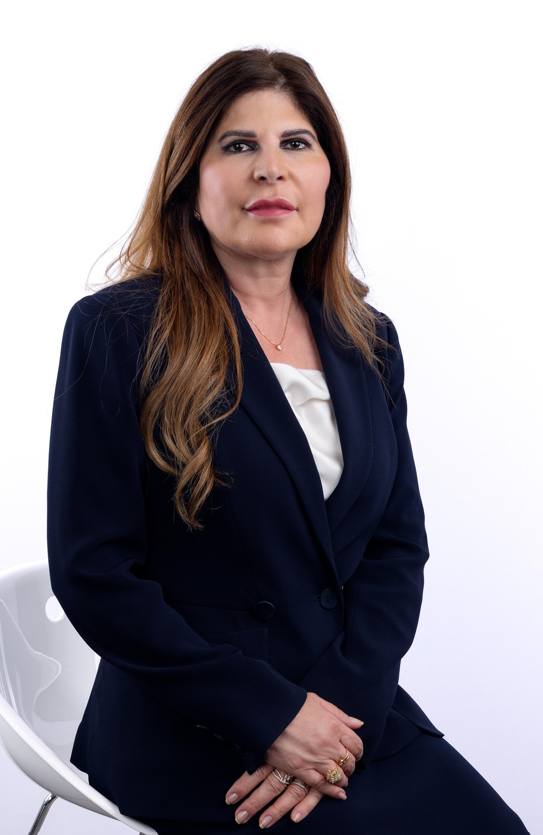
Rola Abu Manneh, Chief Executive Officer, UAE, Middle East and Pakistan, Standard Chartered, said: “The UAE has established itself as one of the world’s leading regulatory environments for digital assets and a global centre for financial activity. That creates a strong setting for regulated digital asset firms and established financial institutions to work together. Our partnership with MidChains puts that opportunity into practice, with Standard Chartered providing the banking services that support its institutional activity, including fiat settlement, segregated client money accounts and correspondent banking.”
Basil Al Askari, Chief Executive Officer, MidChains, added: “Institutional capital moves continuously between traditional and digital markets, and the infrastructure supporting that activity must keep pace. For institutional investors, digital asset services need to connect with the banking system that supports their wider activity. Our partnership with Standard Chartered brings that connection to MidChains’ institutional services, supporting clients as capital moves between traditional and digital markets.”
By bringing a VARA-licensed digital asset platform together with an established international bank, the partnership connects institutional digital asset activity with the banking infrastructure behind fiat settlement. It is a practical example of how the UAE’s regulated financial ecosystem can link innovation with established banking capabilities to support international business.
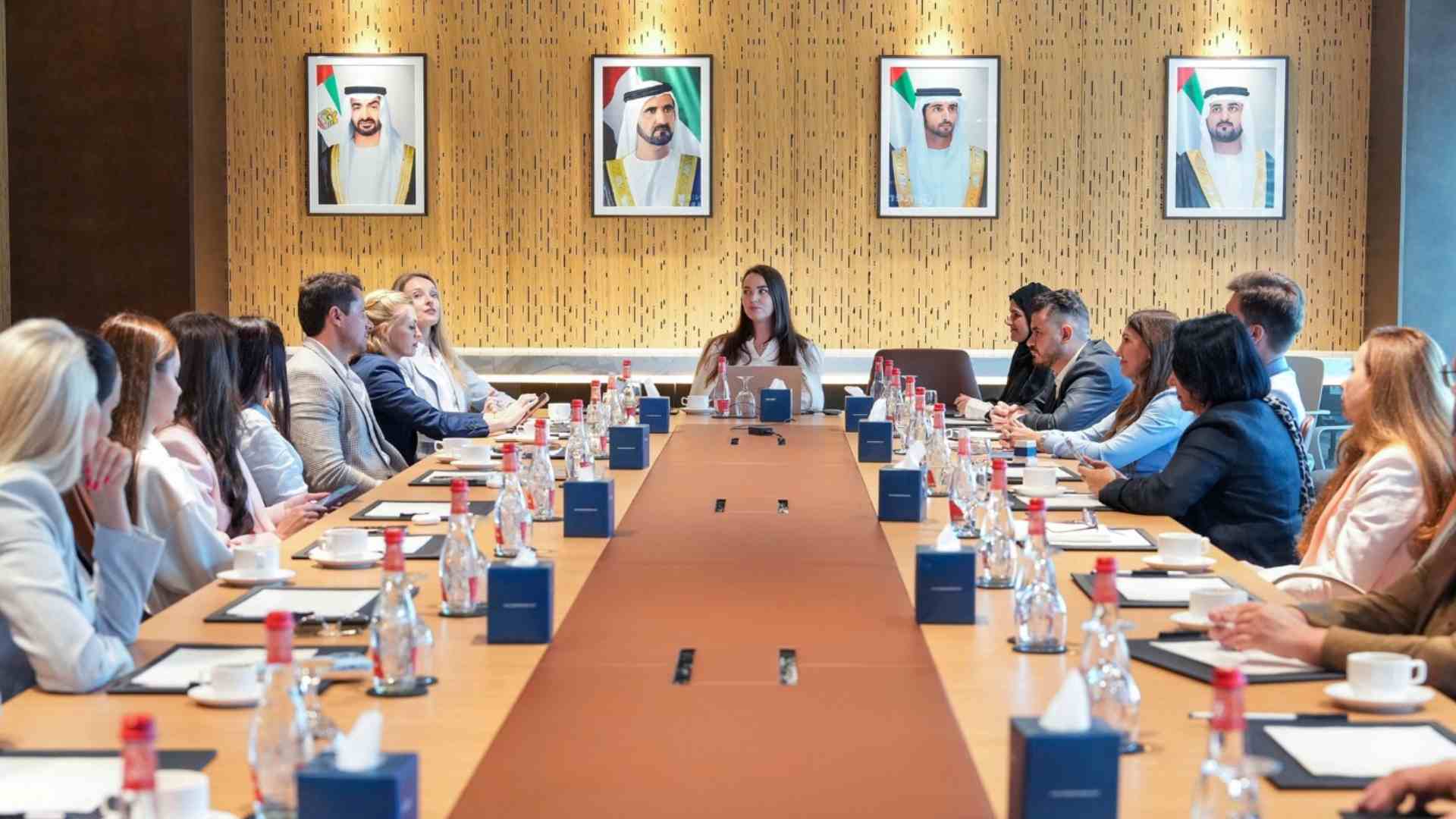
The Ukrainian Business Council in the UAE (UBC) elected a new Board at its General Assembly at Dubai Chamber, where members also approved a 2026–2028 strategy to strengthen trade and investment between the two countries.
Over the next three years, the Council plans to extend its trade delegation programme to new markets, deepen ties with international business councils and launch structured investment dialogues to connect UAE investors with opportunities in Ukraine. The UAE–Ukraine Comprehensive Economic Partnership Agreement (CEPA), Ukraine’s first agreement of its kind with a Gulf state, came into force in July 2026 and removes or reduces customs duties on most goods traded between the two countries.
“Ukrainian companies are achieving real results in the UAE, and we see significant untapped potential for Emirati business and investment in Ukraine. Our role is to build on this momentum: to connect the right partners, support companies at every stage of their growth and help investment flow with confidence in both directions.” commented Olena Shyrokova, President, Ukrainian Business Council in the UAE.
In 2025 and 2026, UBC led business delegations to Vienna, Qatar, Ras Al Khaimah, Fujairah, Oman and the Seychelles. It also ran webinars on UAE market entry for Ukrainian companies and business associations and supported the Ukrainian IT delegation at GITEX. Since its founding in 2016, the Council has established a dialogue with the Federation of UAE Chambers and chambers of commerce across the Emirates.
Under the new strategy, UBC will work with international business councils to give Ukrainian companies access to wider business networks in the Emirates and use the UAE as a base for trade missions to the Gulf, Asia and Africa. The Council will help Ukrainian companies in the UAE with registration, investment and expansion. It also plans to help Ukrainian investors find opportunities in the Emirates, attract Emirati investment to support Ukraine’s recovery and develop arbitration and investor protection mechanisms to build confidence in cross-border agreements.
The Council sees the strongest potential in sectors where Ukrainian strengths meet Emirati priorities: agri-food and food security, IT and digital services, renewable energy, logistics and port infrastructure, and post-war reconstruction. These are also the areas both governments have highlighted for future cooperation.
UBC works closely with the Embassy of Ukraine in the UAE and with H.E. Dr Oleksandr Balanutsa, Ambassador Extraordinary and Plenipotentiary of Ukraine to the UAE. The Council took part in the Cities Unite: Cultural and Business Exchange between the UAE and Ukraine dialogue at Expo City Dubai, initiated by H.E. Reem bint Ebrahim Al Hashimy, UAE Minister of State for International Cooperation, and the Embassy of Ukraine.
The Council will continue to support Ukrainian businesses and the wider community, helping companies expand into the UAE and encouraging UAE investment in Ukraine. Businesses, investors and potential partners interested in working with the Council can get in touch by reaching out to info@ukrainianbc.org.

Benihana Arrives In Muscat Bringing Its Iconic Teppanyaki Experience To Oman
Sundays Are Made for Sharing at Hawkerboi

Ninja and Citron team up to simplify balanced back-to-school lunches for UAE families

OPPO A6 Pro 5G Review: Reliable Daily Driver

Denodo Bolsters Executive Team by Hiring Christophe Culine as its Chief Revenue Officer

Microsoft Launches New Surface Copilot+ PCs for Business

2026 in Review: Is AI Becoming More of a Management Problem Than a Technology Problem?

Inside XPENG Brand Night: AI Mobility Lands Centre Stage in Dubai

Chinese Cars Are Reshaping the GCC Market, but Resale Value Could Be the Next Battleground

-
 Trending1 year ago
OPPO A6 Pro 5G Review: Reliable Daily Driver
-
 Tech News2 years ago
Denodo Bolsters Executive Team by Hiring Christophe Culine as its Chief Revenue Officer
-
VAR2 years ago
Microsoft Launches New Surface Copilot+ PCs for Business
-

 Automotive2 years ago
AGMC Launches the RIDDARA RD6 High Performance Fully Electric 4×4 Pickup
-

 VAR11 months ago
Huawei Nova 14 Pro Review: Where Camera Excellence Meets Ecosystem Evolution
-
Tech Interviews3 years ago
Navigating the Cybersecurity Landscape in Hybrid Work Environments
-

 Hospitality2 years ago
Gulfood 2025 30th Edition Kicks Off Today, Setting New Benchmarks in F&B Growth and Innovation
-
News4 years ago
BenQ ZOWIE : First TN 360Hz DyAc+ Gaming Monitor