Cover Story
UAE Investors Want More Than Just Trading Apps

Traders’ Hub’s Michael Barbour on investor trust, technology, and the future of finance in the Gulf.
BY SRIJITH KN FOR FINANCIAL INTEGRATOR
Over the past few years, investor participation across the region has evolved beyond speculative trading activity into something far more structured, technology-driven, and institutionally aligned. Retail traders are becoming increasingly sophisticated, expectations around transparency and execution quality are rising, and financial platforms are under pressure to offer far more than simple market access.
The speculative frenzy that once defined large parts of retail trading is gradually giving way to a more measured investor mindset, shaped largely by regulation, financial awareness, and long-term wealth preservation rather than short-term market excitement.
In this changing landscape, brokerage firms are no longer positioning themselves purely as trading providers. Instead, many are beginning to evolve into broader financial ecosystems, combining infrastructure, education, technology, regulatory credibility, and long-term investment access into a single platform experience.
For UAE-based firms such as Traders’ Hub Capital Markets, this shift represents more than market expansion. It signals a transformation in how the region’s next generation of investors may engage with financial markets altogether.
Founded in 2022 and headquartered in Abu Dhabi, Traders’ Hub has rapidly positioned itself as a locally regulated, technology-enabled brokerage focused on transparency, multi-asset access, and client-centric trading infrastructure.
Today, the company offers access to more than 2,000 instruments across forex, commodities, equities, indices, and cryptocurrencies, while simultaneously preparing for a broader move into wealth management and long-term investment services.
But the story surrounding Traders’ Hub is not simply about growth.
It is also about the wider evolution of the UAE’s financial ecosystem itself.
THE SHIFT IN UAE INVESTOR CULTURE
Across the GCC, financial participation is changing shape.
The rapid rise of digital platforms, increasing financial literacy, regulatory modernization, and mobile-first investing have fundamentally altered how younger investors interact with markets.
In parallel, the UAE has continued strengthening its position as a regional financial hub, attracting capital, fintech innovation, institutional activity, and globally mobile investors seeking regulated access to international markets. This transformation has also created new expectations.
Today’s investors are increasingly prioritising transparency, regulatory protection, execution quality, multi-asset accessibility, and seamless digital experiences.
In many ways, expectations around trading platforms are beginning to resemble expectations traditionally associated with banking and wealth management institutions.
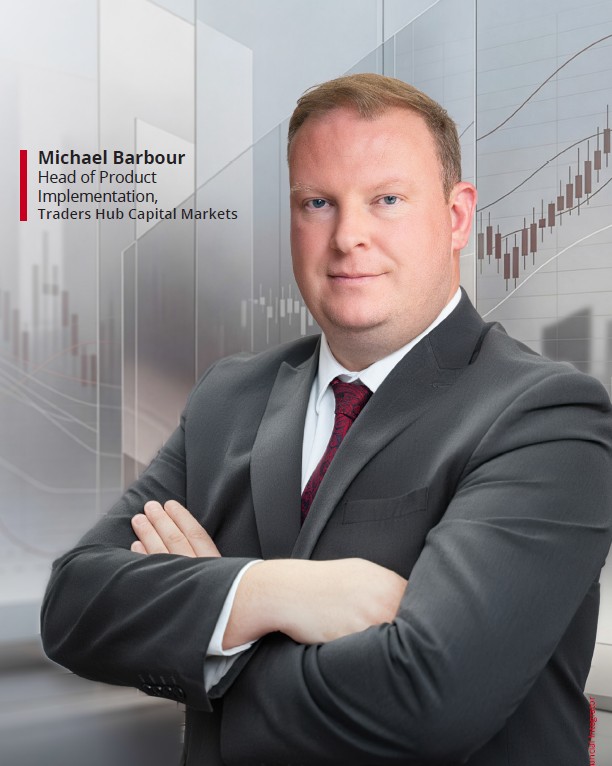
According to Michael Barbour, Head of Product Implementation at Traders’ Hub Capital Markets, these changes reflect a deeper transformation in investor behaviour itself.
“Investors increasingly seek integrated, trustworthy financial ecosystems prioritising long-term value, convenience, and institutional-grade service.”
Over the past five years, the psychological profile of the UAE investor has gradually shifted from short-term speculation toward a far more informed, disciplined, and globally aware mindset. Earlier retail participation was often driven primarily by leverage, speed, and short-term market movements. Today, however, younger investors across the UAE are becoming more research-driven, risk-conscious, and focused on long-term wealth creation rather than impulsive trading behaviour.

Modern traders are also seeking far more than market access alone. Transparency, educational support, analytical tools, platform stability, and institutional credibility are becoming increasingly important components of the investor experience itself.
FROM SCOTLAND TO GULF CAPITAL MARKETS
Long before helping shape the growth trajectory of Traders’ Hub Capital Markets, Michael Barbour’s early ambitions were far removed from financial markets.
Growing up in Stonehaven, a small Scottish town south of Aberdeen, he originally aspired to become a professional footballer, eventually playing semi-professionally before moving into finance.
His early exposure to financial systems came during the 2008 financial crisis while working within the legal and asset management sector in Scotland, assisting major UK banking institutions in managing distressed real estate portfolios during one of the most volatile periods in modern financial history.
That experience, combined with his later move to the Middle East in 2011 and subsequent years at the Dubai Gold and Commodities Exchange (DGCX), helped shape a perspective grounded not only in trading infrastructure, but in how markets behave under pressure, uncertainty, and rapid transformation.
Today, that institutional perspective continues influencing Traders’ Hub’s broader focus on operational credibility, technology infrastructure, and long-term investor engagement across the UAE market.
BUILDING A LOCALLY ROOTED TRADING PLATFORM
One of Traders’ Hub’s strongest positioning advantages lies in its status as a UAE-regulated Category 1 Capital Markets Authority (CMA) licensed broker, one of the highest licensing classifications within the country’s financial ecosystem.
In a market where offshore platforms have historically dominated retail participation, regulatory credibility has become increasingly significant, particularly as investors grow more conscious of operational risk, fund protection, execution transparency, and long-term platform reliability.
Rather than positioning itself through aggressive speculative messaging, Traders’ Hub appears to be building its identity around institutional-grade infrastructure, operational discipline, and client alignment.
Its trading environment is built around a Straight Through Processing (STP) execution model, meaning trades are routed directly to liquidity providers rather than internally warehoused by the broker itself.
In increasingly crowded financial markets, brokerage differentiation is no longer being shaped purely by leverage offerings or execution speed. Investors across the UAE are becoming far more conscious of pricing transparency, liquidity structures, operational credibility, and how trades are ultimately executed, particularly as financial literacy continues maturing across the region.
According to Michael Barbour, many investors still misunderstand how brokerage models differ operationally, particularly around spreads, slippage, pricing structures, and conflicts of interest between market-making and STP environments.
For Barbour, transparency itself is becoming a defining factor in long-term investor confidence.
Modern investors are also becoming more selective around how brokers disclose execution policies, fee structures, liquidity relationships, and client fund protections. In many ways, execution architecture itself is increasingly becoming part of the trust equation.
For regulated regional firms such as Traders’ Hub, this shift may ultimately represent a broader advantage. As investor sophistication continues evolving across the UAE, operational credibility and institutional transparency are beginning to matter as much as platform functionality itself.
FROM BROKERAGE TO FINANCIAL ECOSYSTEM
The transition from Traders’ Hub Currency Brokerage to Traders’ Hub Capital Markets reflects more than a naming evolution. It signals a broader ambition to position the company as a longer-term financial institution within the UAE’s evolving investment ecosystem.
Globally, the distinction between trading platforms, investment platforms, and wealth management ecosystems is beginning to blur. Increasingly, investors no longer want fragmented financial experiences spread across multiple platforms. Instead, they are seeking connected environments capable of combining active trading, long-term investing, financial planning, analytics, and educational support within a single ecosystem.
For Traders’ Hub, this transition also reflects an effort to solve a longstanding regional friction point: the difficulty many UAE investors face when moving between active trading and structured long-term wealth accumulation.
“The modern investor no longer wants isolated trading access. They want a complete financial environment,” says Barbour.
The company’s planned expansion into wealth management and broader investment services reflects a wider regional shift toward more integrated financial participation models.
TECHNOLOGY, AI, AND THE NEXT INVESTOR EXPERIENCE
As trading platforms become increasingly automated and algorithmically assisted, the financial industry is also confronting a deeper question: how much of investing should remain human?
Technology is rapidly becoming the defining layer of modern financial platforms, from AI-assisted analytics and mobile-first investing experiences to increasingly sophisticated execution infrastructure.
But while automation can enhance speed and efficiency, long-term investing still remains deeply shaped by human behaviour itself. Markets continue being influenced by fear, overconfidence, emotional reaction, and risk perception, factors technology alone cannot fully eliminate.
One potential differentiator for firms such as Traders’ Hub may therefore lie in how effectively they balance algorithmic intelligence with human judgement.
EDUCATION, TRUST, AND LONG-TERM ENGAGEMENT
As trading participation expands across the GCC, financial platforms are increasingly carrying responsibilities extending far beyond market access alone.
While digital platforms have lowered barriers into global financial markets, they have also intensified conversations around behavioural investing, financial literacy, emotional discipline, and long-term risk awareness.
Increasingly, sustainable platform growth may depend not only on user acquisition, but on trust, transparency, and investor education itself.
In the GCC particularly, where retail participation continues expanding rapidly, financial firms are beginning to recognise their role in shaping long-term investor behaviour and financial understanding.
THE NEXT PHASE OF REGIONAL FINANCE
The UAE’s financial landscape is evolving rapidly.
As regulation strengthens, investor sophistication increases, and technology continues reshaping how capital moves through markets, financial platforms and capital markets institutions are being forced to rethink what they represent within the broader financial ecosystem.
The company’s broader direction, spanning infrastructure investment, wealth management expansion, AI integration, mobile accessibility, and educational initiatives, reflects a wider regional transition toward more mature, technology-enabled financial participation.
Barbour believes the future of finance will increasingly belong to intelligent platforms capable of combining technology, trust, education, accessibility, and long-term wealth creation into a unified experience.
Whether this next generation of financial platforms ultimately succeeds will depend not only on execution speed or product breadth, but on something far more enduring: trust.
And in an increasingly crowded financial landscape, trust may ultimately become the most valuable asset of all.