
 Have a question? +971 56 404 0503





Hospitality
THE 2026 WORLD CUP IS THE MOST CONNECTED, AND MOST MEASURABLE, FAN EXPERIENCE EVER


By Federico Pienvoi, CEO for MENA and APAC at Globant
With the 2026 FIFA World Cup in full swing across 16 cities in the United States, Canada, and Mexico, the tournament has marked a shift in how we experience sport, and how sport experiences us. With 48 nations competing for the first time and millions of fans flooding stadiums from Vancouver to Guadalajara, it is the most connected, most measured, most analyzed cultural event in history. Every cheer, every purchase, every swipe through a stadium app generates data points that paint an unprecedented portrait of fandom itself.
The pitch remains the same 100-meter rectangle it’s always been. Everything else? Unrecognizable. Step inside any of the tournament’s venues and you’ll encounter two stadiums occupying the same physical space. The first is the one your eyes see: 80,000 seats, manicured grass, the roar of nations colliding. The second is an invisible architecture of apps, sensors, and platforms capturing how you move, what you watch, where you linger, and what makes you reach for your wallet.
The Intelligence Layer
Since 2022, FIFA and Globant have worked side by side to transform a fragmented landscape of platforms into a connected ecosystem designed for continuity, performance, growth, and continuous innovation. Key initiatives included building the foundations of FIFA+, enabling unified fan identity through FIFA ID as the backbone of a direct-to-fan strategy, developing the Tournament App as the gateway to live event participation, and scaling global content distribution across competitions.
As the scale and complexity of FIFA’s ecosystem increased, Globant introduced AI Pods, persistent execution units where AI-driven workflows perform the work, guided and supervised by Globant experts, delivering a 20% improvement in efficiency and delivery speed, greater predictability across execution cycles, and full traceability across workflows and decisions. This model enables FIFA to move from fragmented fan interactions to a unified, direct communication channel where every fan becomes identifiable, reachable, and monetizable over time, turning fan engagement into a continuous, data-driven relationship that drives long-term growth.
For leagues, teams, and sponsors, this represents the ability to activate fan data in ways that feel valuable, turning anonymous spectators into known customers with preferences you can actually serve. In our work with LALIGA, Globant’s teams manage 900 terabytes of data across more than 400 digital assets reaching 260 million fans, a scale of operation that would be operationally and financially unfeasible without AI-augmented delivery.
Here’s where things get genuinely interesting: the same platforms transforming how fans experience matches are now reshaping how the matches themselves are played.
Ahead of the World Cup, Mauricio Pochettino, the Argentine tactician charged with resurrecting American soccer on the world stage, selected Globant’s Sportian Performance platform to support the US Men’s National Team’s tactical preparation. The platform brings match data, video, and AI-powered insight into a single workspace, giving coaching staff live, in-match intelligence rather than after-the-fact analysis.
Pochettino isn’t an early adopter taking a flyer on unproven technology. The same coaching intelligence platform is already trusted by all 42 professional clubs of LALIGA and the Belgian Pro League. When one of the most respected coaches in world football builds his in-tournament strategy around your data platform, that tells you where competitive advantage in sport is heading.
From Saudi Arabia to the World: Building Without Legacy
To understand where sports technology is heading, look to Saudi Arabia, which is hosting the AFC Asian Cup 2027 and the FIFA World Cup 2034. The Kingdom is going through a generational infrastructure build-out that offers a preview of what’s possible when you design systems from scratch rather than retrofit them onto creaking legacy architectures. Saudi Arabia’s AI market is projected to reach $16.90 billion by 2032, growing at a 34.3% compound annual growth rate, driven by Vision 2030 and sustained government investment in digital transformation.
The Saudi Pro League serves as a laboratory for what elite competition management looks like when AI is applied properly: intelligent fixture scheduling that balances hundreds of sporting and operational constraints, operational forecasting for stadiums and security, and AI-generated reporting that frees competition staff to focus on strategy rather than paperwork.
Traditional sports technology projects often require large teams, extended timelines, and unpredictable outcomes. Globant has developed a unique delivery model to address this challenge through its AI Pods, subscription-based, AI-native teams where supervised, agent-orchestrated workflows take on work that used to require large traditional project teams. These pods are delivering results up to seven times faster than conventional approaches, drawing on access to more than 140 large language models depending on the use case. Within FIFA partnerships, AI Pods delivered work 20% faster with greater predictability and full visibility into execution. The gains compound: agents execute, experts supervise, and clients receive governed outputs at scale.
So what does any of this mean for someone with tickets to a match?
It means the app on your phone will know when you arrive, guide you to your seat, surface the video highlights you actually want to see, and remember that you prefer your beer cold and your merchandise in medium. It means the sponsors surrounding you, on screens, on surfaces, in the augmented overlays you might see through your phone’s camera, will have paid for access to an audience they can actually measure.
It means the coaching staff of both teams on that pitch will have prepared using AI-powered analysis. And it means the data generated by your presence, your attention and your engagement will feed into systems that make the next tournament, and the one after that, marginally better at understanding what you want.
The 2026 World Cup is a spectacle of athletic excellence. It is also a global test of whether technology can genuinely improve how we experience the things we love. Millions of fans. Billions of data points. This World Cup, we are finding out what connected fandom really means.
Hospitality
Qatar Airways Unveils Onboard Signature Music Created in Partnership with Award-Winning Composer Hans Zimmer


Qatar Airways today unveiled its new onboard signature music, created in partnership with world-renowned composer Hans Zimmer.
Inspired by Qatar and its culture, Qatar Airways’ new onboard music brings a distinctive sound identity to the passenger experience through its collaboration with the iconic composition of Hans Zimmer. The music is also featured on the ‘Burgundy Symphony’ album, a bespoke five-track album that encapsulates the airline’s wider sound identity and signature sound elements.
The collaboration brings together Zimmer’s acclaimed cinematic storytelling and Qatar Airways’ commitment to delivering memorable experiences, creating a recognisable sound that reflects the emotions, moments and memories that define travel.
The launch was celebrated at Hans Zimmer’s highly-anticipated concert in Doha on 6 November, where audiences were given an exclusive first look at the story behind the collaboration through a specially created film on the creative process and inspiration behind Burgundy Symphony, alongside a preview of the music. Qatar Airways passengers can experience the new composition onboard from today.
The Burgundy Symphony album captures the rhythm of travel through five original tracks, each reflecting a different stage of the journey:
Dawn opens the collection with a sense of anticipation and possibility experienced when stepping beyond the daily routine and discovering new horizons.
Dusk reflects the tranquillity of flight as daylight fades and travellers are carried above the clouds beneath a sky illuminated by stars.
The Orchard introduces a restorative pause, inspired by moments of calm and reflection amidst the pace of everyday life. The inspiration for the composition is drawn from the sense of escape offered by the ORCHARD – one of Hamad International Airport’s most distinctive passenger experiences.
Homecoming reflects the quiet gift of returning home and the small but lasting ways travel enriches life. The track encapsulates the adventure continues beyond touchdown, with memories of places and skies keeping moments of wonder alive long after the journey ends.
An Ode to Qatar, concludes the album with a tribute to the nation’s rich heritage and forward-looking vision. The piece brings together a sense of history, culture, and ambition, reflecting a country where tradition and progress exist in harmony.
Following the unveiling, Burgundy Symphony is now available on the Qatar Airways YouTube channel, inviting audiences around the world to experience Hans Zimmer’s original compositions inspired by the journey of travel and the spirit of Qatar Airways.
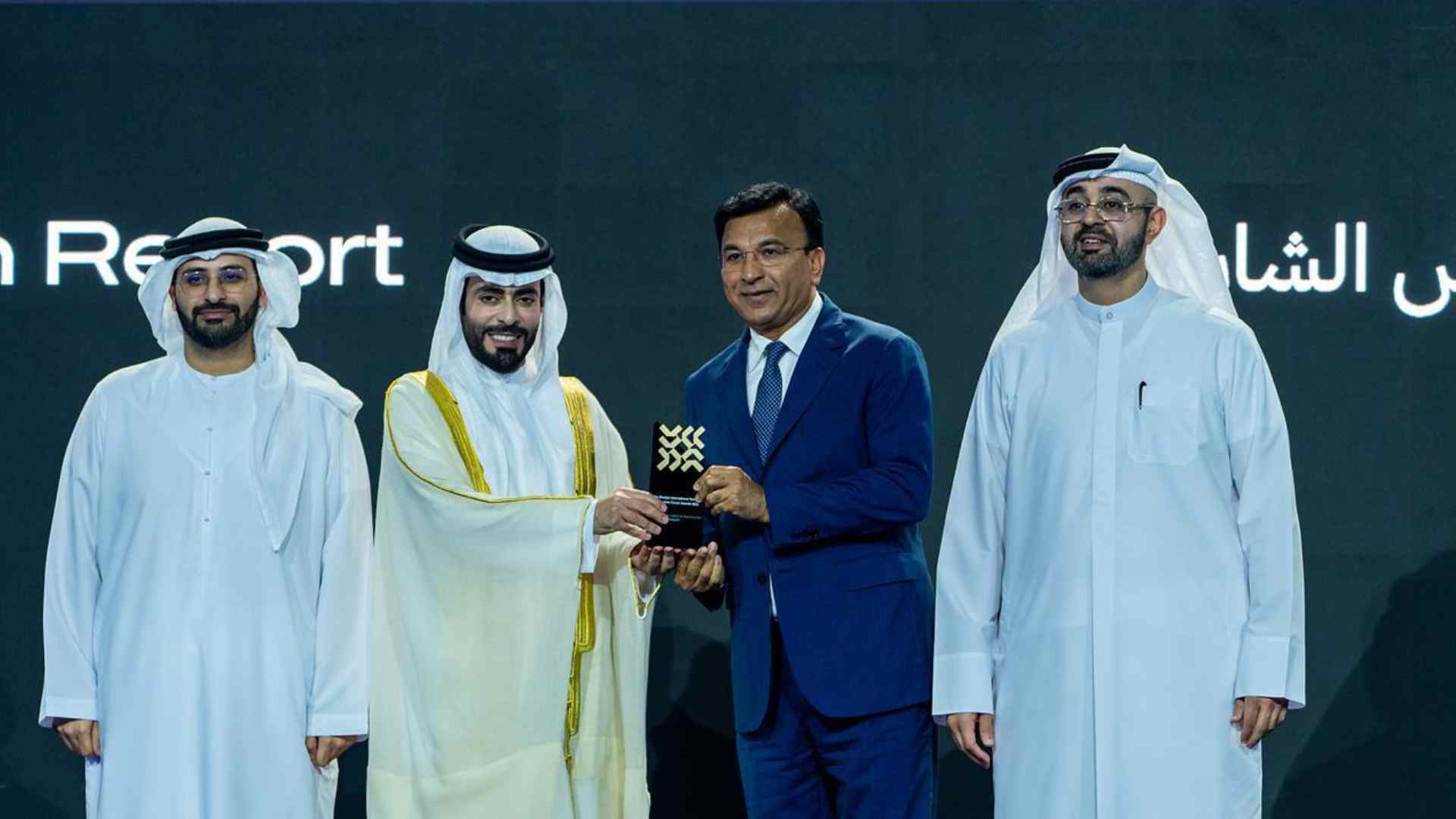
Coral Beach Resort Sharjah has won the Sustain Sharjah award for Hotel Properties at the Sharjah International Travel and Tourism Forum 2026, organised by the Sharjah Commerce and Tourism Development Authority (SCTDA). This marks the resort’s second consecutive recognition under the initiative.
The accolade acknowledges the property’s progress at Level 2 of the programme’s Explorers journey, structured around four core pillars: Guest, Experience, Local, and Story. Across each pillar, the resort has prioritised measurable, practical measures that engage guests, support the surrounding community, and ensure transparent sustainability reporting.
Central to this achievement are three primary operational initiatives:
- Onsite water bottling plant: Replaces single-use plastics with reusable glass bottles, eliminating approximately 300,672 plastic bottles annually.
- Winnow AI food-waste system: Weighs and monitors kitchen waste in real time, enabling culinary teams to curb excess directly at source.
- Onsite biodigester: Installed in 2026, making the property the first hotel in Sharjah to process organic waste entirely on site.
Commenting on the achievement, Iftikhar Hamdani, Area General Manager of Coral Beach Resort Sharjah, said: “Securing the Sustain Sharjah award for the second consecutive year is an honour for our entire team. Initiatives such as our water bottling plant, AI-driven waste monitoring, and onsite biodigester reflect our daily operational commitment—one shared with our guests, partners, and the local community. We thank the Sharjah Commerce and Tourism Development Authority for this recognition and for their steady leadership in advancing sustainable tourism across the emirate.”
Coral Beach Resort Sharjah is a signatory to the Glasgow Declaration on Climate Action in Tourism and continues to align its operations with broader international climate targets.
Hospitality
Qatar Airways Connects Doha to Caracas, Venezuela, and Bogotá, Colombia with First Flight
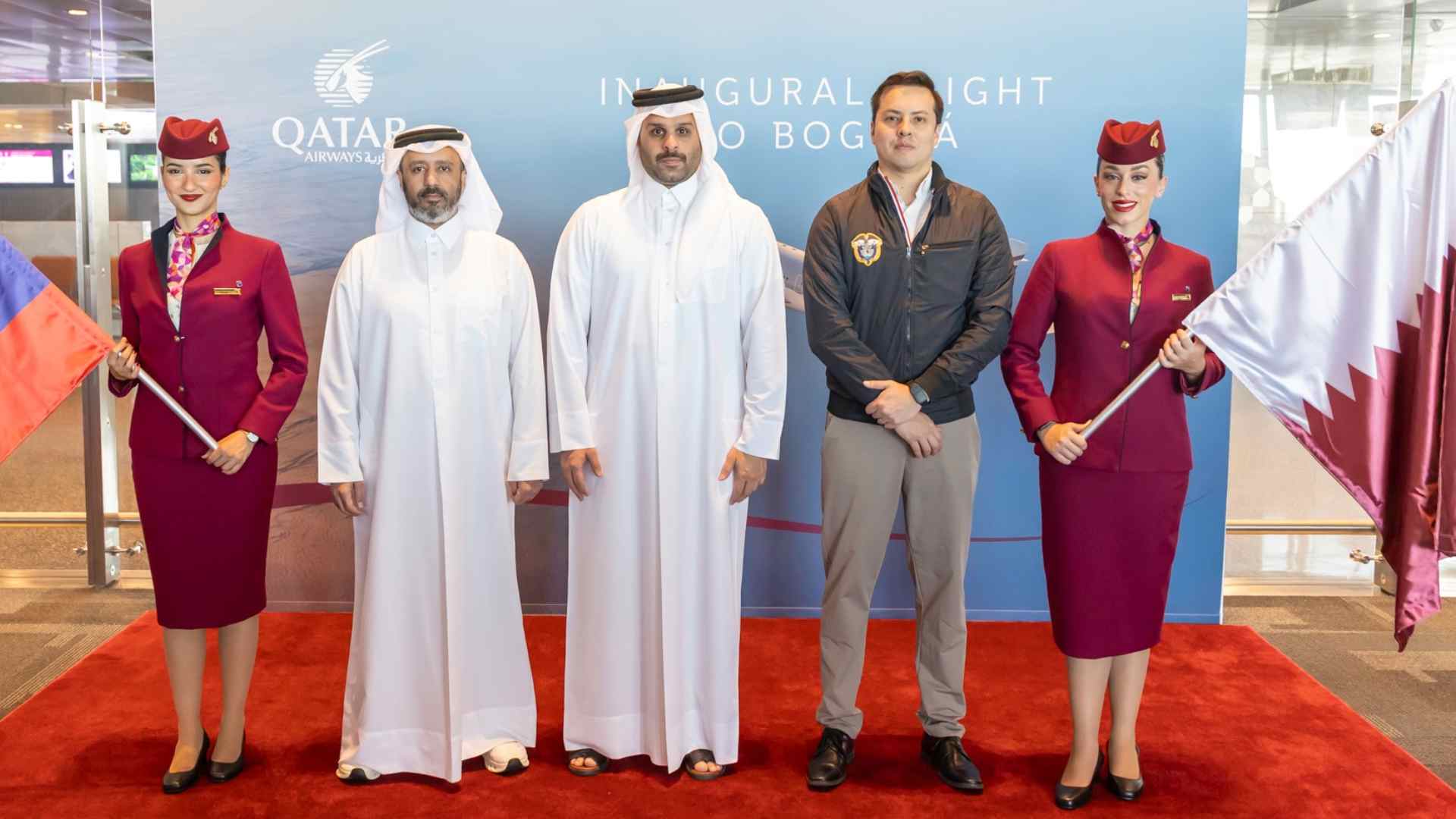
Qatar Airways has inaugurated its new twice-weekly service connecting Doha with Caracas and Bogotá. The service represents a significant milestone for the airline, as Qatar Airways becomes the first Gulf carrier to serve Venezuela, and the first airline to operate nonstop services from the Middle East to both Bogotá and Caracas. The new route underscores the airline’s commitment to strengthening global connectivity for the region and is operated on Boeing 777-200LR aircraft.
Qatar Airways flights to Caracas (CCS) and Bogotá (BOG)
Qatar Airways’ flight schedule has been designed to provide smooth onward connections through Hamad International Airport to key markets including Australia, China, Japan, Lebanon, South Korea, and the United Arab Emirates. This offers passengers greater flexibility and seamless transfer options across Qatar Airways’ global network of over 170 destinations.
Departing every Wednesday and Sunday:
Doha (DOH) to Bogotá (BOG) – Flight QR783: Departure 07:35; Arrival 16:25
Bogotá (BOG) to Caracas (CCS) – Flight QR783: Departure 17:55; Arrival 21:00
Caracas (CCS) to Doha (DOH) – Flight QR783: Departure 23:30; Arrival 20:35
The addition of Caracas and Bogotá marks the 16th and 17th destinations in the Americas served by Qatar Airways. The airline began serving South America in 2010 with its inaugural flight to Brazil’s São Paulo.
The airline has recently expanded its partnership with LATAM to include LATAM Airlines Colombia, offering travellers greater access to the region. Qatar Airways will place its code on LATAM-operated flights between Bogotá and key domestic destinations including Cartagena, Armenia, Barranquilla, Bucaramanga, Cali, Cúcuta, Ibagué, Leticia, Medellín, Montería, Neiva, Pereira, Pasto, Riohacha, San Andrés Island, Santa Marta, and Yopal.
Qatar Airways continues to strengthen global connectivity, serving more than 170 destinations this winter. Bookings can be made at qatarairways.com or through the airline’s mobile app.


Qatar Airways Unveils Onboard Signature Music Created in Partnership with Award-Winning Composer Hans Zimmer

Laura Hammett Expands to the Middle East with New Studio in Dubai
RAF ABU DHABI ADDS STARZPLAY AS DISTRIBUTION PARTNER ACROSS MENA



-

 Trending1 year ago
OPPO A6 Pro 5G Review: Reliable Daily Driver
-

 Tech News2 years ago
Denodo Bolsters Executive Team by Hiring Christophe Culine as its Chief Revenue Officer
-
 VAR2 years ago
Microsoft Launches New Surface Copilot+ PCs for Business
-

 Automotive2 years ago
AGMC Launches the RIDDARA RD6 High Performance Fully Electric 4×4 Pickup
-

 VAR11 months ago
Huawei Nova 14 Pro Review: Where Camera Excellence Meets Ecosystem Evolution
-
Tech Interviews3 years ago
Navigating the Cybersecurity Landscape in Hybrid Work Environments
-

 Hospitality2 years ago
Gulfood 2025 30th Edition Kicks Off Today, Setting New Benchmarks in F&B Growth and Innovation
-

 Tech News1 year ago
Nothing Launches flagship Nothing Phone (3) and Headphone (1) in theme with the Iconic Museum of the Future in Dubai