
 Have a question? +971 56 404 0503





Hospitality
A MORE SELECTIVE ERA FOR HOSPITALITY INVESTMENT

As some of the world’s leading figures in hospitality investment prepare to gather at Madinat Jumeirah in Dubai tomorrow for Future Hospitality Summit – FHS World 2026, investors have set out their views on the trends and strategies that are shaping the future of hospitality investment.
Widely regarded as the Middle East’s leading hospitality investment forum, FHS World will welcome more than 200 investors representing over USD$ 5 trillion in assets under management. Some 25 percent of those investors are attending for the first time, and 40 percent are travelling from outside the GCC.
Ahead of the event, top-tierinvestors have shared their views on the future of hospitality investment. With input from Mayra A Mueller, President, CGK Partners Private Wealth, Cipta Graha Group; Fahad M. Al-Alloush, CEO, Al Raya Real Estate; Mohammed Basiony, Group CEO M Hospitality FZ; Devendra Asher, Director Hospitality, Lordship Africa, and Yassine Moamah, CEO, Imperial Living.
Has investor sentiment shifted when it comes to hospitality investment over the past 12 months, and if so, in what way?
Mayra A Muller: “Yes. Investor sentiment has become more disciplined and selective rather than less optimistic. Over the past 12 months, investors have increasingly focused on resilient assets with strong operating fundamentals, experienced management teams, and destinations supported by government tourism strategies. There is also growing interest in mixed-use hospitality developments that integrate hotels, branded residences, wellness, lifestyle, and entertainment components to create diversified revenue streams.”
Fahad M. Al-Alloush: “What was a growth conversation twelve months ago is now a risk-pricing conversation, driven by the regional conflict and the subsequent supply-chain inflation. With Hormuz disrupted and shipping rerouted, construction materials and logistics have repriced sharply, so investors are underwriting delivery cost with far more caution than they were a year ago.”
Mohammed Basiony: “Sentiment hasn’t so much shifted as it’s been postponed – construction cost inflation and logistics-driven delivery delays have pushed a number of decisions further out. That said, what’s happening at the destination level, particularly in Ras Al Khaimah/Marjan Island, is giving the market a genuinely optimistic outlook again, with the Wynn Al Marjan Island resort acting as a real game-changer for the area.”
Devendra Asher: “Yes. I believe the conversation has moved from simply asking “Is hospitality attractive?” to asking “Where is the real value, and who can execute the business plan?”
Investors are becoming more selective. Strong locations and compelling demand fundamentals remain important, but they are no longer sufficient on their own. There is much greater focus on the quality of the operator, the positioning of the asset, the ability to drive sustainable operating performance and, increasingly, the flexibility to adapt the asset to changing customer and investor expectations. I also see growing interest in hospitality-led residential models, particularly branded residences, where the combination of real estate value, hospitality services and recurring income can create a compelling proposition when the model is properly structured and operated.”
Yassine Moamah: “Yes. I think the biggest change is that investors have moved from cautious interest to more selective conviction. At the same time, investors are not buying everything. They are much more disciplined about location, operator, brand, construction cost and the ability of the hotel to generate sustainable cash flow.”
From your perspective, what are the biggest challenges and opportunities in hospitality investment today?
Fahad M. Al-Alloush: “The honest answer is that the long-term consequences of the conflict for the Gulf are not yet clear, and that is the challenge. We have built our tourism ambitions on international visitors, and international confidence is the slowest thing to return. The opportunity lies in perspective: this region absorbed many challenges before (i.e. the first and second Gulf wars) and emerged stronger each time, and those who kept building through the uncertainty were the ones positioned when demand returned.”
Mohammed Basiony: “On the challenge side, capital deployment has become more constrained: construction cost inflation is compressing returns, and supply chain and logistics disruption continue to push out delivery timelines, which in turn raises financing costs and forces investors to recalibrate return expectations. On the opportunity side, though, destination-level catalysts are shifting sentiment back toward optimism — Ras Al Khaimah and Marjan Island in particular, where the Wynn Al Marjan Island resort is a genuine game-changer, are giving investors real confidence in emerging secondary destinations beyond the traditional Dubai/Abu Dhabi axis.”
Devendra Asher: “The biggest challenge is probably the gap between the cost of capital, construction and operations and the returns that investors expect. Hospitality is also a business where execution matters enormously. A good investment thesis can quickly lose value through poor design decisions, inefficient operations, weak distribution or the wrong brand positioning. At the same time, I see significant opportunities in markets where tourism, business travel, urbanisation and wealth creation are creating long-term demand while quality hospitality supply remains relatively limited. Africa is particularly interesting in this respect. The opportunity is not simply to build more hotels; it is to develop better-positioned, professionally operated and appropriately financed hospitality assets that respond to the needs of increasingly sophisticated local, regional and international customers. For me, the opportunity lies at the intersection of real estate, hospitality and capital and in creating operating platforms that can be replicated rather than developing one-off assets.”
Yassine Moamah: “Hotels can continue to increase revenue, but investors are dealing with higher construction and renovation costs, labour inflation, financing costs and geopolitical uncertainty.
And finally, markets where tourism demand is increasing faster than high-quality hotel supply. That last point is particularly relevant to Morocco. Morocco welcomed 19.8 million tourists in 2025, up 14% year-on-year, while tourism receipts reached approximately MAD 138 billion. Through August 2026, arrivals had already reached 14.1 million, 4.5% above the same period in 2025. The country’s official objective is 26 million visitors by 2030. For an investor, that combination of tourism growth, infrastructure development and international visibility creates an interesting long-term investment environment.”
Mayra A Muller: “The main challenges continue to be geopolitical uncertainty, rising financing costs, construction inflation, and the increasing complexity of delivering sustainable developments while maintaining attractive returns. At the same time, significant opportunities exist in markets where governments actively support tourism through long-term development strategies, infrastructure investment, transparent regulatory frameworks, and competitive tax and investment incentive programs. These policies play a critical role in attracting international capital and improving project viability. Another key opportunity lies in the growing demand for experiential travel, luxury hospitality, wellness tourism, and integrated mixed-use destinations. Investors are increasingly seeking projects that generate resilient cash flows while creating long-term economic and social value for the communities they serve.”
What asset classes, geographies, and projects are currently on your radar?
Mohammed Basiony: “On my own radar, we’re currently developing a new 5-star hotel on Marjan Island, a 400-key project slated to open in 2029, which reflects our own conviction in that destination’s trajectory. More broadly, Ras Al Khaimah and similar emerging coastal destinations anchored by major branded developments are where I see the strongest pipeline of investor interest right now.”
Devendra Asher: “My immediate focus is on branded residences, hospitality-led mixed-use developments and urban hospitality assets, particularly in Africa. Nairobi is an important market because of its role as a regional business and diplomatic hub, but I believe the broader opportunity extends to other major African cities where there is a growing affluent and internationally connected customer base, combined with limited institutional-quality hospitality and branded residential supply.
I am particularly interested in models that bring together residential ownership, hospitality services and professionally managed rental income, while maintaining a strong focus on the end-user experience. Beyond the individual asset, I am increasingly interested in platforms and concepts that can be scaled across multiple markets.”
Yassine Moamah: “Morocco is particularly important for us. We believe there is significant value in partnering with recognised international operators and brands. For the right property, a strong brand can improve international distribution, operating standards and ultimately the institutional attractiveness of the asset. Beyond Morocco, we are watching the GCC, particularly Saudi Arabia, while remaining highly selective. Saudi Arabia has one of the world’s largest hotel development pipelines. Demand in the holy cities continues to benefit from structural religious tourism, We will be interested if there is an opportunity to invest in such places especially Madinah. However, the region also demonstrates why investors need to differentiate between structural growth and short-term performance. UAE hospitality performance was affected materially by regional travel disruption during the first half of 2026. So our approach is not simply to follow growth markets. We look for the right city, the right micro-location, the right asset and the right operator.”
Mayra A Muller: “Current priorities include luxury hotels, ultra-luxury resorts, branded residences, serviced apartments, wellness and medical tourism resorts, integrated mixed-use developments, and hospitality assets with strong repositioning or value-add potential. There is also growing interest in destination developments that combine hospitality with luxury real estate, marinas, golf communities, cultural attractions, and sustainable tourism infrastructure. Geographically, the focus remains on the GCC, Southeast Asia, and selected high-growth markets in Latin America, particularly destinations with supportive tourism policies, expanding air connectivity, and strong long-term visitor demand.”
Fahad M. Al-Alloush: “Serviced apartments in Saudi Arabia, particularly product that blends genuine local character with international operating expertise — domestic demand for Saudi tourist destinations is extraordinary and has proved far more resilient than international demand. The discipline required is managing seasonality, which is what separates a good location from a good investment.”
What is your outlook for hospitality investment in 2027 and beyond?
Devendra Asher: “I remain positive, but selective. I believe the next phase of hospitality investment will be less about simply adding rooms and more about creating differentiated experiences, stronger brands and more resilient operating models. For Africa, I see a long-term structural opportunity. Demographics, urbanisation, improving connectivity, intra-African travel and the growth of the middle and affluent consumer segments should continue to support hospitality demand. However, capital will need to be disciplined, and projects will need to demonstrate a clear competitive advantage and credible execution strategy. I also expect the boundaries between hospitality, residential and real estate investment to continue to blur. Branded residences, hospitality-led mixed-use developments and rental-pool models can potentially create attractive opportunities where the commercial structure, governance and operating model are aligned from the outset. Ultimately, I believe the winners will be projects where the real estate proposition and the hospitality proposition are designed as one business not as two separate components.”
Yassine Moamah: “I expect more capital to move across borders and more partnerships between local developers, international hotel operators and institutional or family-office capital. For Morocco specifically, the period between now and 2030 is particularly interesting. The country is targeting 26 million tourists by 2030, compared with 19.8 million in 2025, while continuing to expand connectivity, tourism infrastructure and accommodation capacity.”
Mayra A Muller: “We believe the long-term outlook for hospitality investment remains exceptionally positive, supported by the continued expansion of global tourism, rising demand for premium travel experiences, and increasing cross-border capital flows. As international travel continues to grow, hospitality will remain one of the world’s most attractive real asset classes, offering both resilient income generation and long-term capital appreciation. Looking ahead, capital will increasingly be directed toward destinations with strong economic fundamentals, political and regulatory stability, transparent investment frameworks, modern infrastructure, and competitive investment incentives. These factors strengthen investor confidence and support the long-term sustainability of hospitality developments. We also see significant momentum behind integrated destination developments that combine hotels, branded residences, wellness, entertainment, retail, cultural experiences, and sustainable tourism infrastructure. These mixed-use ecosystems create diversified revenue streams, enhance asset resilience, and generate lasting value for investors, local communities, and national economies. Ultimately, we believe hospitality will continue to be a catalyst for economic growth, job creation, and international investment. Markets that successfully align public policy, private capital, sustainability, and tourism development will lead the next generation of global hospitality investment.”
Fahad M. Al-Alloush: “Develop what is within our control and stop trying to forecast what is not. The returns in this cycle will come from operational efficiency and disciplined execution rather than from market timing.”
Mohammed Basiony: “I expect a gradual normalization rather than a sharp rebound — as construction cost inflation eases and supply chains stabilize, previously postponed decisions should start moving forward again, with destination-led growth stories like Ras Al Khaimah leading that recovery.”
FHS World gives investors direct access to high-value deal-making in one of the fastest-growing hospitality markets, through dedicated event features such as the FHS Dealroom, a curated showcase of premier real estate investment opportunities and cutting-edge projects. Attending investors also have use of the Investors Lounge, an invite-only networking zone, and the Investor Breakfast, both designed to connect senior decision-makers with high-value opportunities and focused discussion.
Ali Shahid,CEO, The Bench, said: “Investors are more selective than they were a year ago, which makes the quality of the conversation matter more. FHS World puts owners, operators, investors and developers in the same room to test ideas, compare notes and do business. After 21 years in the UAE, Dubai remains the natural place for that conversation, and we are looking forward to hosting our community again.”
The FHS World 2026 agenda covers everything from investment to innovation, sustainability to staffing, and technology to tourism trends, all in line with this year’s event theme, Reinvest in our Future. Delegates will experience three days of keynote speeches, panel discussions, presentations, and roundtable debates, as well as a plethora of events, networking sessions and receptions. For full details of FHS World 2026, visit the website.
Hospitality
A REIMAGINED PRIME68 RETURNS TO JW MARRIOTT MARQUIS DUBAI ALONGSIDE ION, A NEW “NEIGHBOURHOOD IN THE SKY”
As JW Marriott Marquis Hotel Dubai continues its property-wide enhancement, this December will see the return of Prime68 alongside the arrival of ION, marking a major moment in the hotel’s dining transformation. Prime68 has long been regarded as one of Dubai’s best steakhouses, and following a complete renovation, the destination returns fully reimagined with a fresh new look. ION, a brand-new day-to-night sky lounge, has taken over the 71st and 72nd floors of the iconic hotel, marking one of the most significant additions yet to its dining line-up.
Prime68 returns as a contemporary benchmark steakhouse high above the city, defined by serious cuts, serious views and a renewed sense of occasion. Building on its strong market equity and iconic skyline setting, the reimagined venue pairs premium cuts, live-fire cooking and a considered wine programme with renovated interiors inspired by “The Art of Silver,” a design narrative rooted in craft, precision and understated elegance.
New additions include an enhanced arrival experience with an atmospheric bar, private dining rooms, a chef’s table and a wine display, with every detail carefully reconsidered to bring greater theatre, warmth and refinement to the Prime68 experience. The result is a destination that feels both familiar and newly elevated, shaped by materiality, acoustics, simplicity and the premium dining rituals that have long made classic steakhouses enduringly relevant.
ION introduces a new day-to-night sky lounge high above the city, set across the 71st and 72nd floors, where Dubai’s skyline becomes the starting point for a more layered social experience. Designed as “a neighbourhood in the sky,” ION brings together panoramic views, music-led energy, crafted drinks and sharing plates in a setting that evolves as the hours unfold. By day, it offers a refined place to pause above the city; as golden hour arrives, the atmosphere warms into a more social rhythm; and by night, the space becomes a cinematic lounge shaped by sound, light and connection.
Prime68 and ION form part of JW Marriott Marquis Hotel Dubai’s wider property enhancement, bringing two distinct new experiences to the city and signalling an exciting new era for the iconic hotel.
Hospitality
Radisson Blu Hotel Dubai Deira Creek Invites Guests to Celebrate Diwali with Family, Flavour and Festive Stays
As families come together to celebrate the Festival of Light, Radisson Blu Hotel Dubai Deira Creek will welcome Diwali with an afternoon shaped around the traditions, flavours and shared moments that make the occasion so special. Taking place on Saturday, 7 November from 1 p.m. to 4 p.m., the hotel’s Greenhouse Social Brunch will bring together food, music, art and family entertainment in a colourful celebration inspired by Diwali.

An Afternoon of Diwali Flavours and Family Traditions
Designed as an occasion for families and friends to gather around the table, the brunch will feature an abundant buffet of vegetarian and non-vegetarian dishes, offering something for every generation. The experience will be priced at AED 199 for the soft package, AED 345 with house beverages and AED 99 for children, with an early-bird rate of AED 119 for those planning ahead.
The afternoon will extend beyond the dining table, inviting guests to experience Diwali through music, creativity and play. At the Baithak area, guests can settle in with a cup of chai while Indian folk music provides a relaxed soundtrack to the afternoon. Families can also join in Antakshari, bringing generations together through one of India’s much-loved musical games.
For younger guests and those young at heart, a series of hands-on workshops will capture the creative spirit of the festival. Diya painting, rangoli making and henna will give families the opportunity to create, learn and celebrate together, while a Diwali Market will add to the festive atmosphere with a showcase of local craftsmanship.
At its heart, the celebration reflects the warmth of Diwali, a festival traditionally associated with light, new beginnings and the joy of gathering with loved ones. Rather than simply marking the occasion with a meal, the Greenhouse Social Brunch will create a setting where families can slow down, share stories, discover traditions and make new memories together.
Stay, Celebrate and Make Memories
The Diwali celebration will form part of the hotel’s wider seasonal programme, with a collection of accommodation offers inviting guests to make the most of the festive period. The Festival of Lights Diwali Room Offer, designed with Indian travellers and families in mind, will be available for stays from 1 to 15 November 2026, followed by the UAE National Day Room Offer, welcoming UAE residents and GCC travellers from 16 November to 2 December 2026.
The season will continue into December with a Festive Season Room Offer, combining accommodation with selected Christmas and/or New Year’s Eve gala dining experiences. All three offers are available at a starting rate of AED 400.
With its blend of Indian flavours, cultural traditions and family-focused experiences, Radisson Blu Hotel Dubai Deira Creek’s Diwali celebration will offer a warm setting in which to celebrate the Festival of Colours, bringing people and families together over good food, creativity, music and the simple pleasure of spending time with those who matter most.
Hospitality
Air India and Standard Chartered partner to launch travel and wealth proposition for Global Indians
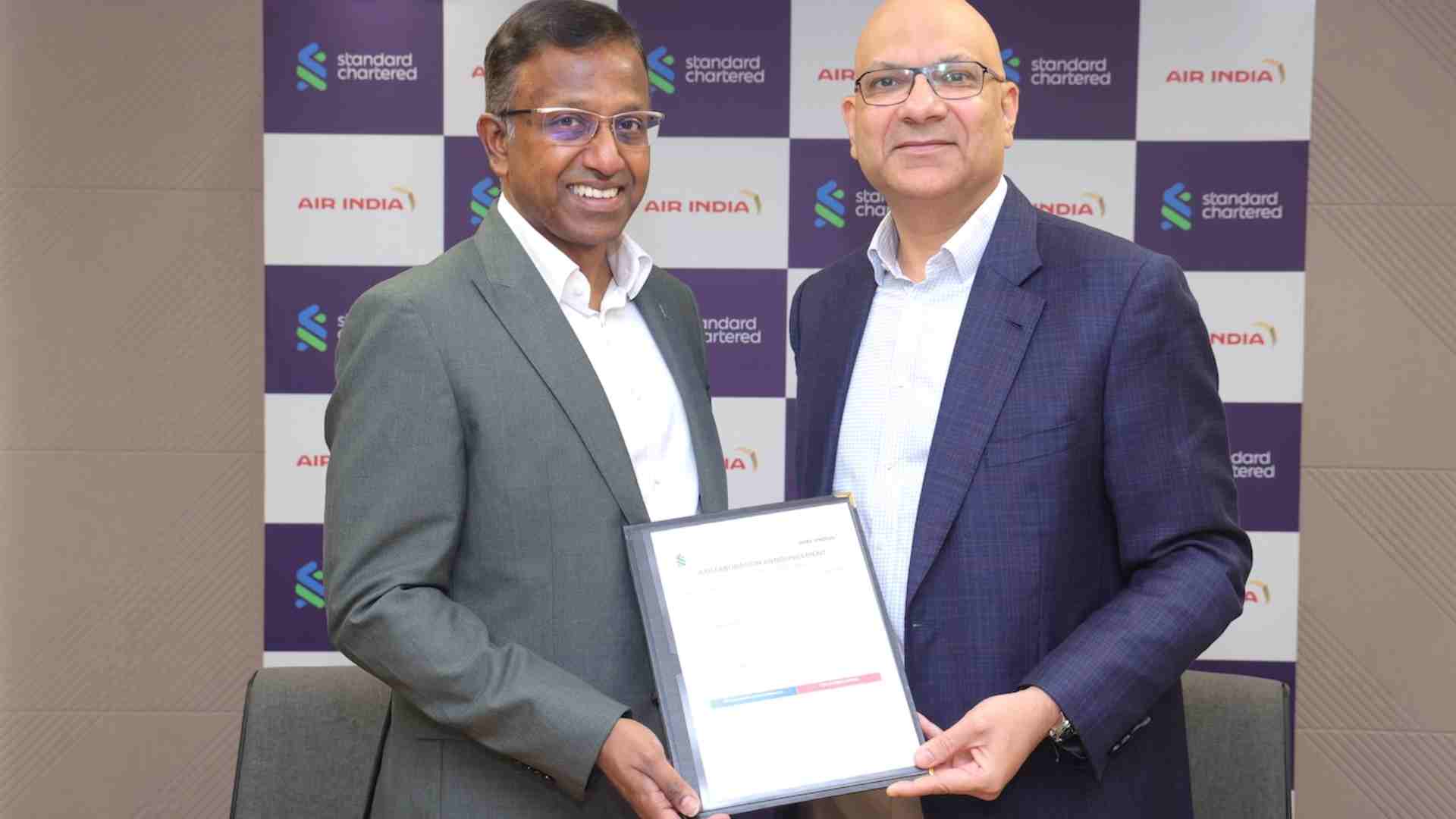
Air India and Standard Chartered (the “Bank”) today announced a first-of-its-kind partnership that combines Standard Chartered’s international banking and cross-border wealth capabilities with Air India’s premium Maharaja Club loyalty programme. The proposition, available in the coming weeks, is set to deliver travel privileges and access that meet the cross-border lifestyle and wealth needs of Global Indians.
Unlocking travel privileges with Maharaja Club
Standard Chartered will offer Air India’s Maharaja Club Gold or Silver status to eligible Affluent Global Indian clients in Singapore and the UAE. Air India Maharaja Club status offers exclusive travel benefits, including extra baggage allowance, priority check-in and boarding, airport lounge access, upgrade vouchers, and bonus Maharaja Points, with benefits varying incrementally from Silver to Gold tiers.
In particular, Maharaja Club Gold members also enjoy the benefits on eligible Air India journeys, as well as Star Alliance Gold status, which provides access to over 1,000 airport lounges worldwide, priority airport services, and extra baggage benefits, and instant recognition around the world across 25 other Star Alliance member airlines in addition to Air India.
Managing cross-border financial needs
Air India customers who meet Standard Chartered’s eligibility criteria can access the Bank’s international banking and wealth management capabilities through its wealth centres in Singapore and the UAE. Customers would benefit from dedicated relationship management support, market outlook insights from the Bank’s Chief Investment Office, invitations to exclusive thought leadership events, and tailored wealth solutions designed to support their cross-border financial needs.
Rajesh Kannan, Head, Wealth and Retail Banking, UAE & Jersey, and Head, Global Indian Clients, Standard Chartered, said: “This partnership brings together two trusted heritage brands to create a distinctive proposition for Global Indians, whose lives, business and ambitions increasingly span borders. By combining Air India’s expanding global footprint with Standard Chartered’s international network and wealth capabilities, we are delivering exclusive multi-market travel benefits to our affluent clients while supporting their broader global lifestyle, business and wealth management needs.”
Nipun Aggarwal, Chief Commercial Officer, Air India, said: “As Air India continues its transformation into a world-class global airline, we are focused on deepening our engagement with the global Indian community. This partnership with Standard Chartered enables us to expand Maharaja Club across key international markets, offering customers immediate access to premium status, enhanced travel benefits and global recognition. Combined with Standard Chartered’s cross-border banking and wealth management expertise, the proposition supports the increasingly international lifestyles of our customers while strengthening their connection with Air India.”
With a simplified structure, a host of customer-friendly features, renamed tiers, and an updated identity, Maharaja Club has added millions of new members since the programme was redesigned in 2024. Maharaja Club members are now able to earn and redeem Maharaja Points on flights operated by Air India and Air India Express to and from 104 destinations across North America, Europe (including the UK), Australia, Middle East, Africa, Southeast Asia, South Asia, in addition 25 other Star Alliance member airlines. Maharaja Club’s partnerships with over 100 other brands across categories, including hospitality, retail, lifestyle and financial services, also enables members to earn Maharaja Points across a broad range of travel and everyday spends.
Benefits on eligible Air India journeys include complimentary seat selection, applicable fee waivers, additional baggage allowance, lounge access, priority airport services, upgrade vouchers and bonus Maharaja Points, subject to subject to the programme’s terms and conditions.

A REIMAGINED PRIME68 RETURNS TO JW MARRIOTT MARQUIS DUBAI ALONGSIDE ION, A NEW “NEIGHBOURHOOD IN THE SKY”
Radisson Blu Hotel Dubai Deira Creek Invites Guests to Celebrate Diwali with Family, Flavour and Festive Stays
Trust Is the New Speed – AI, Lexis+ with Protégé and the future of legal work in the Middle East



-

 Trending12 months ago
OPPO A6 Pro 5G Review: Reliable Daily Driver
-

 Tech News2 years ago
Denodo Bolsters Executive Team by Hiring Christophe Culine as its Chief Revenue Officer
-
 VAR2 years ago
Microsoft Launches New Surface Copilot+ PCs for Business
-

 Automotive2 years ago
AGMC Launches the RIDDARA RD6 High Performance Fully Electric 4×4 Pickup
-
Tech Interviews3 years ago
Navigating the Cybersecurity Landscape in Hybrid Work Environments
-

 Hospitality2 years ago
Gulfood 2025 30th Edition Kicks Off Today, Setting New Benchmarks in F&B Growth and Innovation
-

 VAR10 months ago
Huawei Nova 14 Pro Review: Where Camera Excellence Meets Ecosystem Evolution
-

 Tech News1 year ago
Nothing Launches flagship Nothing Phone (3) and Headphone (1) in theme with the Iconic Museum of the Future in Dubai