Hospitality
Gymkhana Dubai – Designing the next chapter of an evolving hospitality brand

By Samuel Hosker, Founder, North End Design
The design of Gymkhana Dubai began with a question we have been exploring with the team behind the restaurant for several years – how do you continue to evolve a successful and recognisable design identity without simply replicating what has come before?
Our relationship with Gymkhana now spans seven years, beginning with the redesign of the London restaurant in 2019 and continuing as the brand has expanded internationally. With each location, we have looked at how we can retain the character and identity that makes Gymkhana distinctive, while introducing new layers of detail and creating something that feels relevant to its setting. For Dubai, the ambition was to create the most complete expression of Gymkhana to date.
A journey through India
The starting point for the design was the architecture and interiors of Northern Indian residential properties, alongside the richness of Indian fashion and bridal couture. The intricate detailing and opulence of designers such as Sabyasachi, as well as the theatricality of traditional Indian wedding celebrations, informed our approach to pattern, texture, ornament and colour.
Travel has always been an important part of my design process. Visits to Chandigarh and Pondicherry helped shape a broader and more contemporary interpretation of India, moving away from the more familiar visual language associated with the British Raj.
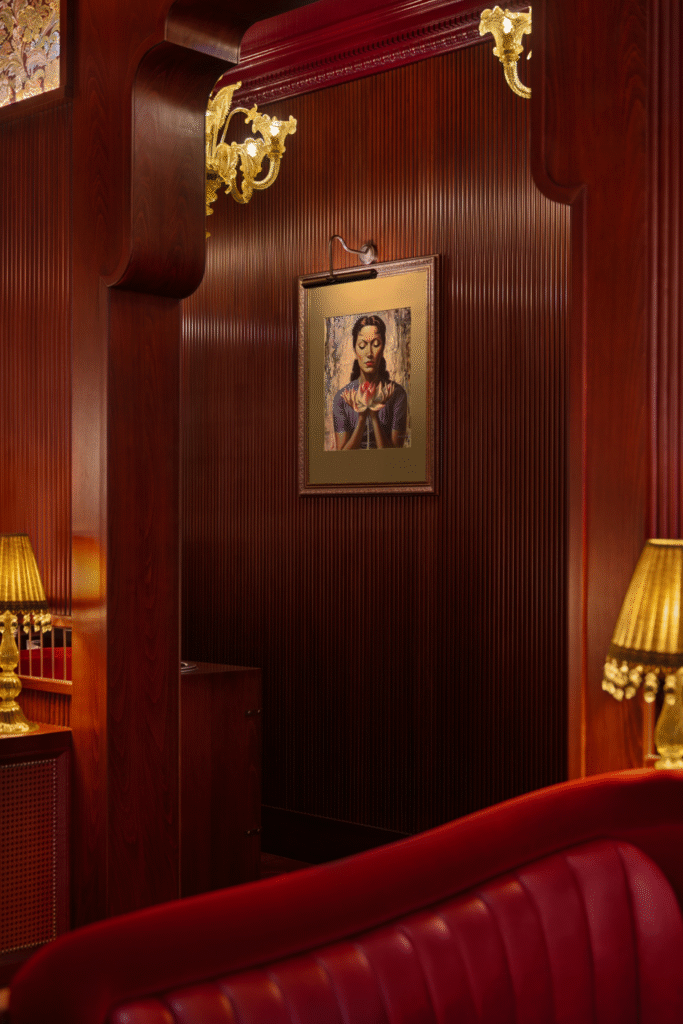
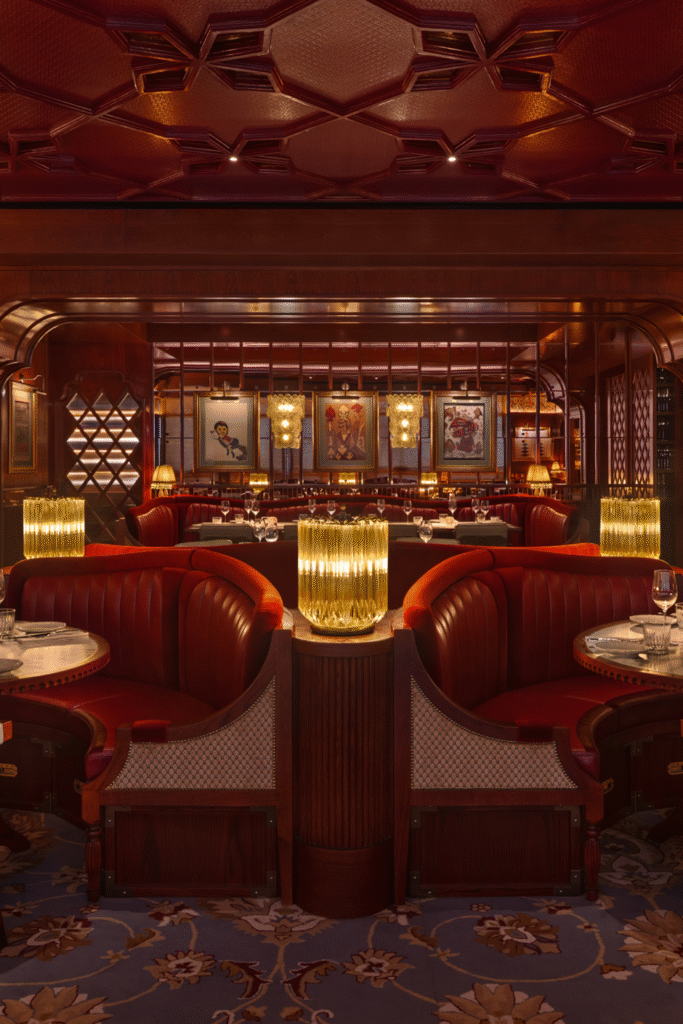
Chandigarh was particularly influential. Its modernist architecture offered a very different perspective on Indian design and informed elements of the furniture and proportions within the restaurant. Elsewhere, references to Rajasthani architecture, the Red Fort in Old Delhi and buildings encountered in Kolkata have been translated into timber arches, decorative rosettes and floral stained-glass detailing.
These Indian influences sit alongside references from Europe. Northern Italian design, particularly the architecture and interiors of Venice, inspired elements including Murano-style lighting and marble detailing, while Antoni Gaudí’s Casa Vicens in Barcelona influenced the expressive pattern, geometry and ornament of the dining room ceiling.
Furniture adds another layer through references to Edwardian campaign furniture manufactured in India, using materials such as cane, rosewood and teak to bring together British-Indian heritage and Indian craftsmanship.
The artwork continues the narrative, combining bespoke oil paintings of native Indian animals and equestrian events with 55 contemporary Indian artworks reinterpreting traditional playing cards – all subtle references to the sporting clubs of India from which Gymkhana takes its name.
Designing a restaurant that works
While the visual experience is important, successful hospitality design has to work operationally.
The Dubai site was previously another restaurant, and its existing layout presented several challenges. We remodelled the space to maximise covers while creating dining rooms that still feel intimate and purposeful, alongside two separate staircases to improve front- and back-of-house circulation.

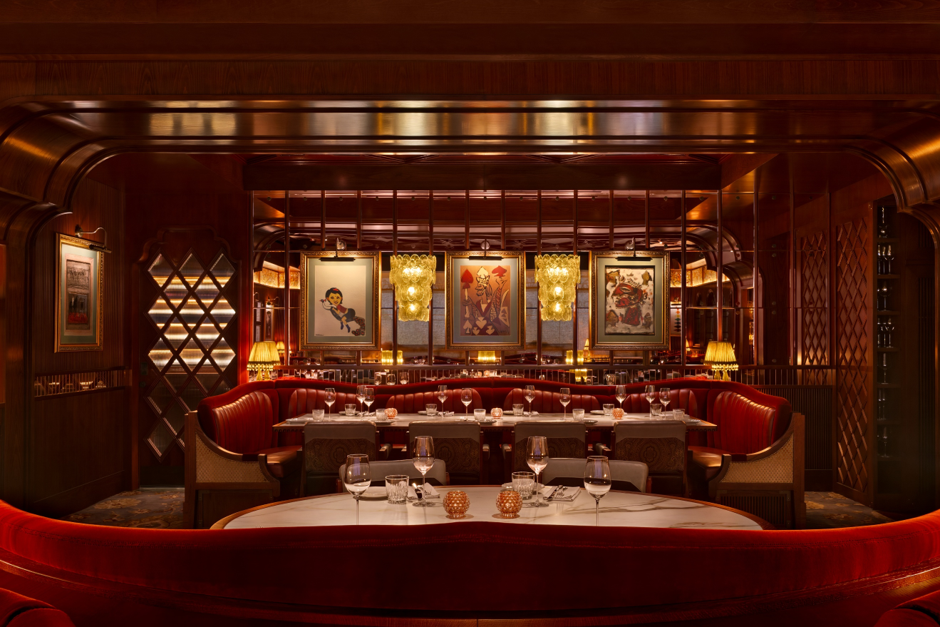
We work closely with Gymkhana’s operations and kitchen teams because seemingly small design decisions can have a significant impact on the guest experience. A dish coming from the tandoor, for example, should reach the guest within a minute of leaving the pass. Understanding that journey influences how we plan circulation, service routes and the relationship between the kitchen and dining spaces.
That operational understanding has developed considerably through our long-term relationship with the client.
Seven years of evolution
For us, one of the most rewarding aspects of Gymkhana has been demonstrating what can happen when the relationship between client and designer continues long after a project opens.
Over the course of seven years, we have been able to challenge, refine and evolve the design together. Crucially, our involvement doesn’t stop at handover. We remain close to the operations team after opening, learning how spaces perform in practice, what works and what can be improved before applying those lessons to future projects.
That continuity has allowed North End Design to operate almost as an in-house design consultancy – an extension of the client team with a deep understanding of the brand, its operations and its ambitions.
For me, that is ultimately what a successful hospitality design relationship should look like. It isn’t simply about delivering a beautiful restaurant and moving on. It’s about understanding a client’s business, growing alongside them and continually finding ways to make the next project better than the last.
Gymkhana Dubai is the culmination of that process so far – but, importantly, it is also another step in an ongoing relationship.