
 Have a question? +971 56 404 0503





Tech News
Beyond the camera: Why video surveillance is becoming a business intelligence tool


by Dr. Ryad Soobhany, Deputy Academic Head of School of Mathematical & Computer Sciences, Heriot-Watt University Dubai
Camera systems, such as CCTV, are mainly used for video surveillance within organisations. Passive video surveillance has been part of the security ecosystem for years, providing organisations with the ability to monitor different areas simultaneously, while recorded footage can be inspected after an event occurs.
The evolution of computer chips and increased processing power has led to improved image quality, including better performance in low-light conditions, particularly at night. The advent of edge computing, with processing performed on edge devices within a network, has made object and scene recognition more readily accessible. This evolution has led to more active video surveillance through video analytics, where events can be identified and addressed in real time. Examples include number plate recognition systems and facial recognition for access control.
With the combination of AI and video data, computer vision can be integrated with business analytics to transform video surveillance from a security infrastructure into a business intelligence tool. Video surveillance is moving from passively recording events to sensing what is happening in the environment. This helps to answer questions such as which areas are congested, how customers are moving, how long they dwell in particular areas, and whether unusual events are occurring. Businesses can use this data to optimise their operations, such as improving the customer checkout process, monitoring asset or staff movement, and managing crowds or traffic flows. Organisations can also incorporate contextual business information to enhance the analytics by combining behavioural data with CRM or IoT data, providing additional context and insights for decision-making and improving the customer or visitor experience.
Video surveillance can be used to optimise operations, improve customer experiences, and support strategic decision-making across industries. Video itself does not create business intelligence; rather, its value increases when visual information is combined with other operational and contextual data, while computer vision is used to understand and enhance business operations. The pipeline from video to business intelligence can be represented as obtaining data from video sources such as fixed cameras, IoT-enabled cameras, or robots. Computer vision is then applied to the video to detect or track people, objects of interest, or activities. Behavioural data are taken into account, such as customer dwell time in particular product areas, occupancy of rooms or halls, movement of people across a building, and anomalies in behaviour. At this stage, operational data are also considered. The final stage is the business intelligence stage, where trends are identified and insights are inferred. At this stage, data visualisation plays an important role, with dashboards and data storytelling displaying correlations, predictions, and infographics that provide more than simple visual summaries of surveillance data. The camera becomes an operational sensor for the organisation. The important transformation occurs when visual data are combined with business data, such as sales, operational, and IoT data, to convert visual observations into business knowledge that informs operational, tactical, and strategic decision-making within an organisation.
The levels of business intelligence can be viewed as three analytical capabilities: descriptive intelligence, diagnostic intelligence, and combined predictive and prescriptive intelligence. Descriptive intelligence usually addresses what is happening. Visual analytics can identify footfall, occupancy, queue length, waiting time, dwell time, traffic flow, movement patterns, and detected events. Visualisation dashboards can present these indicators in real time or over historical periods, allowing managers to understand the current state of an operation. For example, a museum dashboard can show heat maps of visitor numbers, dwell time, and movement across different exhibition areas, while analysing visitor behaviour and providing insights into the optimal placement of exhibitions. An airport dashboard could display passenger volumes and queue lengths across terminals.
Tech News
Vertiv™ Coolant Distribution Unit qualified as NVIDIA DSX Ready for AI Factory Infrastructure
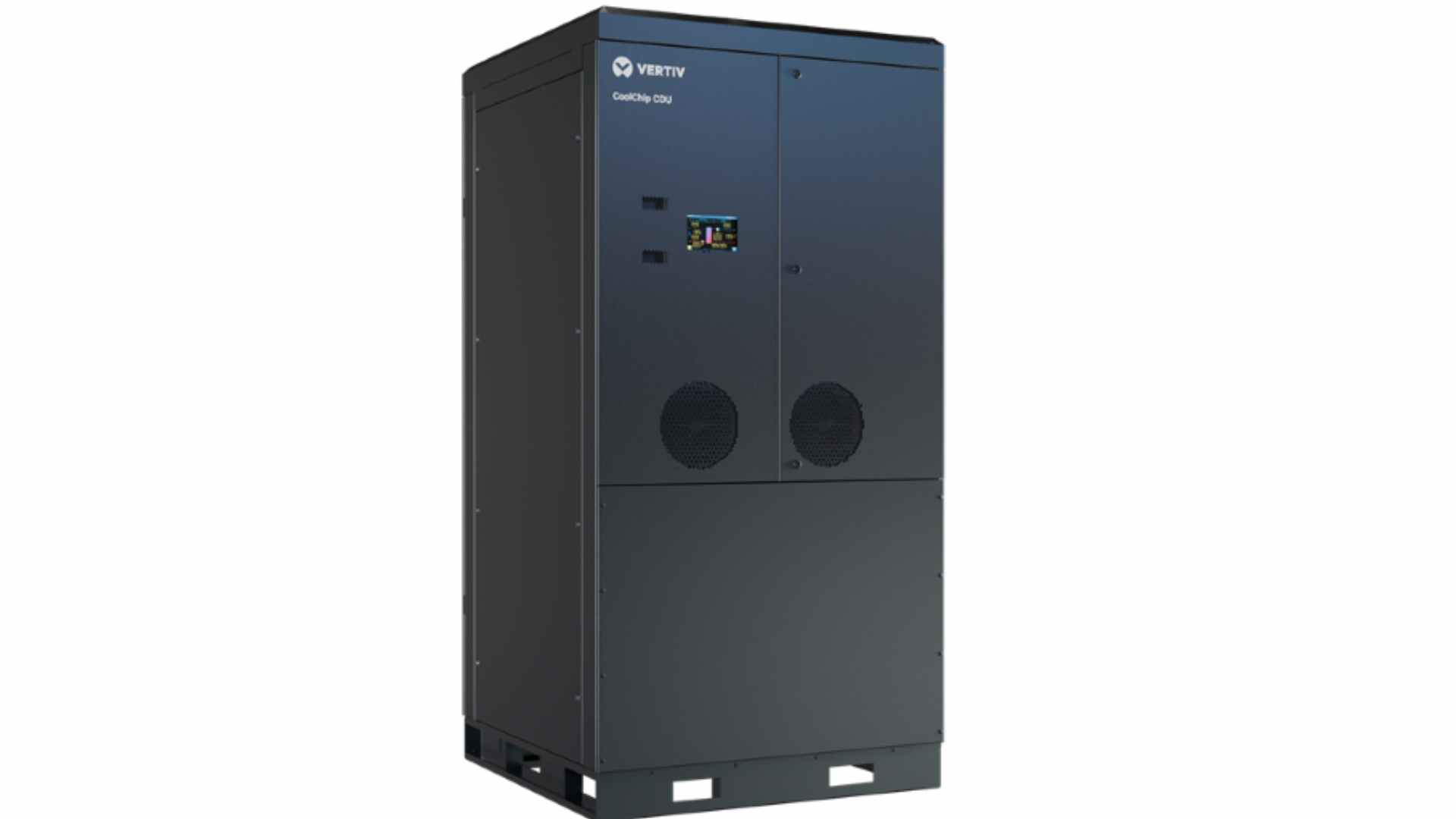
Vertiv (NYSE: VRT), a global leader in critical digital infrastructure, today announced the 2.3 MW Vertiv™ CoolChip coolant distribution unit (CDU) model has qualified as a NVIDIA DSX Ready CDU. The 2.3 MW CDU model is the first CDU to qualify specifically as NVIDIA DSX Ready. Vertiv is among the initial providers of qualified CDU solutions in the NVIDIA DSX Ready program, which enables AI factory builders to identify specific power and cooling products that meet applicable NVIDIA DSX requirements.
“The scale of AI deployment is forcing a more integrated approach to data center infrastructure,” said Scott Armul, Chief Product and Technology Officer of Vertiv. “Compute, power and cooling decisions can no longer be made independently. A constraint on any one of those systems can limit the performance and productive capacity of the entire facility. NVIDIA DSX Ready gives customers a more consistent basis for evaluating critical infrastructure within that larger design.”
Armul continued: “The qualification of Vertiv’s 2.3 MW CDU model reflects our continued focus on providing the thermal building blocks, engineering expertise and lifecycle support customers need as they plan and operate increasingly complex AI environments.”
A coolant distribution unit, or CDU, manages the flow and temperature of liquid used to remove heat from high-density computing systems. The DSX Ready 2.3 MW model is part of Vertiv’s liquid-to-liquid CDU portfolio, supporting direct-to-chip and rear-door heat exchanger applications and designed for installation at the end of a row or along the room perimeter.
Connecting AI factory design to qualified cooling products
AI factories are data centers designed to develop and operate AI models and applications at scale. As computing density and infrastructure scale increase, power, cooling, water, site and grid constraints increasingly influence what builders can deploy.
The NVIDIA DSX AI Factory Platform unifies AI factory design and operations across compute, networking, power, cooling, facilities and software. It helps partners design and operate the factory as one system to support AI output within available power, cooling, water and grid constraints.
NVIDIA DSX Ready connects specific products to applicable NVIDIA DSX requirements. For CDU providers, the program uses the NVIDIA CDU self-qualification suite to determine whether a specific offering meets applicable functional requirements.
Qualification does not replace the engineering required for a particular site or configuration, and customers must still determine how a qualified product will fit within their facility design, system configuration and operating requirements.
For more information about the Vertiv portfolio of power, cooling, infrastructure, IT systems and services for critical digital applications, visit Vertiv.com.
Tech News
Abu Dhabi Projects and Infrastructure Centre and PATRIZIA sign strategic partnership to support infrastructure investment and development
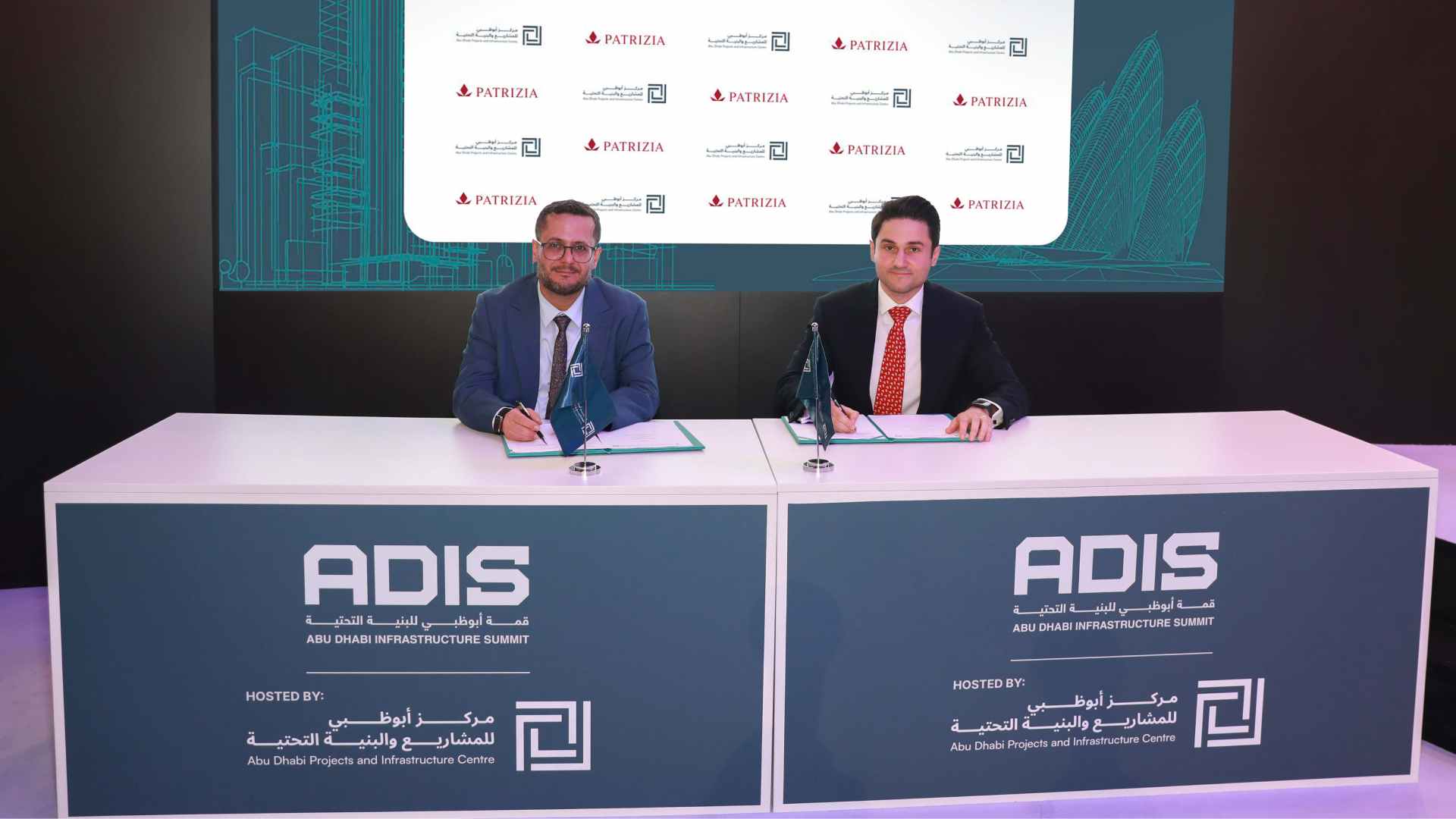
The Abu Dhabi Projects and Infrastructure Centre (ADPIC)and PATRIZIA, an investment manager in real assets, have signed a strategic partnership to deepen cooperation around infrastructure investment and project delivery in the Emirate of Abu Dhabi, drawing on PATRIZIA’s wider real assets expertise.
The strategic partnership was signed during the Abu Dhabi Infrastructure Summit (ADIS) International Roadshow at EXPO REAL 2026 in Munich by His Excellency Eng Maysarah Mahmoud Salim Eid, Director General of ADPIC and Hassan Awada, Senior Executive Officer, MENA at PATRIZIA.
ADPIC sits at the centre of Abu Dhabi’s capital-project programme, coordinating planning, governance, and delivery across approximately 500 projects valued at more than AED 200bn, equivalent to more than USD 56bn. The programme spans housing, transport, culture, education, social infrastructure, and the wider urban systems supporting Abu Dhabi’s long-term growth, livability, and economic competitiveness.
The agreement also reflects the wider objective of the ADIS International Roadshow by connecting Abu Dhabi’s infrastructure ecosystem with international partners that bring specialist expertise and long-term capability, while deepening engagement with Germany and Europe. The partnership establishes a framework for PATRIZIA and ADPIC to exchange international expertise and explore areas where private-sector participation can strengthen project delivery and long-term value creation. This includes dialogue around public-private partnership structures, sharing international best practice in infrastructure financing and delivery, and exploring potential investment and co-investment opportunities arising from Abu Dhabi’s capital projects programme.
The two organisations will also cooperate on market insight, benchmarking and technical studies relevant to infrastructure investment and project delivery, while exploring ways to support greater international participation, knowledge exchange, and access to specialist capability across Abu Dhabi’s ecosystem.
H.E. Eng. Maysarah Mahmoud Salim Eid, Director General of ADPIC, said: “Abu Dhabi’s infrastructure programme requires partners that bring proven international capability, market insight, and a long-term commitment. Through this partnership with PATRIZIA, we will explore how that experience can support private-sector participation, strengthen project delivery, and create long-term value. This is exactly the type of practical international cooperation the ADIS International Roadshow is designed to advance.”
PATRIZIA has worked with institutional investors and partners in Abu Dhabi for 15 years, building long-term relationships across the Emirate. The recent establishment of a permanent presence in the Abu Dhabi Global Market (ADGM) marked a further step in that commitment, strengthening PATRIZIA’s ability to work with regional investors and partners and connect them with its international real assets platform.
Asoka Wöhrmann, CEO of PATRIZIA, said: “Abu Dhabi has established itself as an important centre for long-term investment and infrastructure development. Our teams have worked with clients and partners in the Emirate for the past 15 years, and our decision to establish a permanent presence in Abu Dhabi reflects the importance we attach to that relationship. We have seen first-hand the scale of its ambition and the increasingly important role that international expertise and private capital can play. This partnership creates a framework through which PATRIZIA can contribute its experience across real assets while deepening our longstanding relationships in Abu Dhabi.”
Hassan Awada, Senior Executive Officer, MENA at PATRIZIA, said: “Abu Dhabi is developing into a significant market for infrastructure and real assets investment, supported by major infrastructure pipeline and a clear focus on attracting international investment and expertise. Our partnership with ADPIC gives us an opportunity to closely support on delivering these priorities and to explore where PATRIZIA’s international investment capabilities can support the Emirate’s long-term ambitions.”
The agreement reflects PATRIZIA’s wider strategy of combining its established global real assets platform with selective international growth in markets where it has longstanding client relationships and relevant investment expertise.
Tech News
NetApp to Showcase AI-Ready Data Infrastructure as CEO George Kurian Takes the Stage at Ai Everything Abu Dhabi 2026

NetApp® (NASDAQ: NTAP), the Intelligent Data Infrastructure company, will exhibit at Ai Everything Abu Dhabi 2026, taking place on October 6 and 7 at ADNEC Centre in Abu Dhabi. The event will also feature George Kurian, Chief Executive Officer of NetApp, who will take part in a fireside chat on the Summit Stage titled, “Can AI Be Trusted? The New Architecture of Sovereign, Secure and Safe AI.” As AI moves from generating answers to taking action across the enterprise, Kurian will explore why trust must extend beyond the model to the data, infrastructure and systems AI can access, as well as the growing importance of security, data sovereignty and governance.
At the centre of NetApp’s presence will be the NetApp Platform, designed to provide enterprises an intelligent, connected, governed foundation that delivers zero-copy access to their data. Customers can quickly and confidently access, manage, and activate their data and be confident it is AI-ready and secure so they can take on the most demanding tasks and solve the most complex problems. In addition to being available on-premises, the NetApp Platform is natively embedded in the world’s largest public clouds. As organizations move AI initiatives from experimentation into production, having data that is accessible, governed and protected becomes increasingly important to scaling AI securely and efficiently.
“Abu Dhabi’s ambition to become an AI-native government reflects a broader shift we are seeing across the Middle East, where AI is rapidly moving from experimentation to large-scale deployment. But scaling AI is ultimately a data challenge. Organizations need trusted, secure and accessible data wherever it resides. The NetApp Platform provides the foundation customers need to build Intelligent Data Infrastructure that enables them to move from AI ambition to real business outcomes, securely and at scale.” said Suhail Hasanain, Senior Director and General Manager, MEA at NetApp
During the two-day event, NetApp’s regional and global experts will engage with industry leaders, partners and customers on building AI-ready infrastructure and addressing the data and infrastructure challenges that can prevent AI projects from progressing into production.
Visitors will have an opportunity to hear the latest developments from NetApp INSIGHT 2026 in Las Vegas, one of the company’s key events focused on tackling today’s biggest AI and technology challenges with intelligent data infrastructure.

Kenz ‘de’ Rasasi Debuts at Beautyworld Middle East 2026 with a New Expression of Rasasi Heritage

Burjeel Holdings Launches Preventive Cardiac Campaign Across Its UAE Hospital Network for World Heart Day

Vertiv™ Coolant Distribution Unit qualified as NVIDIA DSX Ready for AI Factory Infrastructure



-

 Trending11 months ago
OPPO A6 Pro 5G Review: Reliable Daily Driver
-

 Tech News2 years ago
Denodo Bolsters Executive Team by Hiring Christophe Culine as its Chief Revenue Officer
-
 VAR1 year ago
Microsoft Launches New Surface Copilot+ PCs for Business
-

 Automotive2 years ago
AGMC Launches the RIDDARA RD6 High Performance Fully Electric 4×4 Pickup
-
Tech Interviews3 years ago
Navigating the Cybersecurity Landscape in Hybrid Work Environments
-

 Tech News1 year ago
Nothing Launches flagship Nothing Phone (3) and Headphone (1) in theme with the Iconic Museum of the Future in Dubai
-

 VAR2 years ago
Samsung Galaxy Z Fold6 vs Google Pixel 9 Pro Fold: Clash Of The Folding Phenoms
-

 Hospitality2 years ago
Gulfood 2025 30th Edition Kicks Off Today, Setting New Benchmarks in F&B Growth and Innovation