
 Have a question? +971 56 404 0503





Financial
INSIDE THE SHIFT TO CLOUD-NATIVE CORE BANKING; BUILDING THE BANK OF TOMORROW


Responses attributed to Amr Kandel, GCC Country Manager and Product Director, Fimple
How is the shift towards cloud-native core banking changing the way financial institutions in the GCC approach technology modernisation?
The biggest change is that banks are moving away from the idea that modernisation has to mean replacing everything at once.
In the GCC, we’re seeing more interest in a progressive approach, introducing new products, capabilities or customer journeys while continuing to use existing systems where they still make sense. Cloud-native and composable architecture makes that much more practical.
Unlike systems that are simply moved from on-premises infrastructure into the cloud, cloud-native architectures are designed so that capabilities can be deployed, updated and scaled more independently. This allows institutions to upgrade selected areas without having to tie every change to a large transformation programme.
GCC institutions also have to consider regulatory requirements, data governance and local market needs. It is not simply about moving systems to the cloud. Banks need to decide where data and capabilities should sit, how they are governed and how the overall environment remains resilient.
What are some of the key technology limitations of legacy core banking systems that GCC banks are looking to overcome today?
There are a few challenges that come up quite consistently.
The first is speed. Many legacy platforms were designed around batch processing, so getting a current view of the customer or making decisions in real time can be difficult.
The second is fragmented data. Customer information and banking capabilities can sit across different systems for deposits, lending, payments, cards and other services. That creates complexity and makes it harder to deliver a consistent customer experience.
The third is product agility. With heavily customised and hard-coded systems, launching a new product or changing an existing one can take months.
And finally, there is integration. When every new fintech, payment provider or ecosystem partner requires another point-to-point integration, the technology environment becomes harder to manage.
For GCC institutions, the challenge is not simply to replace an old system. It is to reduce dependencies and create a more flexible foundation that makes integration, localisation and regulatory change much easier to manage.
Fimple takes an API-first approach to core banking. How does this architecture help financial institutions integrate emerging technologies and third-party services more efficiently?
In an API-first architecture, integration is part of the platform from day one rather than something added afterwards.
At Fimple, core banking capabilities such as accounts and deposits, lending, payments and limits can be accessed through APIs. That makes it much easier for financial institutions to connect channels, fintech partners, wallets, payment providers and other services.
These services are designed to be accessible and reusable. Instead of building a completely different integration every time a new partner comes in, institutions can use the same underlying architecture and governance model.
This approach is particularly relevant in the GCC because every market has its own ecosystem and local requirements. Banks need the flexibility to connect to local payment infrastructures, regulatory services and fintechs without rebuilding their core every time.
As banks increasingly adopt AI and automation, what role does a modern core banking platform play in enabling these technologies at scale?
AI is moving from something that sits around the bank to becoming part of how it operates.
Today, many institutions already use AI for functions like customer assistants, fraud detection, document processing or analytics. However, scaling AI requires a strong foundation underneath it.
AI needs access to accurate and timely data, clearly defined business rules and secure ways to interact with banking capabilities, with the right controls and human oversight.
At Fimple, we see the next step as agentic AI interacting with banking capabilities through secure APIs and controlled workflows. An AI agent could, for example, support an onboarding process, assist with servicing, or work within a lending or payment process while the bank still controls what the agent is allowed to do.
The goal is not simply to make a core banking platform AI-enabled. The real opportunity is to build a platform that is AI-ready by design.
How important is interoperability in the GCC financial ecosystem, particularly as banks, fintechs and digital financial platforms become increasingly connected?
Banks, fintechs, wallets, payment providers and digital platforms across the GCC are becoming more connected, and customers expect their experiences to work together.
For financial institutions, that means the ability to work securely with partners is becoming a business capability, not just an IT requirement.
There is also an important GCC dimension here. The GCC may be viewed as one market from a broader economic perspective, but each country has its own regulatory environment, payment infrastructure and requirements. Institutions need a common foundation that can still accommodate those differences.
This is where composable, API-led architecture can help. Institutions can connect capabilities, launch new propositions and adapt to local requirements without redesigning the entire banking platform each time.
Ultimately, interoperability gives financial institutions the flexibility to participate in the wider ecosystem rather than trying to build everything themselves.
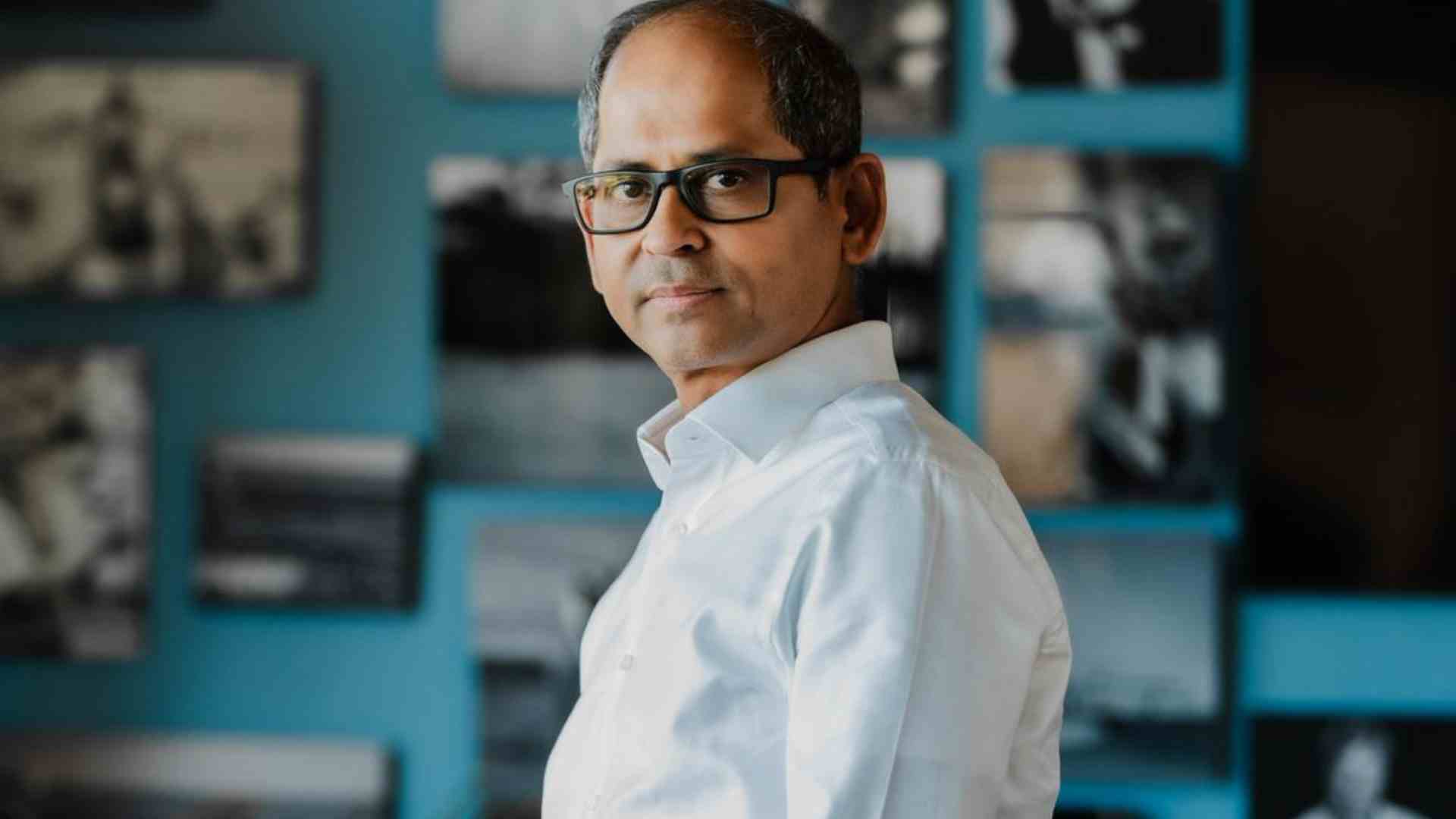
By Ramki Jayaraman, CEO and Managing Partner, Synarchy Consulting
Disruptions to Gulf shipping routes have brought attention to ports and logistics centers beyond the region’s commercial hubs. Khor Fakkan, Fujairah, Sohar and Salalah matter as companies reassess distribution networks and locations. These developments reinforce a wider shift. Industrial clusters have matured, operating costs and competition for skilled people have increased, and businesses are reassessing where activities should sit. Dubai, Riyadh and Abu Dhabi remain important for headquarters, talent and capital, while production, distribution, support services and research can be located elsewhere.
Saudi Arabia’s regional headquarters program draws leadership to Riyadh, while industrial cities and Special Economic Zones are designed for industry and logistics.
A World Bank study published in June 2026 benchmarked 615 MENA cities against more than 8,000 worldwide and found the typical MENA city 17.6% less productive than the best-performing cities of comparable size. A smaller city improves results only when it offers the infrastructure, market access and skills required. The locations offer different advantages. Jubail and Yanbu provide petrochemical and downstream supplier networks. SOHAR Freezone links industry to a deep-water port and signed five investment contracts worth $589 million in the first half of 2026. Ras Al Khaimah offers lower costs within reach of the UAE market. Ain Sokhna serves distribution, while Tangier connects automotive suppliers to export supply chains.
For a chief financial officer, the comparison has four parts: the fully loaded cost of running a function, the time needed to reach target productivity, the additional investment and management effort separation creates, and the effect on resilience and market access. Licensing matters too: a free-zone company may need a mainland license or local distributor to sell domestically.
In the feasibility work we do across the region, the location is often settled before the business case is tested, usually on the strength of an incentive package. The incentive then shapes the plan, when the plan should decide whether it is worth taking. Every function moved to another city still has to run as part of one enterprise. That brings coordination time, duplicated supervision, extra inventory and working capital, and slower decisions.
Savings at the new site must exceed the cost of running across two, and management has to own this design alongside the board. Talent is a hard constraint, though power, water or suppliers can matter more. Operators, technicians and supervisors can be developed locally. Experienced managers and specialists usually must relocate, and their decisions depend on schools, healthcare and housing. A low-cost site can take years to reach target productivity, and those years belong in the investment case.
Public investment and policy shape whether these locations work. Companies must assess the ecosystem behind an incentive: reliable power and transport, housing and healthcare, suppliers and training providers. Zones offering only industrial plots struggle to keep tenants. Recent shipping patterns have highlighted the limits of geographic diversification. Alternative ports and transport corridors provide options, but depend on capacity, connectivity and reliable infrastructure. A business across three locations may still rely on a single port, supplier, technology platform or regulatory approval. Resilience depends on managing dependencies, not simply adding locations.
A disciplined approach is to test a city against one function before committing to large property or capacity. A supplier partnership, distribution node or small operating unit can show whether service levels, staff retention and cash returns hold.
The lasting change is how companies design their footprint: which functions sit where, how sites run as one business, and what each location adds once the cost of connecting it is counted. Boards that make these decisions function by function will grow across the region with fewer expensive surprises.
Ramki Jayaraman is CEO and Managing Partner of Synarchy Consulting, a Dubai-based management and technology advisory firm working with governments, enterprises and family businesses across the Middle East and Africa.
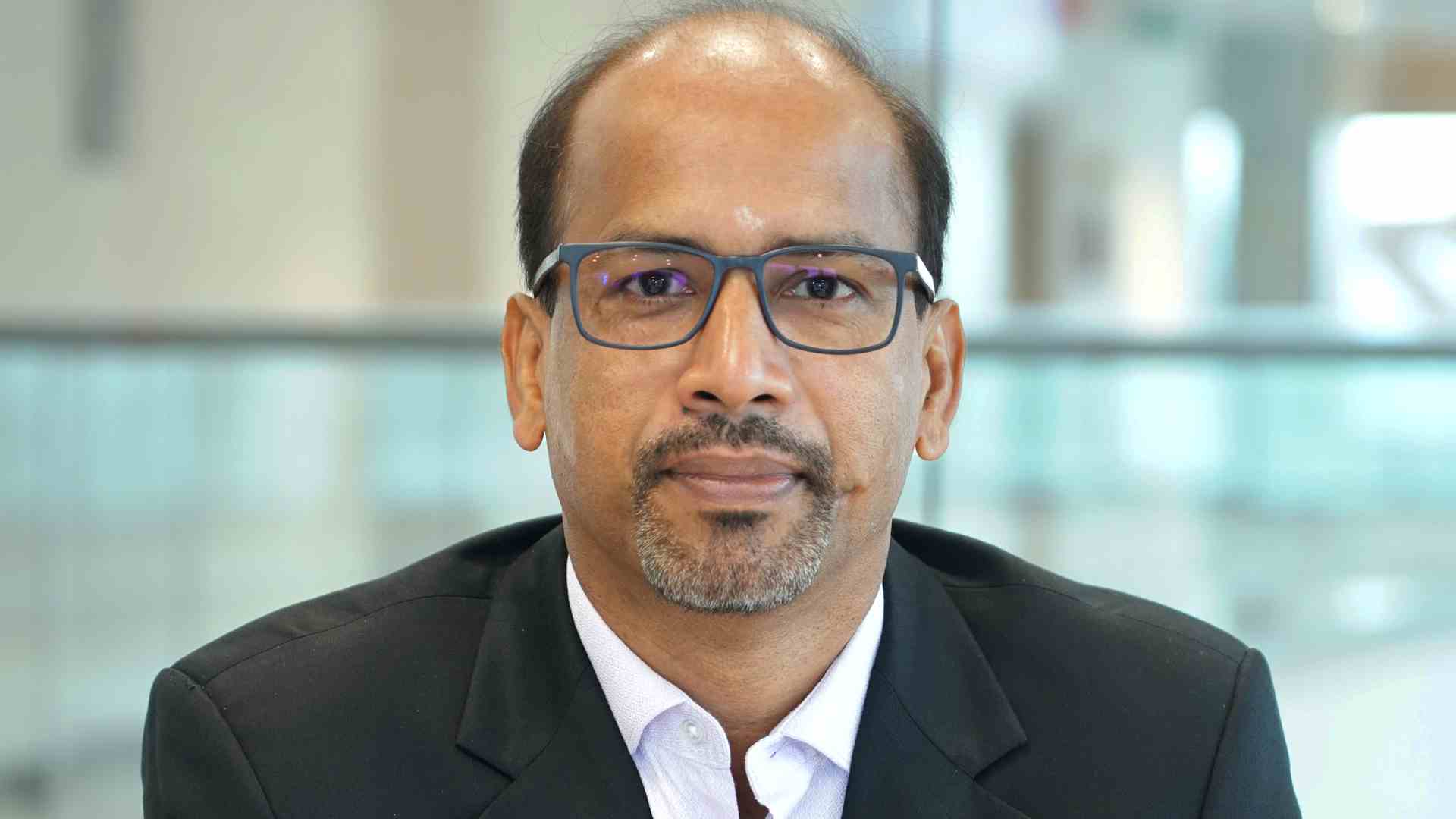
Prakash P. Nair, Vice President – Customer Excellence Group, SunTec Business Solutions
For banks preparing for e-invoicing, much of the readiness conversation naturally centers on technology: system integration, data formats, regulatory requirements, service providers, and connectivity. But technology is only one part of the equation.
The bigger question is whether people and processes are ready to operate in a world where financial data is more structured, connected, and available closer to the point of transaction.
The UAE’s e-invoicing program is designed to reduce manual intervention, improve data quality, strengthen compliance, and provide richer information for decision-making. For banks, readiness should be measured by more than whether systems can generate and transmit a compliant invoice. Employees also need to understand the new data flows, their role in them, and how the information can be used.
From Technology Readiness to Workforce Readiness
The UAE’s transition is already moving into implementation. Its e-invoicing pilot began on July 1, 2026, while mandatory implementation for businesses with annual revenue of AED 50 million or more remains scheduled for January 1, 2027.
This creates a short window to address a practical question: What will people need to do differently once e-invoicing becomes part of the operating model?
The answer will vary across teams. Relationship managers need greater awareness of how pricing, fees, discounts, products, and contractual terms affect billing data. Operations teams need to understand recurring billing issues and address the process or data problems behind them. Finance and tax teams will increasingly work with controls closer to the transaction itself.
IT and risk teams also need to understand what information moves between systems, who relies on it, and where errors or control gaps can emerge.
The common requirement is technical expertise, alongside data literacy and an understanding of business processes.
Redesigning How Work Gets Done
Workforce readiness becomes meaningful when processes change with it.
A bank can implement an e-invoicing platform while retaining many manual practices associated with traditional invoicing. That would limit the value of the investment.
Billentis estimates that electronic and automated invoice processes can generate 60–80% savings compared with traditional paper-based processing.
The value comes from redesigning the processes around the invoice. Manual validation can move towards automated validation, post-transaction reconciliation towards earlier controls, and recurring exception resolution towards preventing those exceptions at source.
This also changes how employees spend their time. Instead of entering, checking, matching, and correcting information, teams can focus more on interpreting exceptions, improving processes, and acting on insights.
That transition requires changes to roles, responsibilities, workflows, and escalation paths.
The Invoice Becomes a Data Asset
With e-invoicing, the invoice does more than document a transaction. Its information can be captured in a structured, machine readable format and used across different parts of the business.
The UAE Ministry of Finance has highlighted this as an opportunity to use invoice data for analysis and more proactive decision making. For banks, that could mean better visibility into transactions, pricing and revenue, while giving operations and risk teams more information to identify issues and strengthen controls.
The value, however, depends on what happens with that information once it is available. Teams need to know how to interpret the data, where it fits into their work, and when to act on what it shows.
Making Readiness Part of Implementation
The impact of e-invoicing will become clear once it starts changing how work moves through the organisation. Employees may work with different information, controls may sit earlier in the transaction, and teams that previously handled separate parts of the process may need to work more closely.
That makes workforce readiness part of implementation itself. Training people on a new platform is useful, but it does not address the wider changes to roles, workflows and decision-making. Banks need to give employees a clear understanding of what the new data means, how it affects their work, and where they are accountable for its quality.
The same thinking applies to processes. Manual steps that made sense under traditional invoicing may become unnecessary, while recurring exceptions may point to problems earlier in the process. Addressing those issues can help teams spend less time correcting information and more time using it.
Readiness should ultimately be visible in the way the organisation operates: fewer manual interventions, fewer recurring errors, faster exception resolution, and greater use of transaction data in decision-making.
A successful implementation depends on what happens after the technology goes live.
The UAE’s e-invoicing framework creates an opportunity for banks to build a more connected approach to financial operations. Capturing that value will depend on how effectively technology, people, and processes work together.
Ultimately, E-invoicing readiness comes down to how well people, processes and technology work together once the new system is in place.

Unmanaged rapid expansion risks severe financial distress when revenue growth fails to cover ballooning overheads
In the UAE’s high-octane economic environment, rapid expansion is often seen as the biggest sign of entrepreneurial success. From ambitious startups in Dubai’s innovation hubs to established firms expanding across the GCC, the goal is clear: capture market share quickly, grow fast, and stay ahead of competitors. However, behind impressive revenue figures lies a hidden risk that can affect even the most promising businesses. When a company grows faster than its operations and financial systems can support, growth can quickly turn from an advantage into a serious financial risk.
The challenge of rapidly scaling a business is that high sales numbers can hide deep structural deficiencies. When a company expands quickly, it may appear financially healthy while facing issues such as falling profits, limited cash flow, and rising costs. This can lead to unnecessary spending, poor inventory management, and longer working capital cycles. What looks like a thriving company from the outside may be one that is spending money faster than it can improve its efficiency.
In the UAE, this challenge is intensified due to the constantly changing market. Changes in regulations, new tax systems, and a more developed financial sector require businesses to have strong management and control systems. At the same time, companies that grow too quickly often face challenges in hiring and managing people. Rapid expansion can create skill shortages, forcing businesses to depend on temporary solutions instead of planned hiring. When teams double or triple in size without proper HR planning and leadership development, company culture can suffer. Communication becomes difficult, responsibilities may overlap, and employee performance can decline. This makes people management one of the most important areas to focus on during business expansion.
The difference between sustainable growth and hasty expansion comes down to financial clarity and strong management. Business leaders must look beyond total revenue and understand the actual quality of their growth.
Are profit margins improving or falling? Is working capital being managed properly? Are internal controls strong enough to handle growing business operations? Does the company have the right HR systems and leadership talent to manage larger teams? Most importantly, is cash flow protected through clear credit policies and timely collections?
One of the first things to suffer when a company expands too quickly is financial discipline. This often begins with falling profit margins. As revenue grows, business operations also become more complex. Without simplified operations and proper cost control, the cost of delivering services and attracting customers can quickly become higher than the money coming in. Internal controls, especially those related to cash flow and payments due from customers, can also become weaker as margins fall.
Cash flow difficulties caused by delayed collections are one of the most common issues faced by growing businesses. Without strict credit controls and follow-ups on receivables, money remains tied up, leaving companies at risk when market conditions change or supply chains are disrupted. Businesses may also accept projects with lower profit margins or offer heavy discounts simply to show growth. This creates a false picture of success, where higher revenue is mistaken for long-term financial stability.
To address this risk, organisations must have clear payment terms, strong collection processes, and proper checks to manage credit risks before cash flow becomes a problem.
Sustainable expansion requires businesses to be ready for growth at every level.
Executive leadership must put strong internal controls, financial planning, risk management systems, and HR processes in place before expanding, rather than waiting for problems to arise. This also means having the discipline to turn down low-profit-margin projects, slow expansion when teams are already stretched, manage investments carefully, and protect cash flow through regular follow-ups and timely collections.
In a market driven by high ambition, the real measure of leadership is not how quickly a business grows, but how well it manages that growth. Expansion should come from a well-executed strategy supported by strong operations, cash flow protection, and effective people management, not a rushed process that jeopardises the company’s future. Growth is an achievement, but disciplined growth is what builds a resilient business.

SpudBros Express Brings the Spud Craze back to Abu Dhabi F1 and Liwa International Festival

Beyond Braking: Asad Badami on ASIMCO’s Next Chapter
The Art of Choosing a Sofa: A Guide by Aati

OPPO A6 Pro 5G Review: Reliable Daily Driver

Denodo Bolsters Executive Team by Hiring Christophe Culine as its Chief Revenue Officer

Microsoft Launches New Surface Copilot+ PCs for Business

2026 in Review: Is AI Becoming More of a Management Problem Than a Technology Problem?

Inside XPENG Brand Night: AI Mobility Lands Centre Stage in Dubai

Chinese Cars Are Reshaping the GCC Market, but Resale Value Could Be the Next Battleground

-
 Trending1 year ago
OPPO A6 Pro 5G Review: Reliable Daily Driver
-
 Tech News2 years ago
Denodo Bolsters Executive Team by Hiring Christophe Culine as its Chief Revenue Officer
-
VAR2 years ago
Microsoft Launches New Surface Copilot+ PCs for Business
-

 Automotive2 years ago
AGMC Launches the RIDDARA RD6 High Performance Fully Electric 4×4 Pickup
-

 VAR12 months ago
Huawei Nova 14 Pro Review: Where Camera Excellence Meets Ecosystem Evolution
-
Tech Interviews3 years ago
Navigating the Cybersecurity Landscape in Hybrid Work Environments
-

 Hospitality2 years ago
Gulfood 2025 30th Edition Kicks Off Today, Setting New Benchmarks in F&B Growth and Innovation
-
News4 years ago
BenQ ZOWIE : First TN 360Hz DyAc+ Gaming Monitor