
 Have a question? +971 56 404 0503





Hospitality
The restaurant trends to bring into 2027

By Jonathon Scanlon, Director of Operations, Sarood Hospitality

The restaurant industry has always been driven by new concepts emerging and dining habits evolving. Operators are constantly looking for new ways for consumers to experience their venue. In an overly saturated market such as Dubai, the speed at which the industry changes is both rapid and considerable.
From an operator’s perspective, our main challenge is knowing the difference between something that creates prolonged value and something that creates short-term noise. While dishes that gain traction across social media certainly have their place within an ever-evolving industry, operators must start to look further down the road and understand how to create a memorable experience for guests – and, more importantly, how to make them come back.
As we look towards 2027, the speed of change shows no sign of slowing. I believe we are moving beyond novelty and towards experiences that are unique and memorable for our guests.
Here are five restaurant trends that I expect to shape the year ahead.
Five trends to bring into 2027
1. Redefined experiential dining
The restaurant is becoming more than just somewhere to have a meal. F&B concepts are becoming destinations where food is all part of the wider experience. We are seeing restaurants and food venues introduce workshops, markets, pop-ups, cultural programming, live entertainment, and family activities. Examples such as Hillhouse Brasserie’s & The Duck Hook’s Market at The Hills demonstrate how food, retail, community, and programming can come together to create a destination that people return to for different reasons.
This is an important distinction from the type of dining experience that has dominated the F&B industry in recent years. Experiential hospitality is about creating a space that has a life beyond the dining table. A restaurant that values this vision might host a cooking workshop one weekend, welcome a local artisan market the next, and offer a family activity after that. Each experience gives guests another reason to visit, while creating opportunities for restaurants to build genuine communities around their brands. As such, for me, the next evolution of F&B will see an increase in restaurants functioning as lifestyle and community destinations as much as places to eat.
2. The sober-curious surge
Health-conscious dining and mindful drinking are also becoming increasingly relevant to the restaurant experience. The sober-curious movement has been gaining momentum globally, and Dubai is no exception. The city is already seeing restaurants introduce more sophisticated alcohol-free wine pairings, creative mocktails, kombucha, tea-based alternatives, and dedicated zero-proof offerings.
For operators, this means a mocktail option or two will no longer be enough. Non-alcoholic drinks should receive the same thought, creativity, and quality as their alcoholic counterparts. More broadly, this reflects a shift towards balance whereby guests are increasingly interested in reduced sugar, functional beverages, mindful eating, and food that makes them feel good without compromising on enjoyment.
The opportunity is to give guests more choice without making anyone feel like an afterthought.
3. AI that works in the background
I expect AI to dominate less conversations in 2027 and instead simply work efficiently and in silence behind the scenes. The most valuable applications will be those where guests do not even notice – forecasting demand, managing inventory, optimising staffing, analysing guest behaviour, reducing waste, and helping teams make faster, better-informed decisions. That matters because restaurant margins are under constant pressure and if technology can help an operator reduce waste, improve productivity, or deliver a more consistent guest experience, it has a tangible role to play.
Technology can make restaurant interiors appear futuristic, but it can also be used to make businesses smarter, operations more efficient, and customers more cared for. Earlier this year, we started exploring the concept of a personalised menu experience, whereby guests could indicate their dietary preferences and see the dishes most relevant to them. That is just one example of AI that we are considering, but there are many.
4. The rise of the homegrown brand
Dubai has long been a destination for international restaurant brands, but its own F&B identity is becoming increasingly distinctive. Homegrown concepts are no longer simply filling a gap between global launches, they are creating restaurants with their own personalities, communities, and points of view, and some are increasingly capable of taking those ideas beyond the UAE such as Saddle’s meteoric rise to Cannes, London and beyond or SALT’s expansion to the rest of the region. This is an exciting development as the region sees the flourishing of brands that have deliberately chosen to be Dubai-based. For operators specifically, that means understanding that local relevance can be a competitive advantage – a restaurant does not need to imitate an international concept to be successful; it needs to understand its market and create something people feel connected to.
5. Service becomes the new luxury
Ultimately, I believe the greatest differentiator in restaurants will be something that has been present for centuries yet has perhaps taken a back seat in recent years: warm hospitality. As technology becomes more sophisticated and restaurants become increasingly experiential, genuine human connection becomes more valuable.
Systems and programmes can repeat customers’ names with ease, but guests remember the restaurant where another human knew their name, where a recommendation felt personal, where the team anticipated a need without being intrusive, or where they simply felt comfortable enough to stay a little longer.
That is particularly important in a market like Dubai, where guests have an extraordinary number of choices and restaurants can often feel transactional. The restaurants that stand out will not necessarily be the loudest, largest, or most technologically advanced. I believe instead, they will be the ones that consistently make people feel welcome.
As we move into 2027, the restaurant industry has an opportunity to focus less on what is new and more on what is meaningful. For F&B operators, that means we must be more selective about the trends we follow, while for guests it means they can expect restaurants to offer some things increasingly valuable: a reason to come in, a reason to stay, and most importantly a reason to return.
Hospitality
Qatar Airways Unveils Onboard Signature Music Created in Partnership with Award-Winning Composer Hans Zimmer

Qatar Airways today unveiled its new onboard signature music, created in partnership with world-renowned composer Hans Zimmer.
Inspired by Qatar and its culture, Qatar Airways’ new onboard music brings a distinctive sound identity to the passenger experience through its collaboration with the iconic composition of Hans Zimmer. The music is also featured on the ‘Burgundy Symphony’ album, a bespoke five-track album that encapsulates the airline’s wider sound identity and signature sound elements.
The collaboration brings together Zimmer’s acclaimed cinematic storytelling and Qatar Airways’ commitment to delivering memorable experiences, creating a recognisable sound that reflects the emotions, moments and memories that define travel.
The launch was celebrated at Hans Zimmer’s highly-anticipated concert in Doha on 6 November, where audiences were given an exclusive first look at the story behind the collaboration through a specially created film on the creative process and inspiration behind Burgundy Symphony, alongside a preview of the music. Qatar Airways passengers can experience the new composition onboard from today.
The Burgundy Symphony album captures the rhythm of travel through five original tracks, each reflecting a different stage of the journey:
Dawn opens the collection with a sense of anticipation and possibility experienced when stepping beyond the daily routine and discovering new horizons.
Dusk reflects the tranquillity of flight as daylight fades and travellers are carried above the clouds beneath a sky illuminated by stars.
The Orchard introduces a restorative pause, inspired by moments of calm and reflection amidst the pace of everyday life. The inspiration for the composition is drawn from the sense of escape offered by the ORCHARD – one of Hamad International Airport’s most distinctive passenger experiences.
Homecoming reflects the quiet gift of returning home and the small but lasting ways travel enriches life. The track encapsulates the adventure continues beyond touchdown, with memories of places and skies keeping moments of wonder alive long after the journey ends.
An Ode to Qatar, concludes the album with a tribute to the nation’s rich heritage and forward-looking vision. The piece brings together a sense of history, culture, and ambition, reflecting a country where tradition and progress exist in harmony.
Following the unveiling, Burgundy Symphony is now available on the Qatar Airways YouTube channel, inviting audiences around the world to experience Hans Zimmer’s original compositions inspired by the journey of travel and the spirit of Qatar Airways.
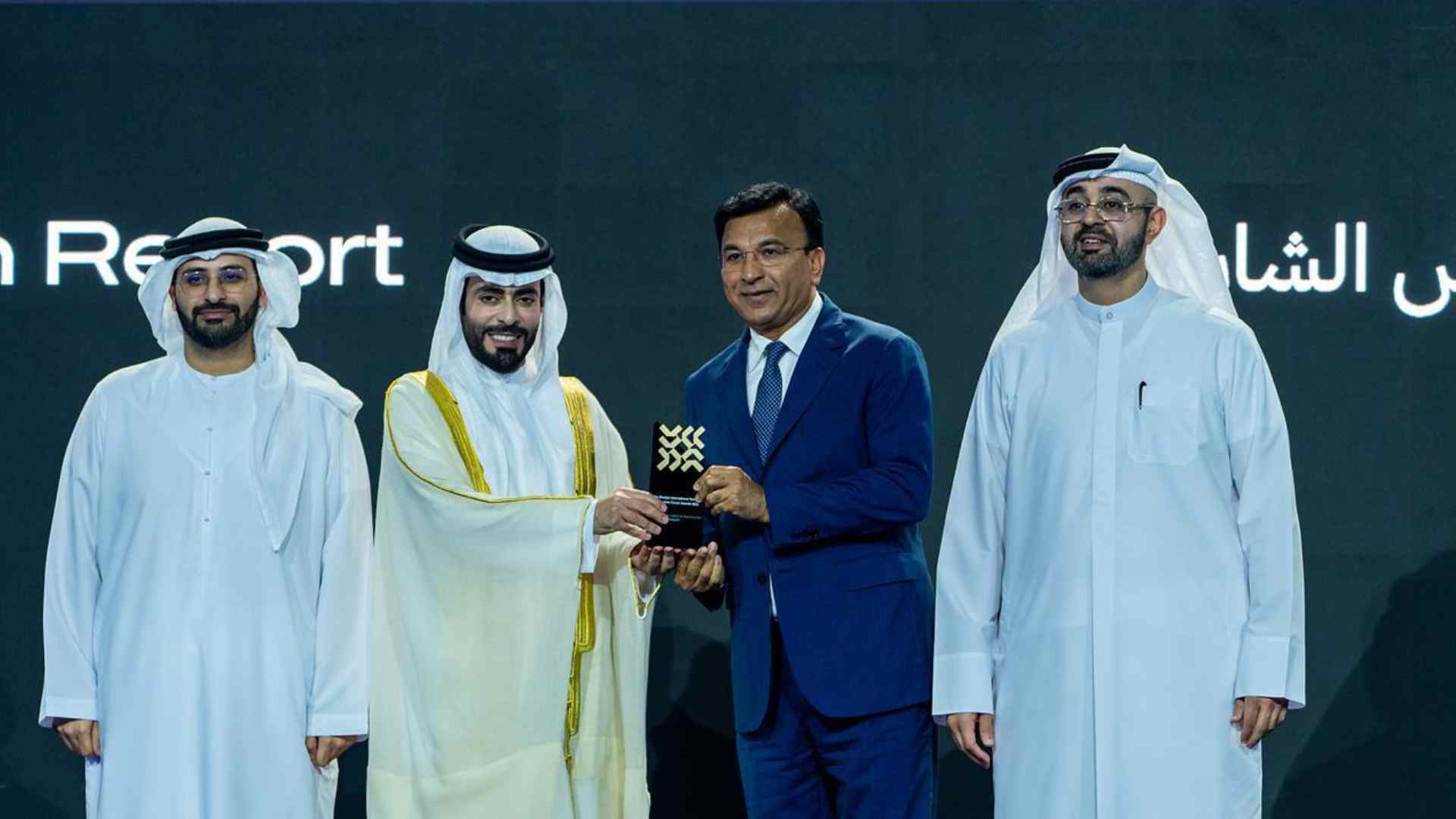
Coral Beach Resort Sharjah has won the Sustain Sharjah award for Hotel Properties at the Sharjah International Travel and Tourism Forum 2026, organised by the Sharjah Commerce and Tourism Development Authority (SCTDA). This marks the resort’s second consecutive recognition under the initiative.
The accolade acknowledges the property’s progress at Level 2 of the programme’s Explorers journey, structured around four core pillars: Guest, Experience, Local, and Story. Across each pillar, the resort has prioritised measurable, practical measures that engage guests, support the surrounding community, and ensure transparent sustainability reporting.
Central to this achievement are three primary operational initiatives:
- Onsite water bottling plant: Replaces single-use plastics with reusable glass bottles, eliminating approximately 300,672 plastic bottles annually.
- Winnow AI food-waste system: Weighs and monitors kitchen waste in real time, enabling culinary teams to curb excess directly at source.
- Onsite biodigester: Installed in 2026, making the property the first hotel in Sharjah to process organic waste entirely on site.
Commenting on the achievement, Iftikhar Hamdani, Area General Manager of Coral Beach Resort Sharjah, said: “Securing the Sustain Sharjah award for the second consecutive year is an honour for our entire team. Initiatives such as our water bottling plant, AI-driven waste monitoring, and onsite biodigester reflect our daily operational commitment—one shared with our guests, partners, and the local community. We thank the Sharjah Commerce and Tourism Development Authority for this recognition and for their steady leadership in advancing sustainable tourism across the emirate.”
Coral Beach Resort Sharjah is a signatory to the Glasgow Declaration on Climate Action in Tourism and continues to align its operations with broader international climate targets.
Hospitality
Qatar Airways Connects Doha to Caracas, Venezuela, and Bogotá, Colombia with First Flight
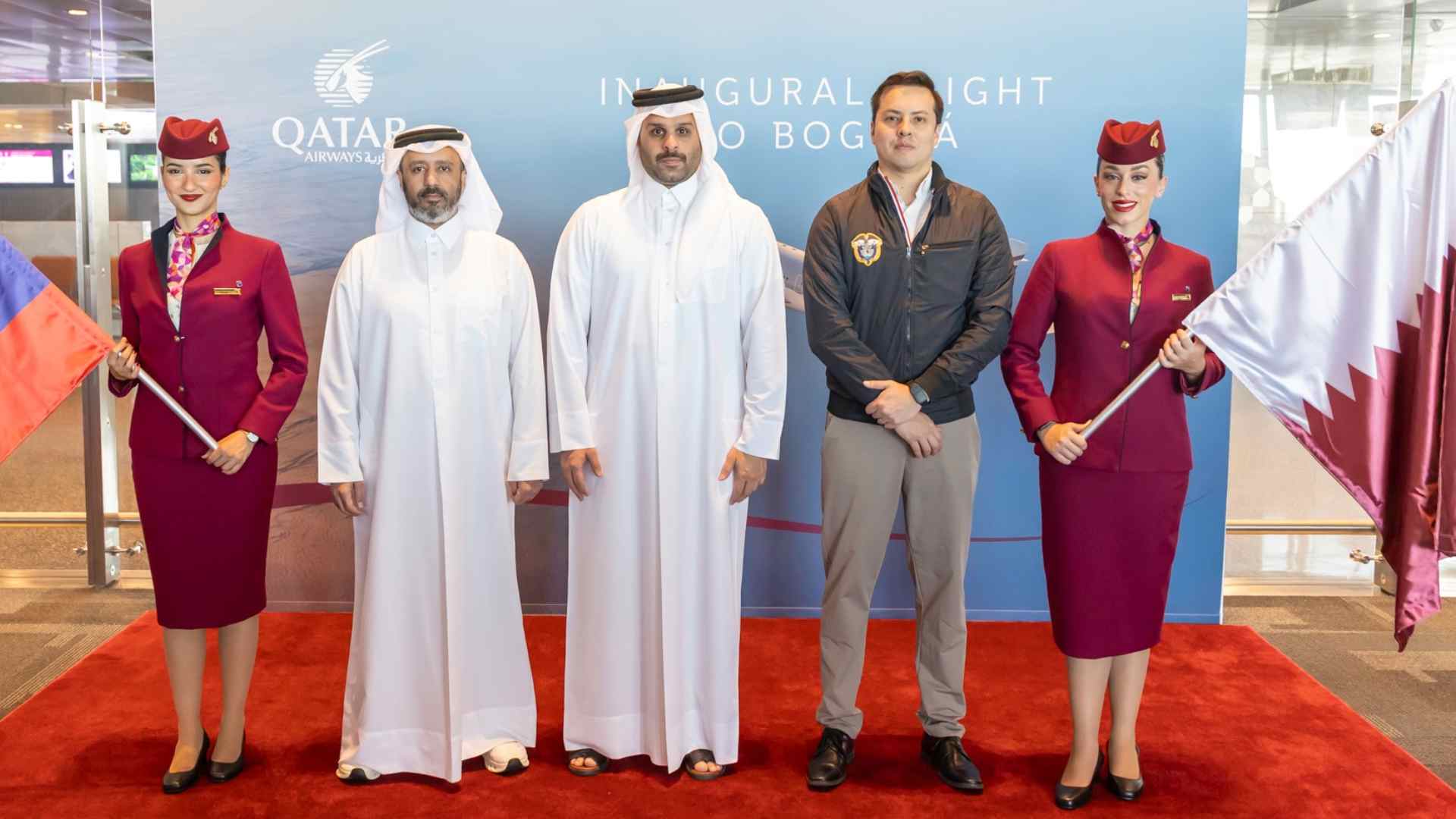
Qatar Airways has inaugurated its new twice-weekly service connecting Doha with Caracas and Bogotá. The service represents a significant milestone for the airline, as Qatar Airways becomes the first Gulf carrier to serve Venezuela, and the first airline to operate nonstop services from the Middle East to both Bogotá and Caracas. The new route underscores the airline’s commitment to strengthening global connectivity for the region and is operated on Boeing 777-200LR aircraft.
Qatar Airways flights to Caracas (CCS) and Bogotá (BOG)
Qatar Airways’ flight schedule has been designed to provide smooth onward connections through Hamad International Airport to key markets including Australia, China, Japan, Lebanon, South Korea, and the United Arab Emirates. This offers passengers greater flexibility and seamless transfer options across Qatar Airways’ global network of over 170 destinations.
Departing every Wednesday and Sunday:
Doha (DOH) to Bogotá (BOG) – Flight QR783: Departure 07:35; Arrival 16:25
Bogotá (BOG) to Caracas (CCS) – Flight QR783: Departure 17:55; Arrival 21:00
Caracas (CCS) to Doha (DOH) – Flight QR783: Departure 23:30; Arrival 20:35
The addition of Caracas and Bogotá marks the 16th and 17th destinations in the Americas served by Qatar Airways. The airline began serving South America in 2010 with its inaugural flight to Brazil’s São Paulo.
The airline has recently expanded its partnership with LATAM to include LATAM Airlines Colombia, offering travellers greater access to the region. Qatar Airways will place its code on LATAM-operated flights between Bogotá and key domestic destinations including Cartagena, Armenia, Barranquilla, Bucaramanga, Cali, Cúcuta, Ibagué, Leticia, Medellín, Montería, Neiva, Pereira, Pasto, Riohacha, San Andrés Island, Santa Marta, and Yopal.
Qatar Airways continues to strengthen global connectivity, serving more than 170 destinations this winter. Bookings can be made at qatarairways.com or through the airline’s mobile app.


Qatar Airways Unveils Onboard Signature Music Created in Partnership with Award-Winning Composer Hans Zimmer

Laura Hammett Expands to the Middle East with New Studio in Dubai
RAF ABU DHABI ADDS STARZPLAY AS DISTRIBUTION PARTNER ACROSS MENA



-

 Trending1 year ago
OPPO A6 Pro 5G Review: Reliable Daily Driver
-

 Tech News2 years ago
Denodo Bolsters Executive Team by Hiring Christophe Culine as its Chief Revenue Officer
-
 VAR2 years ago
Microsoft Launches New Surface Copilot+ PCs for Business
-

 Automotive2 years ago
AGMC Launches the RIDDARA RD6 High Performance Fully Electric 4×4 Pickup
-

 VAR11 months ago
Huawei Nova 14 Pro Review: Where Camera Excellence Meets Ecosystem Evolution
-
Tech Interviews3 years ago
Navigating the Cybersecurity Landscape in Hybrid Work Environments
-

 Hospitality2 years ago
Gulfood 2025 30th Edition Kicks Off Today, Setting New Benchmarks in F&B Growth and Innovation
-

 Tech News1 year ago
Nothing Launches flagship Nothing Phone (3) and Headphone (1) in theme with the Iconic Museum of the Future in Dubai