
 Have a question? +971 56 404 0503





Tech News
Five Strategies from Government HR and Youth Thought Leaders to Shape the Future of Work

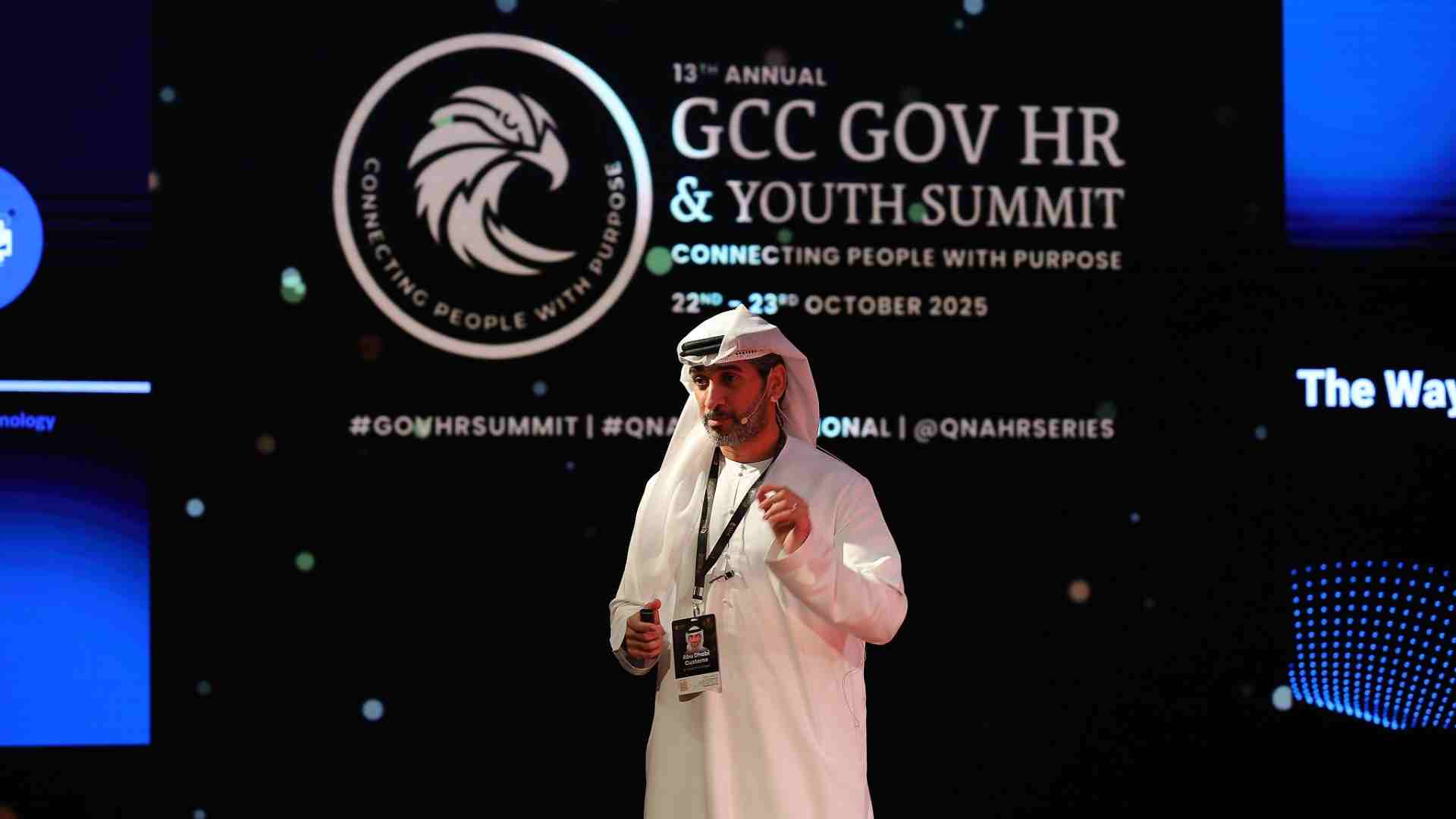
Government and public sector leaders from across the GCC will gather in Abu Dhabi on 20th and 21st October 2026 for the 14th Annual GCC GOV HR & Youth Summit and Awards, taking place at the Grand Hyatt Abu Dhabi Hotel & Residences Emirates Pearl. Organised by QNA International, the region’s most exclusive B2B public sector HR platform will bring together CHROs, People Leaders, policymakers and change agents under the theme Time of Opportunities: Uncovering the New Realities of Work.
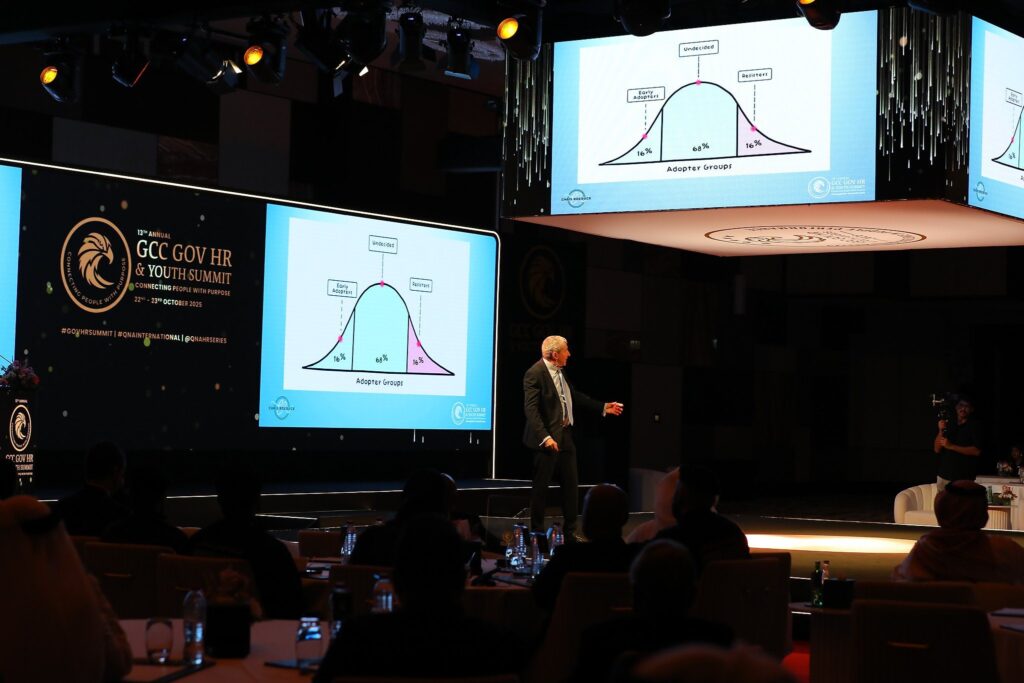
As governments across the GCC advance their national transformation agendas, the challenge is no longer simply to modernise systems or introduce new technologies, but to build institutions that can translate innovation into meaningful outcomes for people. This requires a more integrated approach to workforce transformation, one that brings together digital capability, adaptive leadership, employee experience and a culture of continuous learning.
Ahead of the event, Advisory Board Members and speakers have shared the shifts they expect to define government work across the region.
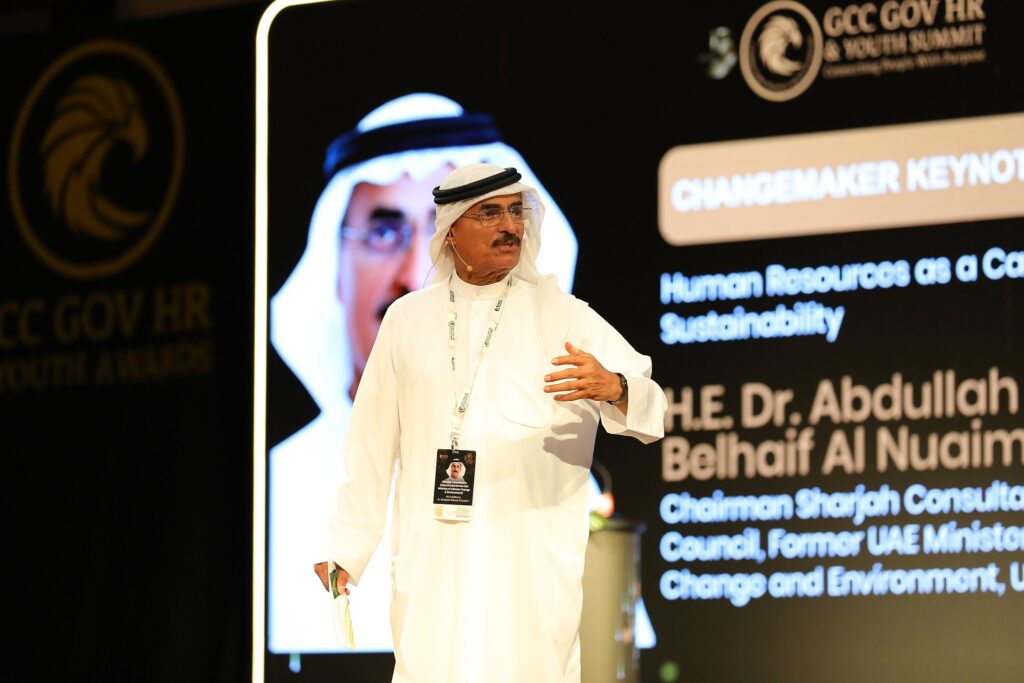
From Measuring Volume to Measuring Impact
His Highness Captain Shaikh Abdulaziz Sultan Al Nuaimi, Director of Excellence Awards Branch, Ajman Police, UAE, said: “Government excellence requires a shift from measuring the volume of achievements to measuring impact, added value, and the capacity for anticipation and adaptation.”
His Excellency Mohamed Al Marzooqi, Executive Director Of Support Services, Government Entity, UAE, added: “The future of government support services is not about doing the same things faster; it is about doing things differently and creating greater value for people.”
For HR, that means a new role. Brigadier Rashid Nasser Rashid Abdullah, Director of the General Department of Human Resources, Dubai Police, UAE, said: “The biggest shift facing government HR leaders in the GCC today is moving from managing workforces to unlocking leaders.” He added: “Our job is no longer to plan for one future, but to build institutions ready for many, and people who are trusted to learn, adapt, and take initiative.”
Dr. Ebrahim Al Khajeh, Human Resources Director, Abu Dhabi Customs, UAE, named the same turning point: “The shift from traditional HR to strategic workforce transformation.”
These themes reflect the Summit’s focus areas of Human-Centric Government and Disruptive Leadership.
AI, Accountability and Trust
His Excellency Mohamed Al Marzooqi said: “Our greatest challenge is not adopting AI; it is preparing our people and our institutions to work differently because of AI.”
Maitha A. Balfaqeeh, Senior Vice President of Shared Services, ADNOC Gas, UAE, said: “Technology and AI are fundamentally reshaping the role of shared services — moving them from primarily transactional functions to becoming more intelligent, predictive, and employee-centric.”
Iman Khalid Al Marzouqi, Group Chief Support Services Officer, Alpha Dhabi Holding, UAE, said: “HR leaders must help shape how AI is used, how decisions affecting people are made, and who remains accountable.”
These conversations connect to the Summit’s focus areas of AI-First Workforce, Agentic Intelligence, Workforce Intelligence and Trust, Talent, and Resilience.
National Talent and the Next Generation
From Saudi Arabia, Reem AlRehaili, Chief of Corporate Services, ARDARA (PIF), Saudi Arabia, said: “Vision 2030 asks us to do more than increase the number of Saudis in the workforce, it asks us to build their capability.” She added: “The most powerful thing we can offer is not a package. It is a purpose.”
Dr. Ebrahim Al Khajeh said: “Government organizations are increasingly prioritizing national talent development, digital skills, and leadership capabilities rather than simply filling vacancies.”
His Highness Captain Shaikh Abdulaziz Sultan Al Nuaimi said: “Young professionals are essential partners in shaping the future of government work, with their digital skills, capacity for innovation, and ability to adapt rapidly.”
Iman Khalid Al Marzouqi said: “We need to understand their strengths, give them meaningful responsibility, and provide mentors who are personally invested in their progress.”
Advising young professionals, Maitha Ahmed Balfaqeeh said: “Future leaders need to understand the business, not only their own function.” Reem AlRehaili’s message to young women entering the workforce was: “The door is open. What matters now is what you do once you walk through it.”
These perspectives are at the heart of the Summit’s Nationalization 2.0, Workforce 2035 and GCC Next-Gen Leaders tracks.
Why This Summit, Why Now
Brigadier Rashid Nasser Rashid Abdullah said: “This Summit matters now because change is moving faster than institutions can respond, and the UAE has chosen not to wait.”
Sidh N.C., Director of QNA International, said: “The voices ahead of this year’s Summit point in one direction: government HR in the GCC is moving from administering the workforce to leading change. Over two days in Abu Dhabi, we will bring together the leaders, the ideas and the young talent shaping the next chapter of public service across the region.”
The 14th Annual GCC GOV HR & Youth Summit and Awards 2026 will provide a platform for public sector leaders to exchange practical insights, challenge established approaches and explore how government HR can evolve from a support function into a strategic driver of institutional performance, national talent development and long-term public value.
Tech News
KnowBe4 Expands Global Data Residency to Six Markets Across the Middle East, Asia-Pacific and South America
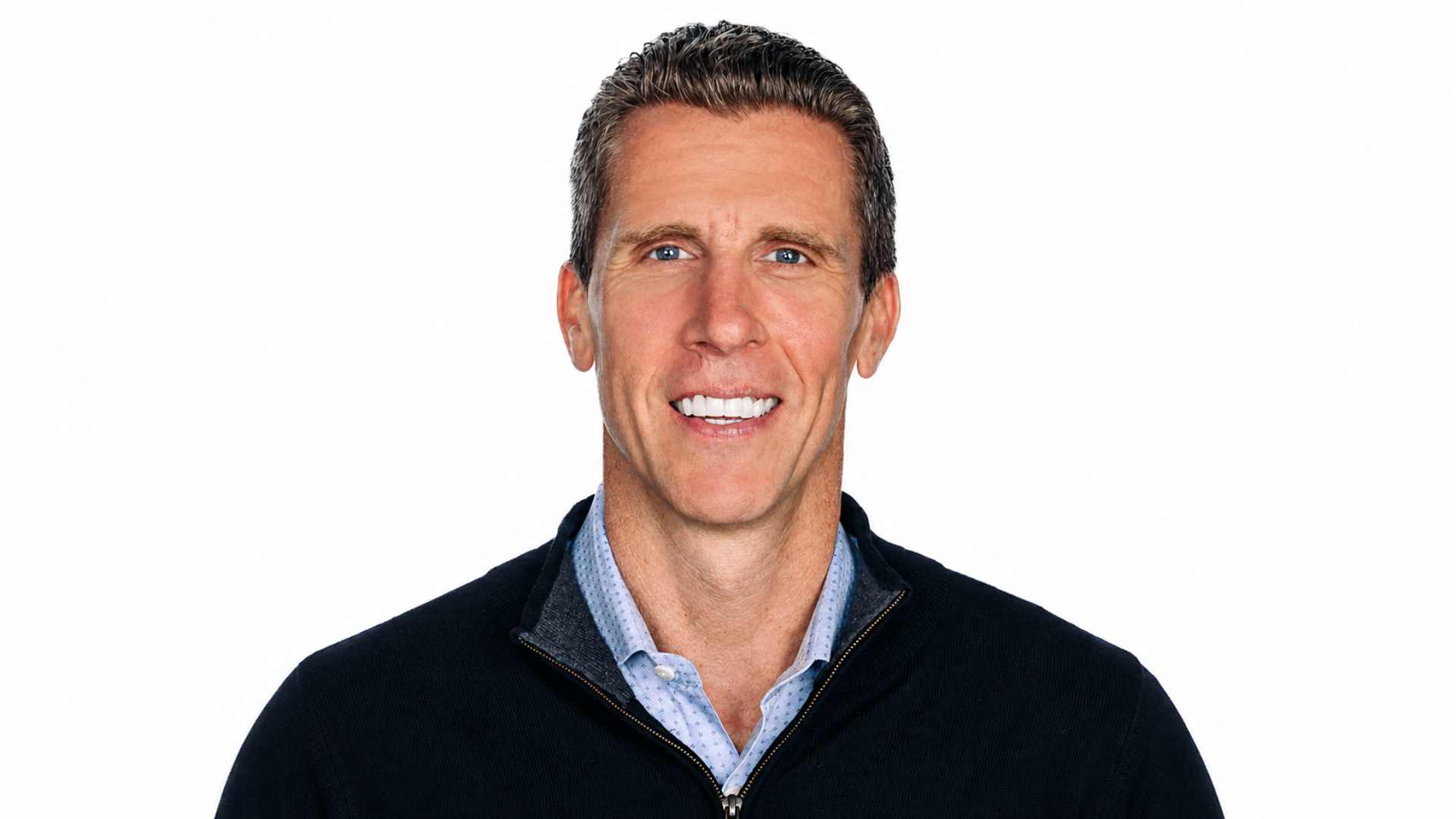
KnowBe4, the global leader in digital workforce security, securing both humans and AI agents, today announced its commitment to expanding in-region data residency across six key international markets: Australia, Brazil, Japan, Saudi Arabia, Singapore, and the United Emirates (UAE).
The expansion addresses escalating regulatory complexity worldwide. By offering local data residency, KnowBe4 enables organizations across industries to secure their whole workforce, people and AI agents, while aligning with local data privacy frameworks.
These new regions are in addition to KnowBe4’s existing data residency capabilities across Canada, the European Union (Germany and Ireland), the United Kingdom and the United States.
“As the global regulatory environment evolves and cyber threats grow more sophisticated, international organizations require clarity and confidence regarding where their sensitive data is stored,” said Bryan Palma, CEO at KnowBe4. “Expanding our in-region data residency across these six markets gives our customers greater control over their data at rest, so they can secure their workforces with confidence.”
Launch in each new region is contingent on the underlying cloud infrastructure becoming generally available. Customer data at rest in these regions will be available across the KnowBe4 Platform.
Tech News
Cambridge Health Group and Heriot-Watt University to advance research and innovation in the GCC
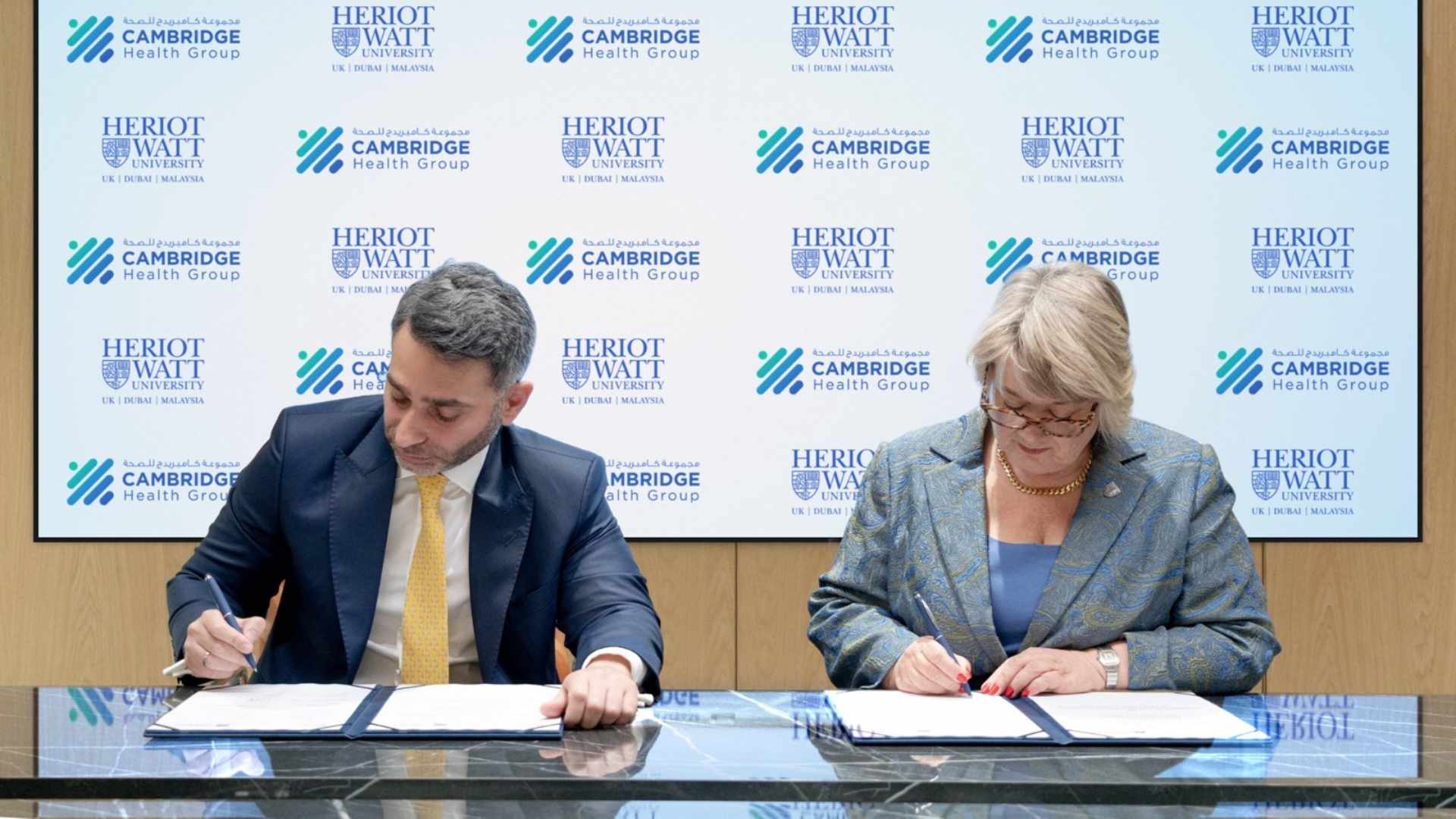
Cambridge Health Group (“CHG an international specialist healthcare group providing post-acute care and a subsidiary of Amanat Holdings PJSC (“Amanat”), has signed a three-year Memorandum of Understanding (MoU) with Heriot-Watt University (“Heriot-Watt”) to advance academic research in rehabilitation, long-term care and specialised care.
The agreement brings together CHG’s clinical expertise in long-term care and post-acute rehabilitation across six facilities in the UAE and Saudi Arabia with Heriot-Watt University’s pioneering research in healthy ageing, rehabilitation robotics and assistive technologies. Through its Global Research Institute in Health and Care Technologies and the National Robotarium, Heriot-Watt combines expertise in engineering, artificial intelligence and behavioural science to address complex challenges in health and care. Heriot-Watt’s global presence spans five campuses across Scotland, Dubai and Malaysia, with plans to establish a further campus in Saudi Arabia.
Together, the organisations will connect research with clinical practice, creating opportunities to develop and evaluate innovations that support rehabilitation, maximise independence and improve quality of life for people with complex, long-term care needs. The partners will also pursue national and international research grants, including collaboration with government and industry partners.
The partnership will also support the development of the region’s specialist healthcare workforce through academic training, executive education and tailored development programmes. These will include postgraduate research supervision, internships, industry placements and mentoring, helping connect academic learning with practical experience.
Professor Dame Heather McGregor, member of Heriot-Watt University’s Executive, said: “Universities have an important role in ensuring that research responds to the needs of society and that its benefits extend beyond academia. Our partnership with Cambridge Health Group brings our researchers closer to the questions and challenges shaping healthcare practice, creating opportunities to translate knowledge into meaningful improvements in care. Through education, professional development and practical experience, we look forward to supporting the skills and expertise the region will need as its healthcare sector continues to evolve. We look forward to doing meaningful work together.”
Wael K. Abdallah, Group Chief Executive Officer of Cambridge Health Group, said: “As healthcare systems across the region evolve, advancing specialised care will increasingly depend on our ability to connect research, clinical expertise and real-world healthcare needs. At Cambridge Health Group, we see research and innovation as important enablers of better care outcomes and the continued development of post-acute healthcare across the GCC. Our collaboration with Heriot-Watt creates opportunities to bring academic expertise closer to clinical practice, strengthen the capabilities of our workforce and contribute to the long-term advancement of the sector.”
The partnership represents a step towards translating research into practical advances in specialised care, with the potential to benefit patients, healthcare professionals and the wider sector.
On the back of the biggest buildout in data infrastructure history, VAST Data, the AI Operating System company, today announced that it is at the center of many of the largest deployments in this space. In the first three quarters of the current fiscal year, just 14 of the more than 1,000 companies VAST serves have made more than $10 billion in aggregate commitments for VAST Data software and supporting platform hardware. The scale and breadth of these investments have no known precedent in the history of data infrastructure and signal that VAST is leading the world in this explosive buildout of superintelligent systems.
The VAST AI OS is the platform of choice for leading AI clouds and frontier AI labs to enable scalable AI training and inference. In 2026, the expansion of AI use cases and the realization of the value of superintelligent systems has reinforced the mandate for organizations to build with industrial-grade storage and database infrastructure to support GPUs and AI accelerators.
The progress VAST has made:
- 14 customers have each committed over $100M in VAST Data-powered system build outs
- Four of those 14 customers have each committed over $1B this year
- VAST Data-powered systems now support 9 of the top 10 frontier AI labs
“Growth at this scale only happens when an entire industry is rebuilding at once,” said Renen Hallak, Founder and CEO of VAST Data. “That’s what the new AI stack is. It’s being built for models and agents, not people and applications, and data sits at the center of it. The companies building it at the largest scale, for people, agents and now robots, are choosing VAST to anchor it.”
Supply Aligned Through 2029
The scale of data capacity VAST’s partners are delivering is unprecedented, and is now representing a significant percentage of the overall global NAND flash produced for enterprise data centers. At a time of such extreme supply chain pressure, VAST is also now taking steps to ensure the next phase of superintelligent system buildout. Increased flash supply takes years to bring online due to the investments in NAND fabs.
Because VAST is partnered with so many of the world’s AI builders, VAST has unique visibility into where capacity demand is headed. The company has structured agreements with its supply chain partners to align more than 200 exabytes of flash capacity through 2029. This forward planning supports VAST’s scaling objectives for the next several years, maps to the growth outlook of its largest customers and helps the AI clouds, labs, enterprises and government organizations building on the VAST AI OS plan their infrastructure with confidence.
“Planning for hundreds of exabytes isn’t only about protecting our customers’ growth projections,” said Jeff Denworth, Co-Founder of VAST Data. “It’s about keeping flash available to hundreds of clouds, so that every AI builder, not just the largest, has the capacity it needs to build and compete.”


H&H’s AED 30 Billion Dubai Peninsula Development Takes Shape, Home to Five World-Renowned Hospitality Brands

The Best Festive Turkey Takeaways in Abu Dhabi This Christmas

Qatar Airways Connects Doha to Caracas, Venezuela, and Bogotá, Colombia with First Flight



-

 Trending1 year ago
OPPO A6 Pro 5G Review: Reliable Daily Driver
-

 Tech News2 years ago
Denodo Bolsters Executive Team by Hiring Christophe Culine as its Chief Revenue Officer
-
 VAR2 years ago
Microsoft Launches New Surface Copilot+ PCs for Business
-

 Automotive2 years ago
AGMC Launches the RIDDARA RD6 High Performance Fully Electric 4×4 Pickup
-

 VAR11 months ago
Huawei Nova 14 Pro Review: Where Camera Excellence Meets Ecosystem Evolution
-
Tech Interviews3 years ago
Navigating the Cybersecurity Landscape in Hybrid Work Environments
-

 Hospitality2 years ago
Gulfood 2025 30th Edition Kicks Off Today, Setting New Benchmarks in F&B Growth and Innovation
-

 Tech News1 year ago
Nothing Launches flagship Nothing Phone (3) and Headphone (1) in theme with the Iconic Museum of the Future in Dubai