
 Have a question? +971 56 404 0503



Tech News
Data Center World makes its Middle East debut as AI infrastructure build-out accelerates

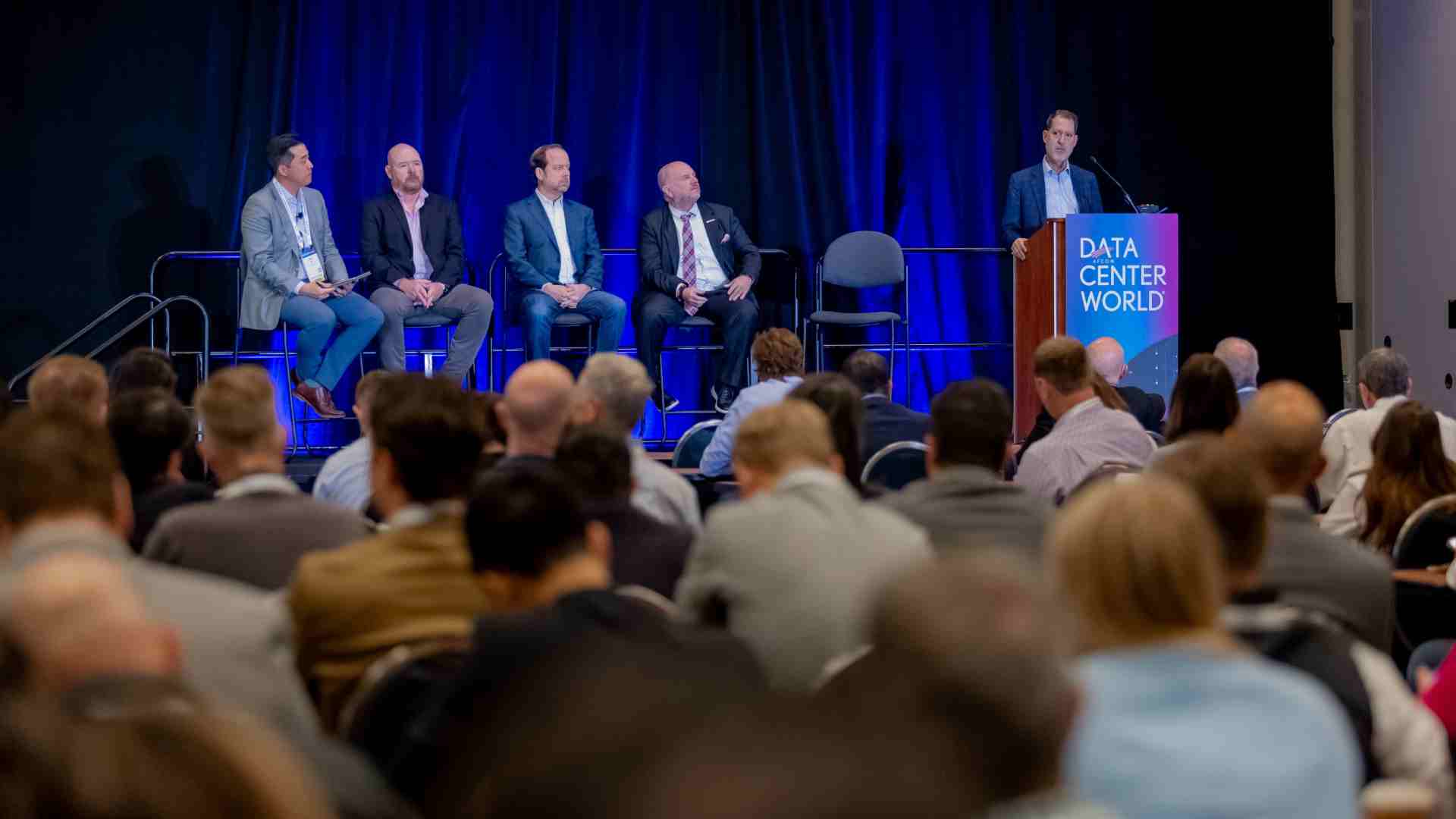
Data Center World, the premier global event for data centre IT infrastructure and innovation for more than four decades, will hold its first Middle East edition in the UAE capital, bringing together the people who build, power, finance and regulate the region’s AI infrastructure.
Building on the success of it’s flagship US conference, Data Center World Middle East, running from 17-18 November, follows the launch of events inAustralia, Latin America and Europe in 2026, reflecting rising global demand for digital infrastructuredriven by AI adoption, cloud growth and surging data consumption.
Organised by inD – an Informa/DWTC company – the event puts delegates in the same room as the UAE Ministry of Energy and Infrastructure, the UAE Ministry of Investment and the companies building and running Gulf capacity, including Khazna Data Centers, Core42 and Tabreed. Hyperscalers AWS, Google and Oracle, and AI computing leader NVIDIA, complete a line-up that pairing senior industry voices with deep technical expertise.
The event at the Dusit Thani Abu Dhabi coincides with a sharp rise in regional capacity. Omdia, the technology research and advisory group within Informa TechTarget, identifies the Middle East as the world’s next data centre hot spot. It estimates the region added 1GW of new IT capacity in 2025, with data centre IT capacity compounding at almost 25% a year.
Efficiency is also becoming a priority as capacity scales. The Ministry of Energy and Infrastructure and Khazna Data Centers have launched a pilot to cut energy use in data centers and district cooling systems, with the technology claimed to reduce cooling-related consumption by up to 40%.
Eng. Mozah Alnuaimi, Chief AI Officer, UAE Ministry of Energy and Infrastructure, a speaker on the opening panel, said: “Every megawatt saved in cooling is a megawatt of compute the grid does not have to build for. In our climate, water efficiency and energy efficiency are the same discipline: liquid cooling, closed-loop systems, and clear intensity requirements. Through the Global Cooling Pledge and the Ministry’s planning tools, we are treating data centres as a national efficiency opportunity, not only a load, so growth in AI strengthens the system rather than strains it.”
The UAE is at the centre of that growth aiming to double the digital economy’s contribution to GDP, from 9.7% to 19.4%, within a decade. In Abu Dhabi, the Department of Government Enablement’s AED 13 billion digital strategy targets full migration to sovereign cloud on the way to an AI-native government by 2027, supported by a Unified Government Data Centre. Khazna, meanwhile, is building G42’s 1GW Stargate UAE cluster with partners including OpenAI, Oracle, NVIDIA, Cisco and SoftBank.
Sean James, Distinguished Engineer – Energy Systems, NVIDIA, said: “AI load does not behave like the load utilities planned for. I watched other markets pay for that lesson. Hundreds of megawatts moving in seconds is a power quality problem before it is a capacity problem. Solve it inside your own fence, with storage and controls. The same batteries that smooth your load can hand the utility ride-through and voltage support back. Then the interconnection conversation shifts from whether to when.”
Tara Gibb, Senior Event Director for Data Center World, said: “Data Center World goes where the industry is building, and the Gulf is now one of its most important growth markets. For the first time in the region, the operators building Gulf capacity, the hyperscalers and two federal ministries share one programme. The programme moves from market outlook to closed-door technical workshops, so delegates leave with clear priorities and the right contacts to move their projects forward.”
Day one opens with a panel on the risks and realities of the Gulf’s 3GW target for AI, power and sovereign demand. A Market Outlook 2030 session will assess where growth is most investable across the UAE, Saudi Arabia, Oman, Qatar and Bahrain.
The programme runs across keynote, conference and technical tracks, with closed-door workshops on AI hall design, cooling and electrical design for AI loads, built for people running data centres in 50°C conditions
The headline sponsor is Midea Building Technologies, the building and data centre cooling division of Midea Group, with Marwan AlObaidi, Regional Director – Data Centers & Applied Systems, among the speakers. Enover and E-kerno are Gold Sponsors with Endress+Hauser as Silver Sponsors.
Tech News
Cambridge Health Group and Heriot-Watt University to advance research and innovation in the GCC
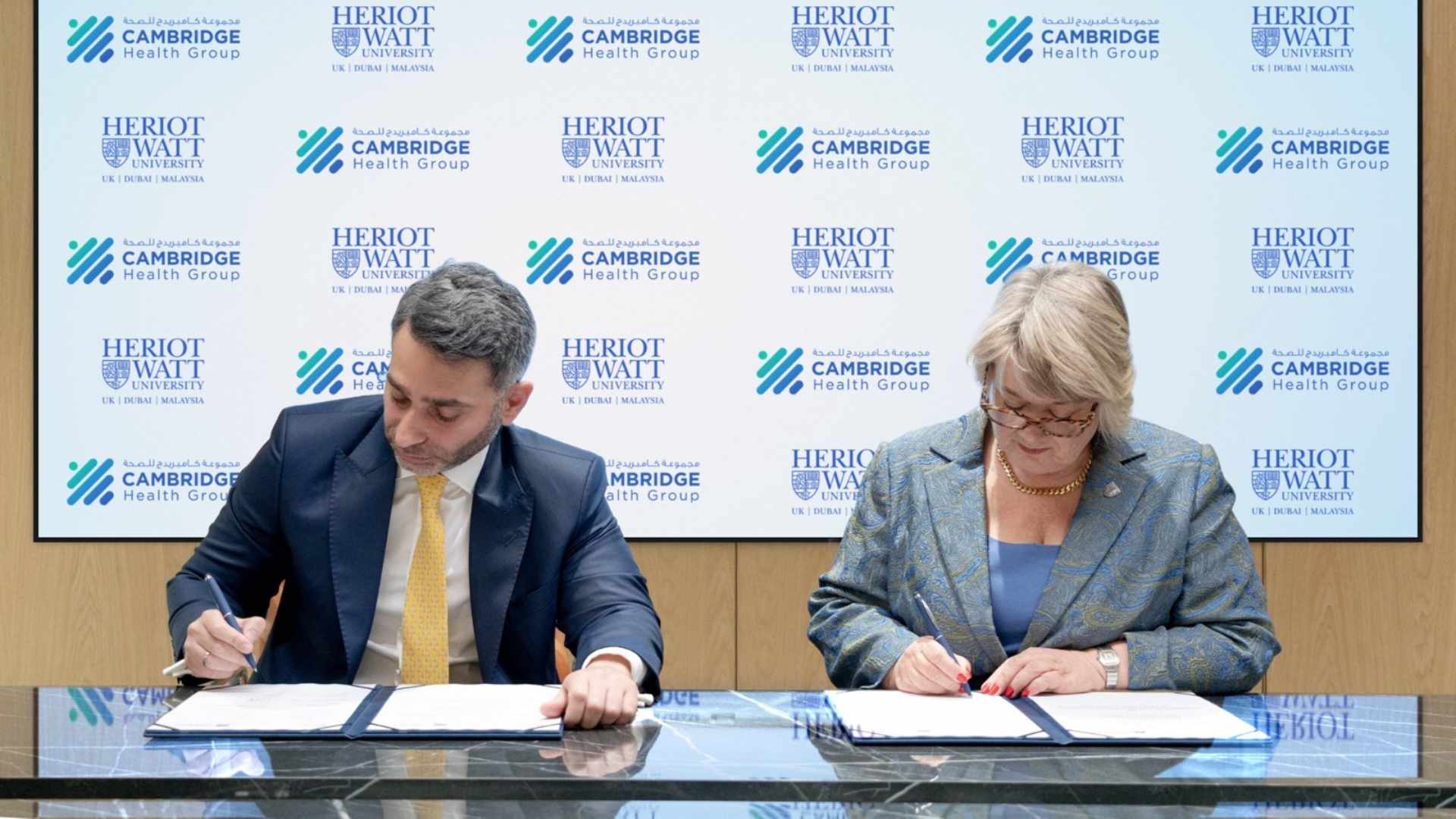
Cambridge Health Group (“CHG an international specialist healthcare group providing post-acute care and a subsidiary of Amanat Holdings PJSC (“Amanat”), has signed a three-year Memorandum of Understanding (MoU) with Heriot-Watt University (“Heriot-Watt”) to advance academic research in rehabilitation, long-term care and specialised care.
The agreement brings together CHG’s clinical expertise in long-term care and post-acute rehabilitation across six facilities in the UAE and Saudi Arabia with Heriot-Watt University’s pioneering research in healthy ageing, rehabilitation robotics and assistive technologies. Through its Global Research Institute in Health and Care Technologies and the National Robotarium, Heriot-Watt combines expertise in engineering, artificial intelligence and behavioural science to address complex challenges in health and care. Heriot-Watt’s global presence spans five campuses across Scotland, Dubai and Malaysia, with plans to establish a further campus in Saudi Arabia.
Together, the organisations will connect research with clinical practice, creating opportunities to develop and evaluate innovations that support rehabilitation, maximise independence and improve quality of life for people with complex, long-term care needs. The partners will also pursue national and international research grants, including collaboration with government and industry partners.
The partnership will also support the development of the region’s specialist healthcare workforce through academic training, executive education and tailored development programmes. These will include postgraduate research supervision, internships, industry placements and mentoring, helping connect academic learning with practical experience.
Professor Dame Heather McGregor, member of Heriot-Watt University’s Executive, said: “Universities have an important role in ensuring that research responds to the needs of society and that its benefits extend beyond academia. Our partnership with Cambridge Health Group brings our researchers closer to the questions and challenges shaping healthcare practice, creating opportunities to translate knowledge into meaningful improvements in care. Through education, professional development and practical experience, we look forward to supporting the skills and expertise the region will need as its healthcare sector continues to evolve. We look forward to doing meaningful work together.”
Wael K. Abdallah, Group Chief Executive Officer of Cambridge Health Group, said: “As healthcare systems across the region evolve, advancing specialised care will increasingly depend on our ability to connect research, clinical expertise and real-world healthcare needs. At Cambridge Health Group, we see research and innovation as important enablers of better care outcomes and the continued development of post-acute healthcare across the GCC. Our collaboration with Heriot-Watt creates opportunities to bring academic expertise closer to clinical practice, strengthen the capabilities of our workforce and contribute to the long-term advancement of the sector.”
The partnership represents a step towards translating research into practical advances in specialised care, with the potential to benefit patients, healthcare professionals and the wider sector.

On the back of the biggest buildout in data infrastructure history, VAST Data, the AI Operating System company, today announced that it is at the center of many of the largest deployments in this space. In the first three quarters of the current fiscal year, just 14 of the more than 1,000 companies VAST serves have made more than $10 billion in aggregate commitments for VAST Data software and supporting platform hardware. The scale and breadth of these investments have no known precedent in the history of data infrastructure and signal that VAST is leading the world in this explosive buildout of superintelligent systems.
The VAST AI OS is the platform of choice for leading AI clouds and frontier AI labs to enable scalable AI training and inference. In 2026, the expansion of AI use cases and the realization of the value of superintelligent systems has reinforced the mandate for organizations to build with industrial-grade storage and database infrastructure to support GPUs and AI accelerators.
The progress VAST has made:
- 14 customers have each committed over $100M in VAST Data-powered system build outs
- Four of those 14 customers have each committed over $1B this year
- VAST Data-powered systems now support 9 of the top 10 frontier AI labs
“Growth at this scale only happens when an entire industry is rebuilding at once,” said Renen Hallak, Founder and CEO of VAST Data. “That’s what the new AI stack is. It’s being built for models and agents, not people and applications, and data sits at the center of it. The companies building it at the largest scale, for people, agents and now robots, are choosing VAST to anchor it.”
Supply Aligned Through 2029
The scale of data capacity VAST’s partners are delivering is unprecedented, and is now representing a significant percentage of the overall global NAND flash produced for enterprise data centers. At a time of such extreme supply chain pressure, VAST is also now taking steps to ensure the next phase of superintelligent system buildout. Increased flash supply takes years to bring online due to the investments in NAND fabs.
Because VAST is partnered with so many of the world’s AI builders, VAST has unique visibility into where capacity demand is headed. The company has structured agreements with its supply chain partners to align more than 200 exabytes of flash capacity through 2029. This forward planning supports VAST’s scaling objectives for the next several years, maps to the growth outlook of its largest customers and helps the AI clouds, labs, enterprises and government organizations building on the VAST AI OS plan their infrastructure with confidence.
“Planning for hundreds of exabytes isn’t only about protecting our customers’ growth projections,” said Jeff Denworth, Co-Founder of VAST Data. “It’s about keeping flash available to hundreds of clouds, so that every AI builder, not just the largest, has the capacity it needs to build and compete.”
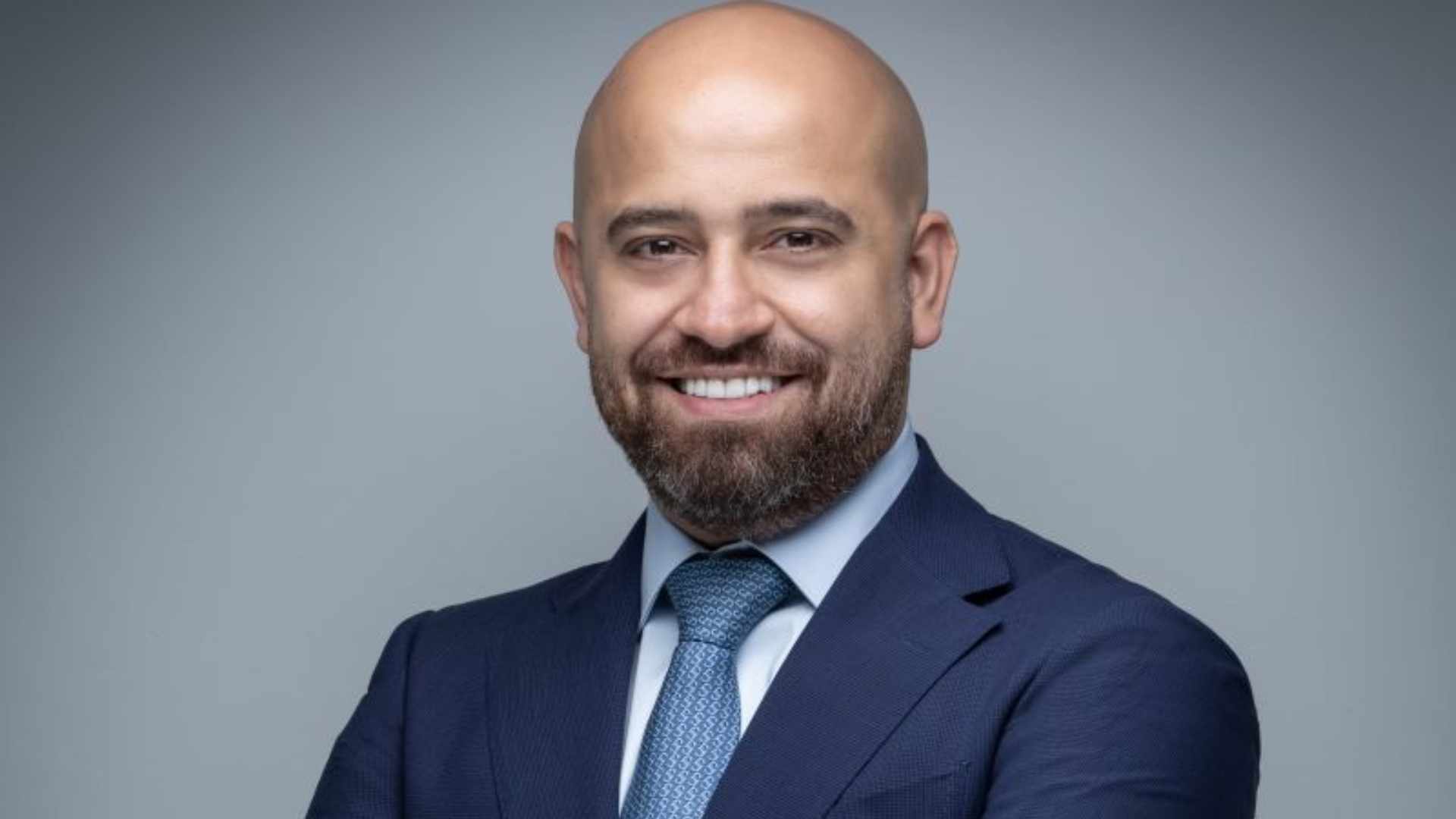
Cloudera, the only data and AI platform trusted by organisations to bring AI to their data, announced its participation at GITEX Global 2026, the Middle East’s premier technology showcase.
As AI adoption accelerates across the Middle East, businesses must ensure their data is accessible, well governed, and secure to support AI advancements. Organizations who handle sensitive data carefully consider where AI workloads run and how data is managed across their public cloud, private cloud, and on-premises environments.
The UAE’s focus on sovereign AI and a secure digital environment is driven by nationwide digital-first initiatives. The UAE’s cloud computing market is projected to reach $23 billion by 2032, due to numerous government mandates for sovereign cloud adoption across the public sector.
Alongside these mandates, enterprises within the region are adopting similar sovereignty principles. Organizations are looking to transition their AI workloads from public clouds to private or on-premises environments. However, this migration exposes a critical infrastructure challenge as legacy systems often confine valuable information in isolated data silos.
The impact of these silos is evident in Cloudera’s recent Data Readiness Index, which reveals that while 91% of IT leaders across EMEA express confidence in their data, only 26% report that it is fully governed. To dismantle these barriers and bridge the gap between AI and data readiness, Cloudera introduces Cloudera Anywhere Cloud, a modular hybrid platform engineered specifically for the agentic era.
“Our participation at GITEX Global 2026 comes at a time when organisations are looking more closely at how they manage data and deploy AI,” said Ahmad Shakora, Group Vice President, Cloudera Middle East. “Our work with global technology providers and regional partners reflects the different requirements businesses face, from accessing AI models to managing data across hybrid and sovereign environments.”
To further strengthen its regional ecosystem, Cloudera has forged strategic alliances, including Mistral AI, to assist Cloudera with delivering the hybrid data foundation essential for moving enterprise AI into more organisations. Supported by Cloudera’s Anywhere Cloud platform, this new offering by Cloudera helps equip organizations in the Middle East with a secure, localized platform needed to scale advanced AI securely and independently.
Based on stand H15-E40, Hall No. S15, Cloudera will feature live demonstrations showing how enterprises can tackle persistent data governance and architectural challenges to allow organisations to utilise AI securely within their own organisations.

Your Shade Is Waiting: Namshi Opens the First-Ever Beauty of Joseon Pop-Up in the UAE

Stablecoins Can Move Money Faster. Can They Make Cross-Border Payments More Reliable?
TWG TEA TAKES THE STAGE WITH 2026 TWELFTH NIGHT ADVENT CALENDAR



-

 Trending1 year ago
OPPO A6 Pro 5G Review: Reliable Daily Driver
-

 Tech News2 years ago
Denodo Bolsters Executive Team by Hiring Christophe Culine as its Chief Revenue Officer
-
 VAR2 years ago
Microsoft Launches New Surface Copilot+ PCs for Business
-

 Automotive2 years ago
AGMC Launches the RIDDARA RD6 High Performance Fully Electric 4×4 Pickup
-

 VAR11 months ago
Huawei Nova 14 Pro Review: Where Camera Excellence Meets Ecosystem Evolution
-
Tech Interviews3 years ago
Navigating the Cybersecurity Landscape in Hybrid Work Environments
-

 Hospitality2 years ago
Gulfood 2025 30th Edition Kicks Off Today, Setting New Benchmarks in F&B Growth and Innovation
-

 Tech News1 year ago
Nothing Launches flagship Nothing Phone (3) and Headphone (1) in theme with the Iconic Museum of the Future in Dubai