
 Have a question? +971 56 404 0503





Home Feature
The Thinking Behind a Successful Building


By Amir H. Greiss, Founder and Chief Executive Officer, SharpMinds Consulting Engineers
When a new building opens, attention naturally falls on what can be seen – whether its the form, the facade, or the quality of the public spaces. Yet the true measure of a building only becomes clear after it has been occupied for a year or two. By then, it has been through a full cycle of seasons and daily use, and its performance can be judged on facts rather than first impressions.
Those facts are practical ones. Are the spaces thermally comfortable throughout the day? Do people move through the building easily at peak times? Are energy and maintenance costs in line with what was forecast? Can equipment be serviced and replaced without disrupting occupants?
The answers are rarely down to a single design decision. They reflect how well the different disciplines involved in a project worked together, and how early they started doing so. Understanding that process explains why some buildings perform well for decades, while others struggle soon after handover.
Vision is the starting point, not the finished product
Every successful building begins with a clear architectural vision. It defines how the building relates to its context, how people will experience it, and what it aims to achieve. But a vision on its own is not a building. It has to withstand the realities of structure, climate, budget, regulation and the way people actually behave.
A useful way to manage this is to distinguish between design intent and design form. The form is the specific solution shown in the drawings. The intent is the outcome that solution is meant to deliver.
Consider a design that features a large, fully glazed atrium. The form is the glass. The underlying intent may be that occupants feel connected to daylight and to one another. If analysis shows the glazing would create an excessive cooling load, a team that understands the intent can deliver it differently, through roof lights, shaded courtyards or a more open circulation core. A team focused only on the form tends either to defend it at any cost or to remove the idea altogether. Clearly stated intent gives a project room to adapt without losing its purpose.
Why integration must begin at concept stage
In a traditional, linear process, the architect develops the design and engineers are brought in afterwards to make it work. The approach appears orderly, but it often produces compromises that nobody deliberately chose.
The symptoms are familiar across the industry. A structural grid conflicts with the parking layout below. Ceiling voids prove too shallow for mechanical services, so finished ceiling heights are reduced. A facade is finalised before its solar exposure has been properly analysed, leaving the cooling system to compensate.
These issues share a common thread where they are inexpensive to resolve at concept stage and costly to resolve on site. The ability to influence a building’s cost and performance is greatest at the start of a project and declines steadily as the design is fixed.
That is why integrated design, in which architects, structural engineers, mechanical, electrical and plumbing engineers and cost consultants work together from the outset, has become best practice. Early collaboration is not a constraint on creativity. Structural engineers can propose systems that free up floor space or create column-free public areas. MEP engineers can recommend orientation and massing adjustments that reduce energy demand without altering the building’s character. When engineering is treated as part of the design process rather than a correction applied afterwards, it strengthens the architectural vision instead of diluting it.
Project planning where vision meets time and cost
Project planning is often viewed as an administrative function covering programmes, procurement and site logistics. In reality, it has a direct influence on design quality, because it determines which elements of the original vision are actually delivered.
Procurement is a clear example. Major equipment such as chillers, lifts and specialist facade systems can have long lead times and varying availability. If they are not identified and ordered early, delays can force late substitutions with whatever is available. Each change may seem minor, but together they can gradually erode the performance and quality the design was intended to achieve.
Realistic budgets and programmes play a similar protective role. When time or budget runs short late in a project, the elements most likely to be cut are often those that gave the building its distinctive value, from material quality to sustainability features.
Effective planning also involves knowing when key decisions need to be fixed. Choices such as the structural system or the location of major plant become very expensive to revisit beyond a certain point, while others can safely remain flexible for longer. Clarity about this sequence reduces late-stage redesign, protects the programme and gives the whole team a more stable basis for coordination. Constructability belongs here too, a design must be buildable on its specific site, with the available workforce and supply chain, and within the realities of the local climate.
Designing for the operational life of a building
A building may take a few years to design and construct, but it will be operated for decades. Over that lifespan, the combined cost of energy, maintenance and periodic upgrades typically far exceeds the original construction cost. Decisions made during design therefore have long-term financial and environmental consequences for owners.
Despite this, facility managers and maintenance teams are rarely involved in early design discussions. Their input can be invaluable. They understand which plant rooms are difficult to access, which control systems are hard to operate and which finishes deteriorate quickly under daily use. Involving them early leads to practical improvements: clear routes for replacing large equipment, metering that supports meaningful energy monitoring, and building controls that can be operated without specialist knowledge.
Occupant experience deserves equal attention. Thermal comfort, natural light, acoustics and intuitive wayfinding directly affect wellbeing and productivity. Post-occupancy evaluation, the structured process of assessing how a building performs once in use, is one of the most reliable ways to verify whether these goals have been met and to inform future projects.
Adaptability is the final consideration. Few buildings are used in exactly the same way for their entire life. Generous floor-to-floor heights, structural capacity for future loads and flexible building services allow a building to accommodate new uses as needs change, extending its useful life and reducing the case for early demolition.
Protecting design intent across the project lifecycle
When buildings underperform, the cause is rarely one poor decision. More often, important information is lost as a project moves between stages from concept to detailed design, from design team to contractor, and from contractor to operator. At each transition, some of the original intent can be diluted or misunderstood.
Digital tools have significantly improved coordination. Building Information Modelling allows clashes between structure and services to be identified virtually rather than on site. However, a model records what has been decided, not why. Technology supports collaboration, but it cannot replace professional judgement or clear communication between disciplines.
Two practices help close this gap. The first is documenting the reasoning behind major design decisions, so that those who inherit the project understand what they are expected to protect. The second is ensuring clear accountability for the performance of the building as a whole, rather than only for individual packages of work. Without it, each party can complete its own scope successfully while the overall outcome still falls short.
Clients also have an important role. Projects tend to be most successful when the client defines at the outset what success means in practical terms, including expected energy performance, operating costs, occupant comfort and flexibility, and keeps those measures in view throughout delivery.
What a successful building ultimately delivers
A successful building is often one that occupants barely notice, because it simply works. Spaces are comfortable and easy to navigate. Maintenance teams can operate and service it efficiently. Running costs align with expectations, and the building can evolve as the needs of its users change.
Achieving that outcome depends less on any single discipline than on the quality of collaboration between them. Architecture provides the vision and the human experience. Engineering ensures the building is safe, efficient and resilient. Project planning makes sure both are delivered within the realities of time, cost and construction.
A design vision is only as strong as the process that carries it into the real world. The drawings are where that process begins, but a building’s performance over the decades that follow is where its success is truly measured.

From scented boyfriend sweaters to cocktails that cross continents, Murali, Co-founder of Jockamo Barnes, is turning Dubai’s cultural quirks and everyday observations into unexpected creative experiences.
In an industry where every brand wants to be culturally relevant, Murali, Co-founder of innovation studio Jockamo Barnes, is challenging the very idea of what that means. “Culture is one of the most abused words today, especially in marketing and advertising. Every agency claims it. Every brand sees it as a shortcut to relevance. But few truly understand what it means to be a part of it.”
For Murali, the answer lies in creating rather than chasing culture. At Jockamo Barnes, that translates into unconventional objects, brands and experiences rooted in human behaviour, often inspired by the contradictions of life in the UAE. ““Every project starts with a tension: two things that shouldn’t necessarily work together, but somehow do. The UAE produces them faster than anywhere I’ve lived,” he explains.
Take Boomerang, a playful inversion of hospitality inspired by a New Orleans cocktail tradition. Instead of visiting bars to be served, Murali travels with a drink to gift bartenders around the world, creating an unexpected connection between cocktail communities across continents.
Then there’s Pre-Worn Boyfriend Sweater, a tongue-in-cheek take on Dubai’s dating culture, built around the observation that “the best part of situationships are the clothes you steal; the worst part is the man.” Created with fragrance studio Oo La Lab Dubai, the scented sweaters capture three familiar dating archetypes: the Entrepreneur, the Gym Rat and the Desert Philosopher. Beyond the humour, the project explores how scent and touch can evoke memories in ways traditional advertising cannot.
A more poignant expression of this thinking is Bitter Meat, created with Aidan Frederick. Described as a love letter to the UAE’s expat experience, the project challenges the familiar narrative of Dubai as a temporary stopover. Its message, “for those who chose here,” speaks to residents who have made the country home by choice. “Reverence without romanticism. We love this place too much to put it on a postcard,” says Murali.
This creative philosophy also shapes the studio’s collaborations. The Away Kit, developed with Super Cellar for the 2026 World Cup, features more than 17 editorial posters pairing nations with culturally inspired cocktails. The insight is distinctly local: Dubai experiences the tournament as a city of away fans, where people passionately support countries they no longer live in.
For Murali, partnerships like these are about shared authorship rather than conventional sponsorship. “Super Cellar started as a client and became a co-author. That’s the model we want: invite a brand into something already in motion instead of shopping them a finished idea.”
Ultimately, Jockamo Barnes is interested in ideas that live beyond the fleeting attention of a campaign. “Advertising asks for attention. People watch it, skim past it. But it’s ignorable and avoidable. Objects earn a place in someone’s life. We’re more interested in the second.”
And perhaps that’s the studio’s most compelling proposition: culture isn’t something brands need to borrow relevance from. It’s something they can meaningfully contribute to.
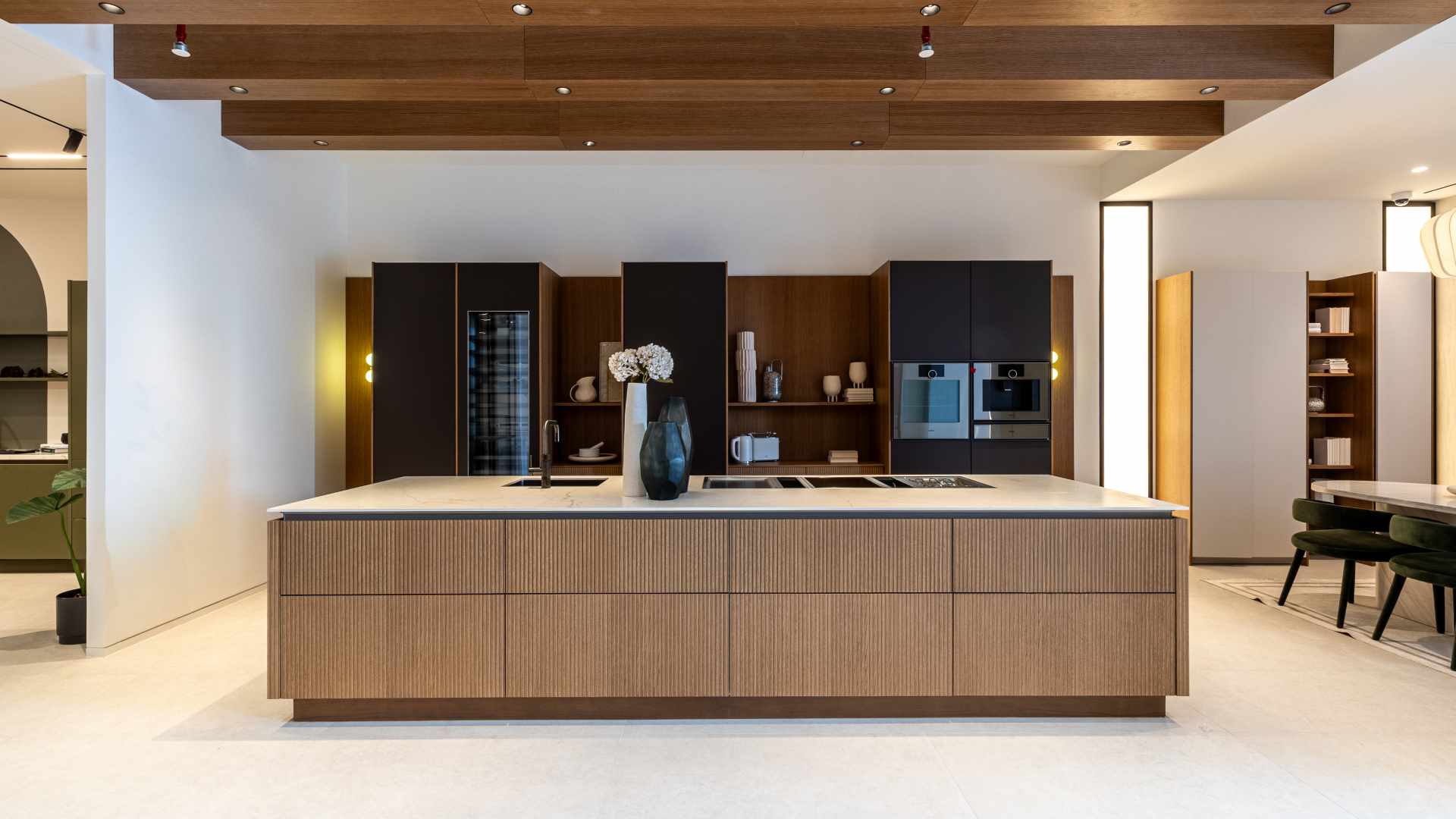

by Selva Kumar Rajulu, Managing Director & Senior Vice President – Middle East, Asia & Africa, Nolte FZE
A beautiful material can catch the eye, but it is the story behind it that increasingly captures a buyer’s attention. Customers today are more knowledgeable about their homes and increasingly interested in the finer details behind the products they choose. Where was the material sourced? How will it perform overtime? And what effect could it have on the people living around it?
For manufacturers and designers, this creates a responsibility to explain the thinking behind every material choice. Storytelling is becoming an important way to do that, connecting aesthetics with provenance, performance, sustainability, and wellbeing. And like any good story, this too begins with its origins.
Origin Is Adding New Value To Premium Interiors
A material’s origin tells us more than where it comes from. It can influence how sustainably it is produced, how well it performs, and the character it brings into a home.
Stone from a particular quarry, responsibly sourced timber, and traditionally woven textiles each carry a sense of place and craftsmanship. These qualities are particularly valuable in premium interiors, where homeowners are looking for substances beyond surface appearance. However, these stories also need to be supported by evidence. At Nolte Küchen, more than 99% of the wood we use meets our sustainable wood criteria, with FSC and PEFC certifications prioritized in procurement.
We are seeing this emphasis on transparency reflected in our work with UAE developers, where project briefs increasingly look beyond the appearance of kitchen materials to consider sourcing, durability, and consistency across multiple units. For manufacturers, responsibly sourcing materials, backed by recognized certifications and produced to consistent quality standards, will set them apart. It also allows customers to make more informed choices by showing where materials come from and how they are made.
Regional identity is influencing design trends
Beyond its origin, a material must also suit the region’s environment and culture. In the UAE, extreme heat, humidity, and strong sunlight make durability a key consideration. Material choices can also influence how much heat enters a building and, in turn, the energy needed for cooling.
A 2026 study of Dubai’s Al Fahidi district highlighted how traditional homes used coral-stone walls and wind towers to regulate indoor comfort naturally. Today, that same principle of environmental adaptation applies to modern interiors: cabinetry, adhesives, and surface finishes must be engineered to withstand the UAE’s coastal humidity, intense UV light through floor-to-ceiling windows, and constant exposure to indoor air conditioning without losing their structural integrity.
Cultural identity matters, too, with some homeowners looking for ways to reflect the region’s heritage in their spaces. For example, Al Sadu is a traditional Emirati weaving technique featuring geometric patterns inspired by grasslands, sand dunes, and the waves of the Arabian Gulf. These cultural influences can be incorporated into contemporary homes through traditional geometric detailing, sand-toned finishes, and textured stone.
From our experience, no single style defines the UAE market. With people from over 200 nationalities coming here to live, work, and build families, homes naturally reflect a wide range of cultures and personal tastes. This is especially evident in kitchen design, where some buyers prefer clean, minimalist European styles, while others are drawn to warmer wood finishes, earthy tones, and textured surfaces. We are also seeing growing interest in combining contrasting materials and finishes, such as natural wood textures with matt cabinetry or stone surfaces, to create more unique kitchens.
Sustainability is at the center of material choices
PWC found that more than half of Middle Eastern consumers surveyed are changing their purchasing habits by buying more sustainable products. This growing awareness is also influencing how people choose materials for their homes, with greater attention to what products contain, how they are made, and how long they will last.
For manufacturers, this means supporting sustainability claims with evidence. Using recycled wood in particle boards, sourcing certified timber, and reducing waste during production are some ways the industry is responding. However, sustainability goes beyond material sourcing. Durability and repairability are equally important to reduce the need for frequent replacements.
In kitchens, these considerations are particularly important. With frequent everyday use, buyers increasingly look for materials that can withstand wear and tear while retaining their appearance over time. This is why advancements in surface engineering—such as anti-fingerprint matt lacquers, UV-resistant laminates, and highly durable stone reproductions—have become central to the sustainability conversation.
What lies ahead for 2027
As homeowners pay closer attention to materials, trends such as natural wood finishes, statement stone surfaces, and textured cabinetry are gaining ground across the UAE.
More importantly, the kitchen is no longer treated as an isolated workspace. Heading into 2027, we are seeing a decisive shift toward integrated living ecosystems, where identical material stories, warm timber cabinetry, layered textures, full-height stone backsplashes, and earthy colors extend seamlessly from the kitchen into dining and living areas, paired with fully integrated built-in appliances.
This has made customisation increasingly important, as customers want cohesive colours, textures, and layouts that reflect their personal identity across the entire home. As buyers increasingly seek to experience these materials first-hand, showrooms are becoming an important part of the decision-making process, letting them see and feel differences in texture, finish, and quality. Beyond appearance, however, sustainability and provenance will become essential considerations in material selection, with customers expecting greater transparency around responsible sourcing, durability, environmental impact and long-term value.

By Dr Ryan Copeland, Regional Medical Director, Middle East, International SOS
As traffic volumes continue to rise across Dubai and the UAE, particularly along heavily congested commuter corridors, employers face a growing responsibility to address one of the most underestimated workplace risks: driver fatigue. Recent reports of significant congestion on key routes connecting Dubai and Sharjah serve as a timely reminder that many employees are spending longer periods behind the wheel each day. For organisations whose employees drive for work, whether visiting clients, transporting goods, responding to emergencies, or travelling between sites, fatigue can significantly impair performance and increase the likelihood of serious road traffic incidents.
While organisations often focus on vehicle safety, defensive driving, and compliance measures, fatigue management should be viewed as a critical component of any duty of care programme. Unlike mechanical failures, fatigue can be difficult to recognise, yet its effects on concentration, reaction time, decision-making, and situational awareness can be profound.
Fatigue: More Than Just Feeling Tired
Fatigue is a physical and mental state that reduces a person’s ability to perform tasks safely and effectively. It may result from insufficient sleep, long working hours, stress, illness, dehydration, poor nutrition, or prolonged periods spent driving in congested traffic.
Long commutes, early starts, and frequent travel between emirates can contribute to chronic sleep debt, often before employees recognise its impact on performance.
Common warning signs include:
- Frequent yawning or heavy eyelids
- Difficulty concentrating or maintaining attention
- Missing road signs or navigation instructions
- Drifting within a lane
- Delayed reaction times
- Increased irritability or mood changes
Employers should educate both drivers and line managers to recognise these signs before fatigue becomes a serious safety risk.
Building Fatigue Awareness into Journey Risk Management
Driver fatigue should form part of every organisation’s journey risk assessment process. Managers should evaluate not only the distance being travelled but also the employee’s fitness to drive.
Key considerations include:
- Has the employee had adequate sleep in the previous 24 to 48 hours?
- Are they undertaking an early morning or late-night journey?
- Have they worked a prolonged shift before driving?
- Are they feeling unwell or taking medication that may affect alertness?
- Is the journey likely to involve extended periods in heavy traffic?
Organisations should avoid schedules that encourage rushed journeys, excessive driving hours, or inadequate rest. Where practical, virtual meetings, overnight stays, or alternative transport arrangements may offer safer options than long-distance road travel.
Sleep: The Foundation of Driver Safety
Good-quality sleep remains the most effective defence against fatigue.
Most adults require seven to nine hours of sleep each night to maintain alertness, concentration, and decision-making ability. Chronic sleep deprivation can significantly increase the risk of driving-related incidents.
Employers can support healthy sleep habits by encouraging employees to:
- Maintain consistent sleep and wake times
- Create a cool, dark, and quiet sleep environment
- Avoid heavy meals close to bedtime
- Limit caffeine intake later in the day
- Reduce screen exposure before sleep
- Seek medical advice for persistent sleep problems, snoring, or suspected sleep apnoea
Hydration and Nutrition Matter
The Gulf climate presents additional challenges for drivers. Even mild dehydration can contribute to headaches, poor concentration, fatigue, and reduced mental performance.
Employees should be encouraged to:
- Drink water regularly throughout the day
- Carry water during journeys
- Increase fluid intake during hot weather or after physical activity
- Limit excessive consumption of energy drinks and highly caffeinated beverages
Nutrition also influences alertness. Heavy meals can contribute to sluggishness, particularly during afternoon driving periods.
To help maintain concentration, drivers should aim for:
- Balanced meals containing lean protein, whole grains, fruits, and vegetables
- Healthy snacks such as nuts, yoghurt, or fresh fruit
- Regular meal timing to maintain stable energy levels
- Reduced reliance on sugary snacks that can lead to energy crashes
While caffeine may provide a temporary boost, it should never be viewed as a substitute for adequate sleep.
Practical Steps During Peak Traffic Periods
As congestion increases, employers should reinforce practical fatigue-mitigation measures:
- Encourage regular breaks during longer journeys
- Rotate driving responsibilities where possible
- Avoid scheduling consecutive high-mileage driving days
- Plan journeys outside peak traffic periods when feasible
- Use telematics and journey management tools to identify excessive driving exposure
- Include fatigue awareness in routine safety briefings
Drivers should also be reminded that opening a window, turning up the music, or consuming caffeine offers only temporary relief. If fatigue develops while driving, the safest option is to stop in a safe location and rest.
A Shared Responsibility
Managing driver fatigue is not solely the responsibility of the individual behind the wheel. It requires a coordinated approach involving employers, managers, occupational health teams, and employees.
By promoting healthy sleep habits, supporting hydration and nutrition, recognising warning signs, and embedding fatigue awareness into journey planning, organisations can significantly reduce fatigue-related driving risks.
As traffic volumes continue to increase during peak periods, companies that proactively address fatigue as part of their duty of care strategy will not only enhance road safety but also protect employee wellbeing, productivity, and organisational resilience. Ultimately, safer and healthier drivers contribute to safer roads for everyone.


From the French Riviera to Abu Dhabi: La Môme Makes Its Grand Debut with an Exclusive Four-Day Race Weekend Takeover
Celebrate Thanksgiving and Christmas with The Grazer’s Turkey Takeaway
Turkey Takwaway – Bring Home the Christmas Roast



-

 Trending1 year ago
OPPO A6 Pro 5G Review: Reliable Daily Driver
-

 Tech News2 years ago
Denodo Bolsters Executive Team by Hiring Christophe Culine as its Chief Revenue Officer
-
 VAR2 years ago
Microsoft Launches New Surface Copilot+ PCs for Business
-

 Automotive2 years ago
AGMC Launches the RIDDARA RD6 High Performance Fully Electric 4×4 Pickup
-

 VAR11 months ago
Huawei Nova 14 Pro Review: Where Camera Excellence Meets Ecosystem Evolution
-
Tech Interviews3 years ago
Navigating the Cybersecurity Landscape in Hybrid Work Environments
-

 Hospitality2 years ago
Gulfood 2025 30th Edition Kicks Off Today, Setting New Benchmarks in F&B Growth and Innovation
-

 Tech News1 year ago
Nothing Launches flagship Nothing Phone (3) and Headphone (1) in theme with the Iconic Museum of the Future in Dubai