
 Have a question? +971 56 404 0503





Tech News
Beyond the camera: Why video surveillance is becoming a business intelligence tool


by Dr. Ryad Soobhany, Deputy Academic Head of School of Mathematical & Computer Sciences, Heriot-Watt University Dubai
Camera systems, such as CCTV, are mainly used for video surveillance within organisations. Passive video surveillance has been part of the security ecosystem for years, providing organisations with the ability to monitor different areas simultaneously, while recorded footage can be inspected after an event occurs.
The evolution of computer chips and increased processing power has led to improved image quality, including better performance in low-light conditions, particularly at night. The advent of edge computing, with processing performed on edge devices within a network, has made object and scene recognition more readily accessible. This evolution has led to more active video surveillance through video analytics, where events can be identified and addressed in real time. Examples include number plate recognition systems and facial recognition for access control.
With the combination of AI and video data, computer vision can be integrated with business analytics to transform video surveillance from a security infrastructure into a business intelligence tool. Video surveillance is moving from passively recording events to sensing what is happening in the environment. This helps to answer questions such as which areas are congested, how customers are moving, how long they dwell in particular areas, and whether unusual events are occurring. Businesses can use this data to optimise their operations, such as improving the customer checkout process, monitoring asset or staff movement, and managing crowds or traffic flows. Organisations can also incorporate contextual business information to enhance the analytics by combining behavioural data with CRM or IoT data, providing additional context and insights for decision-making and improving the customer or visitor experience.
Video surveillance can be used to optimise operations, improve customer experiences, and support strategic decision-making across industries. Video itself does not create business intelligence; rather, its value increases when visual information is combined with other operational and contextual data, while computer vision is used to understand and enhance business operations. The pipeline from video to business intelligence can be represented as obtaining data from video sources such as fixed cameras, IoT-enabled cameras, or robots. Computer vision is then applied to the video to detect or track people, objects of interest, or activities. Behavioural data are taken into account, such as customer dwell time in particular product areas, occupancy of rooms or halls, movement of people across a building, and anomalies in behaviour. At this stage, operational data are also considered. The final stage is the business intelligence stage, where trends are identified and insights are inferred. At this stage, data visualisation plays an important role, with dashboards and data storytelling displaying correlations, predictions, and infographics that provide more than simple visual summaries of surveillance data. The camera becomes an operational sensor for the organisation. The important transformation occurs when visual data are combined with business data, such as sales, operational, and IoT data, to convert visual observations into business knowledge that informs operational, tactical, and strategic decision-making within an organisation.
The levels of business intelligence can be viewed as three analytical capabilities: descriptive intelligence, diagnostic intelligence, and combined predictive and prescriptive intelligence. Descriptive intelligence usually addresses what is happening. Visual analytics can identify footfall, occupancy, queue length, waiting time, dwell time, traffic flow, movement patterns, and detected events. Visualisation dashboards can present these indicators in real time or over historical periods, allowing managers to understand the current state of an operation. For example, a museum dashboard can show heat maps of visitor numbers, dwell time, and movement across different exhibition areas, while analysing visitor behaviour and providing insights into the optimal placement of exhibitions. An airport dashboard could display passenger volumes and queue lengths across terminals.
Tech News
DTC partners with DIFC’s Dubai AI Campus to accelerate AI upskilling drive through Dubai AI Academy
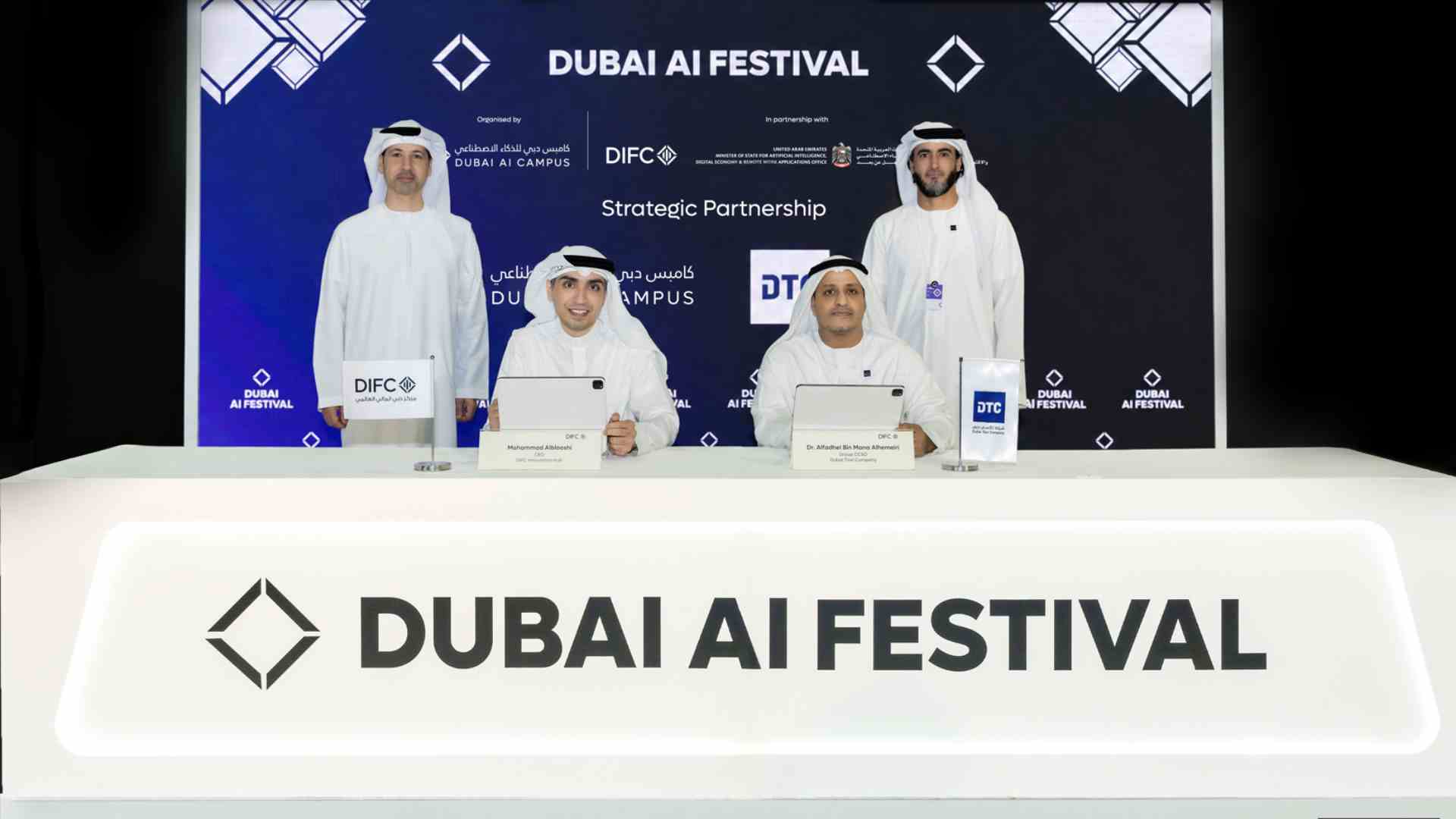
Dubai Taxi Company PJSC (DTC), a leading provider of comprehensive mobility solutions in Dubai, has signed a Memorandum of Understanding (MoU) with Dubai AI Campus, the largest dedicated cluster of AI companies in the region at DIFC Innovation Hub, on the sidelines of the Dubai AI Festival 2026 to launch a comprehensive artificial intelligence training programme that will upskill more than 400 employees across the company. The programme will be delivered through Dubai AI Academy, the AI capability-building initiative of Dubai AI Campus.
The MoU was signed by Dr. Alfadhel Bin Mana Alhemeiri, Group CCSO, Dubai Taxi Company and Mohammad Alblooshi, Chief Executive Officer, DIFC Innovation Hub, and witnessed by H.E. Arif Amiri, Chief Executive Officer, DIFC Authority, and Mr. Mansoor Rahma Alfalasi, Group CEO, Dubai Taxi Company.
AI Drive Month will start in November 2026, building on DTC’s ongoing digital transformation programme, which spans agentic, generative and predictive AI across the organisation, from fleet operations to booking channels. Equipping employees with the skills to work alongside these technologies will help DTC continuously improve its services and keep customer experience at the centre of its operations.
The new training programme is structured across four tiers, each tailored to the roles and responsibilities of different groups of employees. This approach ensures every participant, from operational and administrative staff to the executive team, can attain AI skills directly relevant to their daily work.
His Excellency Arif Amiri, Chief Executive Officer, DIFC Authority, said: “Building a competitive AI economy requires more than access to technology. It requires people with the skills and confidence to apply it effectively and responsibly. At DIFC’s Dubai AI Campus and Dubai AI Academy, we are focused on translating AI ambition into practical capabilities across organisations. This partnership with DTC demonstrates how workforce-wide upskilling can accelerate meaningful AI adoption, while supporting Dubai’s position as a global hub for AI innovation.”
“Technology is the engine that drives DTC’s operational efficiency and customer experience, and the use of AI represents the next chapter of that journey,” said Mansoor Rahma Alfalasi, Group CEO of DTC. “AI Drive Month will provide employees at every level of the organisation with practical skills they can apply from day one. Partnering with Dubai AI Campus and its Dubai AI Academy allows us to build that capability to the highest standard, raising AI literacy, improving productivity, and preparing our workforce for the next phase of DTC’s growth. This investment also reflects our commitment to the UAE National Strategy for Artificial Intelligence 2031, helping develop the skills and capabilities required to accelerate responsible AI adoption across Dubai’s mobility sector.”
The structure of the programme ensures a comprehensive understanding of AI, its capabilities, and the various applications relevant within their respective roles. Lead the Drive, the first tier of the programme, will see participants from senior management undertake an immersive and highly engaging two-day executive learning experience. The programme combines strategic foundations in artificial intelligence and agentic AI, real-world case studies from leading enterprises, and practical, hands-on work with the AI tools reshaping executive work. It also addresses AI ethics and data privacy culminating in a group exercise in which senior leaders design and pitch a real AI use case for DTC.
Groups of managers, specialists, and executives will undertake Power the Engine, which will incorporate 10 hours of live online sessions and cover AI foundations, everyday productivity, workplace efficiency, responsible use, and applied workplace scenarios. Fuel the Movement is the third tier of the programme and will provide participants a self-paced, certified online course focused on generative AI, prompt engineering, and practical applications, including writing, summarisation, and analysis.
The three tiers will be complemented by Inclusion Lane,which is delivered in the format of an AI-focused majlis in both English and Arabic, accessible to every employee, and will pair participants with AI champions from the leadership team.
Beyond building individual skills, the programme is designed to deliver lasting benefits for DTC, including stronger AI literacy across the workforce, faster and higher-quality decision-making, and the secure, responsible and ethical adoption of AI tools. It will also establish a network of internal AI champions to support future innovation across the company’s operations.
Tech News
Government entities and industry thought leaders to address the strategic decisions turning built environment challenges into scalable outcomes at Big 5 Global’s Leadership Summits
The next phase of construction and urban development in MEASA will depend on how investment, infrastructure, community planning and technology translate into operational value. These priorities will be discussed at the Big 5 Global Leaders’ Summit, LiveableCitiesX Summit and Big 5 FutureTech Summit, bringing together government and city authorities, master planners, investors, consultants, utility providers, infrastructure owners and technology leaders to explore the priorities and decisions impacting the built environment.
With more than 70 speakers across over 40 sessions, the three summits will provide a meeting ground for the people driving policy, investment and project delivery to exchange perspectives on the decisions facing the industry. The programme explores commercial realities, governance frameworks, planning choices and technology applications that will determine how successfully the next generation of projects and cities takes shape.
Leadership decisions in a changing construction market
Big 5 Global Leaders’ Summit will examine the relationship between national ambitions, investment priorities and the realities of project delivery. The summit will open with a keynote from H.E. Eng. Mohamed Almansoori, Undersecretary of the UAE Ministry of Energy and Infrastructure for Infrastructure and Transport Affairs.
The programme will also feature insights from H.E. Omar Saif Ghobash, Advisor to the UAE Minister of Foreign Affairs; Dr Mahmoud Al-Burai, Advisor at the Director General’s Office, Dubai Municipality; Ebtesam AlKaabi, Senior Vice President, Jebel Ali Free Zone; Cynthia Corby, Partner, Deloitte; Amer Khansaheb, Managing Director, Khansaheb; Dr Valerio Soldani, Trade Commissioner to the UAE and Oman, Italian Trade Agency; and Simon Penney, Deputy CEO, Innovo Group, among other industry leaders.
Adding an organizational leadership perspective, an executive insight led by Gregory Karpinski, Chief Operating Officer and Partner at KEO Group, will discuss the approaches that can help organizations identify the right problems, unlock new thinking and strengthen decision-making. In another fireside conversation, Paul Griffiths, Chief Executive Officer, Dubai Airports, will address how senior executives can navigate competing priorities and make decisions that influence organizational performance and project execution.
Planning cities around people, infrastructure and investment
LiveableCitiesX Summit will address a different but closely connected challenge: how cities can accommodate growth while remaining accessible, resilient and economically competitive. The summit will open with an address by H.E. Dr Maria Hanif AlQassim, Assistant Undersecretary of Policies and Economic Studies Sector at the UAE Ministry of Economy and Tourism on the impact of urbanization, climate resilience and economic competitiveness on the built environment.
Other speakers at the summit will include Eng. Mansour Saleh Al Harbi, Acting Executive Director for Activation and Development Control Sector, Urban Planning and Permits Centre, Abu Dhabi Department of Municipalities and Transport; Khawla Al Hashimi, Chief Projects Officer at Sharjah Investment and Development Authority (Shurooq); Andre Vreman, Chairman and Managing Partner of Climate Neutral Real Estate; and Vladislav Boutenko, Managing Director and Senior Partner, BCG Institute Content Excellence Global Leader, Boston Consulting Group, among others.
The programme will also delve into how cities can move beyond housing delivery towards integrated communities, where a panel featuring leaders from Deyaar, ORO24 Real Estate Development and Sdeira Group – Abu Dhabi Ports will explore the relationship between affordability, mobility, social infrastructure and the funding models needed to deliver communities.
Influencing project delivery through construction innovation
Big 5 FutureTech Summit will highlight the application of emerging technologies across project planning, design, construction and asset management as construction businesses adopt AI, digital twins, automation and connected systems for efficient project delivery. The summit will open with a keynote by Mahaba Salem Alsaleh, Head of Technology Development Section at the UAE Ministry of Industry and Advanced Technology, followed by a fireside chat with Eng. Maitha Ali Al Nuaimi, Director – GIS Center Department, Dubai Municipality.
An executive panel moderated by Saphia Ali, AI Governance and Institutional Strategy Advisor and Independent Consultant, featuring representatives from Forgechemy; Deloitte; Citi Developers and Premier Construction Software, will examine the leadership capabilities and future-ready talent required in an AI-enabled industry.
Taking the discussion from organizational readiness to delivery at scale, an executive panel, featuring representatives from Al-Futtaim Technologies, Target Engineering Construction Company, Trojan Construction Holding and Autodesk Middle East, will explore strategies to create high-performing project ecosystems that deliver faster, more resilient and productive outcomes at scale.
Commenting on how these discussions and leadership priorities connect with the industry’s actions, Josine Heijmans, Senior Vice President, dmg events, said: “The construction industry is making decisions today that will influence the built environment for decades. In the MEASA, this means considering how investment priorities translate into project delivery, how urban growth supports the needs of communities and how technology can improve the way assets are designed, built and managed. Our Leadership Summits bring these considerations together by responding to changing market requirements.”
Big 5 Global is proud to collaborate with an esteemed network of partners and sponsors: Main supporting partner, Ministry of Energy & Infrastructure; Supporting partners, Dubai Civil Defence, Ministry of Economy & Tourism, Dubai Municipality, The Department of Municipalities and Transport and Riyadh Region Municipality; Host city partner, Dubai Department of Economy and Tourism (DET); Summit sponsors including Italian Trade Agency, TALCO | Saudi Made, Innovo, Trojan Construction Holding, KEZAD Group, National Industries Park, Deloitte, Boston Consulting Group; Climate Neutral Real Estate, KEO Group, M.A.H.Y Khoory & Co, The Nemetschek Group, Premier Construction Software and Quantum Industries.
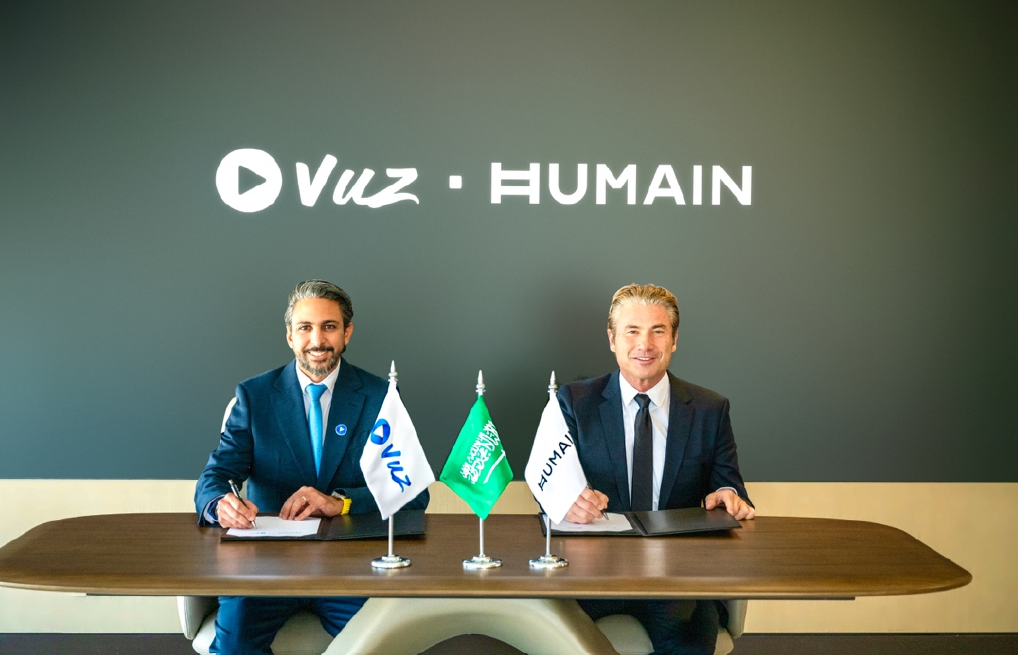
Strategic collaboration combines artificial intelligence, immersive video technology and interactive learning to strengthen AI skills development.
HUMAIN, a Public Investment Fund (PIF) company specialising in full-stack artificial intelligence capabilities, has announced a strategic partnership with VUZ to develop immersive AI learning experiences through HUMAIN+, its newly introduced streaming and learning platform.
The collaboration aims to transform how AI knowledge is delivered by combining HUMAIN’s expertise in applied AI education with VUZ’s immersive video technology. The initiative is designed to equip business leaders, professionals, educators and emerging innovators with practical AI skills through interactive and experience-driven learning.
Through HUMAIN+, participants will be able to engage with AI concepts, demonstrations and real-world applications in immersive digital environments. The platform will incorporate AI-driven sessions delivered both virtually and in person, moving beyond conventional online learning formats to create more engaging and contextual educational experiences.
The partnership was unveiled alongside the first public showcase of HUMAIN+, offering attendees an early look at the platform’s capabilities. The learning experience is expected to become available in the coming months.
Tareq Amin, Chief Executive Officer of HUMAIN, highlighted the importance of rethinking education as artificial intelligence reshapes industries and workforce requirements.
“AI is changing how the world works, and it should fundamentally change how the world learns,” said Amin.
“HUMAIN+ was created to build a new generation of AI talent through practical, immersive streaming and learning experiences. By partnering with VUZ, we are bringing together AI and immersive technology to create learning experiences that are more engaging, more accessible, and more connected to how people will work and innovate in the AI era.”
For VUZ, the collaboration represents an opportunity to extend immersive streaming technology into AI education and professional development.
Khaled Zaatarah, Founder and Chief Executive Officer of VUZ, said: “We believe immersive technology and video streaming have the power to transform many industries, including education, by making learning more interactive and engaging.”
He added that the partnership would enable VUZ to apply its technology to AI education, helping learners develop practical knowledge through new digital experiences while supporting the platform’s ambitions for global scale.
The initiative forms part of HUMAIN’s broader efforts to strengthen AI talent development and workforce readiness in Saudi Arabia and international markets.
By integrating immersive technologies into AI education, HUMAIN and VUZ aim to make technical concepts more accessible and translate emerging AI capabilities into practical workplace knowledge.
The partnership also reflects growing interest in experiential learning models as organisations seek more effective ways to develop AI competencies across their workforces.


Beyond the 30×30: EVIRON Encourages Everyday Wellness This Dubai Fitness Challenge
UBK Turns Up the Festive Season with Weekly Quiz Nights, a Saturday Mic Drop and Festive Turkey to Go
A LITTLE SOFT SERVE, A LITTLE JOY! YUKO CREAM BRINGS JAPANESE-INSPIRED SWEETNESS TO DUBAI

OPPO A6 Pro 5G Review: Reliable Daily Driver

Denodo Bolsters Executive Team by Hiring Christophe Culine as its Chief Revenue Officer

Microsoft Launches New Surface Copilot+ PCs for Business

2026 in Review: Is AI Becoming More of a Management Problem Than a Technology Problem?

Inside XPENG Brand Night: AI Mobility Lands Centre Stage in Dubai

Chinese Cars Are Reshaping the GCC Market, but Resale Value Could Be the Next Battleground

-
 Trending1 year ago
OPPO A6 Pro 5G Review: Reliable Daily Driver
-
 Tech News2 years ago
Denodo Bolsters Executive Team by Hiring Christophe Culine as its Chief Revenue Officer
-
VAR2 years ago
Microsoft Launches New Surface Copilot+ PCs for Business
-

 Automotive2 years ago
AGMC Launches the RIDDARA RD6 High Performance Fully Electric 4×4 Pickup
-

 VAR11 months ago
Huawei Nova 14 Pro Review: Where Camera Excellence Meets Ecosystem Evolution
-
Tech Interviews3 years ago
Navigating the Cybersecurity Landscape in Hybrid Work Environments
-

 Hospitality2 years ago
Gulfood 2025 30th Edition Kicks Off Today, Setting New Benchmarks in F&B Growth and Innovation
-
News4 years ago
BenQ ZOWIE : First TN 360Hz DyAc+ Gaming Monitor