
 Have a question? +971 56 404 0503




VAR
Ring partners with Al Jammaz to provide smart home security for Saudi Arabia

Ring, a provider of smart home security solutions recently announced a partnership agreement with Al Jammaz Distribution, the leading Saudi based Value-Added Distributor, which distributes advanced technology products, solutions and services. This partnership will help Ring foray and expand its reach across the Saudi market offering customers Ring’s innovative home security products and solutions.
“Ring believes in keeping homes and communities safe rather than just comfortable and we hope to change the way home owners view security by keeping an eye on their family and property, even when they can’t. Ring re-imagined the doorbell so consumers could respond – using a smartphone – to someone at their front door from anyplace, anytime while simplifying the technology with the combination of App, Cloud and Security hardware,” said Mohammad Meraj Hoda, Managing Director of Ring.
“Al Jammaz has been providing technology-driven business solutions in Saudi Arabia for almost a decade and in that time, has succeeded in reaching almost 90% of the Saudi Arabian channel and distribution market. We look forward to working with Al Jammaz to address the home security needs by extending the product offerings through Internet Service Providers, Online retailers, system integrators, Internet service providers and brick and motor channels where they have very strong relationship,” concluded Mr. Hoda.
Recent studies regarding the real estate market indicated that the Gulf countries in general and Saudi Arabia in particular are likely to be the most advanced with respect to establishing smart homes as a result of the level of constructional development in this region. According to a report by Statista the revenue in the ‘Smart Home’ market amounts to US$124m in 2017 with expectation for it to show an annual growth rate (CAGR 2017-2021) of 42.3 % resulting in a market volume of US$507m in 2021. The report further reveals that currently the household penetration is at 6.1 % in 2017 and is expected to hit 24.7 % in 2021.
Ring has evolved as the leading brand in the Smart Home Security Space represented by 16000 plus stores across North America and Ring’s products globally have been hailed as dependable second set of eyes and ears to deter would-be thieves from entering homes and communities. It has been proven that Ring doorbells can reduce crime by up to 55% in neighbourhoods, and the goal is to bring the same convenience and security to the Middle East neighbourhoods.
As the Value Added Distributor, Al Jammaz will promote Ring’s latest suite of smart home security products such as Ring Video Doorbell, Ring Video Doorbell Pro, Video Doorbell Elite, Ring Floodlight Cam and the new Ring Spotlight Cam and conduct channel engagement, training and activation programs for partners. Al Jammaz will also set up go-to-market strategies with key retail partners and provide the needed infrastructure for micro-channel to engage with the Ring brand.
“The Saudi Ministry of Housing has launched programs and initiatives to achieve Vision 2030 and the National Transformation Program (NTP) 2020 which aims to increase the rate of property ownership to 52 percent. Under these directives, there are huge opportunities for the housing sector to grow and develop and we believe that the Internet of Things is set to disrupt the way we live. Homes are going to get ‘smart’ with connected products offering endless possibilities to make our lives easier, more convenient, and more comfortable. The awareness and demand for smart entry devices, such as smart doorbells that keep families, neighborhoods and communities safe are growing and therefore we believe that our partnership with Ring is a perfect fit. We see exciting new possibilities in this partnership with Ring across the Kingdom and it will help Al Jammaz to better address our customer’s needs in today’s environment of ever-increasing demand for home security solutions,” said Asim Al Jammaz, CEO, Al Jammaz Distribution.
Al Jammaz will distribute Ring’s best-of-breed home security solutions in the Kingdom of Saudi Arabia.



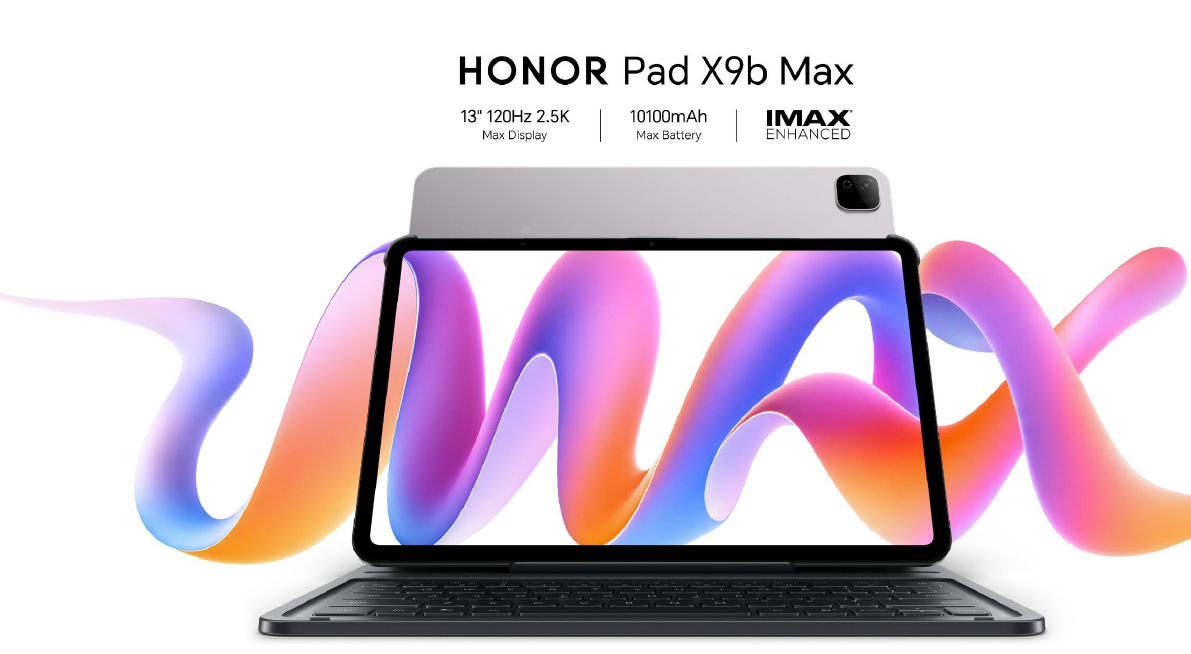

With a huge 13-inch display, a 10,100mAh battery and familiar Android productivity tools, HONOR’s Pad X9b Max makes a convincing case for going big, although its size brings compromises of its own.
BY Srijith KN, Senior Editor, Integrator Media
The HONOR Pad X9b Max makes its intentions clear almost immediately. With a 13-inch display, this is not a tablet designed primarily around compactness. It wants to give you enough screen to watch, browse, multitask and, increasingly, get some proper work done.
That became the most interesting part of my time with it.
Rather than approaching the Pad X9b Max purely as an entertainment device, I connected a Bluetooth keyboard and began using it for documents, browsing, ChatGPT and some of the everyday tasks I would normally reach for my laptop to handle.
The result is a tablet that gets surprisingly close to feeling like a lightweight workstation in the right circumstances, although whether you would actually leave the laptop behind is a slightly more complicated question.
A 13-inch display that makes a difference
The headline feature is undoubtedly that 13-inch LCD display.
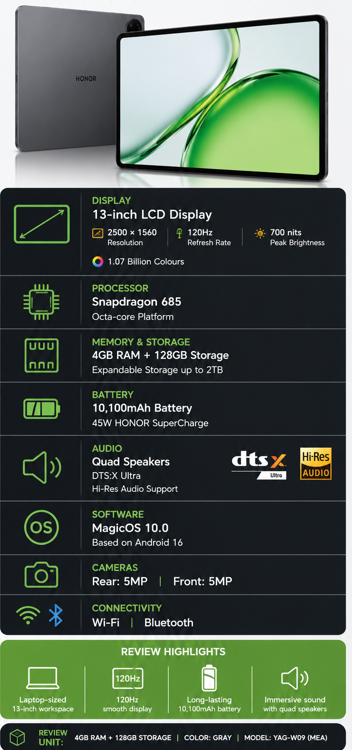
At 2500 × 1560 resolution and with a refresh rate of up to 120Hz, there is plenty of space here for websites, documents and video. But the more important point is simply how much larger everything feels when you start working on it.
I happened to have a Huawei MatePad 11.5 alongside the HONOR during testing, and putting the two next to each other made the difference immediately apparent. The Huawei feels much more like a conventional portable tablet. The Pad X9b Max begins moving into laptop territory.
Documents have more room to breathe, websites feel less constrained and working with text is particularly pleasant. I noticed this while using ChatGPT, where longer conversations almost began to resemble working inside a document rather than interacting with a mobile application.
The 120Hz refresh rate also helps keep scrolling and general navigation fluid, while the large canvas makes multitasking considerably more attractive than it is on smaller tablets.
There is, however, an obvious trade-off.
A 13-inch tablet isn’t something I would choose specifically because I wanted the smallest device possible in my bag. The size that makes the X9b Max so appealing on a desk is also what makes smaller tablets easier to carry and use casually.
That’s the fundamental compromise here: I prefer the HONOR when I’m sitting down to work; I prefer the idea of a smaller tablet when I have to carry it.
Productivity becomes part of the proposition
Pair the Pad X9b Max with a keyboard and the large display begins making considerably more sense.
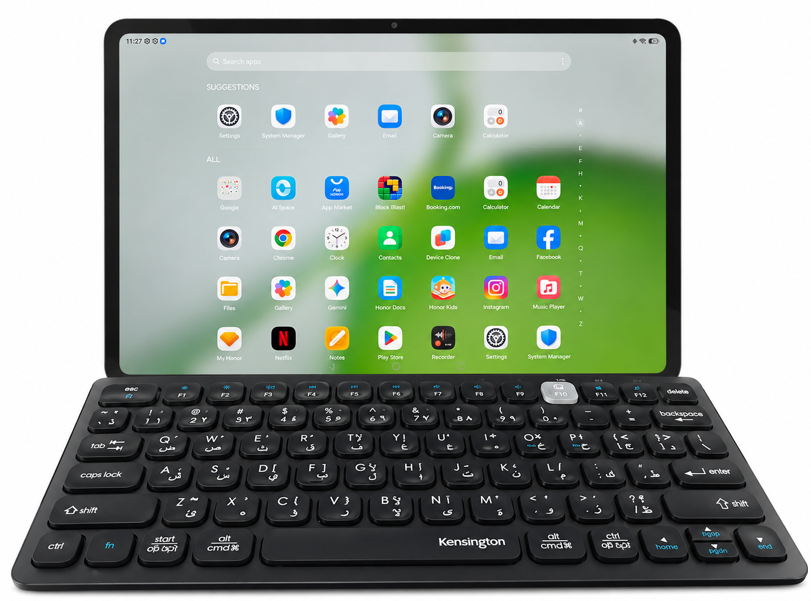
I used a Kensington Bluetooth keyboard during testing, and the combination worked well for writing, browsing and moving between applications. Microsoft Word introduced its own subscription-related complications, but that’s more a reflection of Microsoft’s software model than a limitation of HONOR’s hardware.
The wider Android ecosystem is also important. With MagicOS and access to familiar Google applications, getting my usual collection of services onto the tablet was straightforward.
My review unit comes with 4GB of RAM and 128GB of storage, so this isn’t hardware I would position as a replacement for a high-performance notebook. But for everyday productivity — web applications, writing, email, research, media and lighter multitasking — the experience makes a convincing argument for using the tablet instead of reaching for a laptop every time.
Expandable storage also gives the X9b Max additional flexibility for users carrying large collections of documents or media.
Built for entertainment too
Of course, productivity is only half the appeal of having this much screen.
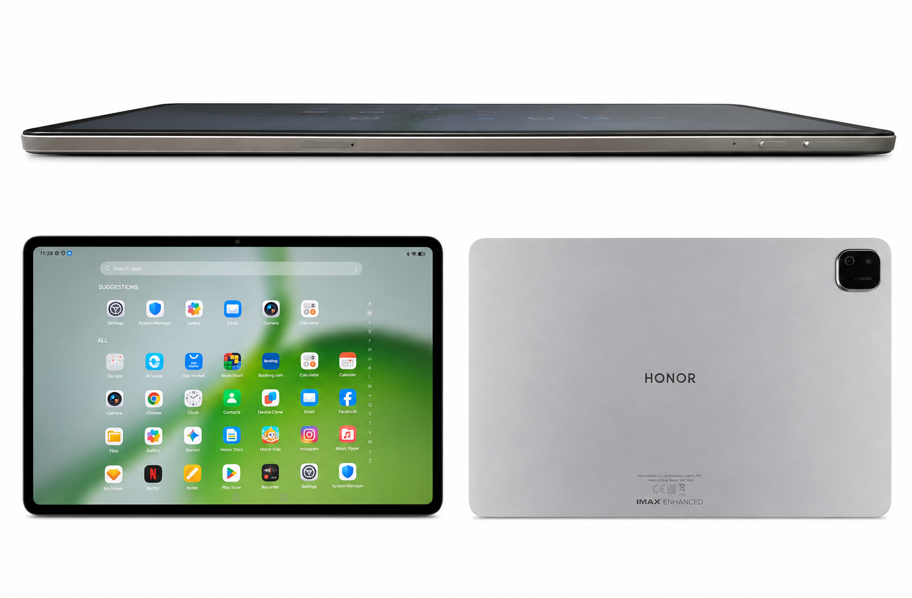
The Pad X9b Max’s size makes video one of its natural strengths. HONOR has paired the display with a quad-speaker system, DTS:X Ultra and IMAX Enhanced support, reinforcing the tablet’s entertainment credentials.
And this is where having 13 inches requires considerably less justification. Video simply benefits from the additional scale, whether you’re watching from a desk, sofa or bed.
It also means the Pad X9b Max can comfortably switch roles during the day: a document and browser screen while working, followed by a sizeable personal entertainment display once the keyboard goes away.
A battery built for the bigger canvas
Powering all of this is a 10,100mAh battery, paired with support for up to 45W HONOR SuperCharge.
The large capacity makes sense considering the size and resolution of the display. More importantly, battery life is critical for a tablet being positioned as both an entertainment device and a productivity companion. Having to constantly look for a charger would undermine much of the convenience of leaving a laptop behind.
We wouldn’t reproduce HONOR’s laboratory endurance claims as our own results here; for the VAR piece, the more relevant point is that HONOR has equipped its largest screen with an appropriately substantial battery.
Verdict
The HONOR Pad X9b Max succeeds because its 13-inch display isn’t merely a specification designed to look impressive on the box. It materially changes what the tablet is good at.
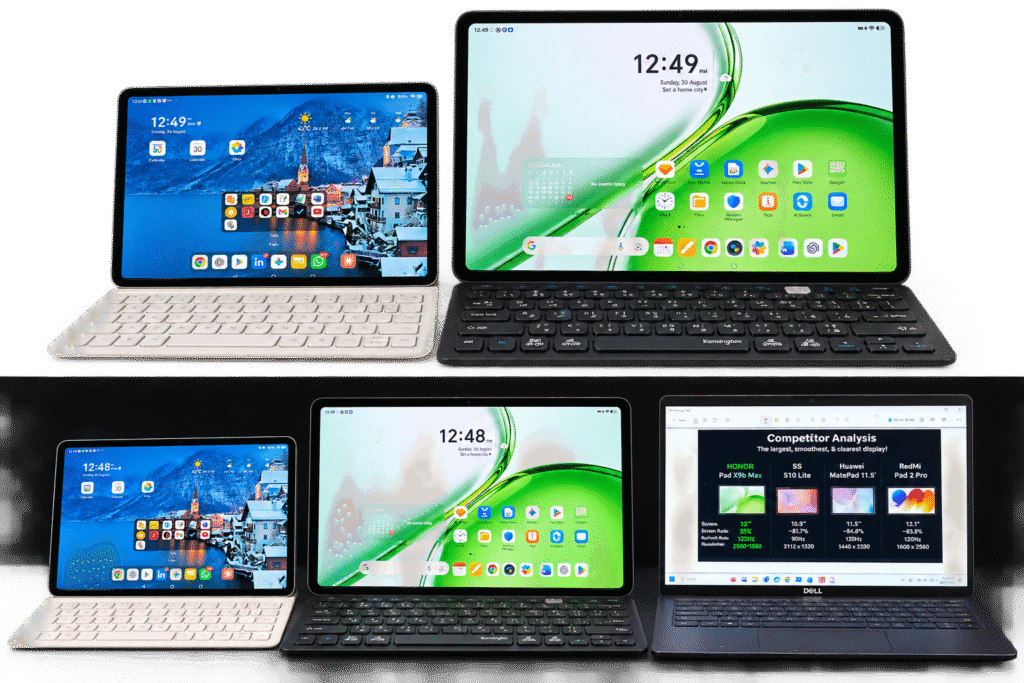
There is substantially more room for documents, browsing, multitasking and content, and adding a keyboard transforms it into a surprisingly useful desk-based productivity device.
But its greatest strength also creates its biggest compromise. At this size, the X9b Max isn’t as effortless to carry around as a smaller tablet, and once you add a keyboard, you inevitably start comparing the entire setup with taking a laptop instead.
That makes the Pad X9b Max particularly appealing for someone who wants one large-screen device capable of moving between work and entertainment, rather than someone whose priority is maximum portability.
It hasn’t made my Dell redundant.
But it has made me reach for it less often, and for a tablet this size, that’s probably the more meaningful achievement.
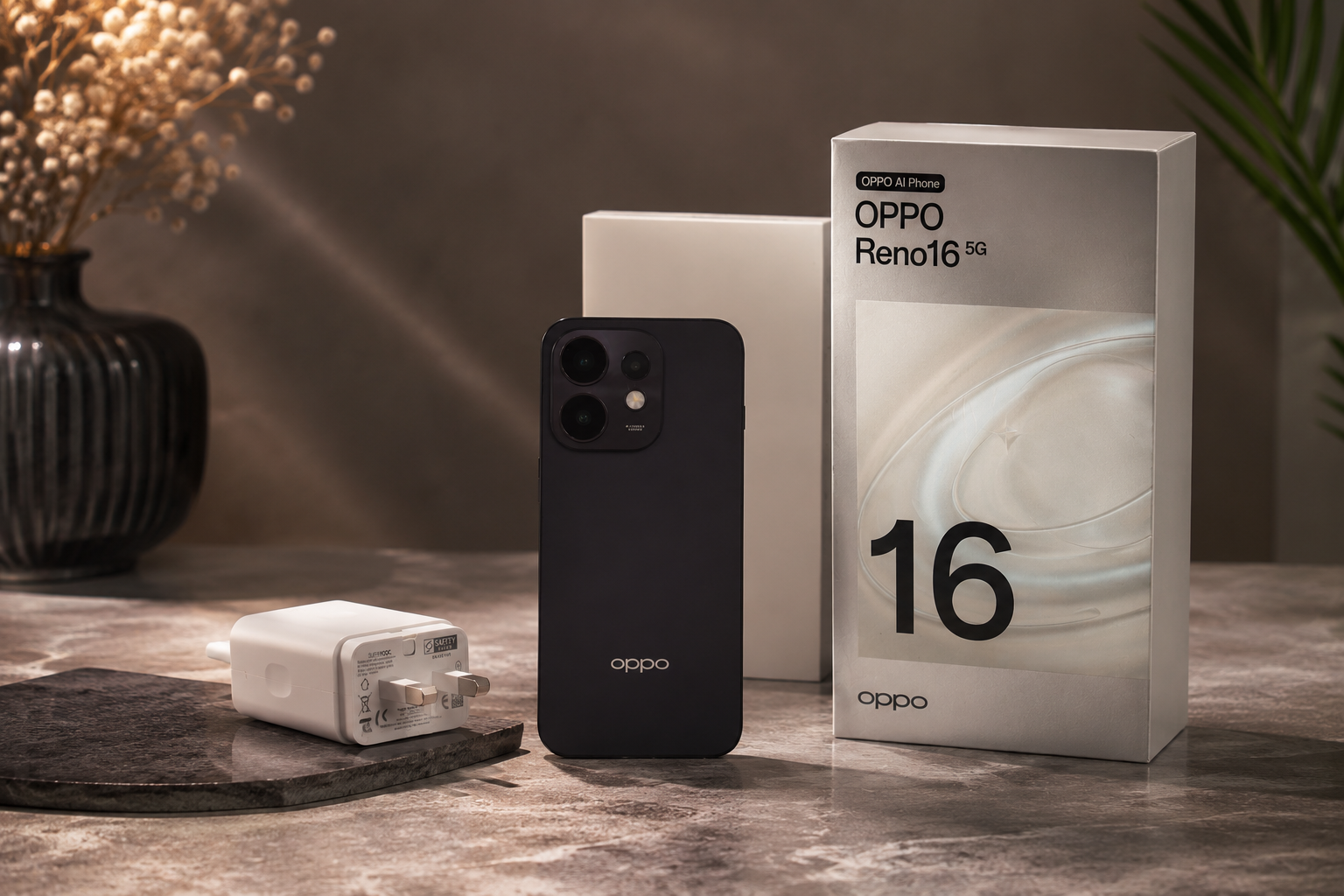
The Reno series has become an important part of OPPO’s smartphone portfolio, sitting between the increasingly competitive mid-range segment and the company’s more premium offerings. With the Reno16 5G, OPPO isn’t attempting to completely reinvent that formula. Instead, it has focused on improving the overall package across design, photography, battery life, software and AI.
Having previously used the Reno14 as one of my primary phones, I was particularly interested in whether the Reno16 felt like a meaningful progression or simply another annual refresh.
After spending time with the device, there is plenty here that feels better refined, although its AED 2,499 UAE price also raises some questions about performance and overall value.
BY SRIJITH KN, SENIOR EDITOR, VAR
A more polished Reno!
My review unit arrived in Twilight Violet, and the Reno16 makes a strong first impression. The aluminium frame, slim symmetrical bezels and overall finish give the device a noticeably premium character.
The 6.32-inch display is also excellent for everyday use. Content looks sharp, the interface feels fluid and the screen is more than capable for browsing, video, social media and photography. The buttons feel solid too, while the haptic feedback deserves particular mention. It is one of those smaller details that contributes considerably to how polished a phone feels in everyday use.
Overall, OPPO has done a good job of making the Reno16 look and feel like a device worthy of its position in the Reno portfolio.
The camera remains a Reno strength
Camera performance was one area where I expected the Reno16 to prove itself, and it largely did.

Images generally came out with natural-looking colours and balanced exposure, without leaving me waiting for noticeable processing after pressing the shutter. There can still be a slightly punchy character to some photographs, but nothing that particularly bothered me.
During testing, I photographed a building opposite me where part of the upper floor had previously suffered fire damage. Zooming into the scene, I was impressed by how closely the camera reproduced the smoke-stained and burnt areas compared with what I could see with my own eyes.
The front camera also performed well. Selfies retained good detail and produced results that I was quite happy to share without much additional editing.
That perhaps sums up the Reno16 camera experience best. It is designed for someone who wants to take the phone out, capture the moment and quickly have an attractive, shareable image.
Performance is good, but the price changes expectations
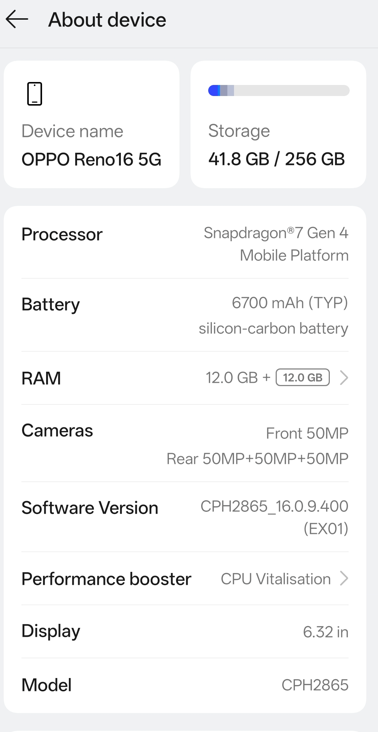
The Reno16 5G is powered by Qualcomm’s Snapdragon 7 Gen 4, and for everyday smartphone use, I have few complaints.
Messaging, email, browsing, photography, social media, content consumption and moving between applications all feel responsive. I didn’t encounter anything during normal use that made the Reno16 feel particularly slow.
But this is also where the AED 2,499 price becomes important.
The Snapdragon 7 Gen 4 is a capable processor, but buyers spending this amount can reasonably expect considerable performance headroom. Users interested primarily in everyday smartphone tasks are unlikely to have an issue, but demanding gamers and those running heavier workloads may find more powerful alternatives at this price.
The Reno16 therefore gets everyday performance right. I simply would have liked OPPO to push the performance envelope further.
Battery and charging strengthen the package
One specification that certainly stands out is the 6,700mAh battery, particularly when combined with 80W SUPERVOOC charging.
Battery capacity has become an increasingly important battleground among smartphone manufacturers, and OPPO has managed to package a substantial battery without making the Reno16 feel unnecessarily cumbersome.
Fast charging also remains one of those features whose usefulness becomes obvious very quickly. Rather than leaving a phone connected for extended periods, being able to add significant charge during a relatively short stop is genuinely practical.
AI is here, but practicality matters more!
Unsurprisingly for a smartphone arriving in 2026, AI plays a significant role in OPPO’s software proposition.
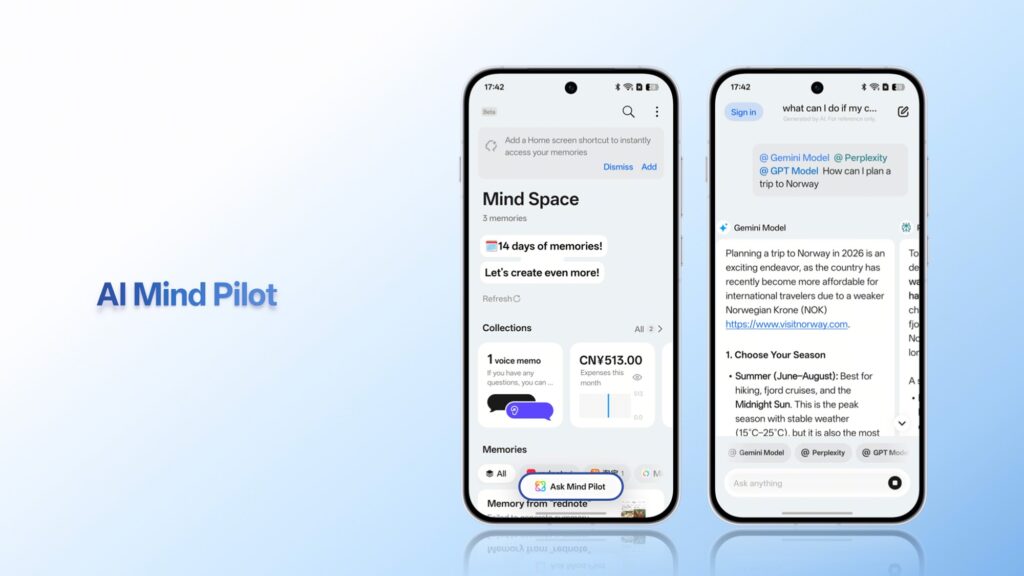
The Reno16 includes the AI Snap Key, which can provide quick access to features such as AI Mind Space. But what I appreciate more is that OPPO allows the physical key to be customised for other functions.
I configured mine to switch between Ring, Vibrate and Silent, and found myself appreciating that simple functionality more than another dedicated AI shortcut.
That flexibility is important. AI capabilities will continue evolving rapidly, but consumers still interact with their smartphones through dozens of simple actions every day. Sometimes improving those actions creates more immediate value than adding another headline AI feature.
ColorOS is fast, although I still want more customisation
ColorOS runs smoothly on the Reno16, and there is no noticeable lag during ordinary use. As mentioned earlier, the haptics are particularly good.
I am less convinced by some of the interface aesthetics. The pre-installed applications and certain default visual elements aren’t necessarily to my taste, and I would like greater freedom around icon customisation and the Quick Settings interface.
These are largely subjective complaints, however. For someone primarily using the Reno16 for messaging, email, photography, browsing, social media and entertainment, ColorOS gets the fundamentals right.
The AED 2,499 question?
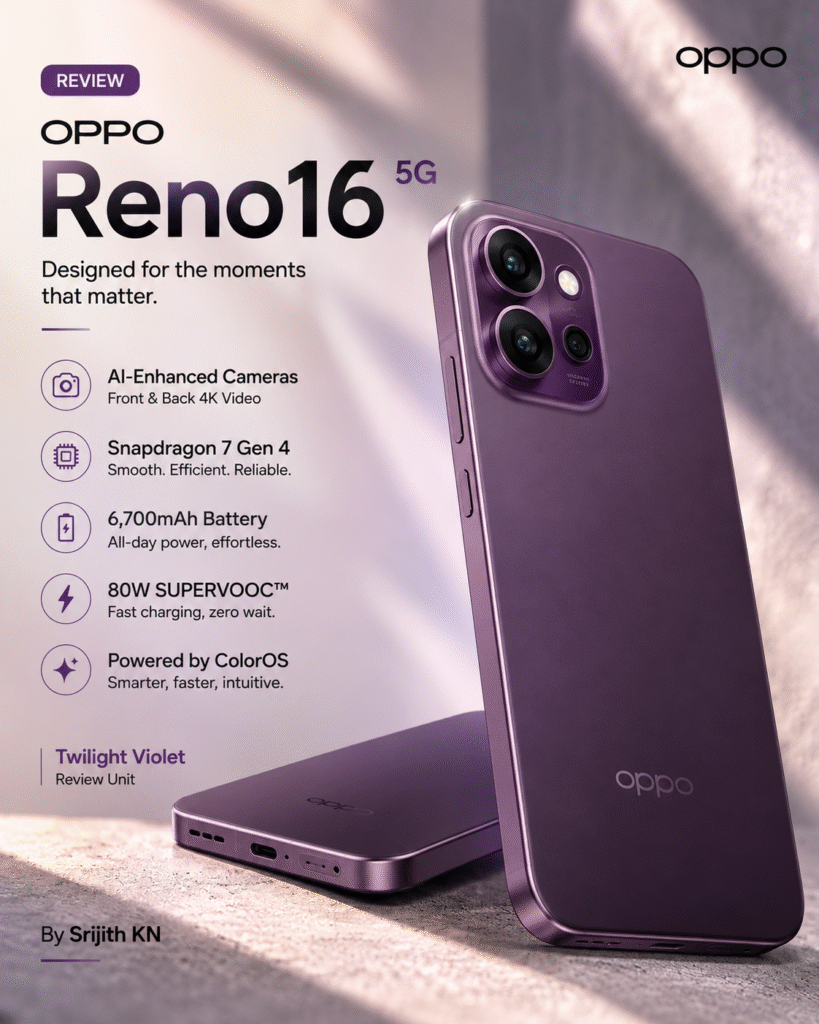
The Reno16 5G is ultimately a polished smartphone with very few obvious weaknesses. The camera is dependable, the construction feels premium, the battery capacity is impressive, 80W charging is genuinely useful and everyday performance is smooth.
What prevents it from becoming an automatic recommendation is not something the Reno16 does particularly badly. It is simply how competitive the market becomes once a smartphone reaches AED 2,499.
The Snapdragon 7 Gen 4 is perfectly capable, but at this price I would have liked more performance headroom.
For Reno14 users, however, the improvements across design, camera, battery and the overall experience make the Reno16 feel like a meaningful progression. If you already own a Reno15, the argument for upgrading immediately is considerably harder to make.
The Reno16 gets most of the fundamentals right. The question buyers ultimately need to answer is whether that polished overall experience is enough to justify its price.
Srijith kn
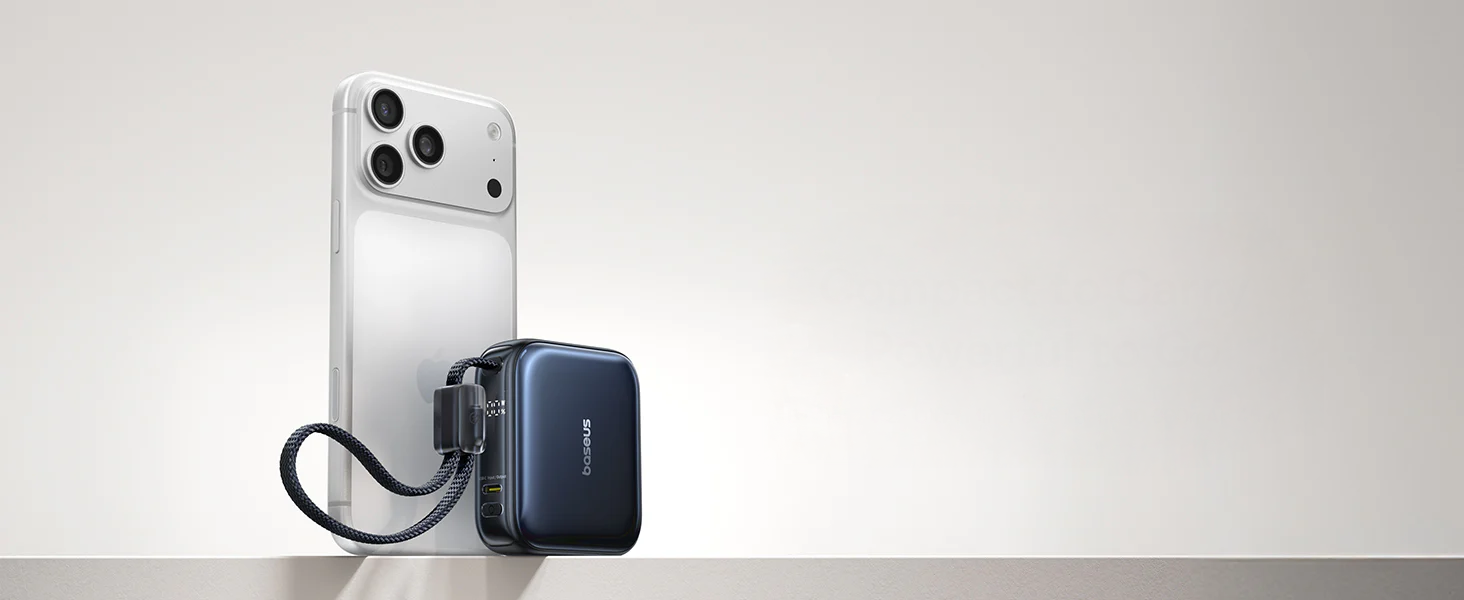
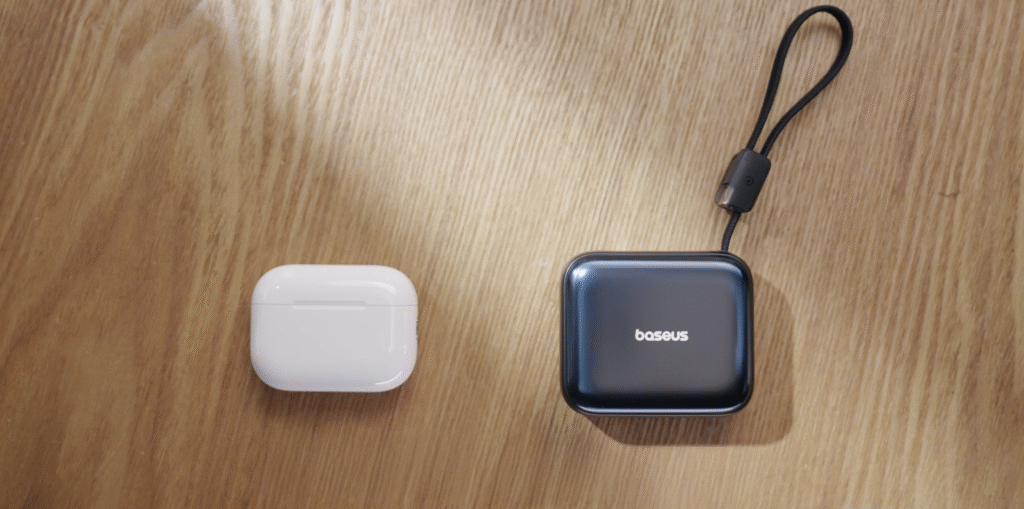
Carrying a power bank often means accepting a compromise between capacity and convenience. A 10,000mAh unit typically demands a dedicated bag compartment, while ultra-compact chargers rarely hold enough power to be genuinely useful on a long day. The Baseus PicoGo AC22 takes a more elegant approach, placing a high-density 10,000mAh battery into a footprint roughly the size of a wireless earbuds case.
Reviewed By Srijith KN, Senior Editor, Integrator
The result is a portable charger that feels purpose-built for the daily commute. Rather than requiring a backpack, it slips easily into a pocket. When you factor in the built-in USB-C cable that doubles as a carrying strap, the AC22 becomes a surprisingly practical solution for professionals moving between meetings, flights, and remote workspaces.
A Different Approach to High-Density Power
The first thing that stands out about the PicoGo AC22 is its size-to-output ratio. Baseus utilises a dual-cell silicon-carbon battery chemistry, which allows the unit to remain exceptionally compact while delivering a 45W maximum output. On paper, 45W is a technical specification. In practice, it becomes the charger’s defining advantage. It provides enough current to fast-charge flagship smartphones from zero to fifty percent in under thirty minutes, and can even sustain smaller USB-C laptops during a layover.
The integrated eight-inch USB-C cable makes the concept even more practical. A secondary USB-C port allows for simultaneous dual-device charging, though output drops to a combined 5V/3A when both are in use. A smart digital display clearly indicates the remaining battery percentage, removing the guesswork often associated with four-LED indicator systems.
Design That Feels Ready for Travel
The AC22 is constructed with travel in mind. Weighing just 170 grams, it carries full TSA compliance for airline carry-on. The built-in cable is robust enough to act as a lanyard, though its short length means you cannot easily use your phone while the charger sits in your pocket.
This combination feels particularly relevant for airport lounges, cafes, and conference centres. The unit does generate noticeable warmth during sustained 45W output, but a comprehensive seven-point safety system manages thermal limits effectively. It recharges fully in roughly two hours via a 30W input, ensuring it is ready for the next leg of the journey.
For users who require magnetic attachment or wireless charging, Baseus offers the sibling AM52 model. However, for those prioritising rapid wired charging in the smallest possible format, the PicoGo AC22 delivers reliable, predictable power without the usual bulk.


New Cequence & EMA Research: 94% of Enterprises Trust Their AI Agents Aren’t Over-Provisioned. Only 33% Actually Enforce It.
DO FISCAL STIMULUS MEASURES SUPPORT THE US MARKET GROWTH, AND IS A DEFAULT POSSIBLE?
DO FISCAL STIMULUS MEASURES SUPPORT THE US MARKET GROWTH, AND IS A DEFAULT POSSIBLE?



-
News11 years ago
SENDQUICK (TALARIAX) INTRODUCES SQOOPE – THE BREAKTHROUGH IN MOBILE MESSAGING
-

 Trending11 months ago
OPPO A6 Pro 5G Review: Reliable Daily Driver
-

 Tech News2 years ago
Denodo Bolsters Executive Team by Hiring Christophe Culine as its Chief Revenue Officer
-
 VAR1 year ago
Microsoft Launches New Surface Copilot+ PCs for Business
-

 Automotive2 years ago
AGMC Launches the RIDDARA RD6 High Performance Fully Electric 4×4 Pickup
-
Tech Interviews2 years ago
Navigating the Cybersecurity Landscape in Hybrid Work Environments
-

 Tech News1 year ago
Nothing Launches flagship Nothing Phone (3) and Headphone (1) in theme with the Iconic Museum of the Future in Dubai
-

 VAR2 years ago
Samsung Galaxy Z Fold6 vs Google Pixel 9 Pro Fold: Clash Of The Folding Phenoms