
 Have a question? +971 56 404 0503




Tech Interviews
Aruba Endorses Edge Transformation and Unified Infrastructure at GITEX

Aruba is a Hewlett Packard Enterprise (HPE) company that provides secure edge-to-cloud networking solutions and AI-based services to businesses in the verticals of IT, education, healthcare, etc. Jacob Chacko, Regional Director, talks to The Integrator about the signature products of Aruba that are being presented at GITEX.
What are your observations on GITEX 2021?
GITEX, with its position as the Middle East’s largest tech exhibition and networking platform, is the perfect venue for us to showcase our technology in simple, yet innovative ways. Our solutions address the specific needs and imperatives of different industries and create value through transformed customer experiences and accelerated financial outcomes. We constantly strive to build loyalty among our customers as well as channel partners (including distributors), and events like GITEX go a long way in helping us do that.
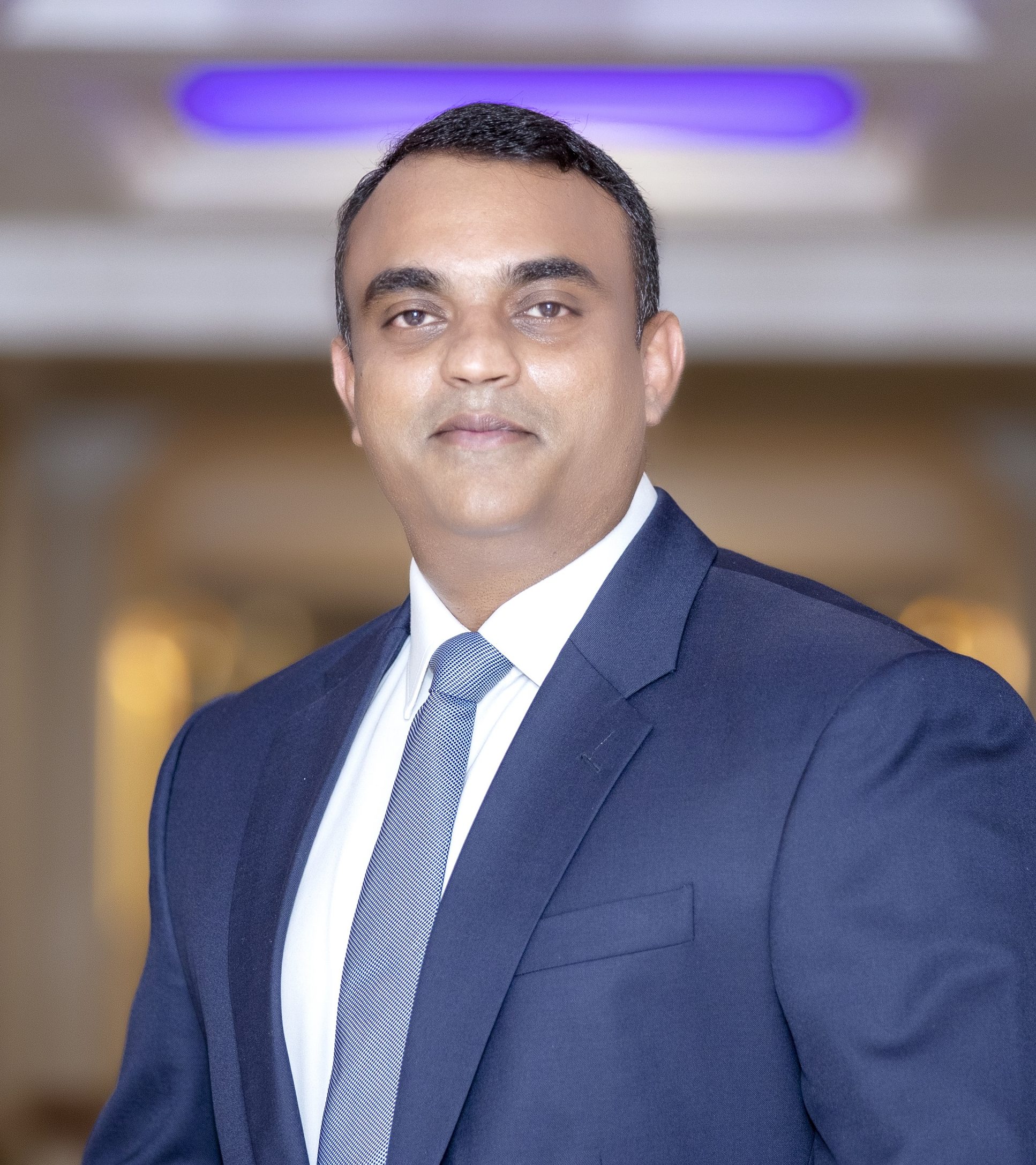
Jacob Chacko, Regional Director, Aruba
Building relationships through face-to-face interactions is the secret to business success in the Middle East. Ever since the pandemic started in early 2020, we haven’t really been able to have those kinds of quality, personalized interactions. So, we are excited at the prospect of getting back to an in-person event like GITEX where we can have one-to-one meetings with customers and partners, and infuse them with excitement about our innovative technologies, as well as discuss our company roadmap and direction that is shaping the future of the networking industry.
What are the key highlights of your participation at this year’s GITEX?
Aruba will be exhibiting under the theme “Your Journey. Your Edge.” Today, more data than ever is generated at the Edge. Legacy networks are unable to cope with the massive amounts of data and decisions required in near real-time. Network architecture needs to utilize Artificial Intelligence (AI) in order to be predictive. That’s where Aruba ESP comes in. It is the industry’s first platform with an AI-powered “sixth sense.” The solution is designed to unify, automate, and secure the Intelligent Edge and help organizations harness its immense potential.
Aruba will demonstrate its latest technologies addressing the digital transformation needs of regional enterprises including:
- Edge transformation in action: New Aruba ESP use cases will be demonstrated across healthcare, education, hospitality, finance, manufacturing and retail.
- Unified Infrastructure: The COVID-19 pandemic accelerated digital transformation but created operational complexity for businesses. The company will showcase how its unified network simplifies network operations and boosts IT agility.
- Edge-to-cloud security: More remote workers mean more applications in the cloud. Aruba will discuss starting a SASE (Secure Access Service Edge) journey with WAN and security transformation.
- AIOps: Event attendees can discover Aruba network’s sixth sense – one that automatically monitors and fixes Wi-Fi, wired and SD-WAN environments.
- As-a-service: Aruba executives will explain the company’s flexible consumption and financing options, to easily deploy new networking technologies in times of change.
An area of focus for the company at GITEX will be on its EdgeConnect platform – an SD-WAN edge solution. The technology is built for today’s edge-to-cloud enterprise and delivers the highest quality of experience for users and IT, no matter where applications reside. Aruba enables enterprises to build a modern WAN that drives maximum value from cloud and digital transformation initiatives with a self-driving network that learns and adapts to the needs of the business.
Aruba will also showcase the company’s 630 Series Access Points (APs) – the industry’s first enterprise-grade Wi-Fi 6E solution. The benefits of Wi-Fi 6E are clear and, alongside other important networking advancements, it is set to enable businesses to become more connected than ever before. Aruba’s WiFi 6E technology will enable businesses to dispense with sluggish connections and poor user experiences, and replace them with powerful, high-speed networks.
With organizations looking to lower their risk during uncertain times, Aruba executives are keen to discuss Aruba as-a-service and Aruba network as a service (NaaS) options that offer business and IT leaders greater visibility, control, and flexibility across hardware, software, and management operations. The pay-as-you-go budgeting model respects today’s organizational imperative of guarding the bottom line.
What is Aruba’s value proposition to regional businesses?
The Hybrid Workplace is the future and this requires network intelligence and cloud-native capabilities to keep workers safe and productive. Below are some of the imperatives of a hybrid workplace that Aruba ESP (Edge Services Platform) addresses:
- Extend the network to the home – The IT department ships an Access Point (AP) to the employee’s home; the employee plugs it in, downloads a configuration from the cloud, and they’re all set. Centrally managed access credentials map to corporate policies to keep the network secure. And it’s all centralized managed from the cloud—IT gets full visibility and AIOps assisted troubleshooting from anywhere
- Reinforce in-office social distancing – As employees return to the office, it’s important for facilities to be able to modify floorplans based on foot traffic or to change cleaning schedules based on density. With Aruba WLAN’s built-In network intelligence and location-aware capabilities, it’s easy to use density mapping to keep the workplace safe.
- Minimize risk with contact tracing – Aruba’s network-based approach uses both proximity and location telemetry to perform contact and location tracing, and the advanced AI capabilities ensure pinpoint accuracy so you’re able to see which people intersected and the exact location of the interaction.
- Flexible financing and consumption – It’s now more important than ever to keep financial and consumption flexibility top of mind. Aruba as-a-service options allow you to respond to rapidly changing business requirements, manage tight budgets, and easily deploy the latest networking technologies.
Aruba has repeatedly been recognized by third party analysts as a leader in Wi-Fi 6, switching, SD-Branch, and a visionary in Data Center networking. The world’s largest companies rely on us to provide a secure, AI-powered edge services platform that spans across campus, branch, data center, and remote working environments. Aruba has been at the forefront of innovation since its start, and has continued to make significant investments to deliver Aruba ESP (Edge Services Platform), the first platform that goes well beyond conventional network management to provide AI-powered operations, provisioning, orchestration, security, and location services from the cloud. Combining over 18 years of proven wired and wireless network expertise with modeling telemetry data from over one million wired, wireless and SD-WAN devices, Aruba AI can identify anomalies and provide prescriptive recommendations that network administrators can trust. No other networking vendor has this level of AI expertise. Aruba as-a-service provides options for financial and consumption flexibility across hardware, software, and management operations. Flexible financing options include leasing, deferred payment, and buy-back programs for unlocking sunk costs. Consumption options include SaaS and NaaS solutions offered in simple pay-as-you-go subscriptions.


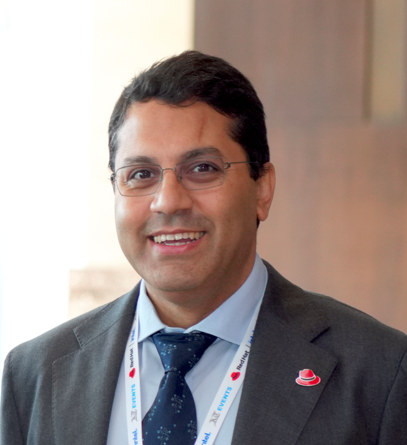
Exclusive interview with Anirban Mukherjee, Director of Solutions Architecture, Red Hat
Digital sovereignty is increasingly moving beyond data residency. What does genuine operational control look like for organisations that need to retain control over their data, applications and infrastructure?
Data residency answers where information sits. Operational control answers who can run, inspect, recover, and change the stack when it matters.
In practice, that means organisations can choose where workloads run – on premises, sovereign cloud, or public cloud – without rewriting applications every time. It means they can audit the software supply chain, keep recovery paths under their own governance, and decide which models, tools, and partners sit in their AI and application environments.
For many MENA enterprises and public-sector bodies, the test is simple: can you keep serving citizens and customers if a single vendor, region, or connectivity path is constrained? Open hybrid platforms give you that room to manoeuvre because the control plane and the open source components stay portable.
As organisations continue to rely on hyperscalers, where do you see the strongest case for combining public cloud with sovereign cloud and on-premises environments?
Hyperscalers remain excellent for elasticity, global reach, and certain managed services. The strongest case for a mixed model is when data sensitivity, latency, or regulatory expectations vary across the same organisation.
We routinely see customer data, AI inference close to the data, and regulated workloads stay in sovereign or on-premises environments, while less sensitive or bursty workloads use public cloud. The point is not to reject public cloud. It is to stop treating it as the only place innovation can happen.
An open hybrid cloud approach lets MENA organisations keep one consistent platform experience across those footprints, so teams are not rebuilding skills and tooling for every environment.
Could the growing AI infrastructure requirement actually increase technology concentration, and what can organisations do to avoid creating a new form of dependency around AI platforms?
Yes, the growing AI infrastructure requirements can actually increase technology concentration, – if every AI workload is tied to one model provider, one accelerator vendor, or one proprietary stack, concentration risk simply moves up a layer.
Organisations reduce that risk by treating AI like the rest of enterprise IT: multiple models for multiple jobs, open tooling where possible, and a platform that can run across hardware and clouds. Smaller, purpose-built open models are often a better fit for specific enterprise tasks than relying on one giant external model for everything.
In the Middle East, where national AI strategies are accelerating investment, the winners will be the ones who can innovate quickly without locking the next decade of infrastructure decisions into a single vendor path.
Open hybrid cloud is often positioned as a way to balance control with access to innovation. What does a mature open hybrid cloud strategy look like in practice?
Maturity looks like consistency. Same platform, same security and policy controls, same developer experience – whether the workload sits in a national data centre, a partner sovereign cloud, or a hyperscaler.
It also looks like deliberate placement: you put each application and AI workload where it creates the best outcome for cost, performance, and governance, and you can move it when those conditions change.
For solution architects in this region, the practical question is: can the customer ship new services without creating a parallel stack every time? If the answer is yes, the hybrid strategy is working.
Vendor dependency is difficult to eliminate entirely. How should organisations assess concentration risk and maintain credible alternatives without creating unnecessary complexity?
You will always have dependencies. The goal is to make them conscious and reversible.
Assess concentration by asking: what breaks if this vendor changes pricing, exits a market, or restricts a capability? Which workloads have no second path? Where does your data or model IP become hard to extract?
Credible alternatives do not mean running five of everything. They mean open standards, portable workloads, and a clear exit or dual-run plan for the few systems that truly matter. Complexity comes from unmanaged sprawl. Discipline comes from a shared platform and clear ownership of what must stay portable.
Red Hat’s role is to help customers keep that optionality – from infrastructure through to AI – so strategic independence is designed in, not bolted on after a crisis.

Exclusive interview with Shadi Hatoum, Regional Director MEA at Tealium
The UAE is moving quickly from AI experimentation to deployment. What do you think will determine which organizations actually turn adoption into measurable business value?
The organizations that create measurable value will be those that connect AI to a clearly defined business decision, then give it the right data and operating model to support that decision.
The UAE has already built significant momentum. Boston Consulting Group found that 42% of UAE organizations qualify as AI Leaders, while 37% have reached the scaling stage of AI maturity. The next test is whether that maturity translates into sustained outcomes.
Deploying a model is not the same as changing how a business operates. AI needs trusted, consented, and real-time context around customer identity, behavior, intent, and journey stage. It also needs clear ownership, measurable objectives, and teams that understand how to use the output.
From my perspective, data readiness and organizational adoption will be the two biggest differentiators. The organizations that can put reliable context in front of AI at the moment of decision, and embed the resulting insight into daily workflows, will be best positioned to turn adoption into measurable value.
How much of the current gap between AI ambition and AI impact comes down to fragmented or outdated customer data?
A significant part of the gap comes down to data readiness, although technology alone is not the whole answer. Most organizations do not lack data. Their challenge is that the data is fragmented, difficult to interpret, or unavailable when a decision needs to be made.
Historical data provides useful depth, but AI also needs data in motion. It needs to understand what a customer is doing now, what has changed, what the customer has consented to, and whether the signal belongs to the correct individual or account.
Tealium’s Future of Customer Data research found that 88% of organizations consider real-time data important to achieving business objectives. That is important because an AI system working from yesterday’s profile may produce a technically valid recommendation that is no longer relevant.
The real opportunity is to create a trusted context layer that connects identity, behavior, consent, and intent, then makes that context available to models and decisioning systems while the customer interaction is still taking place.
Does agentic AI create a new governance problem for enterprises, particularly when agents are acting on customer data without constant human intervention?
Agentic AI does not make the principles of governance entirely new, but it raises the stakes and increases the speed at which controls need to operate. When an AI agent can move from recommendation to action, governance can no longer be treated only as a periodic policy or review exercise. It needs to operate within the data flow and decision process itself.
Enterprises need clear controls over which data an agent can access, the purpose for which it can use that data, how identity and consent are verified, which actions it is authorized to take, and when a person must review or approve the outcome.
The key question is not only whether an agent can access a piece of customer data. It is whether the agent should use that data for this customer, for this purpose, at this moment.
That requires trusted data, current consent, auditability, defined action limits, and clear escalation paths. As autonomy increases, accountability needs to become more precise, not less.
Which sectors in the Middle East do you think are furthest ahead in using real-time customer data and AI together effectively?
From my experience across the region, telecommunications and travel, hospitality, and tourism are among the most active and promising sectors because they generate frequent customer signals and have a clear need to respond in the moment.
In a recent discussion with the Chief Commercial Officer of a major telecom operator in the region, we talked about growth as filling a bucket while also stopping the leaks. Acquisition fills the top, but poor service, irrelevant engagement, and unresolved friction allow value to escape through churn. Sustainable growth requires both attracting new customers and protecting the loyal customer base already in the bucket.
This is where AI-supported decisioning can create real value. Trusted, consented, real-time behavioral data can help an operator recognize changes in usage, service issues, digital engagement, and signs of churn. The next best action may be to resolve a problem, recommend a more suitable plan, position a bespoke package at the right time, or avoid making an offer when the customer first needs support.
The objective is not to push more offers. It is to improve relevance and timing. That can support retention, strengthen loyalty, and create opportunities to grow average revenue per user, or ARPU, by responding to what the customer needs in that moment.
Travel, hospitality, and tourism have a similarly strong opportunity. The customer journey moves from inspiration and research to booking, arrival, the in-destination experience, and loyalty. Each stage creates different needs. A traveler facing disruption needs assistance, while a guest already at a destination may value a timely, personalized experience or service.
These sectors show why hyper-personalization at scale depends on trusted, consented behavioral data in motion. The value comes from giving AI initiatives the current context they need to choose the next best action for that specific moment.
At AI Everything Abu Dhabi 2026, what are the biggest changes you are seeing in the conversations enterprises are having compared with a year or two ago?
The biggest change is that enterprises are no longer asking whether they should adopt AI. They are asking how to move it into production, connect it to measurable outcomes, and govern it at scale.
A year or two ago, many conversations centered on experimentation and individual use cases. Today, the questions are more operational. Leaders want to understand how AI will work with their existing data, how agents will receive current customer context, how decisions will be controlled, and how value will be measured beyond a successful pilot.
I am also hearing much more emphasis on adoption. Organizations recognize that a model does not create value by itself. Teams need clear use cases, practical training, shared measures of success, and confidence in the data behind the recommendation.
The conversation has therefore moved from AI capability to AI readiness. That includes the quality of the data foundation, the governance around it, the ability to make decisions in real time, and the people and processes required to turn those decisions into action. For me, that is a sign that the market is becoming more mature and more focused on sustainable business impact.

Exclsuive interview with Fady Richmany, Corporate Vice President and General Manager, Emerging Markets at Commvault
Integrated Media is at GISEC Global Dubai 2026 with Fady Richmany, Corporate Vice President and General Manager, Emerging Markets at Commvault
How is AI changing the attack surface for organizations in the region?
AI is crucial for digital transformation, so we are not debating the importance of AI. I think the UAE is one of the most advanced countries when it comes to adopting technology. The Dubai Government has also announced plans to use agentic AI extensively in the coming years
However, AI comes with a significant amount of data and introduces new types of identities. We are no longer dealing only with human identities but are increasingly dealing with robotic and AI-agent identities that can access data and systems. This creates additional complexity and consequences from an identity and security perspective.
At the same time, AI-powered attacks are another major concern. In the past, a hacker typically needed to be highly technical. Today, with AI, launching sophisticated attacks can become much simpler.
So, AI is important, but it needs to be utilized properly and governed effectively. There needs to be a balance when organizations and large enterprises adopt these technologies.
Why are threat actors increasingly targeting backup and recovery environments?
Backup and recovery are the last line of defence.
When a company is compromised, one of the first things it needs to do is access its backups to recover its data and operations. Hackers understand this. If they want their attacks to be effective, they also need to target the backup environment.
This is where companies like ours, along with many others in the industry, play an important role in making sure that backups remain clean, protected, and safe so organizations can recover when an incident occurs.
How does identity management need to evolve as AI agents and autonomous workloads multiply?
Agentic AI is putting additional pressure on IT because it is creating many robotic identities.
We have also seen attacks where AI has been used with little or no human intervention. This creates an additional security burden, which means these identities need to be properly protected.
Our approach focuses on the recovery side. Organizations need to use the appropriate security technologies available in the market to protect their environments and ensure that the right identities have access to the right resources.
But we also need to address what happens when an identity is compromised. How do you recover the environment? How do you recover the identity infrastructure? That is becoming a very important topic.
What does Cloud Unity offer beyond separate point solutions?
Cloud Unity brings together identity, security, and operational resilience. We combine people and processes and work closely with many of the leading security technology partners in the market.
We integrate information from different technologies and provide identity resiliency to help protect organizations from both sides of the problem.
We also have something called ResOps, or Resiliency Operations. It is a methodology for how organizations should operate. We believe organizations need to educate their people, keep them aware, and make sure everyone understands their role during a crisis. They also need to modernize their processes.
All of this comes together to make sure the environment remains resilient and productive. And this is not a one-time exercise but has been continuously tested – time and again.
How does ResOps help organizations move from reactive security to a more measurable and proactive approach?
In the olden days, we used what we called backup drills. This is particularly common in banking and government, where people would come together every quarter and check whether the backup was working.
But that approach is no longer enough.
Recovering data is not simply about recovering the information. During a cyberattack, you need to recover clean data and ensure that the environment you are restoring is safe. That means organizations need continuous testing. You have to align people, processes, and technology and make testing an ongoing activity.
When a compromise happens, everyone needs to know their role – Who has access? What are the steps that need to be followed? Who is responsible for each action? The ultimate objective is to be able to recover a clean copy of the data and get the organization back into operation as quickly and safely as possible.
What will the new Center of Excellence in Abu Dhabi focus on, and how will it support the UAE’s digital transformation goals?
One of our strategies is to align closely with local authorities, and work together with them. We work very closely with the UAE Cyber Security Council and have developed this initiative together with them.
The purpose of the Center of Excellence is to bring innovation to the region. It will be a center for innovation, with R&D and technology development taking place in the region. It will also be a center for developing local talent. We are partnering with universities and aim to train young Emiratis in areas such as cyber resilience and cyber defense. It will also be a center for awareness.
I would quote what Dr. Mohamed Al Kuwaiti said- the responsibility for cyber defense does not rely on one technology, one individual, or one government. It requires the entire community to work together to fight cyber threats. That is the purpose of the center. It is to bring all these elements together, support the cybersecurity community, and give back to the region. We want to create awareness, talent, and innovation.


IKEA Turned Last-Minute Hosting into a 90-Second Guest-Ready Tidy-Up Challenge
Building Digital Sovereignty Through Operational Control
A Coffee and Macaroon Affair Acacia Lounge



-

 Trending12 months ago
OPPO A6 Pro 5G Review: Reliable Daily Driver
-

 Tech News2 years ago
Denodo Bolsters Executive Team by Hiring Christophe Culine as its Chief Revenue Officer
-
 VAR2 years ago
Microsoft Launches New Surface Copilot+ PCs for Business
-

 Automotive2 years ago
AGMC Launches the RIDDARA RD6 High Performance Fully Electric 4×4 Pickup
-
Tech Interviews3 years ago
Navigating the Cybersecurity Landscape in Hybrid Work Environments
-

 Hospitality2 years ago
Gulfood 2025 30th Edition Kicks Off Today, Setting New Benchmarks in F&B Growth and Innovation
-

 Tech News1 year ago
Nothing Launches flagship Nothing Phone (3) and Headphone (1) in theme with the Iconic Museum of the Future in Dubai
-

 VAR2 years ago
Samsung Galaxy Z Fold6 vs Google Pixel 9 Pro Fold: Clash Of The Folding Phenoms