Tech Features
WOMEN POWERING THE REGION’S DIGITAL TRANSFORMATION


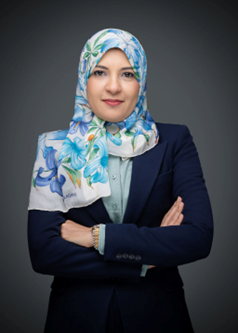
Dr Heba El-Shimy, Assistant Professor (Data and AI), Heriot-Watt University Dubai
At its core, the term “digital transformation” refers to the systematic integration of digital technologies into how organisations operate, deliver value, and interact with their customers. McKinsey defines it as the rewiring of an organisation to continuously deploy technology at scale, while IBM frames it as a business strategy that modernises processes, products, and operations through digital tools. The common thread in both definitions is that digital transformation is not an IT upgrade — it is a structural change in how decisions are made, how services reach end users, and how entire industries reorganise around data and automation.
On that front, the GCC, and particularly the UAE, have moved far beyond the planning phase. The UAE ranked first globally in government AI readiness in 2024 (Oxford Insights) and ninth in the IMD World Digital Competitiveness Index 2025, up from eighteenth in 2017. Over 90% of the UAE’s government services are now digital. Saudi Arabia has digitised 98% of its public services and has climbed to sixth worldwide in the UN E-government Development Index. With the IMF estimating that full digitalisation across MENA could unlock $1.6 trillion in long-term economic gains, the scale of ambition is matched by the scale of opportunity.
One of the region’s most significant and underutilised strategic advantages lies in its female STEM talent. In the UAE, 61% of STEM graduates are women. 77% of computer science students are women, compared to under 20% in the UK, France, and Canada. Bahrain was ranked first globally for female digital skills training and STEM education by the Economist’s Internet Inclusive Report. In Saudi Arabia, the share of women in communications and IT has risen from 7% in 2017 to 35%, exceeding the European average. The GCC is producing technically trained women at rates that most developed economies would find difficult to replicate.
When this talent reaches positions of genuine authority, the results are striking. Ebtesam Almazrouei, an inspiring Emirati, serves as Executive Director, Acting Chief AI Researcher, and Founder of the AI Cross Center Unit (AICCU) at the Technology Innovation Institute in Abu Dhabi (TII), where she oversees the development of the Falcon large language model and chairs the UN AI for Good Impact Initiative. Deemah AlYahya, a Saudi tech diplomat and digital economy expert, became the first Saudi woman to head an international organisation as Secretary-General of the Digital Cooperation Organization (DCO). These are appointments based on capability and merit for women making consequential technical and strategic decisions.
What these examples point to is a broader principle. In a conversation with Global Woman Leader Magazine on the topic of humanising digital transformation at scale, Juliana Rios, CIO of LATAM Airlines Group, made an observation that resonates here: that digital transformation succeeds not when organisations deploy technology, but when the people building those systems deeply understand the context in which they operate. Her argument — that technology must be shaped by human understanding, not just technical specification — speaks directly to what women engineers, data scientists, and domain experts bring to the table. The women leading AI research, engineering cloud architectures, and developing diagnostic algorithms in the GCC are not contributing a complementary perspective to someone else’s technical work. They are doing the technical work, and their fluency across domains like healthcare, policy, and data science is precisely what humanises digital systems at the point of design, not as an afterthought.
Digital transformation demands more than deployment, it demands that the systems themselves are technically sound, contextually appropriate, and fair. Women in the GCC are contributing across all three. They are training large language models, architecting cloud migration strategies, developing computer vision systems for clinical diagnostics, and writing the algorithms behind smart city platforms. They are also, critically, among the researchers identifying and correcting bias in AI systems — work that has direct consequences for whether these technologies serve populations equitably or replicate existing blind spots at scale. When an AI hiring tool penalises candidates because its training data reflected a historically male-dominated applicant pool, or when a facial recognition system performs significantly worse on women than on men, the failure is not one of intention, it is a failure of team composition. The engineers who catch these flaws are those whose own experience makes the flaws visible. The composition of the teams building these systems is not a secondary consideration. It directly shapes the technical integrity, fairness, and ultimately the adoption of the technology.
The GCC is better positioned than most regions to act on this, because the foundation has already been laid. The region has invested heavily in digital infrastructure and in a STEM education system that produces technically trained women at globally exceptional rates. It has also produced cases where that talent has operated at the highest technical and strategic levels and delivered measurably, as the examples in this article illustrate. What makes the GCC’s position distinctive is that these are not isolated stories; they are consistent with the direction the region has already chosen.
From where I sit, teaching computer science, particularly AI, to the next generation of engineers in Dubai, the momentum is real and the talent coming through is exactly what this transformation requires.