Home Integrator
BISR REDEFINES EDUCATIONAL SPACE DESIGN THROUGH STRATEGIC VISION WITH KIDZINK


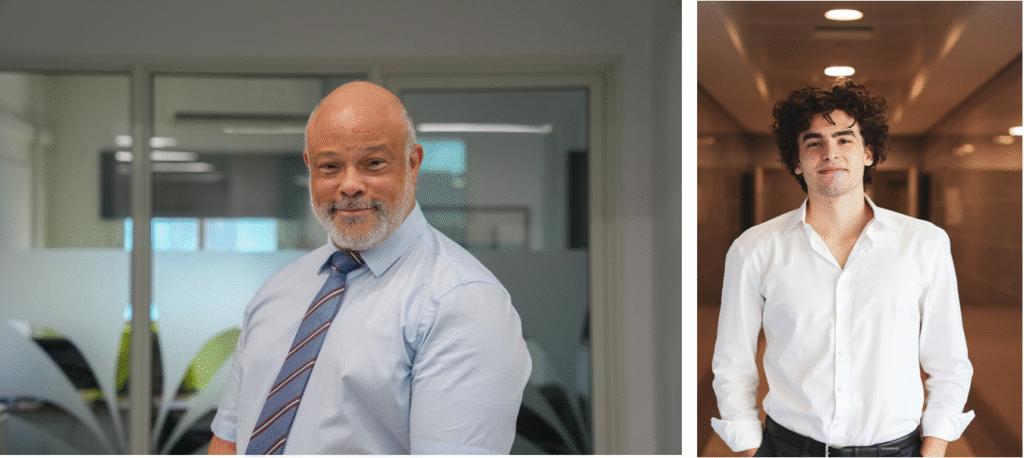
Exclusive interview with Wayne Orr, Interim COO & Project Director Al Waha, BISR & Riccardo Borghesi, Market Manager KSA, Kidzink
Interview with Wayne Orr:
As Interim COO and Project Director, how do you define your role in shaping design outcomes across complex environments like educational campuses?
I joined BISR as Project Director for the Al Waha campus, later became Interim COO, and now serve as Interim Group CEO. That sequence matters because it changes your perspective.
As Project Director, the design was largely set. My job was to ensure it was delivered properly, adapted where evolving needs required it, and tightened where safety or operational risks emerged. That meant challenging contractors, questioning details that did not work in practice, and making sure what we opened was safe, compliant and ready for daily use.
As Interim COO, the focus shifted to opening the school smoothly. Even with a brand new campus, the real test is whether it works. Traffic flow. Student movement. Staff circulation. Supervision. Safeguarding. Peak time pressure. If those fail, the architecture is irrelevant.
Now, at Group level, I look across Al Waha, Al Hamra and DQ and ensure decisions make sense strategically as well as operationally.
If something looks good but creates friction or cost pressure later, it was the wrong call. On a project of this scale, you also learn. The key is recognising issues early and applying those lessons across the estate.
What are the core principles that guide design decisions at BISR projects, especially in terms of spatial flow, flexibility, and future adaptability?
Four principles guide us.
First, flow. A school must feel calm and logical. Students need to move safely. Staff need clear sightlines. Emergency routes must work without confusion. In a through school serving ages 4 to 16, zoning is critical. Younger children need protection and scale. Older students need independence. You cannot design for one group and ignore the other.
Second, flexibility. Educational priorities shift. Numbers change. Teaching models evolve. At Al Waha we built adaptable classrooms and shared spaces. At Al Hamra, which is over 40 years old, flexibility is often about reworking layouts or improving furniture rather than rebuilding.
Flexibility is not free. Every adaptable feature costs money. We invest where it protects long term value and avoid over engineering for theoretical scenarios.
Third, climate reality. In Riyadh, heat and dust shape how a campus functions. If classrooms overheat or glare is uncontrolled, learning suffers. Shading, cooling performance and durable materials are practical decisions, not aesthetic ones.
Fourth, financial discipline. Funds are finite. Whether improving a legacy campus or delivering a new one, we prioritise changes that improve experience and longevity rather than cosmetic upgrades.
The British International School Riyadh (BISR) Al Waha campus is noted for design that nurtures curiosity and creativity. What design elements were crucial in achieving that user experience?
At Al Waha, we focused on three things.
First, visibility. You can see learning happening. Glass between spaces, open commons areas and clear sightlines encourage collaboration and make supervision easier.
Second, variety. We did not just build rows of classrooms. There are breakout spaces, specialist labs, performance areas and shaded outdoor zones. Different students learn in different ways, particularly across a 4 to 16 age range. The building needed to support that range.
Third, making sure it works in this climate. If a space is uncomfortable, students disengage. We focused on effective shading, cooling and lighting. Even sports lighting was designed to meet recognised Class B standards so it performs properly without glare.
Curiosity is far more likely in an environment that is safe, comfortable and well run.
In your experience, how does a place like Al Waha campus balance aesthetic aspirations with functional requirements unique to educational settings?
You balance it through discipline.
Schools are hard working buildings. Finishes must last. Circulation must allow supervision. Specialist facilities must meet regulatory standards. Safeguarding cannot be compromised by design ambition.
At Al Waha, aesthetic decisions were tested against maintenance, operational reality and climate conditions. A building can look impressive, but if it creates long term cost or operational headaches, it is not a success.
In educational design, how do you address flexibility, so spaces can evolve with pedagogical innovation?
Change is constant. That is the starting point.
Teaching methods evolve. Technology advances. Student numbers fluctuate. Buildings need to absorb that change without repeated major capital spend.
At Al Waha, flexibility was built into layout and services capacity. At DQ, which is mid life, we focus on reconfiguration rather than rebuild. At Al Hamra, improvements are targeted and proportionate.
Designing for ages 4 to 16 adds complexity. Early Years spaces must feel secure and appropriately scaled. Secondary students need independence and facilities that feel credible. Zoning and transition areas matter.
Flexibility is about sensible investment, not endlessly transformable space. Good design in a school is ultimately about creating spaces that are safe, workable, financially sustainable and capable of adapting over time.
Interview with Riccardo Borghesi:
As Market Manager for Saudi Arabia, how do you define your role within the design ecosystem, are you a strategist, a cultural translator, or a curator of design experience?
We built Kidzink and Koda around a shared mission: to make schools better. Creativity, collaboration and innovation underpin everything we do. Saudi Arabia’s clear national vision and deep investment in education provide a powerful platform for a mission-driven company like ours to create lasting impact, not only for clients, but for children and communities for generations to come.
Within that context, my role as Market Manager for KSA spans strategist, cultural translator and curator of design experience.
Strategically, I bridge commercial realities with long-term educational ambition — ensuring that vision is grounded in structured, deliverable frameworks that create sustainable value. Education in the Kingdom is evolving rapidly, and aligning design strategy with pedagogical outcomes and operational performance is critical.
Culturally, we work to ensure that as the Kingdom modernises, schools retain a strong sense of identity, place and shared values. Every project must thoughtfully balance global best practice with local context.
From a design experience perspective, we translate educational vision into tangible spatial environments, embedding values physically into the learning experience rather than leaving them as abstract statements.
Pedagogy remains central to this work. Last year, Kidzink unveiled The Enriched Environment Model™, a science-backed framework developed through years of research in pedagogy, neuroarchitecture and environmental psychology. The Model provides a structured approach to designing environments aligned with how students learn, feel and thrive.
Ultimately, my role is about integration, aligning vision, strategy and experience so that each educational environment is pedagogically meaningful, commercially sound and built for long-term impact.
In leading Kidzink’s footprint in Saudi Arabia, how do you maintain a design-first mindset while adapting to fast-evolving regional expectations?
Design strategy is our anchor. At Kidzink, designing for longevity means designing for change.
A design-first mindset is not about rigidity, it is about adaptability. In Saudi Arabia’s fast-evolving market, design is less about fixed solutions and more about creating frameworks that anticipate shifting expectations and evolving educational models.
Each school is a unique ecosystem shaped by stakeholders, operational realities and long-term ambitions. Our role is to develop structured yet flexible strategies that align educational vision with spatial performance and commercial viability.
Whether delivering purpose-built campuses such as BISR Al Waha or elevating legacy environments through thoughtful interventions, the objective remains consistent. We create learning environments that are responsive, future-ready and grounded in pedagogical outcomes..
True sustainability extends beyond materials or efficiency. It means designing spaces that remain relevant and capable of serving generations of learners.
What role does local culture and context play in translating Kidzink’s global vision into meaningful spaces across Saudi Arabia?
At Kidzink, we design schools for children, young people and their communities. Culture is central to that process. Every project begins with fundamental questions. Who are we designing for? What values define the community? What is its history and future ambition?
Saudi Arabia presents a uniquely dynamic context. While Vision 2030 is accelerating modernization and positioning the Kingdom as a global hub, cultural identity remains deeply valued. Education becomes one of the most meaningful platforms where progress and heritage coexist.
Culture shapes how comfort, privacy, hierarchy and social interaction are understood. These behavioural nuances influence how students gather, communicate and experience space. Designing meaningful environments requires sensitivity to those patterns.
Our role is to ensure that global best practice is thoughtfully adapted to local context so each learning environment feels authentic, relevant and grounded in its community. Global vision provides structure. Local culture gives it meaning.
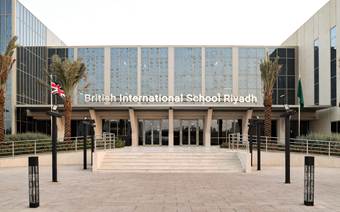
One of the standout projects you’ve been associated with is the Aldenham Prep Riyadh transformation, what design philosophy guided your involvement from briefing to execution?
The philosophy centred on repositioning rather than rebuilding. The structural fabric remained intact, so the transformation focused on reshaping experience, identity and perception within the existing shell.
Interior environments became the primary design tool. Spatial planning, materiality, light, flow and FF&E were carefully orchestrated to elevate quality and clarity without altering the footprint. The objective was premiumisation through atmosphere, improving how the school feels, functions and communicates its values.
Constraints were treated as creative drivers. Existing grids, proportions and circulation patterns informed precise interventions that unlocked the building’s potential. Functionality was central, particularly daily operations, movement, supervision and flexibility.
Cultural calibration was equally important. A British school identity was expressed through detailing and material language, thoughtfully balanced with Saudi expectations around privacy and community.
The project demonstrates that meaningful transformation does not always require new construction. It requires strategic reframing of space and experience.
Can you walk us through how design thinking impacts the way children, educators, and parents interact in a space? What design decisions make that difference?
Design thinking shapes how people feel, behave and connect within a space. In schools, that influence is significant because children, educators and parents experience the same environment differently.
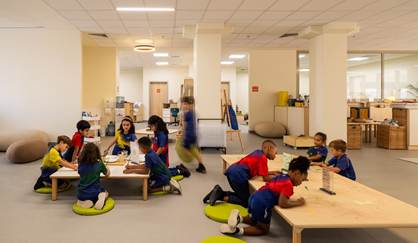
For children, space influences confidence, curiosity and behaviour. Natural light, spatial clarity, movement and sensory comfort support focus, engagement and social interaction. When environments offer flexibility and choice, students develop independence and ownership of learning.
For educators, design affects performance and wellbeing. Clear sightlines, adaptable classrooms, considered acoustics and intuitive circulation reduce friction and cognitive load, allowing teachers to focus on teaching rather than navigating constraints.
For parents, the physical environment becomes the first expression of a school’s ethos. Arrival experience and shared spaces communicate care, safety and educational intent.
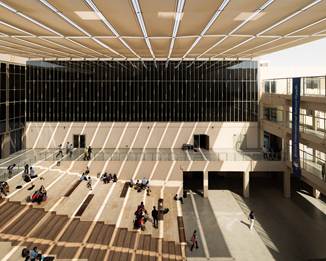
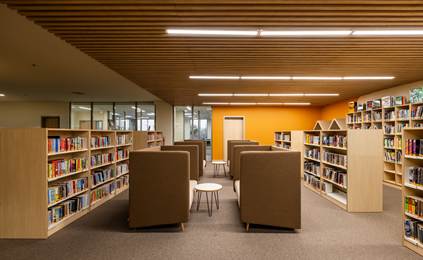
Projects such as BISR Al Waha exemplify this approach, where design strategy aligns with educational vision, student experience and community identity from the outset.
Well-designed spaces don’t just accommodate learning, they quietly shape behaviour, relationships and belonging.

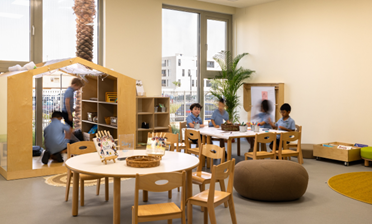
In your opinion, what is the biggest misconception about interior design for institutional or educational environments?
One of the biggest misconceptions is that interior design in schools is primarily aesthetic.
In reality, educational environments demand a level of rigour comparable to sectors such as healthcare. Schools are high-performance human spaces where spatial decisions directly influence wellbeing, stress, cognitive function and behaviour. Yet they are often approached with less technical scrutiny, despite being environments centred on human development.
Educational interiors shape attention, emotional regulation and social interaction in ways that are frequently underestimated. For many children, school is the first environment outside the home where identity, independence and confidence are formed.
Another misconception is viewing schools as static. Pedagogy evolves constantly, requiring spaces that are adaptable and capable of remaining relevant over time.
When designed well, learning environments act as behavioural frameworks. They guide movement, collaboration and focus, often invisibly. The impact of educational design is far more profound than it first appears.