
 Have a question? +971 56 404 0503




Tech News
SENNHEISER LAUNCHES THE CLOSED-BACK HD 480 PRO HEADPHONES


With the HD 480 PRO, Sennheiser today launches its top-of-the-range closed-back headphones for studio and live environments. Designed with the utmost care and precision, they eliminate the two most-cited pain points of closed-back headphones by delivering a tight, accurate bass reproduction and ensuring supreme comfort for audio professionals tasked with recording, tracking, or monitoring in the studio, in live audio environments or on the move.
Delivering where other closed-backs fail
With closed-back headphones, a good reproduction of the low-end is usually difficult to achieve. “This is where the HD 480 PRO excel. Compared to other closed-back headphones, they are a lot tighter on the bass, their low-end is super-accurate and realistic,” notes Jimmy R. Landry, Category Market Manager, Music Industry at Sennheiser.
“Comfort is of paramount importance when headphones are a work tool,” adds Gunnar Dirks, Senior Product Manager for professional headphones. “Engineers often spend hours on end in their sessions. They need a lightweight, ergonomically designed pair of headphones to keep focus and concentration up. The HD 480 PRO eliminate any pressure points and fit every head precisely and comfortably – even if you’re wearing glasses.”
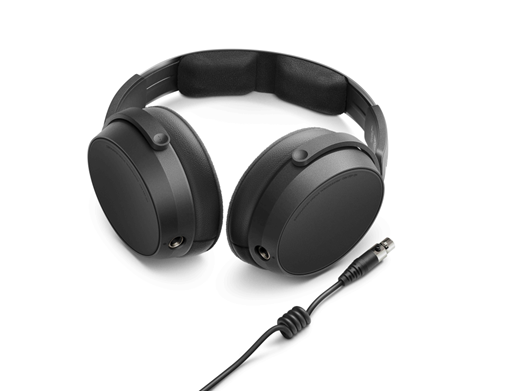
Unlike many other closed-back headphones, the HD 480 PRO deliver an honest low-end
Purpose-built for professional audio work
Whether used in the studio by producers, mixers, musicians, recording engineers, and creators, in live environments by FoH engineers and monitor engineers, or again on the move, the HD 480 PRO are an ideal choice for monitoring, producing, and recording, but also for mixing, which makes them Sennheiser’s most versatile professional headphones to date. Their absolute accuracy, uncoloured frequency response and honest low-end ensure that the audio translates reliably to any listening situation from home speakers to automobile use and PA systems.
“Knowing that you can rely on what you’re hearing is everything, that’s what you get with the HD 480 PRO.”
Jim Kaufman, producer
“When I’m going to be mixing on headphones outside my studio, it’s imperative I have a pair that I trust. With the HD 480 PRO, to have this level of quality and accuracy in a closed-back headphone is amazing.”
Will Brierre, mix engineer
“As producers, we have to receive the best sound to our ears that we can. Every detail is important. When you’re wearing the 480s, you’re immersed in the sound, completely undistracted by the outside world.”
Young Chencs, artist and producer
“The ear cushions. Incredibly soft, right away. And then the dimensionality of the sound. It felt like the music had depth and space around it. Two things stood out immediately. The spatial quality of the sound makes it so much easier to understand where everything sits in a mix. And while recording, I could hear my own voice with this real clarity and dimension. It actually made singing feel more natural and easier.”
Nao Yoshioka, singer and songwriter
“Nothing but the truth”
To enable the user to fully concentrate on the audio and hear all detail, the HD 480 PRO feature multiple stages of passive sound shielding, while comfortable ear pads with soft grooves for the temples of glasses ensure the precise seal that is required for good audio reproduction. A series of design measures – subsumed under the term “Vibration Attenuation System” – eliminate unwanted vibration, reflections and distortion, preserving the clarity of the signal. The ultralight voice coils of the HD 480 PRO ensure a remarkably authentic and dynamic reproduction.
The HD 480 PRO are Sennheiser’s most versatile professional headphones to date. They are an ideal choice for monitoring, producing, and recording, but also for mixing

Patents for comfort, precision fit and noise decoupling
Like its open-back counterpart, the HD 490 PRO, the HD 480 PRO benefit from several Sennheiser-patented features.
Special Axes Geometry: The mechanical design makes sure that the headphones optimally adapt to the head and maintain an equal contact pressure no matter what the shape of the user’s head. The listening experience is consistent across users.
Comfort zone for glasses: The ear pads do not press on the temples of glasses but rather have a soft zone, which ensures good sealing and high comfort at the same time.
Blocking of cable-borne noise: Near the earcup, the connection cable features a coiled part, which effectively decouples the HD 480 PRO from any structure-borne or handling noise, such as that transmitted when the cable hits the desk, for example.
For daily professional use
To adapt to different set-ups, the detachable cable can be worn on the left or right side of the HD 480 PRO. This flexible cable routing is ideal for solo recording of instruments, for example, as it keeps the cable out of the way. To ensure accessibility, the left and right earcups are braille-marked. Engineered by Sennheiser’s experienced professional development team, the HD 480 PRO have been designed to last and deliver consistent results over time.
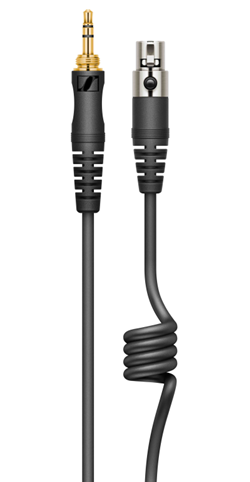
A Sennheiser patent: The coiled part near the earcup connector prevents cable noise from reaching the earcups
HD 490 PRO or HD 480 PRO – which one to choose?
The open-back HD 490 PRO and closed-back HD 480 PRO are at the top of the 400 series of purpose-built professional audio headphones. So which one is best for which application?
“Our developers have been working painstakingly to bring the sound of the closed HD 480 PRO as closely as possible to that of the open HD 490 PRO. Which model is the better choice for you really depends on how you work,” explains Gunnar Dirks. “The open HD 490 PRO will be ideal for mixing in quiet environments, while I would recommend the closed HD 480 PRO for applications where you need isolation, for example when you’re tracking vocals in the room, when monitoring or using them as an FoH reference, or simply when you’re working in the same space as others.”
The HD 480 PRO retails at AED 1.549. It features recording earpads and a 3-metre coiled cable and is delivered complete with a carrying bag. Instead of the bag, the HD 480 PRO Plus comes with a travel case, and retails at AED 1,749.
HD 480 PRO technical data
Acoustic principle: closed
Ear coupling: circumaural
Transducer principle: dynamic
Transducer diameter: 38 mm
Frequency response: 3 to 28,700 Hz (-10 dB)
Sensitivity: 107 dB SPL (at 1 kHz/1 Vrms); 98 dB (at 1 kHz, 1 mW)
Max. SPL: 130 dB (1 kHz, 5% THD)
THD: <0.5% (at 1 kHz, 100 dB SPL)
Impedance: 130 ohms (1 kHz)
Power rating: 300 mW (100 h, noise as per IEC 60268)
Temperature range: 0°C to +50°C for operation; -25°C to +70°C for storage
Relative humidity: 10 to 80%, non-condensing for operation; 10 to 90% for storage
Weight: 272 g (w/o cable)
Available accessories
Replacement recording ear pads, replacement coiled cable (3 m), 1.8 m straight cable, 3 m straight cable, balanced cable, (replacement) travel case, (storage) case, (replacement) bag.

Tech News
ParamountAssure launches inaugural CybHER Awards 2026 to recognise women’s contributions to cybersecurity


ParamountAssure, a UAE-headquartered cybersecurity company, has announced its inaugural ‘Paramount CybHER Awards’ to recognise the expertise and contributions of women protecting their organisations from cyber risk. Registrations are open for women working in cybersecurity and governance, risk and compliance across India, Australia, the UAE, Qatar, Oman, Bahrain, Kuwait and Saudi Arabia. Participants are invited to share practical knowledge that can contribute to the wider cybersecurity profession.
The initiative comes as women remain underrepresented in cybersecurity, with the Global Cybersecurity Forum and Boston Consulting Group’s Cybersecurity Workforce Report estimating their share of the global cybersecurity workforce at 24%. Paramount has unveiled CybHER to recognise women in the public and private sector who implement and oversee cybersecurity in practice and keep operations running.
Premchand Kurup, CEO of ParamountAssure, said: “Women in organisations understand how cybersecurity decisions affect the wider business. Through our interactions, we see women applying sound judgement to complex security and risk challenges every day. Their experience deserves greater visibility. CybHER gives them a platform to share their approaches and lessons, while showing women considering cybersecurity the range of skills and career paths within the profession.”
Five winners will each receive a citation and award recognition, bringing their expertise to a wider professional audience. Selected on the merit of their submissions, winners will gain recognition for the quality of their thinking and the contribution their ideas can make to the cybersecurity community.
Participants can choose the format that best communicates their thinking, submitting an original article or blog of up to 1,000 words, a presentation of up to 10 slides, or a one-minute video. Entries should offer practical insights or useful frameworks, explaining an approach to a cybersecurity challenge or sharing lessons that other professionals can apply. The emphasis is on communicating expertise clearly and giving readers or viewers ideas they can use in their own work.
Ashok Chandrasekharan, COO at ParamountAssure, said: “Women currently make up 25% of ParamountAssure’s workforce and leadership contributing across different functions within our business. We see first-hand the value of their expertise in supporting our work with clients. CybHER reflects our belief that the contributions of women in cybersecurity should be recognised and shared more widely across the industry.”
The awards are open to women whose roles involve protecting their employer’s systems and information, including professionals responsible for security, risk, compliance or privacy. Eligibility extends across technical, managerial and leadership positions, reflecting the different ways women help organisations prevent and respond to cyber threats. Participants can draw on experience in security operations or in setting and overseeing the policies that guide how their organisation manages digital risk.
The independent jury includes Sumayya Shafi, Information Technology Manager at Dubai Petroleum, Amna Al Balushi, Chief Information Security Officer and Head of IT Governance at a leading bank in Oman, and Mariam Ben Dhafari, Director of the Information Systems Center at the General Secretariat of the Supreme Council for Planning and Development in Kuwait. Together, they will assess submissions on demonstrated expertise and originality, considering their practical value, clarity, analytical thinking and potential industry impact.
Sumayya Shafi, Information Technology Manager at Dubai Petroleum, said: “There is still a perception that technical and cybersecurity roles are predominantly male, and many women working in these fields remain underrepresented in the wider industry conversation. Women are already leading in these fields across organisations, and recognising their work is an important step towards closing that gap. CybHER provides a platform to bring these contributions into greater focus.”
The application window will close on November 30, 2026 at 11:59 pm GST (UTC+4), with the announcement of five winners scheduled in January 2027. Eligible professionals can visit the website for further updates, including full participation criteria and submission guidance.

Varonis Systems, Inc. (Nasdaq: VRNS) (“Varonis”), the data and AI security leader, and Proofpoint, Inc. (“Proofpoint”), a global leader in human and agent cybersecurity, today announced entrance into a definitive agreement under which Varonis will be acquired by Proofpoint, a portfolio company of Thoma Bravo, in an all-cash transaction valued at approximately $6.3 billion.
Under the terms of the agreement, Varonis shareholders will receive $49.75 per share in cash. This purchase price represents a premium of 52% to Varonis’ closing stock price of $32.71 on June 22, 2026, the last full trading day prior to initial rumors about a potential sale of the Company, and a premium of 17% over Varonis’ closing stock price of $42.35 on September 1, 2026, the last trading day prior to additional media reports speculating about a potential sale of Varonis. The transaction values Varonis at approximately 53x LTM Free Cash Flow and 8.4x LTM Revenue.1
The combined company will serve more than 16,000 enterprises and millions of organizations globally, creating one of the world’s leading pure-play cybersecurity companies and establishing the industry’s largest data and AI cybersecurity organization. Together, the combined company intends to deliver a unified platform that helps organizations adopt AI with confidence: finding and protecting sensitive data, controlling what people and AI can access, and stopping data loss. Following closing, Proofpoint intends to move quickly to integrate the companies’ capabilities, align go-to-market efforts, and accelerate delivery of the combined platform to customers.
“Today begins an exciting new chapter for Varonis and our customers. It’s a testament to the incredible work of the Varonis team over two decades,” said Yaki Faitelson, Varonis CEO, Co-Founder and Chairman of the Board of Directors. “Our mission is to secure AI and the data that powers it. By joining forces with Proofpoint, we can achieve this mission faster than ever.”
Faitelson continued, “This announcement follows a comprehensive evaluation led by a committee of independent members of our Board of Directors, which included extensive outreach to a range of potential strategic and financial buyers. This transaction is an excellent outcome for the company and our shareholders, representing a realization of immediate, significant, and certain value well in excess of the risk-adjusted value of delivering against our standalone plan.”
“As AI becomes embedded across the enterprise, the data it can access determines both its value and its risk. AI agents are increasingly accessing sensitive information and taking action across systems, making it critical for organizations to understand not only what data needs protecting and who can access it, but how it is actually being used,” said Sumit Dhawan, CEO of Proofpoint. “By connecting communications, identities, permissions, data, and AI, we are creating an intelligence advantage that helps customers see risk more clearly, respond faster, and defend against the next generation of AI risks. This is a defining step in Proofpoint’s evolution into a cybersecurity platform built for the future of AI.”
Tech News
ALEC Partners with Environment Agency – Abu Dhabi to Launch Hydrological Mangrove Restoration Project in Abu Dhabi

ALEC Engineering and Contracting LLC – SPC (ALEC), part of ALEC Holdings PJSC (ALEC Holdings) has signed an agreement with the Environment Agency – Abu Dhabi (EAD) to support a first-of-its-kind mangrove hydrological restoration pilot in the Emirate of Abu Dhabi.
The three-year project will explore whether restoring the natural hydrological conditions of a mangrove area in need of restoration can help the ecosystem return to long-term ecological health. In doing so, the initiative will examine the underlying conditions required to secure the future health and resilience of Abu Dhabi’s mangrove habitats.
EAD will lead the scientific planning and implementation of the project, including site selection, ecological and hydrological assessments, identification of the required restoration interventions, and the monitoring and reporting of project outcomes.
The pilot will establish baseline information for the selected site and track progress against defined restoration and biodiversity indicators. Its findings are expected to strengthen scientific understanding of mangrove hydrology in Abu Dhabi and help inform the planning of future ecosystem restoration initiatives.
The project supports the science-led restoration objectives of the Abu Dhabi Mangrove Initiative and complements the UAE’s national climate and biodiversity targets. By examining the conditions needed for mangrove habitats to recover and thrive, it will contribute to a broader understanding of how protection, hydrological restoration and long-term monitoring can work together to deliver durable ecological outcomes.
Earlier in 2026, ALEC signed the Abu Dhabi Mangrove Initiative Partners Pledge, committing to support the conservation and restoration of mangroves and other blue carbon ecosystems, advance science-based restoration, and reduce its impact on nature.
This partnership marks ALEC’s first flagship nature restoration investment with measurable biodiversity outcomes and forms part of ALEC’s broader commitment to integrating biodiversity considerations into its sustainability strategy and contributing to nature-positive outcomes in the regions where it operates.
Maitha Mohamed Al Hameli, Acting Executive Director, Terrestrial and Marine Biodiversity of the Environment Agency – Abu Dhabi, said, “We welcome ALEC’s support for this pilot, which reflects the kind of long-term, science-based commitment the Abu Dhabi Mangrove Initiative was established to encourage. The findings will strengthen our understanding of how mangrove sites respond to restored hydrological conditions and will inform how we plan future restoration in the emirate. Through this pilot, we aim to build the scientific evidence needed for long-term solutions that safeguard Abu Dhabi’s mangroves, a defining feature of the emirate’s natural heritage.”
Sean McQue, Managing Director – ALEC, said, “Abu Dhabi is a capital defined by extraordinary ambition, creating next-generation cultural and visitor experiences while protecting the natural heritage that gives the emirate its identity. For ALEC, this partnership is an important step in turning our commitment to nature into tangible action. As our first biodiversity restoration investment, the project enables us to contribute directly to the protection and restoration of Abu Dhabi’s mangrove ecosystems, while supporting a science-led approach that will generate measurable biodiversity outcomes. Through this pilot, we are supporting the development of the knowledge, evidence and practical understanding needed to help these vital ecosystems recover and thrive. In doing so, we are proud to support Abu Dhabi’s ambition to protect its natural heritage and contribute to a more resilient future for the emirate.”
As a company whose activities interact with land, water and ecosystems across the built environment value chain, ALEC recognises the importance of supporting the protection and enhancement of natural habitats. Through this partnership, the company will support the collection of ecological baseline data, monitoring of biodiversity indicators and conservation of a priority coastal ecosystem.
The collaboration will also create opportunities for employees across the ALEC Holdings group to participate in environmental awareness, education and structured volunteering activities associated with the project. These are expected to include citizen-science monitoring and other forms of community engagement.
The signing follows the fourth annual Abu Dhabi Mangrove Initiative Partners Meeting, which took place on 8 October 2026 at Rixos Saadiyat Hotel in Abu Dhabi. ALEC participated in the meeting, which brought partners together to review their collective impact and consider future opportunities to support the health and resilience of the emirate’s mangroves.
-Ends-
Photo Caption: (R) Maitha Mohammed Al Hameli, Acting Executive Director – Terrestrial & Marine Biodiversity at Environment Agency Abu Dhabi and (L) Sean McQue, Managing Director at ALEC
About the Environment Agency – Abu Dhabi
About Environment Agency – Abu Dhabi (EAD)
Established in 1996, the Environment Agency – Abu Dhabi (EAD) is committed to protecting and enhancing air quality, groundwater as well as the biodiversity of our desert and marine ecosystem. By partnering with other government entities, the private sector, NGOs and global environmental agencies, we embrace international best practice, innovation and hard work to institute effective policy measures. We seek to raise environmental awareness, facilitate sustainable development and ensure environmental issues remain one of the top priorities of our national agenda.
About ALEC Holdings PJSC
ALEC Holdings PJSC (“ALEC Holdings”), part of the Investment Corporation of Dubai, is a leading diversified engineering and construction group operating in the UAE and KSA. The Company builds and provides construction solutions that set industry benchmarks for innovation, quality, reliability and operational excellence.
ALEC Holdings offers its clients complete turnkey solutions in construction, MEP, fitout, marine, oil & gas, modular construction, energy efficiency and solar projects, heavy equipment rental, technology systems and asset maintenance. With these capabilities, the Company successfully serves a diverse range of sectors including airports, data centers, retail, hotels & resorts, high-rise buildings, and themed projects.
For more information, please visit https://alec.ae/.


The Connected Home Is Evolving into an Intelligent Ecosystem

New Partnership Connects Residential Wellbeing With Preventive Healthcare

Dubai Ride-Hailing App Zed Strengthens Leadership with Appointment of Shobhit Singhal to Shape Its Future



-

 Trending12 months ago
OPPO A6 Pro 5G Review: Reliable Daily Driver
-

 Tech News2 years ago
Denodo Bolsters Executive Team by Hiring Christophe Culine as its Chief Revenue Officer
-
 VAR2 years ago
Microsoft Launches New Surface Copilot+ PCs for Business
-

 Automotive2 years ago
AGMC Launches the RIDDARA RD6 High Performance Fully Electric 4×4 Pickup
-
Tech Interviews3 years ago
Navigating the Cybersecurity Landscape in Hybrid Work Environments
-

 Hospitality2 years ago
Gulfood 2025 30th Edition Kicks Off Today, Setting New Benchmarks in F&B Growth and Innovation
-

 VAR10 months ago
Huawei Nova 14 Pro Review: Where Camera Excellence Meets Ecosystem Evolution
-

 Tech News1 year ago
Nothing Launches flagship Nothing Phone (3) and Headphone (1) in theme with the Iconic Museum of the Future in Dubai