Tech Features
How the Middle East Moved Beyond Followers to Build Brands

Yet another compelling new piece by Mariam Abouzeid, Marketing Manager, MEA at Nothing Technology
There is a $771 million evolution happening at the center of the Middle East marketing industry. For the past five years, the global narrative around influencer marketing was built on a flawed premise that reach equals influence. Brands in New York and London debated whether the creator economy was a bubble, while marketers obsessed over vanity metrics and fleeting viral moments. In the GCC, we stopped debating and started building. The influencer marketing market in the GCC is valued at $315.5 million in 2025 and is projected to reach $771.6 million by 2032. But the real story is not the money. It is the maturity.

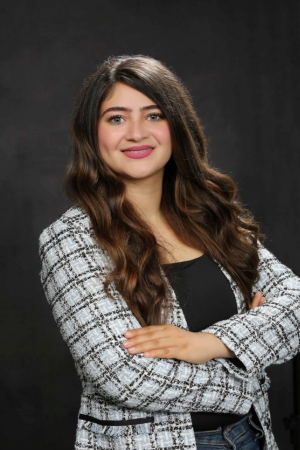
Having overseen communications strategies that collectively generated billions of impressions across the region, I have watched Dubai and Riyadh transform from emerging markets into the global vanguard of creator led brand building.
The signals are clear. The Middle East is not catching up to the global influencer economy. We are leading it. We are doing it by fundamentally reprioritizing how creators are used, moving them out of the traditional PR umbrella and embedding them as the ultimate engine for mass awareness and deep brand trust. When you look at brands like Huda Beauty, which generates over $75 million a year through the strategic amplification of creator content, you see the blueprint for the future. Huda Kattan built a billion dollar empire right here in Dubai not by treating influencers as a PR add on, but by embedding them into the core architecture of the brand. This creator first model has paved the way for a new generation of Middle East beauty empires, from Youmna Khoury’s Youmi Beauty to Aliona Shcherba’s Aliona Cosmetics, proving that the region is no longer just consuming global beauty trends. It is exporting them.
The Mass Awareness Machine
Before we examine where the Middle East is going, it is worth understanding the foundation it has built. Influencers are the most powerful mass awareness engine ever created. In a region where the GCC is on track to have 263,000 active influencers in 2025, brands have access to a decentralized media network that no television buy or billboard campaign can replicate. When 60 percent of Saudi users and 48.1 percent of UAE users use social networks as their primary tool for researching brands and products, creators are not supplementing the media plan. They are the media plan. According to EMARKETER, US social network amplified content ad spending is projected to match creator sponsored content revenues at $14.15 billion in 2027 before surpassing them in 2028. Brands are about to spend more money boosting creator content than they pay
creators to make it. In the UAE and Saudi Arabia, this strategy is already taking hold. Ounass, the Middle East premier luxury e-commerce platform, provides a perfect example of this evolution. They do not just pay influencers for one off posts. They use data driven insights to identify top performing creators, then amplify that content through targeted performance marketing, blending emotional storytelling with rational product attributes to build a luxury narrative that resonates deeply with Gulf consumers and drives measurable return on ad spend/ But here is where the Middle East diverges from the global playbook. While Western brands are still treating influencers purely as awareness tools, the GCC has moved further up the value chain.
The QSR Reality Check: Awareness vs Consideration
To understand this shift, look no further than the highly competitive food and dining sector in the Middle East. This is a category where influencer marketing has been deployed more aggressively than almost any other. At the mass market end, brands like Americana operating KFC and Pizza Hut, McDonald’s, Papa Johns, and Subway pour millions into influencer campaigns to stay top of mind. Yet AlBaik, the beloved Saudi homegrown champion, topped YouGov KSA QSR Rankings 2026 with a consideration score exceeding 50 percent, a position built on decades of genuine consumer love, not just influencer hype. Global giants McDonald’s and KFC follow at 26.9 percent and 23.2 percent consideration respectively, despite their enormous social media presence.
At the premium end, the contrast is even sharper. Shake Shack, Five Guys, P.F. Chang’s, Joe & The Juice, and homegrown hero SALT have all built their GCC presence on the back of creator driven content, using beautiful food photography, viral reels, and influencer queues around the block. Nobu and Zuma in Dubai have become synonymous with aspirational lifestyle content, their dining rooms perpetually filled with creators documenting every dish.
Consider the rise of % Arabica. The Kyoto born coffee brand has grown into a $1.3 billion global giant with virtually zero traditional marketing. In the UAE, its minimalist, highly aesthetic stores were designed specifically for the Instagram and TikTok era. The brand relies entirely on organic discovery, user generated content, and influencer footfall to drive its massive queues. It is the ultimate example of a brand built entirely on the back of social media awareness and creator aesthetics .
The stories of FIX Dessert Chocolatier and Bi Laban are perhaps the most instructive. FIX Can’t Get Knafeh of It chocolate bar became a global social media phenomenon in 2024 and 2025, generating a staggering 1,259 percent year over year explosion in social conversations. The viral awareness was undeniable, leading to $22 million in sales at
Dubai Duty Free in the first quarter of 2025 alone 10 . But as the Ehrenberg Bass Institute for Marketing Science noted, the viral fad diluted the brand identity, turning a specific product into a generic design brief copied by everyone 11 . Similarly, Bi Laban became a regional sensation engineered through influencer seeding and relentless creator buzz. The queues were real. But when the hype faded, the business fundamentals were exposed. Viral awareness, it turned out, is not a substitute for operational excellence, quality consistency, and genuine consumer loyalty.
The data reveals a stark reality. Hype does not seamlessly translate into habit. While 53 percent of Saudi residents eat fast food weekly, their ultimate choice of where to dine is driven by cleanliness at 48 percent and price at 46 percent, operational realities that no influencer can fake 12 . Influencers drive the initial discovery, cited by 61 percent of consumers as their source for finding new spots, but they are highly inefficient at closing the sale 12 .
The Cost of Misalignment: When Influence Breaks Brands
If the Middle East is learning how to build brands through creators, the global market has provided the ultimate cautionary tales of what happens when influence is misaligned with brand equity. The collapse of the Adidas and Yeezy partnership remains the most expensive influencer marketing failure in history. Adidas tied its cultural relevance to a single, highly volatile creator. When the relationship imploded, Adidas posted its first annual loss in 30 years, warning of a $1.3 billion revenue hit due to unsold inventory 13 . The lesson for regional brands is clear. Renting cultural relevance from a creator without building your own brand equity is a catastrophic financial risk.
Similarly, Pepsi infamous Kendall Jenner campaign remains the textbook example of scripted authenticity failing spectacularly 14 . Pepsi paid a massive premium for Jenner reach, assuming her follower count would automatically translate into cultural resonance. Instead, the tone deaf execution sparked a global backlash, proving that massive awareness without genuine cultural alignment actively damages brand trust. These global failures have taught Middle East marketers a crucial lesson. Awareness without alignment is dangerous. Influence must be anchored in trust, not just reach.
The Beauty Blueprint: From Awareness to Empire
If the F&B sector illustrates the limits of viral conversion, the beauty and luxury sectors provide the blueprint for the great reprioritization. Huda Kattan built Huda Beauty into a billion dollar empire using this exact logic. She did not treat influencers as a direct sales channel. She treated them as a massive awareness engine. Today, Huda Beauty generates over $75 million a year through paid media amplification of creator content. The brand understood early that organic influencer
posts build top of funnel awareness, but it is the paid amplification of that content that drives actual scale.
Similarly, Mona Kattan fragrance brand Kayali has mastered this shift. Kayali does not rely on influencers to push promo codes. It uses them to build cultural relevance and awareness around scent layering. The result? According to Sephora merchant partners, Kayali now has one of the highest repurchase rates in the entire fragrance category globally 15 . The brand uses influencers to get the consumer attention, but relies on product quality and brand equity to secure the conversion and the repeat purchase.
This blueprint is now being replicated by the most powerful creators in the GCC. Kuwaiti influencer Noha Nabil leveraged her massive regional following to launch Noha Nabil Beauty, building a brand deeply rooted in Arab culture and diversity that earned her a spot on the Forbes Women Behind Middle Eastern Brands list 16 . Similarly, Emirati superstar Balqees Fathi transformed her 13 million Instagram followers into a luxury cosmetics empire with Bex Beauty, merging global innovation with specific GCC beauty ideals 17 .
These founders understand that influence is the spark, but operational excellence and cultural alignment are the engine.
The Trust Capital of the World
This is why the Middle East is winning. Brands here have realized that influencers are not a shortcut to conversion. They are the architects of trust. According to the 2026 Edelman
Trust Barometer, global trust is contracting inward. People are retreating into insular, values aligned circles, making it harder than ever for mass corporate messaging to penetrate 18 . Yet, the UAE topped the 2026 Edelman Trust Index globally with a score of 80 out of 100, up eight points from the previous year 19 .
Why? Because brands in the UAE and Saudi Arabia understood early that trust cannot be broadcast. It must be brokered. As Edelman research highlights, in an insular world, trust is built and scaled by creators who act as cultural mediators 18 .
This is backed by new academic research. A 2026 study from Imperial College Business School on influencer authenticity found that the era of renting credibility through one off posts is over 20 . Professor Omar Merlo research proves that when brands treat influencers as long term partners rather than transactional media channels, they move from a transactional to a transformational relationship with consumers 20 .
The Global Validation: Unilever Pivot
The model pioneered in the Middle East is now being adopted by the world largest advertisers. In early 2026, Unilever made a declaration that validated everything regional marketers have been building. The FMCG giant shifted 50 percent of its total digital advertising budget away from traditional corporate ads and directly into social media and creators 21 . By April 2026, that commitment had translated into a network of 300,000 influencers actively promoting Unilever brands globally 22 .
Unilever CMO Leandro Barreto described the strategy as building Desire at Scale, using creators to embed brands authentically in culture 22 . This is exactly what the Middle East has been doing for years. When a global giant like Unilever restructures its entire marketing apparatus to match the creator first model, it proves that influencer marketing has officially graduated from the PR department to become the central nervous system of modern brand building.
The Academic Consensus on Brand Value
The data is clear, and the academic consensus is catching up to what we already know in the GCC. A recent Harvard Business Review study on how brand associations drive customer spending found that what consumers spontaneously think about a brand matters far more than what they agree with on a rating scale 23 . The research proves that brand equity is built through deep, authentic associations over time.
Furthermore, as McKinsey 2026 State of Marketing report highlights, branding has returned as the number one priority for marketing leaders globally 24 . CMOs view branding ability to drive distinctiveness and embody a clear value proposition as critical to building competitive differentiation 24 . In the Middle East, we know that the fastest, most authentic way to build that distinctiveness is through the voices of trusted creators.
The Way Forward: Leading the Next Era
The next wave of global marketing innovation will not come from Silicon Valley or Madison Avenue. It is coming from Dubai and Riyadh. According to EMARKETER, 57 percent of ad buyers globally say influencer ads and partnerships are their top investment priority for 2026. The world is finally waking up to the power of the creator economy, but the Middle
East is already living in its future.
We have moved past the vanity metrics. We have moved past the debate over whether influencers belong in PR or paid media. We have built an ecosystem where creators are the undisputed architects of mass awareness, brand trust, and deep consideration.
The Middle East audience is among the most digitally connected and brand aware anywhere in the world, and it expects marketing strategies that reflect that level of sophistication. Influencer marketing is not just growing here. It is setting the global standard. The brands that recognise this will not just win the region. They will lead the world.