
 Have a question? +971 56 404 0503





Automotive
2026 XPENG G6 PRO PERFORMANCE / AWD PERFORMANCE FIRST DRIVE REVIEW: THE SENSIBLE SPEEDSTER


Car Review by Integrator Media.
A clean, quick, long-range electric SUV that does not shout for attention, but quietly makes a very strong case for itself as one of the most rational performance EV choices in the UAE.
The XPENG G6 Pro Performance, listed locally as the G6 AWD Performance in UAE market sources, is not the loudest electric SUV in the room. It does not have the luxury-cocoon feel of a Zeekr 7X, and it does not carry the cheeky performance-brand theatre of the smart #5 Brabus. What it does have is a very UAE-friendly combination of price, performance, range, charging speed, cabin space, and technology.
In the UAE, XPENG launched the G6 through Gulf Star Motors, with local coverage listing the G6 lineup in three variants: Standard Range RWD, Long Range RWD, and Performance AWD. The Performance AWD sits at the top of the G6 range, with DubiCars listing it at AED 189,900 for the 2026 model year.
That makes the G6 Performance interesting before it even moves. For less than many traditional premium SUVs, it brings dual-motor all-wheel drive, 470 hp, 660 Nm, an 87.5 kWh battery, a claimed 550 km range, and a 0 – 100 km/h time of around 4.0 – 4.1 seconds depending on source.
Quick Take
Shiny Bits
The value equation is strong. At AED 189,900, the G6 AWD Performance undercuts several premium EV rivals while still offering serious performance, a large battery, all-wheel drive, long claimed range, and a long equipment list.
The powertrain is properly quick without feeling silly. UAE launch coverage lists 470 hp, 660 Nm, an 87.5 kWh battery, 550 km WLTP range, and 20-minute DC charging from 10% to 80%.
The cabin tech is generous. UAE coverage and listings point to a large central touchscreen, digital cluster, Xopera audio, heated and ventilated seats, dual wireless charging, V2L, 360-degree cameras, XPilot 2.5 Level 2 ADAS, park assist, and a feature set that feels closer to a tech product than a conventional SUV.
Rough edges
The official XPENG UAE G6 pages were unavailable during research, returning server errors, so the UAE-specific details for this draft were cross-checked through local UAE automotive sources rather than the live official model page.
The G6’s minimalist interior means many functions are screen-led. External review impressions suggest the system is responsive and feature-rich, but screen-based controls will not appeal to everyone, especially buyers who prefer physical buttons for climate and drive settings.
It is fast and secure, but not necessarily emotional. Brown Car Guy’s review describes the updated G6 AWD Performance as composed, mature, and confidence-inspiring, but also notes that driver engagement could still be sharper.
The Rational Performance EV
The XPENG G6 is the kind of electric SUV that makes more sense the longer you look at it. At first glance, it is a sleek coupe-style crossover with a clean front end, flush details, and a rounded body shape that clearly prioritises aero efficiency. It is not trying to be rugged, and it is not trying to look like a luxury limo on stilts.
That honesty works in its favour. The G6 looks like a modern EV built around range, space, and tech rather than fake exhaust drama or off-road cosplay. In UAE traffic, where EVs now range from tiny city cars to six-figure luxury flagships, the XPENG lands in the useful middle: futuristic enough to feel new, but not so flashy that it becomes the whole conversation.
Its dimensions help too. DubiCars lists the G6 at 4,753 mm long, 1,920 mm wide, 1,650 mm tall, with a 2,890 mm wheelbase and 571 litres of boot space.2 That gives it useful family-SUV proportions without pushing it into the bulkier, harder-to-park class.

Performance: Quick Without The Drama
The G6 AWD Performance has the numbers buyers want to see. UAE launch coverage lists 470 hp, 660 Nm, all-wheel drive, and 0 – 100 km/h in 4.1 seconds, while the UAE listing page quotes 4.0 seconds. Either way, this is very quick for a five-seat electric SUV at this price point.
What makes the G6 more interesting is how it uses that performance. External review impressions of the updated AWD Performance praise the car’s maturity more than its shock value. Brown Car Guy describes it as composed, quick, and surprisingly mature, with steering that tightens convincingly in Sport mode and a secure, neutral feel rather than a tail-happy character.
That is exactly the right personality for UAE use. A fast EV here needs to be calm at highway speeds, confident during sudden gaps in traffic, and comfortable enough for long inter-emirate drives. The G6 seems to prioritise confidence over theatrics, which may not sound exciting on paper, but feels very smart in real life.
It is not a sports SUV in the traditional sense. It is more like a very well-sorted electric appliance that happens to be extremely quick. And in daily driving, that might be the better formula.
Range And Charging: The Main Event
The Performance AWD gets an 87.5 kWh battery in UAE launch coverage and is listed with 550 km WLTP range. DubiCars’ UAE listing also shows 550 km battery range for the AWD Performance. That gives it enough claimed range to cover normal commuting, weekend plans, and longer UAE routes without making charging the centre of every journey.
Charging is just as important. UAE launch coverage lists 20 minutes for DC charging from 10% to 80% and states that the G6 uses XPENG’s SEPA 2.0 platform with 800-volt architecture. This is one of the most important points about the car, because quick charging can make a mid-priced EV feel far more premium in actual ownership.
Home charging will still be the easiest setup for most buyers. But for apartment residents, office chargers, and longer routes, the G6’s charging capability gives it a major practical advantage. A long claimed range is reassuring; a fast top-up is what saves the day when plans change.
Cabin: Minimalist, Spacious, And Tech-First
The G6 cabin follows the modern EV playbook: clean dashboard, large central screen, digital cluster, lots of software, and fewer physical buttons than traditional buyers may expect. UAE launch coverage lists a 15-inch touchscreen, 10.25-inch instrument cluster, Xopera 18-speaker audio, dual-zone climate control, powered heated and ventilated front seats, heated rear seats, V2L, and dual wireless phone charging.
The equipment list is impressive, especially at this price. DubiCars’ UAE listing also includes features such as a head-up display, 360-degree camera, panoramic roof, adaptive cruise control, air purifier, ambient lighting, wireless charger, massaging seats, Android Auto, Apple CarPlay, and a manufacturer warranty listed at 7 years or 160,000 km.
The cabin’s best trick is that it feels designed around actual use. The long wheelbase helps rear-seat space, the 571-litre boot is practical, and the high level of comfort kit suits the UAE climate well. Ventilated seats, rear AC vents, air purification, and remote-friendly EV tech are not just luxuries here. They are everyday quality-of-life features.
The caveat is usability. External review impressions praise the screen as responsive and feature-rich, but also note that screen-heavy controls will not work for everyone.3 In a UAE summer, quick climate access matters. A beautiful interface is only useful if it lets you do basic things quickly.
Technology And Safety: More Than Just A Big Screen
XPENG has built much of its brand around technology, and the G6 reflects that. UAE launch coverage lists XPilot 2.5 Level 2 ADAS, 360-degree cameras, park assist, seven airbags, V2L, dual wireless charging, and a premium audio setup.
The local listing adds blind-spot detection, lane-departure alert, ISOFIX, electronic brake-force distribution, brake assist, hill-start assist, traction control, stability control, autonomous emergency braking, lane-keeping assistance, auto high beam, tyre-pressure warning, front and rear parking sensors, and self-steering parking.
Brown Car Guy’s review also points to a broader tech experience, including OTA support, an advanced voice assistant that can recognise which seat issued a command, intelligent parking, adaptive cruise, driver monitoring, and a digital rear-view mirror that helps compensate for the shallow rear window.
That makes the G6 feel less like a car with a screen and more like a software-defined SUV. The good news is that the technology appears useful rather than purely decorative. The only question is whether every buyer wants this much of the car routed through menus, voice commands, and digital settings.
Final First Impressions
The XPENG G6 Pro Performance / AWD Performance may be the most quietly convincing of this new wave of UAE electric SUVs. It does not rely on badge nostalgia or theatrical design. Instead, it delivers a strong set of numbers, a sensible price, a spacious cabin, fast charging, and proper everyday usability.
Its personality is mature rather than playful. That might sound like faint praise, but it is actually the G6’s biggest strength. A quick EV is easy to build. A quick EV that feels composed, comfortable, efficient, and usable every day is much harder.
For UAE buyers who want performance without showing off, range without overspending, and technology without stepping into luxury-brand pricing, the G6 Pro Performance / AWD Performance looks like a serious contender. It is not the emotional choice in this segment. It is the clever one.
FAQ
How much is the XPENG G6 Pro Performance / AWD Performance in the UAE?
DubiCars lists the 2026 XPENG G6 AWD Performance at AED 189,900 in the UAE.
What is the range of the XPENG G6 Pro Performance / AWD Performance?
UAE launch coverage and local listing data both show the Performance AWD with a claimed 550 km range.
How fast is the XPENG G6 Pro Performance / AWD Performance?
UAE launch coverage lists 0 – 100 km/h in 4.1 seconds, while the UAE listing page quotes 4.0 seconds.
What battery does the XPENG G6 Pro Performance / AWD Performance use?
UAE launch coverage lists an 87.5 kWh battery for the Performance AWD variant.
How quickly can the XPENG G6 charge?
DubiCars’ UAE launch coverage lists 20 minutes for DC charging from 10% to 80% and states that the G6 uses an 800-volt architecture.
Is the XPENG G6 AWD Performance practical?
Yes. The UAE listing shows five seats, a 571-litre boot, a 2,890 mm wheelbase, and a strong equipment list including ventilated seats, rear AC vents, 360-degree cameras, dual wireless charging, and driver-assistance features.
What should UAE buyers check before buying?
Buyers should confirm the final UAE specification with the local dealer, test the screen-based controls, check home or workplace charging options, and compare warranty, service, and software-support terms directly with Gulf Star Motors before purchase.
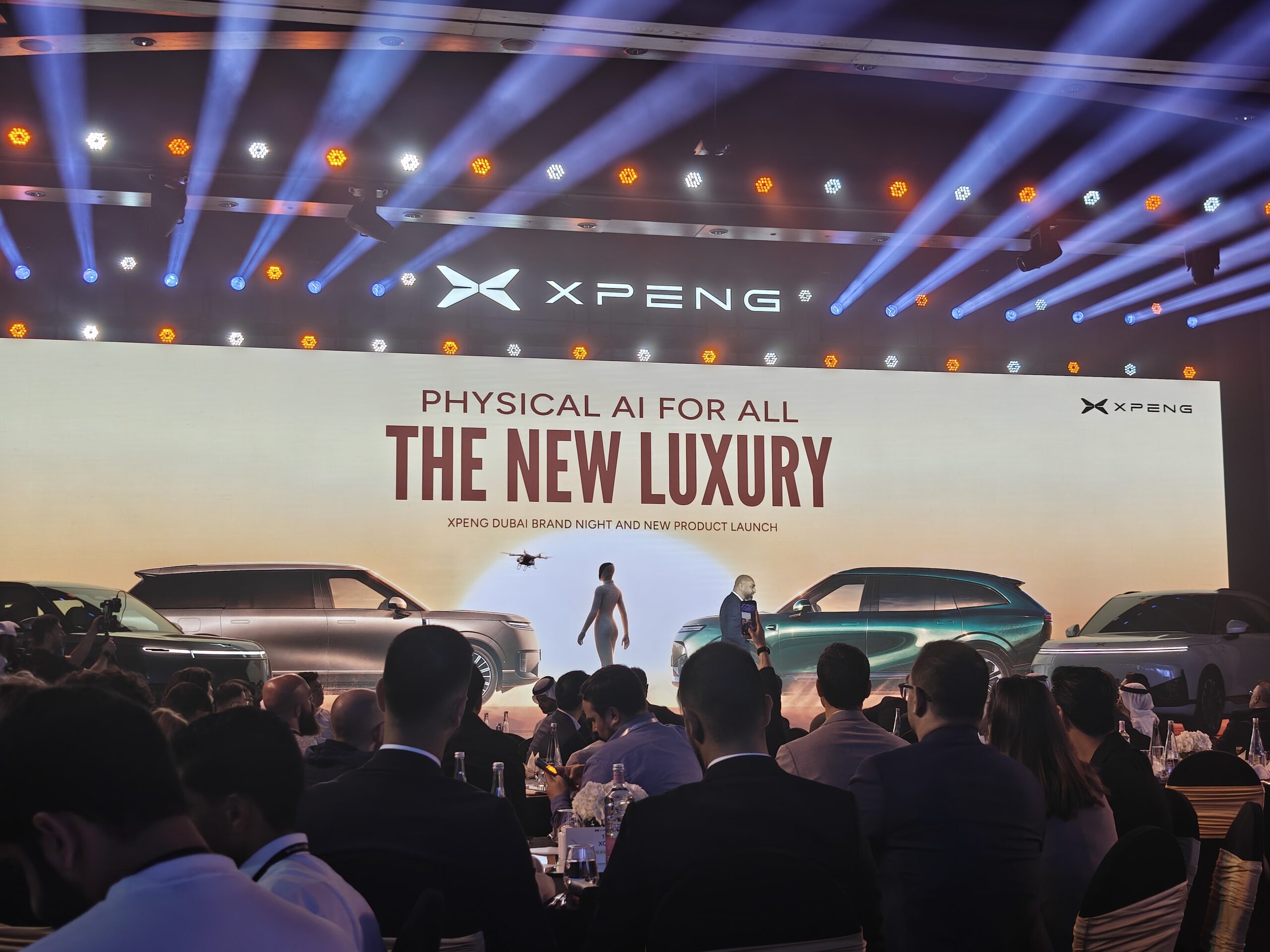
On 2 November 2026, XPENG and Gulf Star Motors put Physical AI, flagship SUVs and design culture in front of UAE guests.
Here is what the Brand Night and New Product Launch felt like from the floor.
Dubai has seen plenty of smart EV launches. Fewer evenings try to stage the whole idea of AI mobility in one room: cars, software, design language and a glimpse of what comes after the road.
On 2 November 2026, that is what XPENG Brand Night and New Product Launch set out to do, hosted with Gulf Star Motors, a subsidiary of Ali and Sons and the official distributor of XPENG in the UAE.
The brief was clear from the moment the programme began. This was not only a reveal of two SUVs. It was a statement that XPENG wants UAE buyers to see the brand as a technology company that happens to make cars, and that Dubai remains the beachhead for that story.
Two Flagships, One UAE Brief
The headline products were the G9L and the GX, both presented for UAE customers. XPENG positions the G9L as its Next-Gen AI Flagship SUV, offered with battery-electric and Kunpeng Super Range Extender powertrains. Official materials cite an overall length of 5,120 mm and a wheelbase of 3,100 mm, with an AI cockpit and advanced driver-assistance technologies aimed at local buyers who want flagship presence without giving up software-led features.
The GX, XPENG’s full-size six-seat flagship SUV, was shown with the same dual choice: battery-electric and Kunpeng Super Range Extender. XPENG quotes a pure-electric range of up to 430 km and a combined range of up to 1,585 km for the Super Range Extender configuration on an 800V architecture, a pairing that speaks directly to UAE driving: long distances, summer loads, and the need for range confidence beyond the city.
The GX also carries the computing story that XPENG wants associated with its upper models: Turing AI computing of up to 3,000 TOPS and the VLA 2.0 intelligent-driving system, framed here as advanced driver assistance and an AI-powered cabin rather than science fiction. On the night, that distinction mattered. Guests were not asked to believe in a driverless future in the abstract. They were asked to look at hardware and interfaces that already sit in production-bound products.
Beyond the Unveil
The programme deliberately stretched past a spotlight moment. Guests experienced the GX in person, a useful reminder that the model has already drawn strong UAE interest, with more than 500 confirmed orders reported ahead of launch. In a market that can be sceptical of new EV brands until the ownership story feels solid, that pre-launch demand figure is part of the narrative as much as any stage lighting.
Workshops on XPENG’s Vital Flow design language sat alongside the metal. Vital Flow, inspired by Design VP JuanMa Lopez, formerly Head of Exterior Design at Ferrari, emphasises flowing, muscular surfaces that look alive even when a vehicle is standing still. For a UAE audience used to premium sheet-metal theatre, the pitch was less about ornament and more about motion held in stillness, a design line that tries to make technology feel intentional rather than bolted on.
There was also a session on XPENG’s flying car programme, the piece of the evening that most clearly connects Brand Night to the brand’s Physical AI agenda of intelligent vehicles and advanced air mobility. It is the kind of slot that can tip into hype. On this programme it was presented as part of a wider stack, not as a separate circus act.
Physical AI, Explained for Dubai
Dubai Brand Night brings XPENG’s ‘Physical AI for All’ vision to the region, with the GX and G9L showcasing how intelligent mobility and Kunpeng Range Extender technology can meet the demands of long-distance driving in the region’s challenging climate..
Dr. Brian Gu, Vice Chairman and President, XPENG
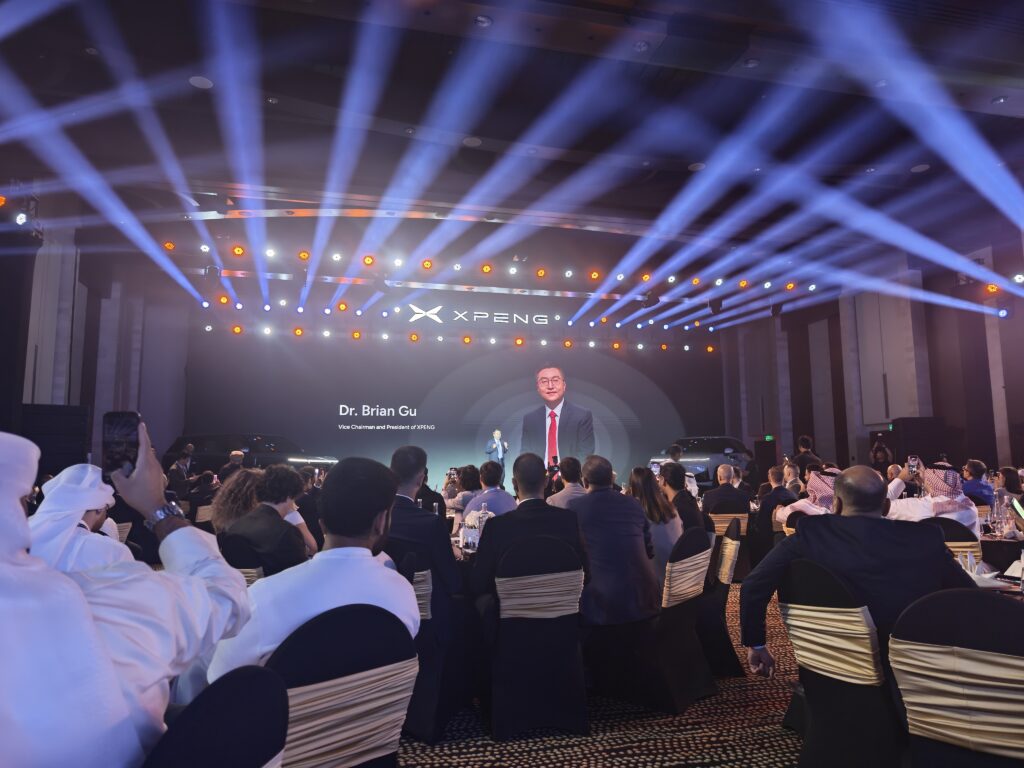
That climate line is not decorative copy in the UAE. Heat, highway pace and uneven charging density still shape purchase decisions, which is why range-extender messaging sits so comfortably next to pure-electric talk here.
The phrase Physical AI can sound abstract until you hear it next to concrete products. On Brand Night it meant AI cars with serious onboard compute, a design system with a named chief, and air-mobility ambitions shown in the same programme as showroom SUVs. Whether every guest left fluent in the jargon is beside the point. The structure of the evening forced the association: software, design and future mobility were not side rooms. They were the spine.
A Local Network Behind the Night
XPENG did not arrive in Dubai as a stranger. The UAE was XPENG’s first market in the GCC. The company announced its UAE partnership in February 2024 and opened the market on 19 October 2024 with the G6 and G9. Gulf Star Motors has since established showrooms on Sheikh Zayed Road in Dubai and in Abu Dhabi, the retail footprint that makes a Brand Night feel like a continuation rather than a cold start.
After-sales has been part of that story too. XPENG’s first Middle East spare-parts warehouse in Jebel Ali Free Zone was inaugurated on 15 October 2025.
XPENG’s rapid growth across the Middle East is being supported by a robust logistics foundation, with the Dubai hub enabling timely parts supply and faster response to local customer needs — an important factor in building long-term confidence in the brand.
Ken Wang, General Manager and Managing Director, XPENG Middle East, Africa and Caucasia
Why the UAE Timing Fits
The Brand Night and New Product Launch arrives as the UAE continues to lead the GCC on electric-mobility readiness. According to Arthur D. Little’s GEMRIX 2026 as reported by WAM, the UAE ranked first among GCC markets and 22nd globally, with electric vehicles accounting for around 9 percent of new vehicle sales in 2025, about 2,800 charging points nationwide, and a national ambition for electric and hybrid vehicles to make up 50 percent of vehicles on its roads by 2050.
Dubai aims for electric vehicles to represent more than 15 percent of its fleet by 2030. The Brand Night and New Product Launch sits within that national drive under the UAE Net Zero 2050 Strategy.
Those numbers do not make any single launch inevitable. They do explain why a night built around AI mobility, long-range electrified SUVs and after-sales confidence can land cleanly here. Net Zero 2050 is policy context. Brand Night was product and persuasion.
What Stayed With Us
Leave the slogans aside and the evening still had a practical shape. Two SUVs for UAE customers. A design language with a named lead. A flying-car session that kept Physical AI from sounding like a brochure heading alone. A distributor network already on Sheikh Zayed Road and in Abu Dhabi, with a JAFZA parts hub behind it.
Through Gulf Star Motors, XPENG Brand Night and New Product Launch strengthens the brand’s offer of AI-enabled, long-range electrified SUVs for customers across the UAE. The cars will still have to win in traffic, heat and service bays. On 2 November, the brand at least made sure the UAE saw the wider system it wants those cars to sit inside.
Automotive
Chinese Cars Are Reshaping the GCC Market, but Resale Value Could Be the Next Battleground

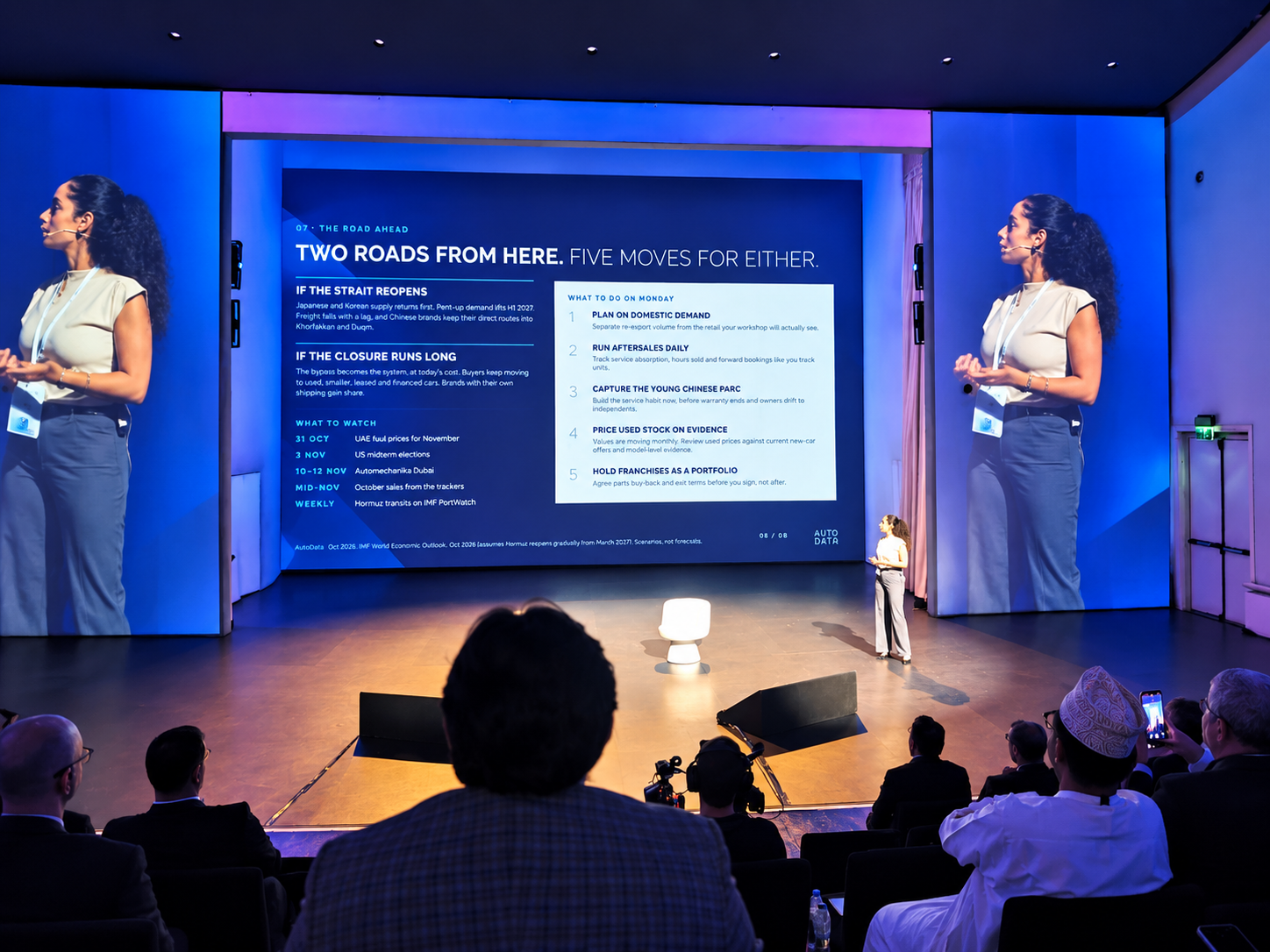
The GCC automotive market is undergoing a significant transformation. Chinese manufacturers are expanding their presence, established brands are navigating supply chain disruptions, and consumers are reassessing the economics of vehicle ownership.

At Keyloop Fusion Live Dubai, Srijith KN, spoke with Nour Abu-Safe, Head of Insights & Analytics at AutoData Middle East, about the changing competitive landscape, the impact of regional logistics challenges, and the opportunities emerging for automotive retailers.
Drawing on market intelligence, vehicle valuation data and industry research, she explains why technology alone may not guarantee long-term customer loyalty, why hybrids currently offer stronger residual value, and why the next major opportunity for dealerships could lie in pre-owned Chinese SUVs.
How are disruptions around the Strait of Hormuz affecting established automotive brands, and could the market changes become permanent?
Initially, many believed the disruption would be temporary. However, the data is beginning to show that market conditions are solidifying and businesses are adapting.
Traditional manufacturers, particularly Japanese brands such as Toyota, Nissan and Lexus, are experiencing challenges getting inventory into the region.
Chinese manufacturers have been more agile because several operate their own vehicle carrier fleets and logistics networks. This has allowed them to establish alternative routes into the GCC.
We have seen a 90% reduction in Japanese vehicle imports into the region, linked to the disruption around the Strait of Hormuz.
Alternative routes through ports outside the Gulf and via the Red Sea and Saudi Arabia are increasingly being used. However, these arrangements are creating delays, with vehicles now taking approximately six to eight weeks to reach showrooms.
The important development is that the market is adapting. Some of the alternative logistics routes established during this period could remain in use for years to come.
Are Chinese automotive brands attracting an entirely new generation of buyers, or are they winning customers away from established manufacturers?
It is a combination of both.
Younger consumers, particularly those between 19 and 30, are increasingly attracted to Chinese vehicles because of their styling, advanced technology, competitive pricing and safety features.
For younger families, especially those entering parenthood, these features can be important purchasing considerations.
Chinese vehicles also tend to offer attractive warranty and servicing packages, making them appealing to consumers who want to reduce their overall ownership costs.
Older buyers, particularly those in their 40s and 50s, generally demonstrate stronger loyalty towards established manufacturers and premium brands.
However, Chinese manufacturers are increasingly entering the premium segment as well, and we are beginning to see them capture some of that market share.
These demographic observations are also supported by consumer research, including studies published by YouGov, which we reference in our market analysis.
Chinese vehicles are becoming increasingly sophisticated. But can manufacturers sustain customer loyalty when technology evolves so quickly?
This is one of the most interesting challenges facing Chinese manufacturers.
Advanced technology is a powerful selling point. It looks attractive in marketing materials and helps manufacturers differentiate their vehicles.
However, rapid technological advancement also accelerates depreciation.
When a manufacturer introduces a significantly improved model within a short period, previous model-year vehicles can quickly appear outdated. That creates challenges for residual values and the used-car market.
For dealerships, the opportunity is to identify vehicles that offer a balance between modern technology and proven, practical features.
Hybrid vehicles are an interesting example because they combine improved efficiency with familiar internal combustion technology.
A vehicle that balances innovation with long-term usability may be better positioned to retain customers over five to ten years than one that depends primarily on the latest technology.
Chinese manufacturers are doing many things well, but the next few years will reveal how effectively they manage this challenge.
With affordability becoming increasingly important, how are vehicle financing and leasing models evolving across the GCC?
Vehicle demand remains present, and manufacturers have found ways to maintain supply despite the disruptions.
However, we could see greater pressure on consumer finances over the coming year.
That creates opportunities for financing and leasing providers.
Financing offers with zero down payment are becoming particularly relevant for buyers who may not have sufficient funds available for a substantial upfront payment.
On the leasing side, some operators are reporting demand increases of approximately 30% to 35%.
Consumers still need vehicles for everyday mobility, but some are becoming more reluctant to take on the financial commitment and risk associated with outright ownership.
Leasing offers an alternative that can address those concerns.
What is the biggest opportunity dealerships may be overlooking today that could become particularly important in 2027?
Used Chinese SUVs.
SUVs represent the largest vehicle body-type segment in the region, and the growing population of Chinese SUVs creates a significant opportunity for dealerships.
The first owner typically absorbs much of the vehicle’s depreciation during the initial two to three years. In some cases, that depreciation could be around 50%.
For dealerships, this creates an opportunity to develop certified pre-owned programmes around relatively young Chinese SUVs.
A three-year-old vehicle may still be in excellent condition and covered by its original warranty or service package.
If dealerships can price these vehicles correctly, they can attract buyers who cannot afford a brand-new SUV but still want a modern, well-equipped vehicle.
This could become an important growth segment for the automotive retail industry.
For consumers considering a vehicle purchase today, which offers the strongest proposition: petrol, hybrid, electric or a competitively priced Chinese vehicle?
There is no single answer because the decision depends on individual priorities.
However, when we compare petrol, hybrid and electric vehicles, our current data indicates that hybrids retain their value best.
They offer fuel efficiency while maintaining the familiarity and convenience of an internal combustion engine.
For buyers concerned about long-term value, that makes hybrids particularly attractive.
Chinese manufacturers, meanwhile, are becoming increasingly competitive on design, pricing and technology.
Vehicles such as the ROX 01 and Jetour G700 demonstrate how Chinese brands are entering segments traditionally dominated by established SUVs such as the Toyota Land Cruiser and Nissan Patrol.
The competitive landscape is changing considerably.
One particularly interesting insight from our latest data is that 48% of the new 2027-model vehicles arriving in the UAE are Chinese brands.
That tells us how aggressively these manufacturers are planning their product introductions, expanding supply and positioning themselves to attract both new and existing automotive customers.
The next few years will be particularly interesting as these changes reshape the balance between established manufacturers and emerging competitors.
Automotive
Dubai Ride-Hailing App Zed Strengthens Leadership with Appointment of Shobhit Singhal to Shape Its Future
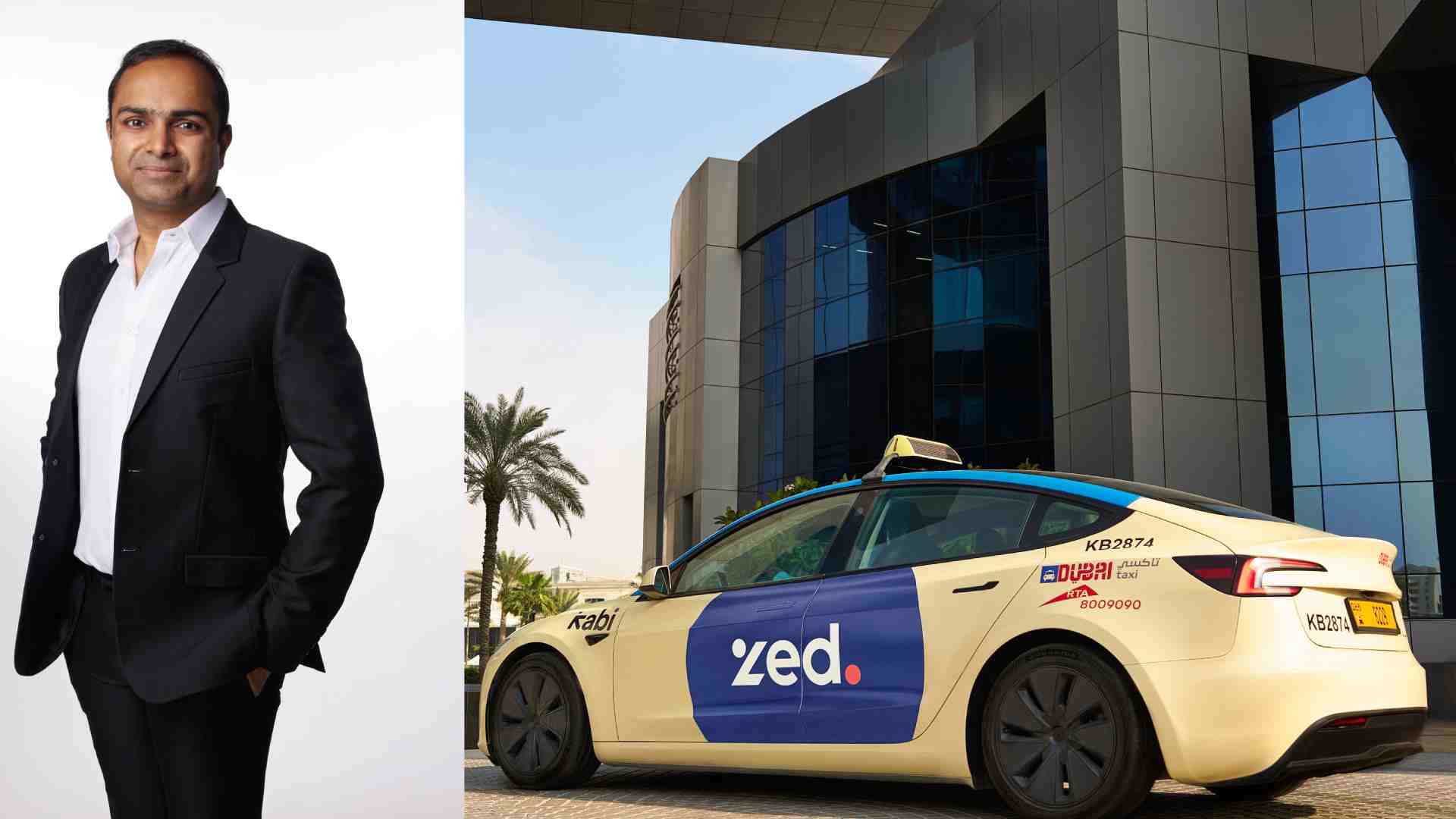
Zed, the Dubai-born ride-hailing app and part of Al Ghurair Mobility, has appointed Shobhit Singhal, former Chief Operating Officer of Southeast Asian super app Gojek, to lead its business and strategic direction. Built in Dubai and designed around the unique mobility needs of those who live and work in the city, Zed is entering a new period of development, with a renewed focus on strengthening its position in the Dubai mobility sector, advancing homegrown technology and building a scalable platform for the region.
Singhal brings extensive experience in leading technology-driven businesses across international markets. As Chief Operating Officer of Gojek, he oversaw the company’s mobility, food delivery and consumer logistics operations, having previously led cross-functional teams across Southeast Asia. His earlier career includes leadership roles at Apple in Singapore, and as a consultant with Bain & Company, specialising in technology services and telecommunications.
In his new role, Singhal will focus on enhancing the customer experience and driving innovation across Dubai’s mobility ecosystem. His priorities will centre on deploying scalable technology to build a smarter, more forward-looking ride-hailing experience for customers.
Shobhit Singhal, Head of Business at Zed, said: “Dubai is one of the world’s most dynamic markets for innovation, and there is a real opportunity to build an app designed around the unique needs of the people who live here. Our ambition is to make Zed the go-to app for rides across Dubai, whether it’s an everyday taxi journey or a premium experience. My priority is to turn that ambition into reality by delivering a reliable, seamless service that customers choose time and again. By getting the fundamentals right in Dubai, we can build a homegrown success story with the potential to grow across the wider region.”
Badr Al Ghurair, CEO of Al Ghurair Mobility commented: “Shobhit’s appointment represents an important step in Zed’s growth journey. At Al Ghurair Mobility, we see Zed as a key part of our vision for the future of mobility in Dubai. His experience in scaling complex mobility businesses, combined
with his understanding of technology and operations, brings valuable expertise to the company. We have a clear vision for Zed as a homegrown platform that can deliver meaningful value to customers and partners alike. With Shobhit’s leadership, our focus is on turning that vision into consistent execution and building a strong foundation for sustainable growth.”
With its roots in Dubai, Zed is focused on developing homegrown mobility technology tailored to the needs of Dubai residents. By strengthening its operations and building on its understanding of the local market, the company aims to establish a scalable platform.
Singhal holds an MBA from Northwestern University’s Kellogg School of Management and a Bachelor of Technology in Engineering from the Indian Institute of Technology Delhi.


H&H’s AED 30 Billion Dubai Peninsula Development Takes Shape, Home to Five World-Renowned Hospitality Brands

The Best Festive Turkey Takeaways in Abu Dhabi This Christmas

Qatar Airways Connects Doha to Caracas, Venezuela, and Bogotá, Colombia with First Flight



-

 Trending1 year ago
OPPO A6 Pro 5G Review: Reliable Daily Driver
-

 Tech News2 years ago
Denodo Bolsters Executive Team by Hiring Christophe Culine as its Chief Revenue Officer
-
 VAR2 years ago
Microsoft Launches New Surface Copilot+ PCs for Business
-

 Automotive2 years ago
AGMC Launches the RIDDARA RD6 High Performance Fully Electric 4×4 Pickup
-

 VAR11 months ago
Huawei Nova 14 Pro Review: Where Camera Excellence Meets Ecosystem Evolution
-
Tech Interviews3 years ago
Navigating the Cybersecurity Landscape in Hybrid Work Environments
-

 Hospitality2 years ago
Gulfood 2025 30th Edition Kicks Off Today, Setting New Benchmarks in F&B Growth and Innovation
-

 Tech News1 year ago
Nothing Launches flagship Nothing Phone (3) and Headphone (1) in theme with the Iconic Museum of the Future in Dubai