
 Have a question? +971 56 404 0503




Uncategorized
THE WASTE LAB EXPANDS ACROSS THE EMIRATES AS THE UAE’S LANDMARK CLIMATE LAW PUTS FOOD WASTE FIRMLY ON THE CORPORATE AGENDA

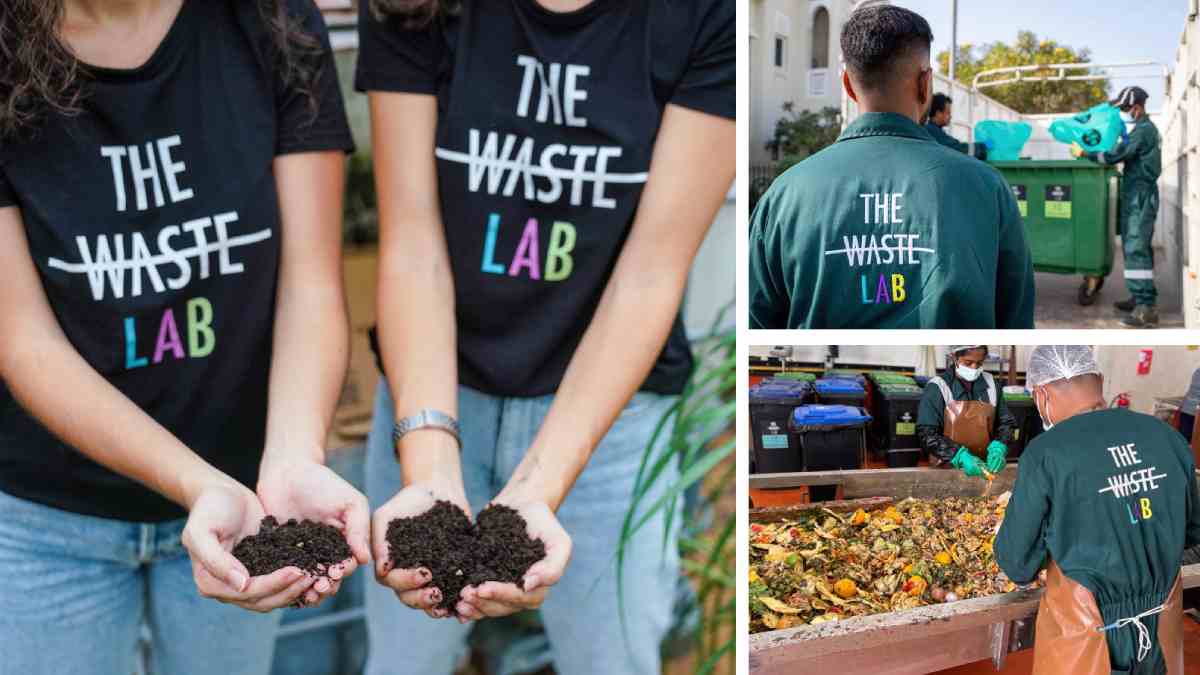
As the UAE accelerates efforts around food security, landfill diversion and circular economy infrastructure, Dubai-based sustainability business The Waste Lab is strengthening its operations across the Emirates to meet growing demand for practical, measurable food waste solutions across the hospitality, corporate, education and F&B sectors.
Founded by Lara Hussein and Ceylan Uren, The Waste Lab has grown from a startup into a licensed end-to-end food waste management and composting platform working with organisations including Accor, Jumeirah, Hyatt, Emirates Flight Catering, Dubai Holding, Expo City Dubai and Dubai World Trade Centre.
The business provides segregation-at-source systems, food waste collection, composting, sustainability reporting and impact tracking through a fully managed model designed to help businesses reduce landfill waste and better understand their environmental footprint. Food waste collected from hotels, offices, schools, restaurants and communities is processed at The Waste Lab’s composting facility in Al Ain, where it is converted into locally produced compost and regenerative soil solutions. It is the only operator in the UAE that closes the full loop – from bin to compost to soil.
The company says momentum around sustainability regulation and ESG accountability is rapidly changing how businesses approach food waste management in the UAE, particularly as landfill diversion and operational reporting become increasingly important across major sectors.
The UAE’s Federal Decree-Law No. 11 of 2024 on the Reduction of Climate Change Effects marks a turning point for businesses operating across the country. The first of its kind in the MENA region, the law shifts climate accountability from voluntary commitment to legal obligation, requiring businesses across designated sectors to measure, report and reduce their greenhouse gas emissions, with penalties of up to AED 2 million for non-compliance. Critically, integrated waste management is explicitly named as an approved emissions reduction pathway, meaning food waste is no longer just an operational afterthought, it is a regulated liability. The Waste Lab was built for exactly this moment. Its end-to-end model, covering segregation at source, collection, composting and verified impact reporting, gives businesses a single, fully managed pathway to meet their legal obligations and demonstrate measurable progress. What was once a sustainability choice is now a legal one and The Waste Lab makes compliance straightforward.
According to The Waste Lab, nearly 40% of food in the UAE still ends up in landfill despite the country importing the majority of its food, while around 90% of compost used locally is imported, highlighting a significant gap between food waste generation and local resource recovery. With the UAE importing most of its food and almost all of its compost, locally produced alternatives are not just an environmental benefit, they are a food security and supply chain priority. The business believes composting will play a far bigger role in supporting local food systems, soil regeneration and circular economy goals in the years ahead.
Alongside its operational growth, The Waste Lab is developing a proprietary mobile application that will bring automation, AI-enablement and end-to-end data capture across the full waste management chain. The platform is designed to give clients deeper, real-time visibility into their food waste footprint, providing granular reporting on waste volumes, contamination rates and sustainability impact to help businesses track and report ESG performance and identify operational inefficiencies with greater precision.
A locally produced B2B compost product is also planned for commercial launch by end of 2026, completing the circular loop of its operations. Food waste collected from UAE businesses is composted and returned to UAE soil creating a traceable, locally produced alternative to the imported organic compost that currently dominates the market, and supporting the kind of soil regeneration the country’s agricultural and landscaping sectors urgently need.
Lara Hussein, Co-Founder and CEO of The Waste Lab, said: “Food waste is one of the UAE’s most urgent environmental challenges, yet composting remains one of the most practical and underutilised solutions available today. Businesses are increasingly looking for systems that are measurable, compliant and operationally realistic, especially as sustainability targets become more closely tied to reporting, regulation and long-term business strategy. The UAE’s National Food Loss and Waste Initiative, ne’ma, has set a target to reduce food loss and waste by 50% by 2030, and achieving that requires local infrastructure and scalable solutions that work in the real world. Our role is to make food waste diversion simpler, traceable and commercially viable while helping create healthier soil, stronger local food systems and long-term environmental impact.”
Beyond its commercial operations, The Waste Lab also works alongside ne’ma, Dubai Municipality, Emirates Foundation and Dubai Chambers on wider sustainability and environmental awareness initiatives across the UAE.
As part of its next phase of growth, the business is expanding operations across additional emirates while progressing plans for Saudi Arabia through a joint venture model. The company is also currently raising its seed round to support infrastructure, technology development and regional expansion.
Uncategorized
EYWA Way of Water to be EMFIS® Certified for Low-Electromagnetic Environment in Dubai’s Business Bay


Step into a bedroom at EYWA Way of Water and you will feel like entering a sanctuary. The invisible electromagnetic hum that fills every modern home has been filtered out. This allows the body to recover and improve residents’ longevity. Engineered quiet for the nervous system: This is the EMFIS® Certification quality seal, which will be granted to this waterfront residential development on the Dubai Water Canal in Business Bay. The project is targeting EMFIS® certification as part of a wider suite of international wellness benchmarks that includes LEED Platinum, WELL Platinum, and WiredScore Platinum.
The appointment builds on EMFIS’s earlier certification of EYWA – Tree of Life, which established the partnership between the two organisations and made EYWA one of the region’s first residential developments to certify electromagnetic hygiene as a measurable, independently verified building standard. At EYWA Way of Water, EMFIS® is applying the same methodology at greater scale across approximately 65 ultra-luxury residences spanning 2– to 5-bedroom apartments, duplexes, and a penthouse, designed by OAD (Zane Tetere-Sulce) with John R Harris as consultant. Delivery is expected around 2028.
At EYWA Way of Water, EMFIS® will pay particular attention to bedrooms, and verifying that shielding and infrastructure choices keep exposure within the bounds EMFIS® considers appropriate for long-term occupancy. All while preserving the aesthetics of the spaces. Where integrated at the design phase, as is the case at EYWA Way of Water, EMFIS’s approach has achieved reductions of up to 98.7% in low-frequency electric fields and 81.8% in high-frequency electromagnetic fields that are verified through independent third-party testing. That’s the difference between a room full of EMF pollution and one fit for a retreat.
Electromagnetic exposure remains the one dimension of indoor environmental quality that most healthy-building frameworks have yet to address. Modern buildings generate a continuous electromagnetic environment from internal wiring, Wi-Fi networks, smart systems, and external 5G infrastructure, operating around the clock regardless of occupancy. The World Health Organization classifies radiofrequency electromagnetic fields as possibly carcinogenic, and mounting regulatory action in Europe, including France banning Wi-Fi in daycare centres and Switzerland writing precautionary EMF limits for schools and hospitals into national law, reflects growing institutional recognition of the issue.
The Global Wellness Institute values the global wellness real estate market at $876 billion, on a trajectory to $1.8 trillion by 2030. In the UAE, the sector has grown from $3.3 billion in 2017 to $14.6 billion in 2025, expanding at 21% annually, making it one of the fastest-growing real estate categories in the region. Wellness-focused properties already command a price premium of 10 to 25% over conventional equivalents. EMFIS’s own benchmarked data across certified projects shows low-EMF certification specifically delivering an average added value of approximately 14%, reflecting a market that increasingly distinguishes between properties that carry a wellness label and those that can demonstrate independently verified wellness standards.
Federico Marangoni, Founder and CEO of EMFIS® commented “Green building told us how a building treats the world outside it. The next question – the one EYWA Way of Water is helping answer – is what a building does to the people inside it over the course of a lifetime. Electromagnetic pollution is the dimension of the indoor environment the industry has not yet had the tools to measure and certify. That is exactly the gap EMFIS® closes, and EYWA Way of Water is one of the clearest examples in the region of a developer addressing it at design phase, where it makes the most difference. EYWA Way of Water is pitched to offer the quietest square meters in Dubai.”
Mariska Stoffel, Director of Design & Development at R.Evolution commented, “Architecture is becoming much more sophisticated in how it responds to human wellbeing. When people spend around 90% of their time indoors, we are shaping the environment where much of daily life happens. That means looking beyond aesthetics to the invisible conditions created by the building itself. Sleep and recovery are a key part of that, which is why EMFIS® provides an important benchmark for how we address electromagnetic exposure. At EYWA Way of Water, we are designing for people who take a long-term view of both capital and personal wellbeing, while creating healthier, more considered living environments in an increasingly connected world.”
Shailesh Bhandari, Director, John R Harris commented “At John R Harris & Partners, sustainability is embedded in our thinking from the first line of a project. EYWA Way of Water extends that principle into territory the industry is only beginning to navigate seriously: the electromagnetic environment that residents live within every day. Partnering with EMFIS® reflects our belief that truly well-crafted spaces actively support the health and longevity of those who inhabit them.”
EMFIS® has certified projects across eight countries in Europe and the Middle East and operates a GCC showroom in the UAE. Founded on research conducted at EPFL (École Polytechnique Fédérale de Lausanne) and recognised by Switzerland’s national standardisation body, a member of ISO, it is currently the only organisation in the world dedicated specifically to measuring, certifying, and managing electromagnetic exposure within the built environment. The appointment of EMFIS® to EYWA Way of Water is part of a growing pipeline of UAE and GCC projects in which electromagnetic environment certification is being integrated from the earliest stages of design, rather than treated as a post-occupancy consideration.

Minor Hotels, a leading global hotel owner and operator, has announced Avani Kota Kinabalu, a 352-key premium lifestyle hotel set to open in Q1 2027. Forming part of The Logg Luyang integrated development by KTI Landmark, the property will introduce the Avani brand to Sabah and expand Minor Hotels’ presence in Malaysia.
Avani Kota Kinabalu will cater to leisure and corporate demand in Kota Kinabalu, one of East Malaysia’s principal commercial centres and a key gateway to Borneo. Approximately 10 minutes from Kota Kinabalu International Airport, the hotel will provide access to the city’s business districts, residential neighbourhoods and visitor attractions.
The announcement supports Minor Hotels’ strategy of expanding its lifestyle portfolio in destinations with growing domestic, regional and international demand. Avani Kota Kinabalu will also strengthen the group’s presence in Malaysia, joining Anantara Desaru Coast Resort & Villas in Johor, as it continues to pursue development opportunities across Asia.
Developed by KTI Landmark, The Logg Luyang will bring together hospitality, commercial and lifestyle components within the established Luyang neighbourhood. Avani Kota Kinabalu will serve as the development’s hospitality anchor, offering accommodation, dining, wellness and event facilities for hotel guests and the local community.
“Kota Kinabalu is evolving rapidly as a regional business and tourism hub, creating strong demand for a hotel that can move easily between corporate, leisure and social use,” said Winston Gong, General Manager of Avani Kota Kinabalu. “Our focus will be on delivering an efficient, locally relevant guest experience while building a property with genuine appeal to the city’s residents.”
Designed by Shah Architect, with landscape architecture by SD2 and interiors by INdulge, Avani Kota Kinabalu will feature 352 rooms tailored to business trips, short breaks and longer stays.
Avani Kota Kinabalu will feature five dining and social venues for hotel guests and the local community. The all-day dining restaurant will serve Sabahan, Malaysian, Korean and international cuisine, with live cooking stations, local specialities and a signature Avani Sunday Lunch. A contemporary Chinese restaurant will focus on Sabah Hakka heritage and regional flavours, while the Lobby Lounge will transition from a daytime meeting space into an evening venue serving afternoon tea, as well as cocktails and whiskies.
The Pantry will offer handcrafted bakery items, desserts and premium coffee for dining in or takeaway. On the rooftop, SEEN Restaurant & Bar will bring the established rooftop dining and nightlife concept to Sabah through globally inspired cuisine, mixology, curated music and destination-led experiences.
The hotel will also include dedicated meeting and banquet facilities for conferences, weddings and social events. Leisure facilities will include an infinity pool and AvaniFit gym, with nearby Tun Fuad Stephens Park offering access to outdoor recreation.
Avani Kota Kinabalu will combine accommodation, rooftop dining, wellness and event facilities within a major integrated development, strengthening Minor Hotels’ lifestyle offering in Malaysia and supporting the group’s continued expansion across Asia.
Uncategorized
ServiceNow Expands Autonomous Security Vision with Unified AI-Powered Cyber Defense Platform
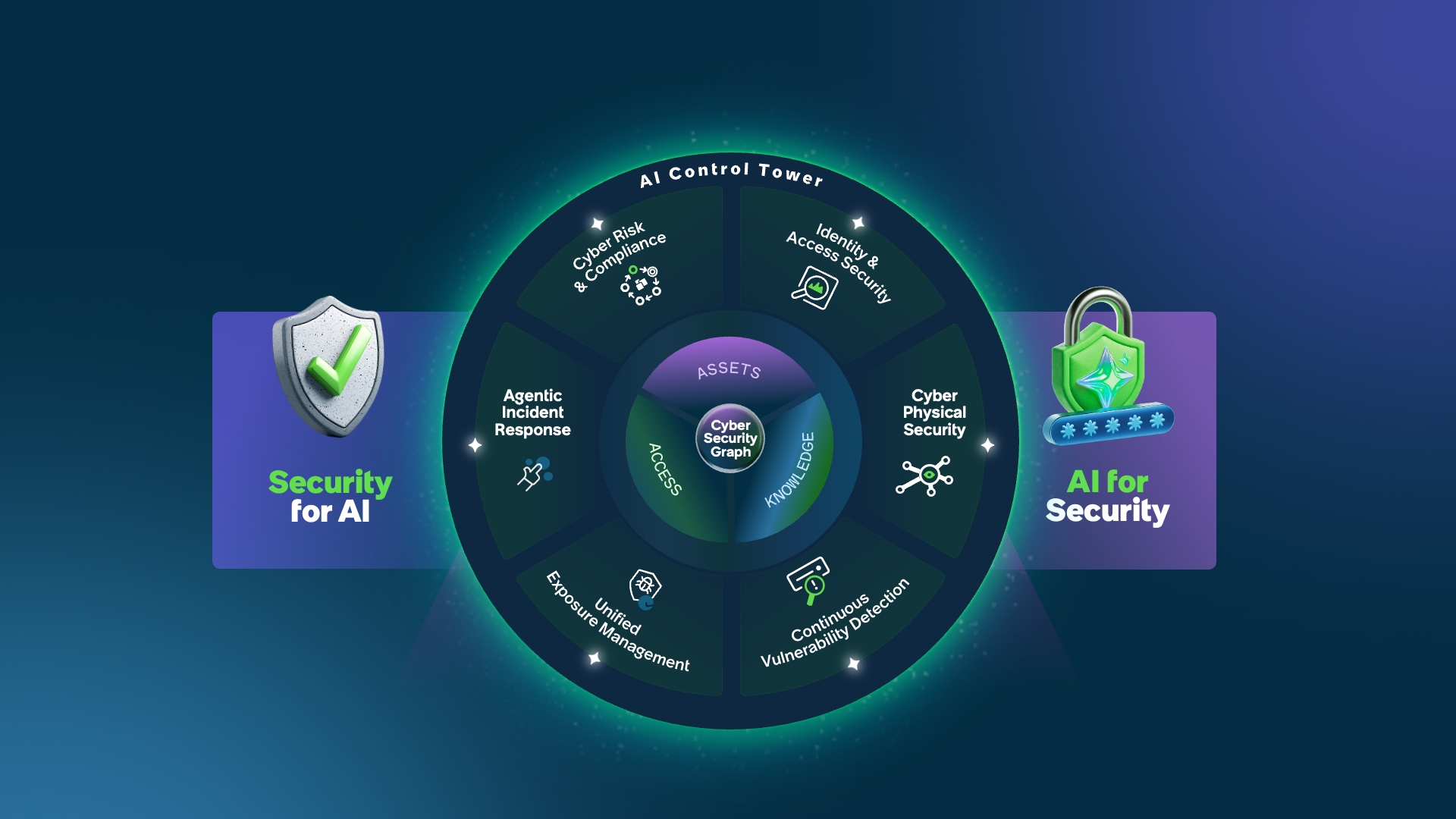
The company introduces six integrated security solutions designed to help enterprises detect, prevent and respond to cyber risks at machine speed.
As organisations continue to accelerate AI adoption, cybersecurity teams are facing a rapidly expanding attack surface driven by AI agents, machine identities, cloud environments and increasingly complex enterprise infrastructures. Addressing these challenges, ServiceNow has unveiled a major expansion of its Autonomous Security vision, introducing six unified security solutions that combine AI-powered automation, governance and risk management into a single platform.
The announcement strengthens ServiceNow’s position as one of the industry’s fastest-growing enterprise security providers, bringing together exposure management, vulnerability detection, identity security, cyber-physical protection, incident response and compliance under a unified operational framework.
Tackling AI-era security complexity
Modern enterprises often operate dozens of disconnected security tools across endpoints, networks, cloud environments and identities, creating fragmented visibility and slower response times. ServiceNow estimates that many organisations manage more than 70 individual security solutions, making it increasingly difficult for security teams to identify and prioritise risks efficiently.
With Autonomous Security, ServiceNow aims to replace this fragmented approach with a unified system capable of continuously monitoring assets, identities and AI agents while providing business context, governance and auditability from a single platform.
The company’s broader vision, known as Shift Zero, focuses on embedding security into every stage of enterprise operations, moving organisations away from reactive incident response towards continuous prevention.
Six security pillars
At the centre of the announcement are six integrated solution areas covering the modern enterprise attack surface.
Unified Exposure Management
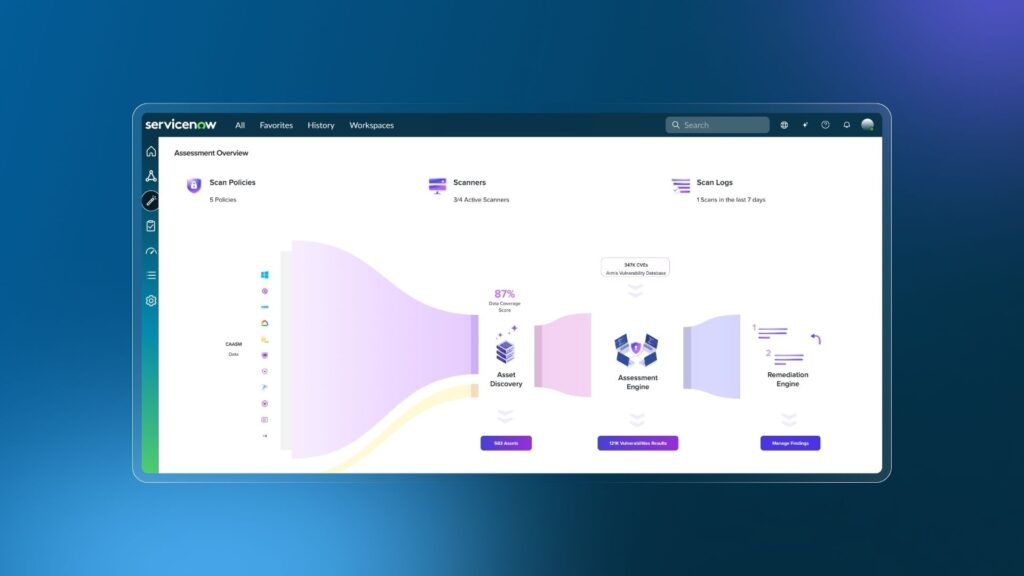
The platform consolidates vulnerability findings from multiple security tools into a single view, enriching them with threat intelligence and business context to help organisations prioritise remediation more effectively. A new Vulnerability Resolution AI Specialist is designed to automate triage and execute low-risk remediation tasks at enterprise scale.
Continuous Vulnerability Detection
ServiceNow is expanding visibility across applications, cloud environments and infrastructure with new capabilities that include application security, dynamic application security testing (DAST) and external attack surface management. Together, these tools aim to identify vulnerabilities before they can be exploited.
Cyber-Physical Security
Recognising the growing importance of operational technology (OT), IoT and connected medical devices, ServiceNow is introducing agentless discovery, continuous compliance monitoring and automated remediation workflows that minimise operational disruption while improving visibility across critical infrastructure.
Identity and Access Security
The company is also extending governance to non-human identities, including service accounts, cloud identities and AI agents. New capabilities enable organisations to manage permissions, automate key rotation and apply least-privilege principles consistently across both human and machine identities.
Agentic Incident Response
To help security operations centres respond faster, ServiceNow is introducing AI-driven incident response capabilities that automate investigation, threat enrichment, correlation and containment while escalating only high-risk decisions to human analysts.
Cyber Risk and Compliance
The final pillar focuses on continuous compliance rather than periodic audits. AI-powered monitoring continuously evaluates access rights, configuration changes and policy violations while generating compliance-ready reporting across major regulatory frameworks. The platform also introduces cryptographic asset management capabilities to support future migration towards quantum-resistant encryption standards.
AI Specialists automate security operations
Alongside the platform enhancements, ServiceNow introduced new AI Specialists capable of autonomously completing security workflows.
These specialised AI agents are designed to assist with vulnerability remediation, incident response, exposure management and continuous compliance monitoring, helping security teams automate repetitive tasks while maintaining governance and auditability.
The company believes these capabilities will allow enterprises to respond to threats at machine speed without sacrificing operational oversight.
Building a unified security ecosystem
ServiceNow’s latest security strategy is further strengthened through technologies integrated from Armis and Veza.
Armis contributes continuous visibility across connected devices and operational technology environments, while Veza enhances identity governance by mapping permissions across human users, machine identities and AI agents. Combined with ServiceNow’s AI Control Tower and orchestration capabilities, these technologies provide organisations with a centralised view of assets, identities and security operations.
Availability
Several new capabilities, including Agentic Exposure Management, Application Security, Dynamic Application Security Testing (DAST), External Attack Surface Management (EASM), Cyber Physical Security and AI Agent Access Security, are available immediately.
Additional features—including the Tier 2 SOC AI Specialist, Vulnerability Resolution AI Specialist, Continuous Control Monitoring and Cryptographic Asset Compliance—are expected to become available in December 2026.

DO FISCAL STIMULUS MEASURES SUPPORT THE US MARKET GROWTH, AND IS A DEFAULT POSSIBLE?

Zeekr UAE and AWR Automotive Unveil Redesigned Flagship Showroom on Sheikh Zayed Road in Dubai
The Infrastructure Is Automated. Why Are the Processes Around It Still Manual?



-
News11 years ago
SENDQUICK (TALARIAX) INTRODUCES SQOOPE – THE BREAKTHROUGH IN MOBILE MESSAGING
-

 Trending11 months ago
OPPO A6 Pro 5G Review: Reliable Daily Driver
-

 Tech News2 years ago
Denodo Bolsters Executive Team by Hiring Christophe Culine as its Chief Revenue Officer
-
 VAR1 year ago
Microsoft Launches New Surface Copilot+ PCs for Business
-

 Automotive2 years ago
AGMC Launches the RIDDARA RD6 High Performance Fully Electric 4×4 Pickup
-
Tech Interviews2 years ago
Navigating the Cybersecurity Landscape in Hybrid Work Environments
-

 Tech News1 year ago
Nothing Launches flagship Nothing Phone (3) and Headphone (1) in theme with the Iconic Museum of the Future in Dubai
-

 VAR2 years ago
Samsung Galaxy Z Fold6 vs Google Pixel 9 Pro Fold: Clash Of The Folding Phenoms