
 Have a question? +971 56 404 0503




Tech Interviews
Connected Cities, Safer Futures: The Critical Role of Communications in Smart Mobility

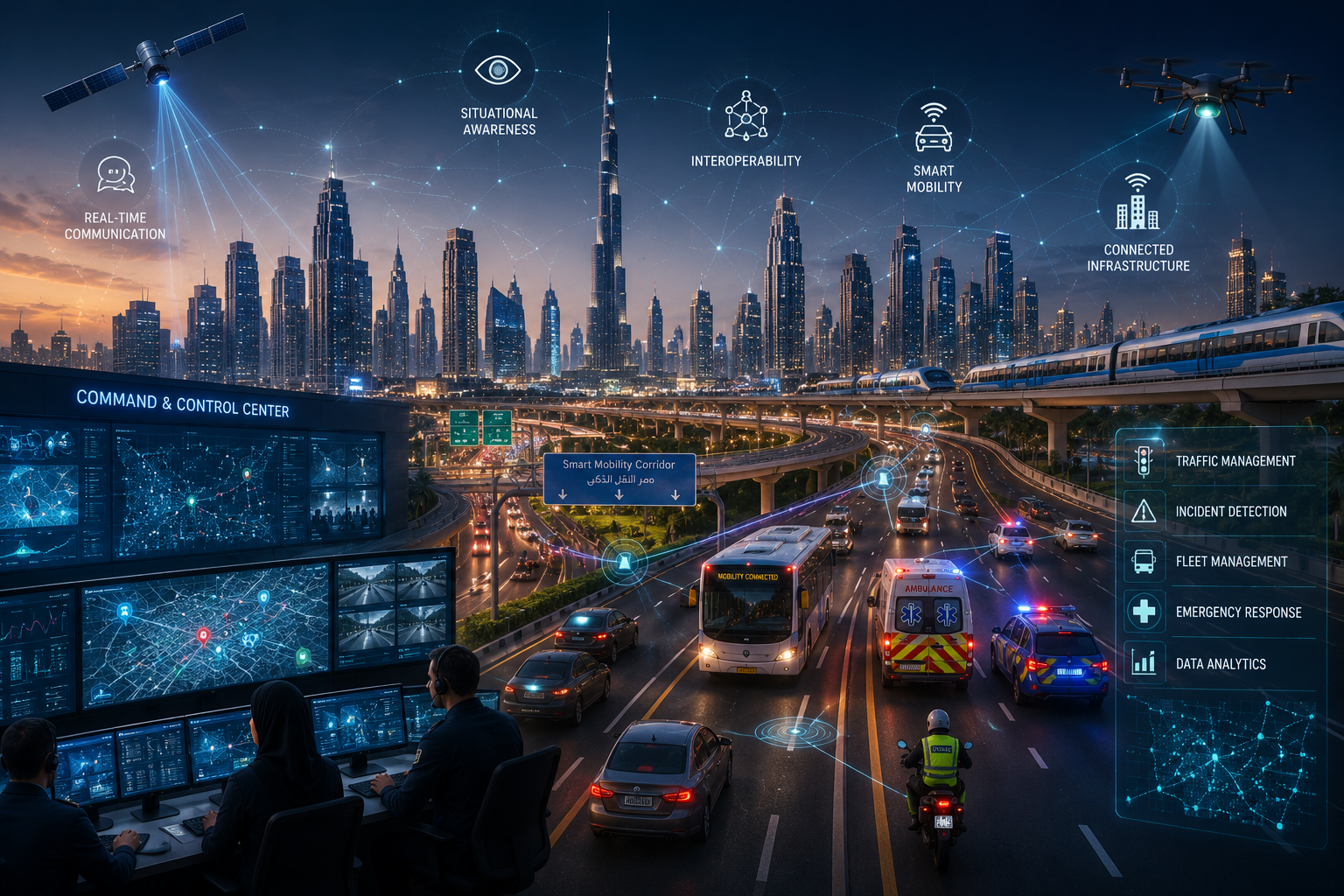
As Middle Eastern cities invest heavily in smart mobility, intelligent transport systems, and connected infrastructure, reliable communication networks are becoming the foundation of urban resilience. In this exclusive interview with Technology Integrator, Thibaut Faivre, Head of MEAI Sales & Programme Delivery for Public Safety and Security at Airbus Defence and Space, discusses the technologies enabling real-time situational awareness, inter-agency collaboration, and mission-critical connectivity across the region’s rapidly evolving mobility ecosystem.
As Middle Eastern cities accelerate smart mobility and connected infrastructure projects, how important is real-time communication and situational awareness becoming for modern transportation and emergency response ecosystems?
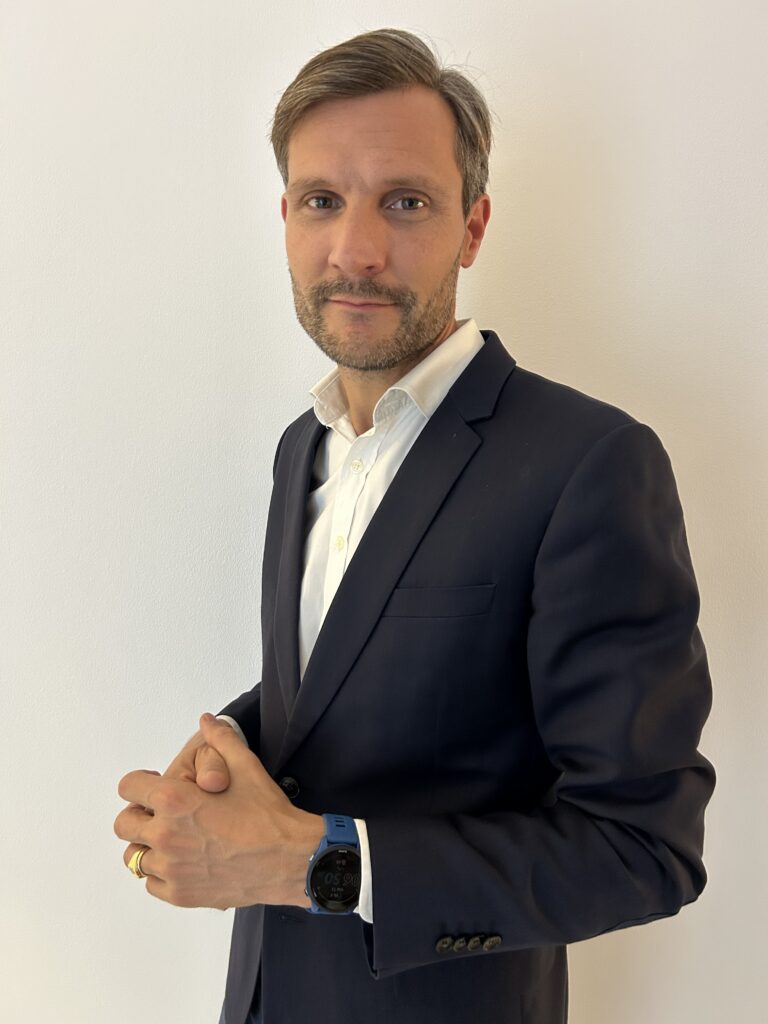
As Middle Eastern cities accelerate their journey toward becoming global hubs for smart mobility, the role of communication is undergoing a fundamental shift from a supportive function to the very backbone of urban resilience. For modern transportation and emergency response ecosystems, real-time communication is no longer merely about voice connectivity; it is about the seamless flow of high-capacity data. Traditional narrowband systems, while reliable for voice, cannot accommodate the digital evidence, live video feeds, and precise geolocation data that now sit at the heart of frontline decision-making. In a region defined by rapid urban expansion and high-security profiles, situational awareness means having the ability for command centres to see incidents in real time rather than reacting to them after the fact. This “resilient intelligence” ensures that as infrastructure becomes more connected, the agencies protecting it can operate with a level of clarity that matches the complexity of the environment they serve.
How could technologies such as GINA Software’s Tactical AVL and Unified Command Interface reshape the way emergency services respond to large-scale road incidents, traffic disruptions, and mobility-related crises?
The integration of GINA Software’s specialised modules into our Agnet and TETRA ecosystems represents a significant leap in how emergency services manage large-scale mobility crises. By turning complex data into life-saving action, these modules allow first responders to operate within a unified digital interface. The Tactical AVL tool provides dispatchers with granular visibility of assets and personnel, ensuring that units are deployed with maximum efficiency during major road incidents where every second is vital for clearing traffic and saving lives. Simultaneously, the Smart CAD (IMS) module supports high-level decision-making by consolidating mapping, field data, and reporting into a single interface, removing the cognitive load of managing disparate systems. Perhaps most importantly, the Unified Command Interface facilitates coordination between different agencies and networks. This reduces the communication barriers that often plague large-scale operations, ensuring that police, medics, and transport authorities are all working from a single, synchronised and common operational picture.
With connected vehicles and intelligent transport systems continuing to evolve, do you see public safety communication networks eventually becoming deeply integrated into future smart mobility frameworks?
We are seeing a definitive convergence where public safety communication networks are becoming deeply embedded into the wider smart mobility framework. The transition from legacy narrowband to mission-critical broadband (4G/5G) is the catalyst for this integration. As vehicles and infrastructure become more intelligent, the communication architecture must scale accordingly to support AI-enabled intelligence and automated workflows. For instance, AI can now be used to detect anomalies in real-time video feeds or automate resource allocation, allowing first responders and control centres to act proactively rather than reactively. This digital transformation ensures that public safety tools are not isolated silos but are instead natively integrated into the data-driven workflows of the cities they protect. By leveraging shared data rather than isolated radio channels, future smart mobility frameworks will benefit from a level of inter-agency coordination that was previously impossible.
In high-density urban environments, where every second matters during emergencies, how critical is interoperability between agencies, fleets, transport authorities, and first responders?
In dense urban environments, the speed of response is often dictated by the fluidity of information across different organisations. Interoperability between agencies, transport authorities, and first responders is a strategic priority, particularly within the Gulf Cooperation Council (GCC) region. Airbus is actively supporting this by creating gateways between respective communication systems to facilitate interstate and inter-agency collaboration. Public safety professionals operating in high-stakes environments rely on their tools to work across boundaries without friction. A smooth transition to broadband must ensure that interoperability, tactical management, and scalability are designed into the system from the outset. This allows agencies to communicate across organisations seamlessly and adjust operational priorities in real time as missions evolve. Without this level of technical and operational certainty, the benefits of high-speed data cannot be fully realised in a crisis.
As the automotive and mobility sectors become increasingly software-defined and data-driven, what role will secure communication architectures play in ensuring safer and more resilient transportation networks across the region?
As the automotive and mobility sectors become increasingly software-defined, the role of secure communication architectures is to ensure that the “intelligence” of the network never fails. Resilience in the Middle East is a unique challenge due to vast geography, the regional security threats and the exposure to climate-driven incidents, which means terrestrial networks alone are sometimes insufficient. Airbus addresses this through a layered approach that integrates satellite connectivity with terrestrial broadband. Solutions such as Agnet over Satcom ensure that mission-critical communications remain operational even in remote areas or during major disasters that disable standard infrastructure. Furthermore, for local incident scenes where network coverage might be overloaded or temporarily unavailable, tools like Agnet Direct allow teams to stay connected via off-network direct mode. This hybrid architecture, which combines the mission-critical reliability of TETRA with the high-speed data capabilities of 4G and 5G, creates a robust foundation for the next generation of secure, data-driven transportation networks across the region.










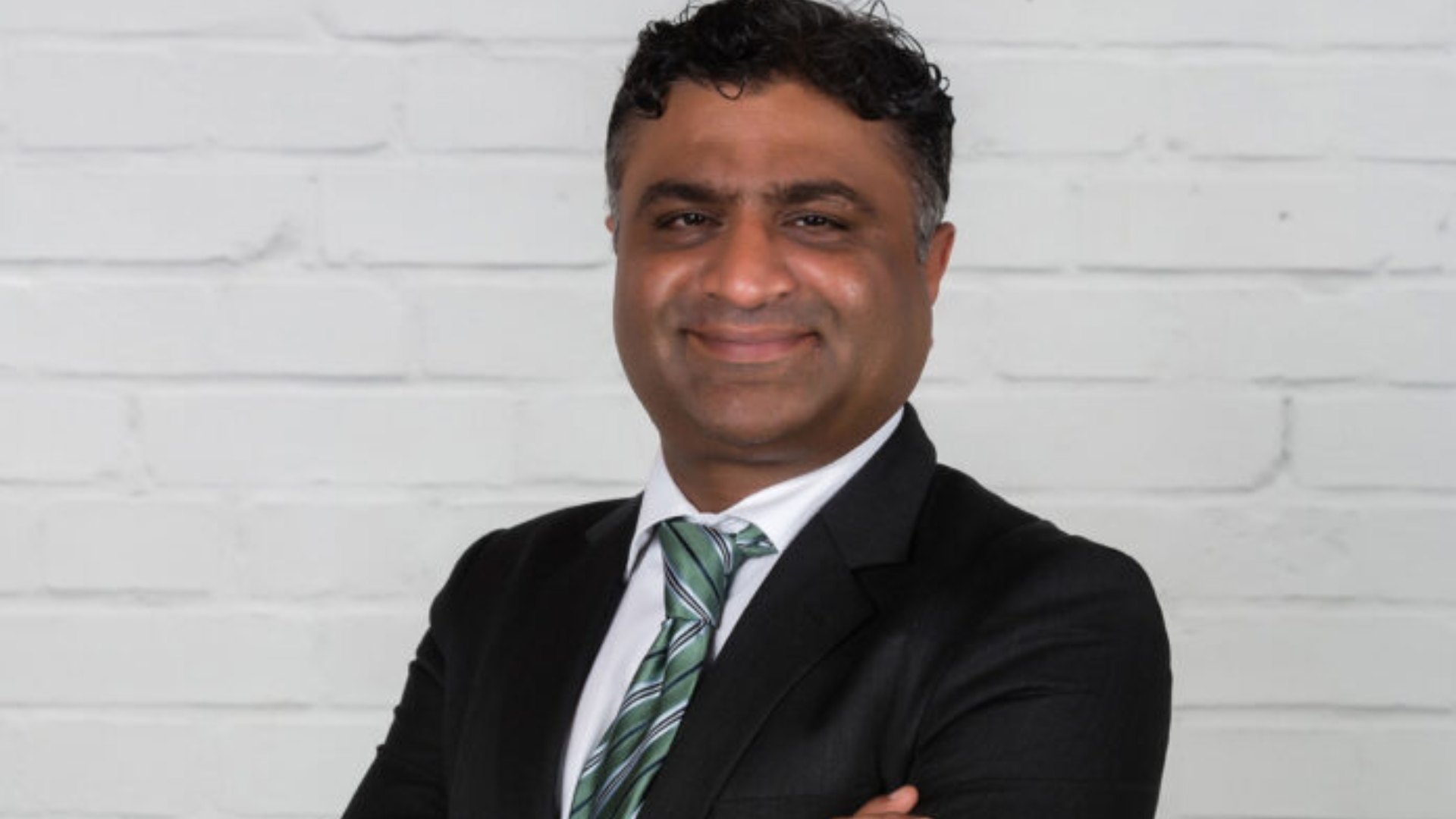
Exclusive interview with Bilal Baig, Vice President, Solutions Engineering, Trend Micro
What is Trend Micro showcasing at GISEC Global 2026, and how does it reflect the shift towards proactive, AI-powered cyber risk management?
We are highlighting our unified cybersecurity platform, Trend Vision One, which is designed as a proactive security platform.
AI has shifted how organisations, governments and agencies respond to threats. It is no longer enough to take a reactive approach. Security needs to become proactive, particularly given the speed at which AI is developing.
We are using AI in two ways. First, we are using AI internally within the platform to identify vulnerabilities. Second, we are using AI to protect our customers.
At GISEC, we are showcasing agentic SIEM, agentic SOAR, XDR capabilities and our full-stack AI security platform. We are also highlighting new developments in AI security, including how AI can help protect against vulnerabilities and zero-day attacks.
How has Trend Micro evolved in both using AI for cybersecurity and securing AI systems themselves?
AI has increased the speed at which organisations can move into production. At the same time, both defenders and attackers now have access to AI. The key question is how organisations manage that risk and how quickly they can protect customers and predict an attack before it becomes a breach.
We created Cybertron, an industry-first cybersecurity LLM, and we also work with frontier AI providers including Anthropic, OpenAI and Microsoft. We use frontier AI to consume vulnerability information, while our customers have access to our broader AI security capabilities.
We are now moving into the agentic AI era, where AI agents can make decisions on behalf of humans. These agents can access systems, emulate human behaviour and perform tasks independently.
For us, agentic AI security comes down to four key areas: visibility, observability, governance and response.
Visibility means understanding what is happening. Observability goes a step further by understanding what an action performed by an AI agent could cause. Governance determines how those agents should be controlled, while response is about deciding what action to take.
What new security and governance challenges arise as agentic AI moves from experimentation to enterprise deployment?
One of the biggest questions is whether an agentic AI system should be treated like a human identity or like software.
A software system needs updates, patches and maintenance. A human has an identity, a job and defined responsibilities. Agentic AI combines elements of both.
Organisations therefore need to give AI agents an identity, establish guardrails around what they can do and ensure that someone within the governance structure is responsible for their actions.
If an agent is given additional responsibilities, organisations need to understand how those permissions are managed and eventually removed when they are no longer required.
In an agentic AI environment, every communication and action needs to be considered within a governance framework. Organisations need to look at every interaction, understand its potential outcome and decide whether an action should be allowed to proceed or stopped.
What does the rise of autonomous or rogue AI agents mean for cybersecurity?
We are entering a world where rogue AI agents can become highly sophisticated systems. This means security cannot focus only on whether the underlying AI model is secure. Organisations also need to examine the actions those models are performing and whether those actions could create a cybersecurity problem.
The attack surface is now changing in terms of both scale and sophistication. Attackers have AI capabilities that can help them launch sophisticated attacks much faster.
This means organisations need AI on the defensive side as well. Security solutions need to match that speed and sophistication while ensuring that governance frameworks prevent malicious outcomes.
How should organisations manage the growing number of vulnerabilities identified by AI?
AI and frontier models can identify vulnerabilities that may not have been visible previously. An organisation that once had to manage 30 or 40 patches could suddenly face thousands.
It is not realistic to address every vulnerability in the same way. Organisations need to prioritise based on the risk and importance of their environment.
They need to identify which vulnerabilities are most important for their particular environment rather than simply looking at a vulnerability’s CVE score.
This is where cyber risk exposure management becomes important. Organisations need to understand the risk, the asset and the identity involved, and then decide which security gaps are most important to close.
How is the UAE’s cyber threat landscape changing as AI adoption and digital transformation accelerate?
The UAE is at the forefront of AI transformation. We are seeing multiple initiatives from the UAE Government, including AI training for government employees, government-focused AI initiatives and the introduction of AI education in schools.
There are already AI systems operating within government, so the digital transformation of AI in the UAE is moving forward rapidly.
Our focus is on helping secure that transformation. As AI systems become more interconnected and increasingly make decisions, the attack surface becomes more complicated.
A layered security approach is therefore important, from the large language model and API access through to the decision-making processes of AI agents, while monitoring for malicious activity.
What should organisations consider around security controls and data sovereignty as they expand their cloud and AI environments?
There is sometimes a misconception that moving to the cloud automatically means an organisation is secure. When cloud computing emerged, we often talked about security as a shared responsibility.
The exposure changes as organisations move from on-premises environments to the cloud and then into AI. The same threat can look very different across these environments.
Organisations need to consider where their assets and identities are located and how they will manage security across these different layers.
For highly sensitive environments, including air-gapped networks and systems involving critical data sovereignty, security may need to remain on-premises. In some national security environments, data cannot be processed outside the country.
Trend Micro has Vision One Sovereign and Private Cloud, which extends our AI cybersecurity unified platform to air-gapped and sovereign environments, with a focus on data sovereignty, localisation and air-gapped deployments.
What role does government-industry collaboration play in strengthening national cybersecurity preparedness and resilience?
Government-industry collaboration is extremely important. Working with organisations such as the Cybersecurity Council, national CERTs and government security services brings together different perspectives.
As governments move towards greater use of AI, industry can help secure that journey while governments provide the regulations and governance frameworks needed to manage these systems.
Without close collaboration, it becomes difficult to create policies that reflect what is actually happening in the private sector.
The objective should be to support innovation without overlooking cybersecurity. Technology is developing extremely quickly, particularly AI, so cybersecurity needs to be considered alongside that innovation.
Government and the private sector need to work together to make sure that while organisations remain at the forefront of technological development, they do not overlook the cybersecurity implications.

Dave Philp, Chief Value Officer at Bentley Systems, discusses how AI, digital twins, clean energy and integrated infrastructure planning are shaping the next generation of data centres across the UAE and wider Middle East.

The UAE and Saudi Arabia are investing heavily in AI and digital infrastructure. From your perspective, what makes the Middle East such an exciting market for the next generation of data centers?
One of the most substantial transformations we are witnessing is the transition of the UAE to a programmatic mindset in terms of data centre development, which makes it a desirable market for the next generation of data centres. We usually consider countries such as UK in terms of building or developing a singular project, but it is impressive that the UAE has been prioritising data centre corridors and digital infrastructure instead of focusing on individual hyperscale data centres.
While speaking to colleagues across the UAE and the Middle East region, I found it interesting as the UAE is constantly investing in the infrastructure needed to achieve its ambitious AI goal. This further includes larger digital ecosystems, sovereign cloud capabilities, and energy infrastructure. I believe it is not just about creating more data centres; it is also about establishing an infrastructure that can help achieve the ambitious economic vision of the UAE. It is important to understand that establishing a robust digital infrastructure is key to power AI, smart city initiatives and industrial diversification. This strategy is part of a much larger national economic plan. By combining digital aspirations with investments in energy and physical infrastructure, the UAE is successfully laying the groundwork for an AI-powered economy. We can also witness that the UK is making efforts to move towards a future economic model, which can motivate other countries to follow suit.
- Power is a growing challenge for AI data centers. How can the Middle East balance rising AI demand with its clean energy goals?
I believe that the UAE has secured a unique position in this regard as any capital investment in AI infrastructure needs to be strategized according to clean energy goals. As the Minister of Energy and Infrastructure highlighted, AI-enabled optimisation can coordinate data-centre demand with grid capacity, renewable generation, storage and shared cooling infrastructure. It can also identify opportunities to recover and reuse waste heat where local conditions make that technically and commercially viable.
This, in my opinion, will define the UAE’s next generation data centres. Integrated planning, which takes into account how data centres interact with renewable energy, solar opportunities, district cooling, battery storage, and demand management, will be prioritised over isolated engineering decisions. These factors need to considered by the UAE, not just in terms of separate workflows.
As I mentioned, these will be common across the region, but we are also witnessing unique models in the UAE. We are seeing a shift from isolated projects towards phased campuses and data-centre corridors supported by shared power, water, cooling and connectivity infrastructure.
- As AI data centers require more cooling, how can operators build facilities that are both efficient and responsible with water use?
Yes, it is interesting. It is similar to not having a favourite child, like you do not want operators to choose between energy and water, but how to optimise both to create a resilient thermal management system. However, it is my belief that it should start the very beginning of the project, investment level, thinking about it as a water ecosystem. It is not just about water on site, but about the sourcing within it.
Additionally, I believe that there is a lot of innovation within data centres as well. Now, when it comes to water-stressed environments, usage of reclaimed water should be considered. On the other hand for high-density AI workloads, direct-to-chip and other liquid-cooling approaches can remove heat closer to the source. Closed-loop systems recirculate coolant rather than continually consuming it, although the overall water and energy performance still depends on how the facility rejects heat to the external environment. Also, we must understand how it will integrate within the local recycling infrastructure within there as well.
As a result, we can now model data centres, which will reduce pressure on potable supplies and improve operational resilience. Effective energy and water management are beneficial for businesses as well. They can monitor performance and optimise water usage, which benefits both the community and operators.
The most significant factor, in my opinion, is that we can move from reactive to predictive water and cooling management with digital twinning and AI. When connected to trustworthy operational data and engineering models, infrastructure digital twins can help operators move from static reporting towards predictive management, testing changes in workload, climate, water availability and equipment performance before those conditions affect operations.
And that can offer significant potential for resilience as well as sustainable data centres with robust governance. This requires a comprehensive and holistic approach to both energy and water, rather than individual components.
Ultimately, the objective is not simply to minimise water consumption in isolation. It is to optimise the complete thermal system, because some lower-water cooling configurations may use more electricity. The right solution depends on climate, workload density, water stress, grid carbon intensity and resilience requirements.
- As the Middle East invests in smart cities like NEOM, what role will data centers play in enabling these developments?
I believe that smart cities should communicate with each other as they are powered by AI. This, showcases proper planning works exceptionally when we consider master planning and data centre planning from urban systems that will be integrated into it.
Additionally, integrated value chains are necessary for communities within the UAE to move forward with smart cities. Now, when we discuss value chains, we mean the energy, water, cooling, mobility, and data services.
A significant portion of our work is conducted on city or municipality level, where we use digital twins to enable planners understand interdependencies and future scenarios that can optimise assets within the framework of smart cities. This is where Bentley Systems’ approach to infrastructure digital twins Infrastructure can provide planners with a shared environment in which to understand dependencies, test future scenarios and make more confident investment and operational decisions.
We frequently consider the data centre to be something we would prefer to keep hidden. But, in reality it is a strategic enabler of better, more resilient urban growth. If we do it correctly and consider, let us call it a digital built UAE, which is plausible, becoming an engine room for smart cities.
In fact, this achievement has to be celebrated. If we do it correctly, it becomes a positive contributor behind them. Therefore, I think that smart cities require smart infrastructure, and data centres are becoming a part of what we now refer to as civic backbone. It must be present, accountable, and advantageous to the communities it serves. Moreover, it all comes down systems, smart dependencies, and data exchange between various departments. Because city-scale infrastructure spans many owners and systems, the digital-twin environment must be capable of federating trusted information through open standards, interoperable interfaces and appropriate governance.
- Beyond speed to market, what do you think will define the next generation of successful data centers in the Middle East?
Speed to market is still a very significant factor, but it must transcend that. I believe that if I was an investor considering data centres, I would clearly want to increase revenue at an expedited rate, but I would also want to ensure that it is resilient for a substantial time, which obviously includes water and energy.
It can understand it is sustainable, but I also want certainty. There are certain longer-term concerns, such as whether there will be droughts in the future. My opinion is that it must evolve. Compute hardware and thermal requirements will continue to evolve over the life of the facility, often much faster than the supporting civil, power and utility infrastructure.
Additionally, I also believe it must be flexible and adaptable as cooling technology and workloads evolve. Therefore, we need to consider how we may apply digital twinning once again, not just for capital building, but also for operational excellence.
As AI campuses move into operation, investors will increasingly look beyond capital cost and installed megawatts towards the productivity of the infrastructure: how reliably and efficiently it converts energy and compute capacity into useful AI output. Measures such as cost per token and tokens per watt will sit alongside PUE, WUE, carbon intensity and availability, providing a fuller view of operational and commercial performance.

Ilia Sheludiakov’s story begins with a single decision — one that set off a complete transformation, physical, intellectual, and philosophical. He shed over 40 kilograms, trained for and completed marathons, and built businesses from the ground up. But it was in the process of rethinking his relationship with time that he arrived at something bigger: Temporalism, a philosophy built on the belief that time isn’t a pressure to outrun, but a long-term ally to work with.
At its core, Temporalism reframes time as our most valuable resource — one to be used consciously, not spent carelessly. It’s a philosophy rooted in a simple but powerful idea: small, consistent actions, repeated over time, compound into transformations far greater than any burst of intensity could achieve. Whether in health, wealth, or personal growth, Sheludiakov argues that lasting change comes not from perfect decisions made once, but from good decisions made repeatedly, with patience enough to let them compound.
Temporalism speaks to anyone who feels time slipping away too fast, or who senses untapped potential in their own ambitions but struggles to turn intention into consistent action. It’s a call to make peace with time — and to start using it as a partner in building a meaningful life.
Sheludiakov will next present Temporalism at the Sharjah International Book Fair, introducing the philosophy to a wider international audience and connecting with readers from around the world.
What is the core idea behind Temporalism?
Temporalism is about treating time as your most valuable resource and learning to use it consciously. It focuses on making better decisions today with your future self in mind, while building a meaningful life through consistent action.
How does Sheludiakov’s weight loss tie into this philosophy?
My weight loss was one of the experiences that shaped Temporalism. I lost over 40 kilograms, but the biggest lesson wasn’t about weight — it was realizing how much small actions, repeated over time, can completely change your life.
Why does he believe consistency beats intensity?
Intensity can create quick results, but it’s difficult to sustain. Consistency compounds. A small action repeated hundreds of times can ultimately have a much greater impact than a short period of extreme effort.
What role does patience play in building wealth?
Patience is fundamental. In investing and business, I try to think in years rather than weeks. Wealth is rarely created by one perfect decision; it is usually built through good decisions, discipline, and allowing enough time for them to compound.
Who is this book meant for?
It’s for people who feel that time is moving too quickly or that they could be doing more with their lives. Especially those who have ambitions but struggle to turn them into consistent action.
Where will he present the book next?
I will be presenting Temporalism at the Sharjah International Book Fair, where I look forward to introducing the philosophy to a wider international audience and connecting with readers from around the world.

The New Rules of Natural-Looking Rejuvenation

UAE Ranks First Globally in Citizen Satisfaction with Government Digital Services at 89%, BCG Survey Finds

The Financial Sector Facing Its Black Swan: How AI Agents Are Redefining the Industry



-

 Trending11 months ago
OPPO A6 Pro 5G Review: Reliable Daily Driver
-

 Tech News2 years ago
Denodo Bolsters Executive Team by Hiring Christophe Culine as its Chief Revenue Officer
-
 VAR1 year ago
Microsoft Launches New Surface Copilot+ PCs for Business
-

 Automotive2 years ago
AGMC Launches the RIDDARA RD6 High Performance Fully Electric 4×4 Pickup
-
Tech Interviews3 years ago
Navigating the Cybersecurity Landscape in Hybrid Work Environments
-

 Tech News1 year ago
Nothing Launches flagship Nothing Phone (3) and Headphone (1) in theme with the Iconic Museum of the Future in Dubai
-

 VAR2 years ago
Samsung Galaxy Z Fold6 vs Google Pixel 9 Pro Fold: Clash Of The Folding Phenoms
-

 Hospitality2 years ago
Gulfood 2025 30th Edition Kicks Off Today, Setting New Benchmarks in F&B Growth and Innovation