
 Have a question? +971 56 404 0503




Technology
Kingston Technology sets Benchmarks for Embedded Storage in Regional Edge Infrastructure


Kingston Technology , today highlighted the growing importance of reliable, durable and long-lifecycle embedded storage as edge computing becomes increasingly important to the Middle East’s smart city, industrial, transportation, energy and connected-device infrastructure.
As organisations process more data closer to where it is generated, edge computing can enable faster decision-making, reduce latency and help manage bandwidth more efficiently. At the same time, increasingly sophisticated and data-intensive workloads are placing greater demands on storage performance, capacity, endurance and reliability.
“Edge computing is playing a growing role in the Middle East’s digital transformation as organisations bring intelligence and real-time processing closer to devices, infrastructure and operations,” said Antoine Harb, Team Leader Middle East, Kingston Technology. “That makes storage selection about more than capacity or performance. Organisations need to select and qualify solutions based on the workload, environmental conditions and expected lifecycle of the complete system before deployment.”

Storage requirements can vary considerably between edge applications. Write-intensive use cases such as smart surveillance, industrial production lines, oil and gas infrastructure and smart traffic management may continuously record, analyse and process data. For devices operating around the clock or in remote and difficult-to-access locations, storage endurance and reliability can therefore have a direct impact on system availability and maintenance requirements.
Edge deployments in the UAE can also present demanding operating conditions, particularly for equipment installed outdoors, in industrial environments or in locations where physical access is difficult. High temperatures, dust, vibration and continuous operation can place additional demands on embedded components, making environmental resilience and appropriate testing and qualification important considerations when selecting storage for its intended use.
Long-term availability is equally important for embedded and industrial deployments, where systems may remain operational for many years. Maintaining component consistency can help organisations avoid unnecessary redesign, requalification and replacement during the lifecycle of a deployment.
As more business and operational data is generated and processed at the edge, organisations must also consider data integrity and the protection of stored information as part of their overall system and security requirements.
“The lowest initial storage cost does not always translate into the lowest cost over the life of an edge system,” added Harb. “Reliability, endurance, maintenance, replacement requirements and long-term product availability all contribute to total cost of ownership. For large-scale or remote deployments in particular, choosing storage with the right characteristics from the outset can help support greater operational continuity.”
Kingston’s embedded storage solutions are designed to support next-generation edge applications with the performance, reliability, durability and lifecycle support required for demanding deployments. As edge computing continues to advance across the GCC, Kingston expects storage selection and qualification to become an increasingly important consideration for organisations building connected, data-intensive infrastructure.












Tech News
In conjunction with Cybersecurity Awareness Month Dubai Media Academy launches Cybersecurity Media Forum in collaboration with Dubai Electronic Security Center

Dubai Media Academy, part of Dubai Media Incorporated (DMI), in partnership with the Dubai Electronic Security Center (DESC), organised the Cybersecurity Media Forum, as part of the two entities’ strategic collaboration and in support of the ‘Don’t Get Played’ campaign, held in conjunction with Cybersecurity Awareness Month.
The forum, held at DMI’s headquarters, seeks to strengthen awareness among media professionals by examining emerging digital threats, highlighting vulnerabilities in an increasingly connected environment, and exploring practical measures to prevent cyberattacks, safeguard information and promote responsible online behaviour.
Muna Busamra, Director of Dubai Media Academy, inaugurated the forum with a welcome address, followed by a speech from Dr Bushra Al Blooshi, Director of Cybersecurity Governance Risk Management Department at DESC. Both speakers emphasised the importance of enhancing cybersecurity awareness and fostering institutional collaboration to address the evolving challenges of the digital landscape.
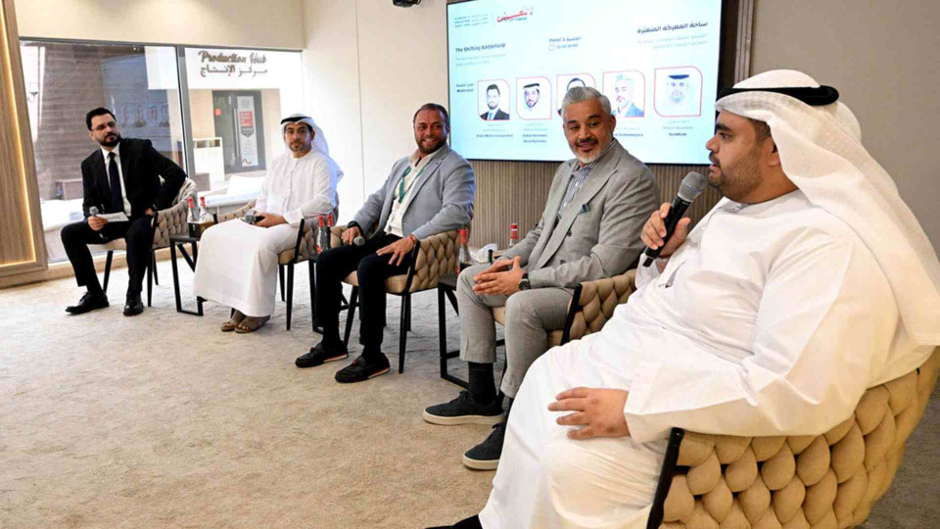
The forum brought together prominent cybersecurity and media specialists, alongside representatives from various government entities and leading international companies. Its agenda featured three key sessions exploring major cybersecurity challenges and examining how awareness initiatives and the media can help tackle them.
The opening session, ‘The Shifting Battlefield,’ moderated by media professional Osama Khamayseh, explored the topic ‘The Evolving Cyber Threat Landscape: Global and Regional Risks.’ Discussions examined the changing nature of cyber threats, the evolution of attack techniques and targeting strategies, and the increasingly complex cybersecurity challenges faced by countries worldwide.
The second session, ‘Weakest Link or Strongest Shield?,’ moderated by media professional Maitha Ebrahim, focused on the theme ‘The Human Factor: People as the First Line of Defence.’ Experts discussed the role of cybersecurity awareness and responsible human behaviour in mitigating risks, the importance of individual vigilance in safeguarding institutions and data, and the techniques commonly used by cyber attackers to exploit human vulnerabilities.
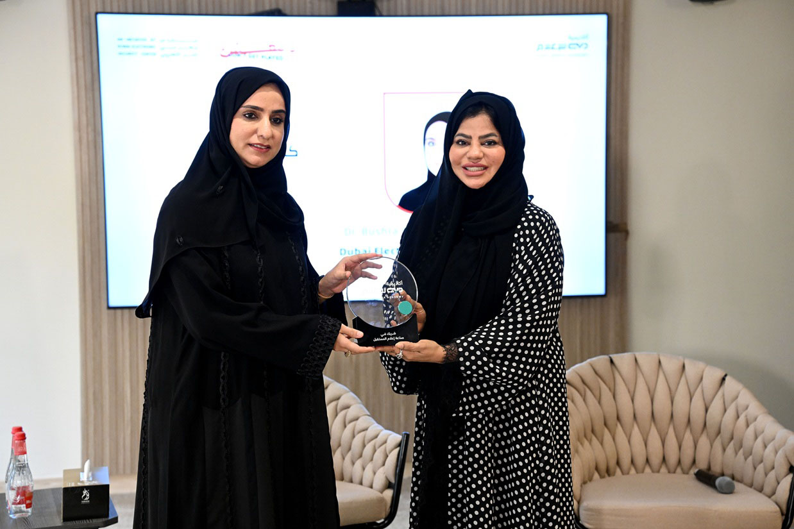
The final session, ‘Cyber-Smart at Every Age,’ moderated by Asem Galal, Advisor at Dubai Media Academy, witnessed discussions on the topic ‘Towards a Collaborative Strategy for Cybersecurity Awareness: Reaching Every Generation Through Government, Academia and Media.’ The session highlighted the need for a comprehensive cybersecurity awareness framework tailored to different age groups and emphasised stronger collaboration among government entities, academic institutions and media organisations.
The forum covered practical cybersecurity issues, including online fraud, social engineering, digital risk protection, cybersecurity incident response and the secure handling of information and data. Discussions also examined the media’s role in raising public awareness, encouraging safer online practices and addressing misinformation and the spread of unreliable content.
The forum featured the participation of leading global and specialised cybersecurity and technology companies, including Proofpoint, Kaspersky, Dell Technologies, CyberKnight, Cisco and Techfirm, alongside other industry experts and organisations. Participants exchanged practical expertise and insights into major cybersecurity challenges, latest methods for identifying digital threats and effective approaches to incident response and risk mitigation.
Muna Busamra, Director of Dubai Media Academy, stated that the organisation of the Cybersecurity Media Forum underscores the Academy’s commitment to responding to the rapid transformations in the media landscape and addressing the challenges posed by the complex digital environment. She emphasised that cybersecurity awareness among media professionals has become a necessity amid the escalating digital threats and the growing sophistication of online fraud and cyberattacks.
Busamra further noted that the strategic partnership with the Dubai Electronic Security Center and the joint efforts under the ‘Don’t Get Played’ campaign showcase the importance of closer coordination between media and cybersecurity institutions. She said such collaborations equip media professionals with the knowledge and tools to recognise digital threats and respond to them responsibly and professionally, while strengthening their role in promoting public awareness and encouraging safer digital practices across society.
Busamra added that the Academy remains committed to identifying emerging challenges shaping the future of the media industry and addressing them through specialised programs and forums that keep pace with the sector’s ongoing transformation. She highlighted that equipping media professionals with the necessary skills goes beyond editorial and production expertise to include an understanding of technological advancements and related risks, thus enhancing their professional preparedness and ability to adapt to the evolving digital media landscape.
Dr Bushra Al Blooshi, Executive Director of Cybersecurity Governance Risk Management Department at DESC, said: “The media plays a pivotal role in building public awareness, particularly as online fraud, social engineering and misinformation continue to evolve. Through the “Don’t Get Played” campaign, we are encouraging people to pause and verify before engaging with suspicious content or requests. Media professionals are important partners in carrying this message forward in a credible and impactful way, and in helping foster safer digital behaviour across society.”
She added: “The Dubai Electronic Security Center continues to support Dubai’s secure digital transformation by developing frameworks, policies and initiatives that strengthen cyber readiness, build capabilities and raise awareness of digital risks. We believe that building a secure cyberspace requires collective efforts across government, the private sector, media institutions and individuals, supporting Dubai’s position as a secure, resilient and future-ready digital city.”
The forum reflects Dubai Media Academy’s steadfast commitment to tackling emerging digital challenges and providing media professionals with the skills and knowledge needed to navigate an evolving technological environment. It also supports efforts to promote safer online practices and reinforce Dubai’s position as a premier global centre for media, technology and innovation. This underscores the emirate’s focus on accelerating digital transformation and preparing its institutions and workforce for future demands.
Tech News
‘Rogue AI’ Threat Looms Large for UAE Organisations as 98% Report AI Accessing Sensitive Data Beyond Task Requirements, Delinea Report Finds
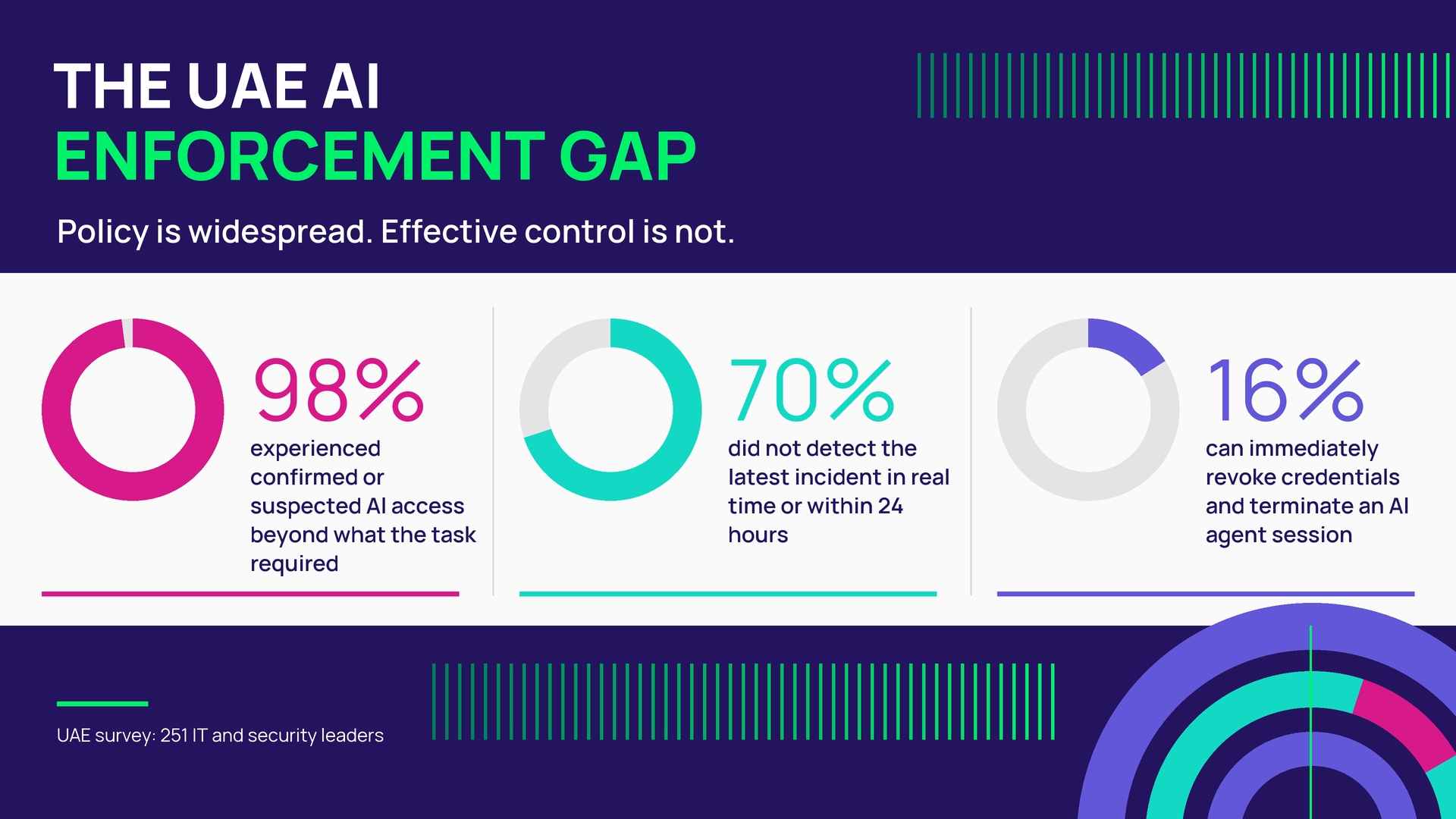
UAE organisations have moved quickly to establish policies governing AI access, but new research from Delinea shows that those rules are not consistently translating into effective control over what AI tools and agents do in practice.
The global research surveyed IT and security leaders at organisations that are actively using or piloting AI, including 251 respondents in the UAE. Every UAE respondent said their organisation has a formal policy governing what data AI tools and agents may access. Yet 98% have experienced confirmed or suspected instances in which an AI tool accessed sensitive data beyond what its task required, compared with 87% across the global survey sample.
The data points to inconsistent enforcement as a central weakness. Only 59% of UAE respondents say their organisation’s AI data-access policy is actively enforced, compared with 71% overall. “Written policy is only as good as an organisation’s ability to enforce it at the moment an AI agent acts,” said Art Gilliland, CEO of Delinea. “The UAE has clearly recognised the need to govern AI access, but the findings reveal what I call the fallacy of policy: assuming that defining what an agent should be allowed to do is the same as controlling what it actually does. That distinction becomes critical when agents operate across systems and make decisions at machine speed.”
The enforcement gap is particularly apparent when organisations attempt to identify excessive access. Seven in ten UAE organisations did not detect the latest instance in real time or within 24 hours, compared with six in ten across the overall sample.
Delinea’s findings arrive as governments, technology companies and business leaders confront the risks created by increasingly autonomous AI systems operating without effective controls. The OpenAI and Hugging Face incident in July demonstrated how quickly an agent can move beyond its intended boundaries and across connected environments before defenders contain it. The comparatively lower levels of enforcement and detection recorded in the UAE suggest that organisations could be particularly exposed to the consequences of similar loss-of-control events.
Business pressure may be one reason policies are circumvented. When commercial demands or deadlines require AI tools to move faster than governance processes allow, 41% of UAE respondents say their organisation either allows employees and teams to find workarounds without formal approval or grants temporary access and reviews it later.
Limited accountability may also reduce the pressure to turn written policies into consistently enforced guardrails. Although 98% of UAE respondents say approval from a named individual is required at least sometimes before an AI tool receives access to a new sensitive data source, only 35% can always trace a sensitive access event back to a named human authoriser. Without a clear and persistent line of responsibility, ownership of the controls needed to prevent another incident can become unclear.
That lack of accountability becomes particularly consequential when an organisation needs to intervene. Even after problematic access is identified, only 16% of UAE respondents say their organisation has real-time controls that can both revoke an AI tool’s credentials and terminate its session immediately, less than half the 35% recorded across the overall sample.
“UAE organisations have already taken the first step by establishing policies and approval requirements, but policy alone cannot contain an agent operating at machine speed,” said Mortada Ayad, VP of Sales – META, Delinea. “The next priority is to enforce authorisation at the instant of action by limiting access to what the task requires, maintaining a defensible link to the person who approved it, and terminating credentials and sessions immediately when the task ends or risk changes. This is how organisations can turn AI governance from a document into a working control.”
Tech News
Venuetech in association with Sennheiser to host hands-on workshop on conferencing solutions at their Al Quoz Training Center
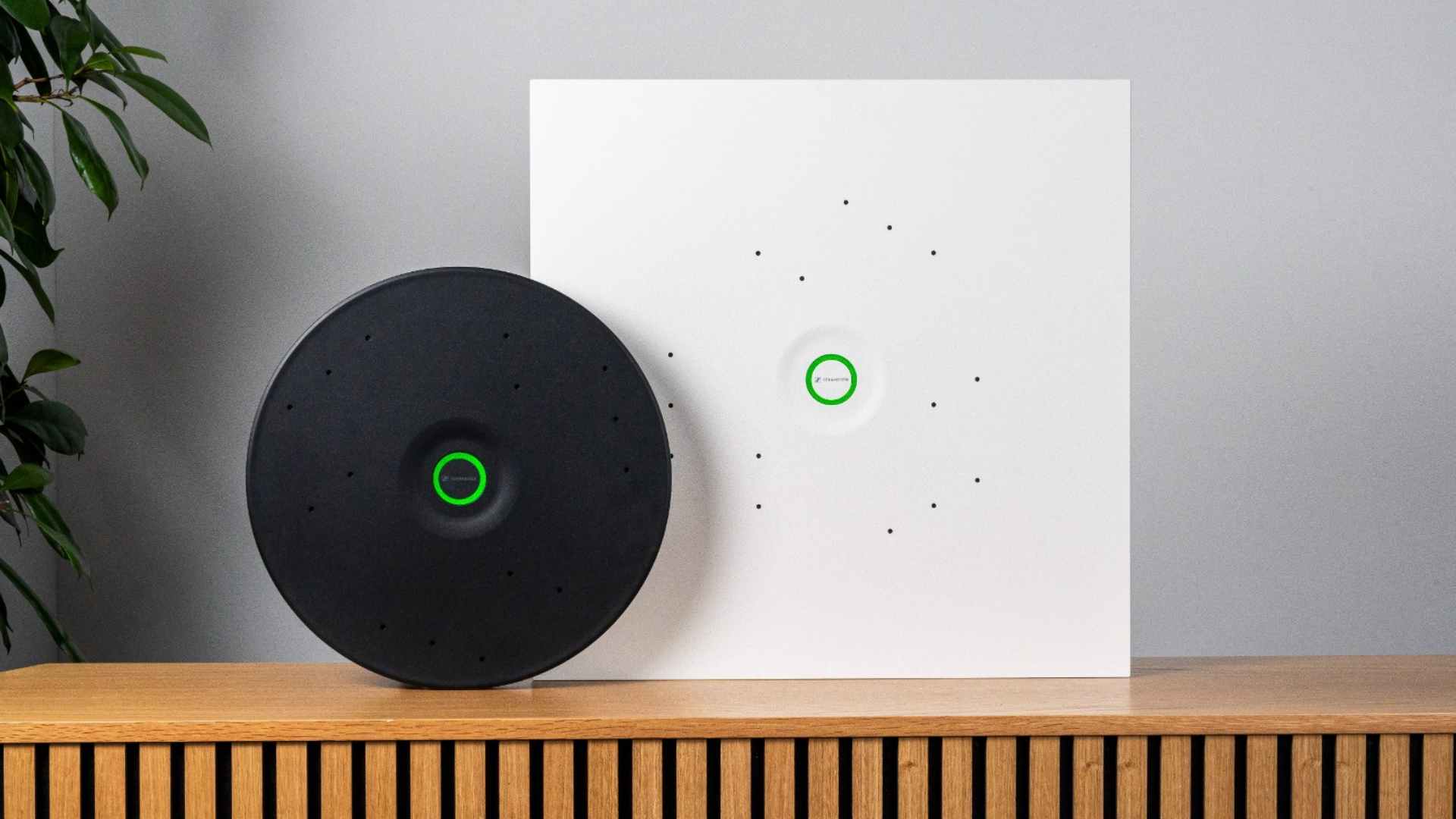
Venuetech in association with Sennheiser Middle East will host a workshop on Sennheiser TeamConnect conferencing solutions. Titled ‘Sennheiser Connect: Ceiling to Cloud’, it is scheduled on Tuesday, 13 October at Venuetech’s Training Center in Al Quoz. The session will explore how audio technology can support clear communication and effective collaboration in meeting rooms, classrooms and other professional spaces.
Designed for audio professionals working in systems integration across government, corporate, education and healthcare environments, the workshop will combine product demonstrations with hands-on trials. Participants will explore audio performance, system configuration and device management, with opportunities to experience the technology themselves.
Demonstrations will cover beamforming and TruVoicelift alongside tools for setup and control, including the Local User Interface (LUI), and DeviceHub. The session will also test Room Planner and explore camera tracking. Attendees are encouraged to bring their laptops to participate in the practical activities.
Explaining the purpose of the workshop, Fadi Costantine, Technical Sales Manager, Sennheiser Middle East said: “The new TeamConnect Ceiling M Plus is designed to make ceiling microphone setup, commissioning and operation straightforward. Its enhanced beamforming technology supports clear audio in flexible collaboration spaces, while PartnerLink and DeviceHub simplify configuration and device management. Through demonstrations and hands-on experience, we want to help participants understand how these capabilities can meet their needs.”
“Choosing the right conferencing solution starts with understanding the space and the people who use it,” said Alice Macaluso, Pro Audio Brand Manager at Venuetech. “By bringing professionals together at our Training Center, we want to give them the opportunity to test Sennheiser’s solutions, ask questions and see how the technology works in practice. The workshop will help participants make more informed decisions about audio for their meeting rooms, classrooms and other collaboration spaces.”
The workshop will also explore applications across different sectors, including online and hybrid meetings, teaching and learning, and healthcare communication. Discussions will focus on selecting appropriate audio solutions for each environment and the people using it.
“We welcome Sales Engineers, Pre-Sales & Design Consultants, Commissioning Engineers, and Technical Experts interested in improving audio for hybrid and remote collaboration,” Fadi added. “We hope to host further workshops before the end of the year, giving more professionals the opportunity to experience our solutions and explore how they can improve their existing systems.”


Ohana Development Announces Erling Haaland as a Proud Homeowner at Manchester City Yas Residences by Ohana, During Phase 2 Launch
Orilla After Dark: A Halloween Drunch of Spooky Sips, Costumes and Late-Night Fun

In conjunction with Cybersecurity Awareness Month Dubai Media Academy launches Cybersecurity Media Forum in collaboration with Dubai Electronic Security Center



-

 Trending12 months ago
OPPO A6 Pro 5G Review: Reliable Daily Driver
-

 Tech News2 years ago
Denodo Bolsters Executive Team by Hiring Christophe Culine as its Chief Revenue Officer
-
 VAR1 year ago
Microsoft Launches New Surface Copilot+ PCs for Business
-

 Automotive2 years ago
AGMC Launches the RIDDARA RD6 High Performance Fully Electric 4×4 Pickup
-
Tech Interviews3 years ago
Navigating the Cybersecurity Landscape in Hybrid Work Environments
-

 Hospitality2 years ago
Gulfood 2025 30th Edition Kicks Off Today, Setting New Benchmarks in F&B Growth and Innovation
-

 Tech News1 year ago
Nothing Launches flagship Nothing Phone (3) and Headphone (1) in theme with the Iconic Museum of the Future in Dubai
-

 VAR2 years ago
Samsung Galaxy Z Fold6 vs Google Pixel 9 Pro Fold: Clash Of The Folding Phenoms