
 Have a question? +971 56 404 0503





Technology
Kingston Technology sets Benchmarks for Embedded Storage in Regional Edge Infrastructure


Kingston Technology , today highlighted the growing importance of reliable, durable and long-lifecycle embedded storage as edge computing becomes increasingly important to the Middle East’s smart city, industrial, transportation, energy and connected-device infrastructure.
As organisations process more data closer to where it is generated, edge computing can enable faster decision-making, reduce latency and help manage bandwidth more efficiently. At the same time, increasingly sophisticated and data-intensive workloads are placing greater demands on storage performance, capacity, endurance and reliability.
“Edge computing is playing a growing role in the Middle East’s digital transformation as organisations bring intelligence and real-time processing closer to devices, infrastructure and operations,” said Antoine Harb, Team Leader Middle East, Kingston Technology. “That makes storage selection about more than capacity or performance. Organisations need to select and qualify solutions based on the workload, environmental conditions and expected lifecycle of the complete system before deployment.”

Storage requirements can vary considerably between edge applications. Write-intensive use cases such as smart surveillance, industrial production lines, oil and gas infrastructure and smart traffic management may continuously record, analyse and process data. For devices operating around the clock or in remote and difficult-to-access locations, storage endurance and reliability can therefore have a direct impact on system availability and maintenance requirements.
Edge deployments in the UAE can also present demanding operating conditions, particularly for equipment installed outdoors, in industrial environments or in locations where physical access is difficult. High temperatures, dust, vibration and continuous operation can place additional demands on embedded components, making environmental resilience and appropriate testing and qualification important considerations when selecting storage for its intended use.
Long-term availability is equally important for embedded and industrial deployments, where systems may remain operational for many years. Maintaining component consistency can help organisations avoid unnecessary redesign, requalification and replacement during the lifecycle of a deployment.
As more business and operational data is generated and processed at the edge, organisations must also consider data integrity and the protection of stored information as part of their overall system and security requirements.
“The lowest initial storage cost does not always translate into the lowest cost over the life of an edge system,” added Harb. “Reliability, endurance, maintenance, replacement requirements and long-term product availability all contribute to total cost of ownership. For large-scale or remote deployments in particular, choosing storage with the right characteristics from the outset can help support greater operational continuity.”
Kingston’s embedded storage solutions are designed to support next-generation edge applications with the performance, reliability, durability and lifecycle support required for demanding deployments. As edge computing continues to advance across the GCC, Kingston expects storage selection and qualification to become an increasingly important consideration for organisations building connected, data-intensive infrastructure.









By – Satyajit (Satya) Roy – Vice President Head of Product & Engineering-Cybersecurity and Threat Intelligence, Anomali
In late 2024, researchers at Harvard Kennedy School ran a phishing test on 101 volunteers using a tool that handled the whole job without a person in the loop. It scraped public sources to build a profile of each target, wrote a personalized email, sent it, and tracked who clicked. The fully automated emails drew a 54% click-through rate, matching messages hand-written by human experts and running more than four times the 12% rate of a generic phishing control, at a cost the authors put at roughly four cents per email.
Criminal tooling is assembling the same pieces. In September 2025, Varonis researchers described SpamGPT, a spam-as-a-service platform sold on underground forums that pairs an AI assistant for writing lures with campaign management and inbox-delivery testing. In April 2026 they documented Bluekit, a kit with automated domain registration, more than 40 brand templates, and session capture that stores the victim’s cookies after login, which lets an operator walk past MFA with a live session. Bluekit’s AI assistant still produced drafts full of placeholders when Varonis tested it, so the fully self-driving version isn’t here yet, but the direction is clear.
It breaks an assumption that has held up most phishing defense for a decade: a phishing campaign is something a person runs, at a pace a person can sustain, with the gaps a person leaves. Reset the password and kill the session, and you have usually outrun the attacker, because the human on the other end had to notice and come back. When the other end is software, that tempo advantage shrinks toward nothing.
What “Drives Itself” Actually Means
The old phishing economy ran on volume. Send a million emails, fool a few hundred people, then sell the credentials or cash out the ones that reached something valuable. Tooling in that world meant blasting more mail faster, and the work that mattered, deciding what to do with a credential once it landed, stayed manual.
The newer tooling goes after that manual part. Here is what a fully automated chain would do after a single Microsoft 365 credential falls, using techniques that are each documented today:
- It reads the mailbox to learn the victim. Who they email daily, which threads are open, how they sign off, which vendors send invoices. Software can build that model of a person’s normal correspondence far faster than a human reading the same inbox.
- It registers infrastructure that matches. Domains that resemble the victim’s real contacts, sometimes timed to an in-flight conversation it found in the inbox.
- It clones and inserts. Reply-chain injection lands the malicious message inside a thread the recipient already trusts, written in the sender’s own voice, because the tool has read enough of that voice to imitate it.
- It pivots. From one mailbox it reaches the contacts, the shared drives, the connected SaaS apps, and any other identity that mailbox can authenticate to. Each hop produces more material for the next one.
Reply-chain injection, lookalike domains, and lateral movement through a tenant have all been documented for years. What changes is that software can chain them with a speed and consistency no manual operator matches, starting the moment a credential lands instead of whenever the operator next logs in.
Why the Password Reset Stopped Working
Here is the operational problem for a security team. The standard containment play for a compromised account is to reset the credential and revoke active sessions. Against a human attacker, that often closes the door: the attacker comes back, finds the password changed, and has to start over.
An automated attacker treats the reset as one more event to route around. By the time you reset the password, it may have already set up persistence through a different mechanism: an OAuth app grant the user “approved” during the original compromise, a mailbox forwarding rule, an added authentication method, or a captured token it is replaying. The credential you just reset was only the entry point. The foothold sits somewhere else and survives the reset. Microsoft’s own guidance on illicit consent grants notes that once a malicious app holds a user’s consent, resetting the password or requiring MFA doesn’t cut off its access, because the app sits outside the organization.
Microsoft’s playbook for responding to a compromised email account reflects the same reality. The password reset is step one of several, followed by hunting down the forwarding addresses and inbox rules an attacker may have left behind as back doors. The question for the responder moves from “did we reset the account?” to “what did the account authorize, forward, or grant while it was out of our control?”
When the Attacker Behaves Like a Co-Worker
The hardest part of this for detection is that automated post-compromise activity looks, on the wire, a lot like an employee having a busy morning. The account logs in from a plausible location, reads mail, sends replies inside existing threads, and opens files it has legitimate permission to open. Every action is something the real user might do.
What gives it away is usually a pattern across events: a cadence that is slightly too fast and too even, access to a combination of resources the user only touches together when something is wrong, a new OAuth grant minutes after a login from an unfamiliar device, a reply sent at 3am to a vendor the user hasn’t written to in months. Catching that means correlating identity activity against a baseline of how the account normally behaves, and against intelligence about what current attacker infrastructure looks like. A reply-chain lure from a freshly registered domain is far more interesting if your intelligence flagged that domain an hour ago.
What This Asks of a CISO
Accepting that the attacker on the other end may be software running unattended changes three things.
- First, containment plans built around resetting a credential need a second half: a sweep of everything the compromised identity authorized, forwarded, granted, or enrolled during the window. The reset is still necessary, but it’s no longer enough on its own.
- Second, detection has to move from per-event rules toward behavioral correlation joined with current intelligence, because no single action in an automated takeover is unusual enough to trip a traditional alert.
- Third, the speed mismatch deserves an honest look. A tool that pivots in minutes can’t be answered by a process that escalates in hours. That is the practical case for letting governed, machine-speed response handle the first moves on the defensive side, with humans approving what carries real risk.
For most of phishing’s history, the attacker’s tightest constraint was their own attention. Someone had to be watching when the credential landed and willing to do the work that followed. Take that constraint away and defenders lose the overnight lulls and slow Monday mornings they’ve relied on, because a phishing kit running on a rented server keeps working at 3am. Machine Attacks Need Machine Defenders looks at what it takes to redesign the SOC for attacks that move at AI speed.
Tech News
NETSCOUT’s Sustainability-by-Design ApproachCombats Surging Data Center Energy Consumption

NETSCOUT SYSTEMS, INC. (NASDAQ: NTCT), a leading provider of network observability, AIOps, cybersecurity, and DDoS attack protection solutions, today announced that its approach to sustainable design is helping its customers achieve a 20% improvement in energy efficiency in their usage of NETSCOUT® products, reducing operating costs and environmental impact. The overall environmental impact could be further reduced depending upon the energy source utilized.
According to recent BloombergNEF research, global data center electricity demand will nearly quadruple by 2035 to 2,354 terawatt-hours, accounting for 7% of the global electricity demand. Forrester blogs note that resource optimization becomes everyone’s business: “Winners will not debate or care whether to label the response ‘sustainability.’ They will be forced to plan AI, energy, water, land, infrastructure, and community impact together, because that is now what resilient growth requires.”
NETSCOUT’s sustainability-by-design approach:
- Prioritizes resource-efficient design at both the component and platform levels.
- Helps organizations mitigate the environmental and financial impacts of rapidly increasing data center and AI energy consumption.
- Enables upgrade of older devices with a single appliance to further optimize power efficiency.
Demonstrated Energy Savings
Performance lab testing of the InfiniStreamNG® 3U appliance measured the M-series platform versus the J-series. The results were reduced power consumption, yielding an estimated 1.3 MWh of annual energy savings per device. When cooling and power distribution losses are considered for the data center, power savings can be even higher. Similar results were observed in a live customer deployment.
“NETSCOUT’s sustainability-by-design architectural approach means that we select for energy efficiency at the platform and component level,” said Jillian James, director of sustainability, NETSCOUT. “We care about our customers’ downstream energy and AI impact, not just our own footprint. Our intention is to help customers make their networks and analytics more resource-efficient and better for the environment.”
Committed to Sustainability
The energy-efficient M-series platform reflects NETSCOUT’s broader corporate commitment to environmental responsibility. NETSCOUT is actively integrating sustainability into its operations and product development cycles to support circular economy principles. These product-level energy reductions are a key component of the company’s ongoing progress toward its science-based greenhouse gas emissions reduction targets for FY30.
By embedding energy efficiency into product design, NETSCOUT helps customers turn infrastructure modernization into lasting business value: lower operational costs, a smaller environmental impact, and greater capacity to support growing digital and AI demands. The M-series platform demonstrates how operational performance and sustainability can advance together, helping organizations make more effective use of power, space, and infrastructure investments. This approach enhances NETSCOUT’s value as resource efficiency becomes an increasingly important driver of technology purchasing decisions.
Tech News
Nemetschek Group Spotlights AI-Powered Solutions for the Middle East’s AEC/O Sector at Big 5 Global 2026
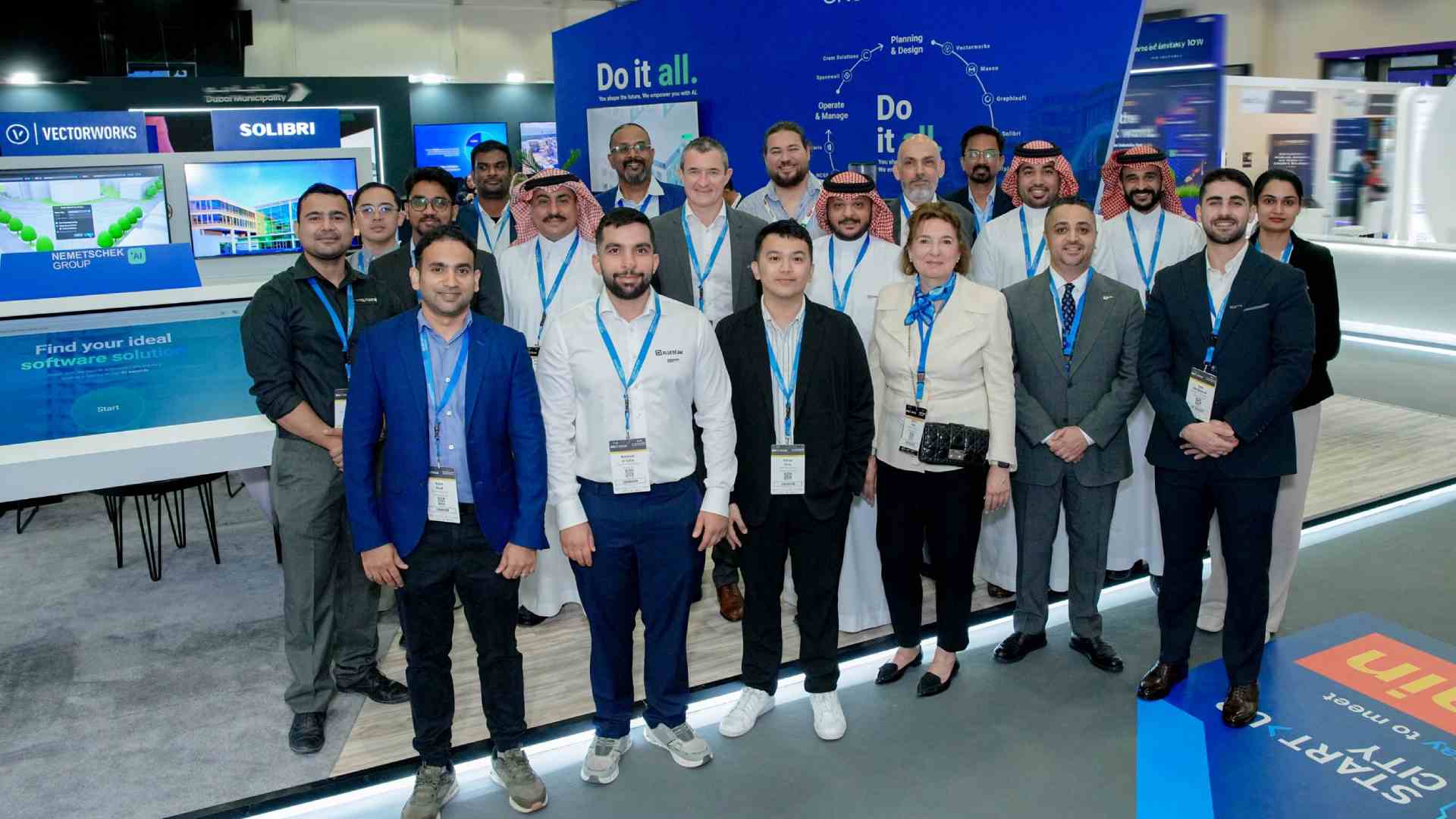
Nemetschek Group, a global leader in Construction AI and one of the world’s leading software providers for the Architecture, Engineering, Construction and Operations (AEC/O) and Media industries, today returned to Big 5 Global 2026 as a Bronze Sponsor to showcase how AI, connected data, and open digital workflows can empower the Middle East’s AEC/O community to design, build and operate more efficiently.
Taking place from 23-26 November 2026 at Dubai World Trade Centre, the 47th edition of Big 5 Global brings together the construction and urban development ecosystem at a time when the region’s active project pipeline is accelerating demand for technology adoption and more efficient project delivery.
At the heart of Nemetschek Group’s participation in this year’s edition is its new family of premium AI-powered offerings: Archicad Max for architecture, Allplan Max for engineering, and Bluebeam Max for construction. Powered by the Nemetschek Intelligence Platform, the Group’s common AI and data foundation, the solutions embed practical AI capabilities into established AEC/O workflows, helping professionals reduce repetitive work, access project information more easily, and improve quality while retaining control over key decisions.
“AI is becoming an increasingly important part of how the AEC/O industry works, creating new opportunities to improve productivity, collaboration, and decision-making”, said Marc Nezet, Group Chief Strategy Officer and Chief Division Officer, Operate & Manage, Nemetschek Group. “With Archicad Max, Allplan Max, and Bluebeam Max, we are accelerating that shift by bringing advanced AI and agentic AI capabilities directly to architects, engineers, and construction professionals. And through the Nemetschek Intelligence Platform, we are moving beyond individual AI features towards connected, intelligent ways of working that allow data and insights to create greater value across the building lifecycle.”
From AI potential to practical value
The showcase comes shortly after Nemetschek was named a Leader in the IDC MarketScape: Worldwide Construction Management Software 2026 Vendor Assessment. The assessment highlighted strengths including the Group’s suite of products supporting the construction lifecycle, cross-team collaboration through Bluebeam and GoCanvas, and its 24% R&D reinvestment rate, with investment focused on improving data flows and using AI to enhance data access, analytics and decision-making.
At Big 5 Global, visitors can explore the connected Nemetschek ecosystem across Planning & Design, Build & Construct, and Operate & Manage, with solutions from ALLPLAN, Graphisoft, Solibri, Vectorworks, dTwin, Bluebeam, GoCanvas, and Spacewell.
“The Middle East is delivering some of the world’s most ambitious built-environment projects, making Big 5 Global an important platform to show what practical digital transformation looks like,” said Eng. Muayad Simbawa, Managing Director, Middle East, Nemetschek Group. “Visitors to our stand can walk through the building lifecycle and see how AI, connected data, and interoperable workflows can help teams work with greater clarity, consistency, and confidence. Our focus is on empowering the region’s AEC/O professionals with technology that supports their expertise and helps them turn digital innovation into tangible project value.”
Bringing industry perspectives to the stage
Beyond the stand, Nemetschek Group executives are contributing to conversations shaping the industry’s future. Marc Nezet will participate in the Global Leaders’ Summit on 23 November in the session titled ‘Decisions that will shape the decade ahead’; while Muayad Simbawa will join the FutureTech Summit on 26 November for the executive panel titled ‘Proof, not pilots: Why transformation stalls and where the value is missed’. And Bjørn Kristian Stangeland, Director of Interoperability and Standards, Nemetschek Group, will discuss ‘Turning Open Standards into Industry Practice’ on 24 November as part of the buildingSMART & Geospatial Talks sessions.
Visitors can meet the Nemetschek Group team and explore its solutions at Big 5 Global 2026 in Hall 4, Booth 4A173, from 23-26 November 2026.

When the Phish Drives Itself
SpudBros Express Brings the Spud Craze back to Abu Dhabi F1 and Liwa International Festival

Beyond Braking: Asad Badami on ASIMCO’s Next Chapter

OPPO A6 Pro 5G Review: Reliable Daily Driver

Denodo Bolsters Executive Team by Hiring Christophe Culine as its Chief Revenue Officer

Microsoft Launches New Surface Copilot+ PCs for Business

2026 in Review: Is AI Becoming More of a Management Problem Than a Technology Problem?

Inside XPENG Brand Night: AI Mobility Lands Centre Stage in Dubai

Chinese Cars Are Reshaping the GCC Market, but Resale Value Could Be the Next Battleground

-
 Trending1 year ago
OPPO A6 Pro 5G Review: Reliable Daily Driver
-
 Tech News2 years ago
Denodo Bolsters Executive Team by Hiring Christophe Culine as its Chief Revenue Officer
-
VAR2 years ago
Microsoft Launches New Surface Copilot+ PCs for Business
-

 Automotive2 years ago
AGMC Launches the RIDDARA RD6 High Performance Fully Electric 4×4 Pickup
-

 VAR12 months ago
Huawei Nova 14 Pro Review: Where Camera Excellence Meets Ecosystem Evolution
-
Tech Interviews3 years ago
Navigating the Cybersecurity Landscape in Hybrid Work Environments
-

 Hospitality2 years ago
Gulfood 2025 30th Edition Kicks Off Today, Setting New Benchmarks in F&B Growth and Innovation
-
News4 years ago
BenQ ZOWIE : First TN 360Hz DyAc+ Gaming Monitor