
 Have a question? +971 56 404 0503




Hospitality
From AMAYA to MYA: Dubai Mall Dining Destination Refines Its Global Identity

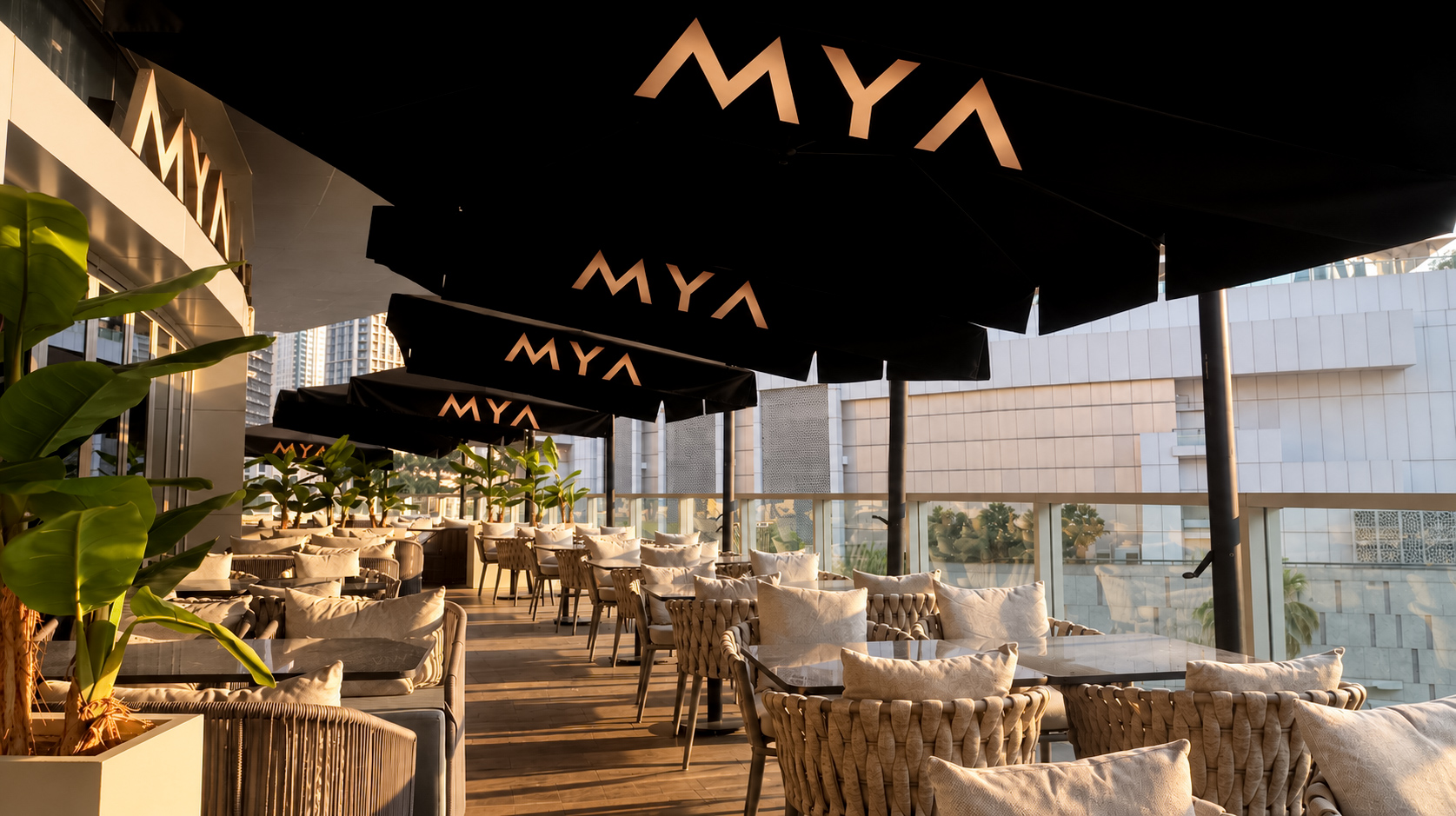
AMAYA is now MYA. As the brand expands its regional and international presence, a unified name gives every location one voice and every guest one clear promise. MYA supports consistency across its growing portfolio of destinations while preserving the energy, hospitality and attention to detail established in Dubai.
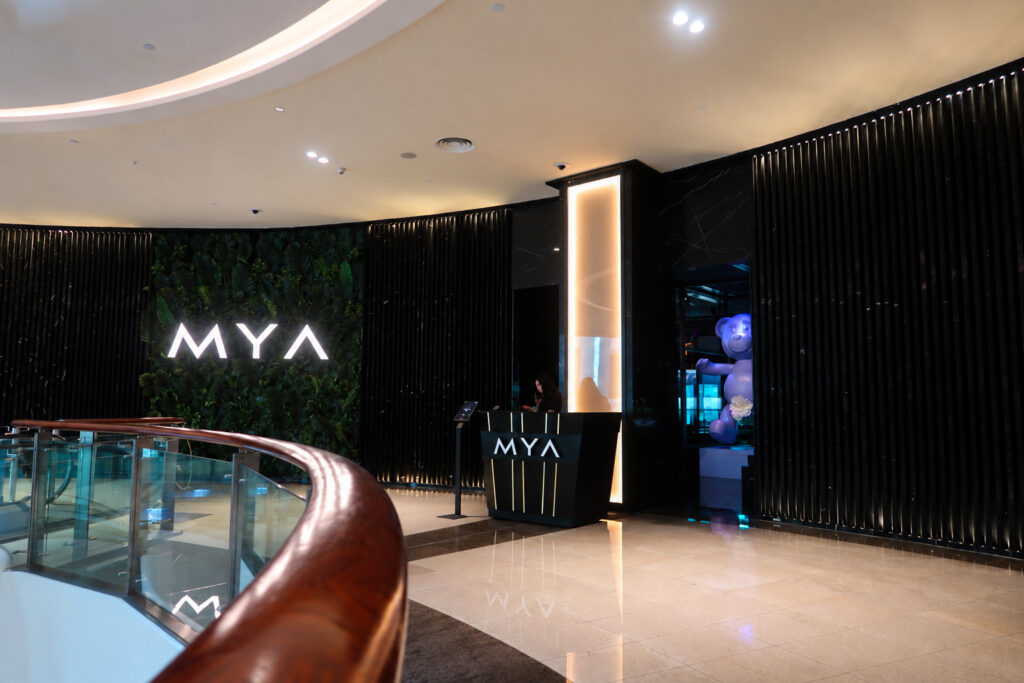
The Dubai-born dining and lifestyle brand has refined its name as part of its continued growth: one concise name that can be recognized, remembered and expressed with equal confidence in every market. MYA is shorter by design, creating greater clarity across destinations, partnerships, communications and digital platforms.
The refinement is precise. MYA carries forward the same founder and leadership, the same team, the same concept, the same culinary direction, the same standards and the same distinctive guest experience. Everything that earned the trust of AMAYA’s guests remains at the heart of MYA.
“Strong brands grow through clarity, consistency and trust. MYA gives the name we have built a sharper global expression. Our people, standards and guest experience remain exactly the same. One name. One vision. One uncompromising standard, built in Dubai and continuing forward as MYA.”
– Murat Tutuncu and Moe Ezzat | Founders & CEO, MYA
MYA’s purpose is clear – to give the established Dubai-born hospitality brand a shorter and more consistent name as it grows across destinations. The shorter name increases recognition, the unified name strengthens consistency, and the same standards give the brand the foundation to grow confidently across cultures and geographies.

Exclsuive interview with Dr. Dragana Spica, Specialist Plastic, Reconstructive & Aesthetic Surgeon, Aesthetics by King’s College Hospital London – Dubai
When patients talk about wanting to look more refreshed or rejuvenated, how important is skin quality and tightening alongside changes to facial volume and shape?
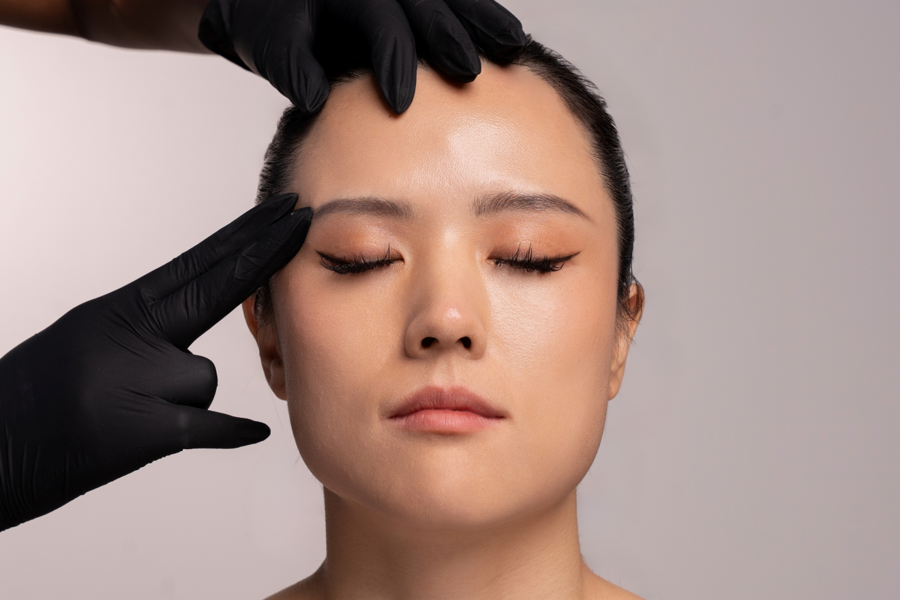
Looking refreshed is about much more than restoring volume or enhancing facial contours. Skin quality plays a central role in how youthful and healthy a person appears. Even when volume loss is addressed with fillers or fat transfer, poor skin texture, laxity, pigmentation, or reduced collagen can still contribute to a tired appearance.

A comprehensive rejuvenation approach combines attention to facial structure with treatments that improve skin quality and firmness. Technologies that stimulate collagen production, skin tightening procedures, and regenerative treatments can significantly enhance results. When healthy, firm skin is combined with balanced facial proportions, patients tend to achieve a more natural and refreshed appearance rather than an over-treated look.
When it comes to body transformation, what are the most common concerns patients are looking to address through contouring and sculpting?
Most patients are not necessarily looking for dramatic weight loss. Instead, they want to improve body proportions and address stubborn areas that do not respond to diet and exercise. Common concerns include excess fat deposits, loose skin following weight loss or pregnancy, and a lack of definition in certain areas of the body.
Many patients seek contouring to create a smoother silhouette, improve waist definition, refine body balance, or restore confidence in their appearance. Increasingly, body contouring is viewed as a way to enhance overall shape and harmony rather than simply reduce body size.
What are some of the most common concerns patients come to you with when it comes to skin laxity, body contouring and overall body shape?
Skin laxity is one of the most frequent concerns, particularly after significant weight loss, pregnancy, or as part of the natural ageing process. Patients often report loose skin around the abdomen, upper arms, thighs, neck, or lower face. In terms of body contouring, many individuals are concerned about localized fat deposits that persist despite maintaining a healthy lifestyle. Others are seeking improved body proportions, whether through waist contouring, abdominal refinement, thigh reshaping, or enhancement of areas that have lost volume over time. Ultimately, most patients want results that look natural and complement their unique body structure rather than conforming to a single aesthetic ideal.
Body contouring has become an increasingly important part of aesthetic care. Which areas of the body are patients most interested in sculpting and refining?
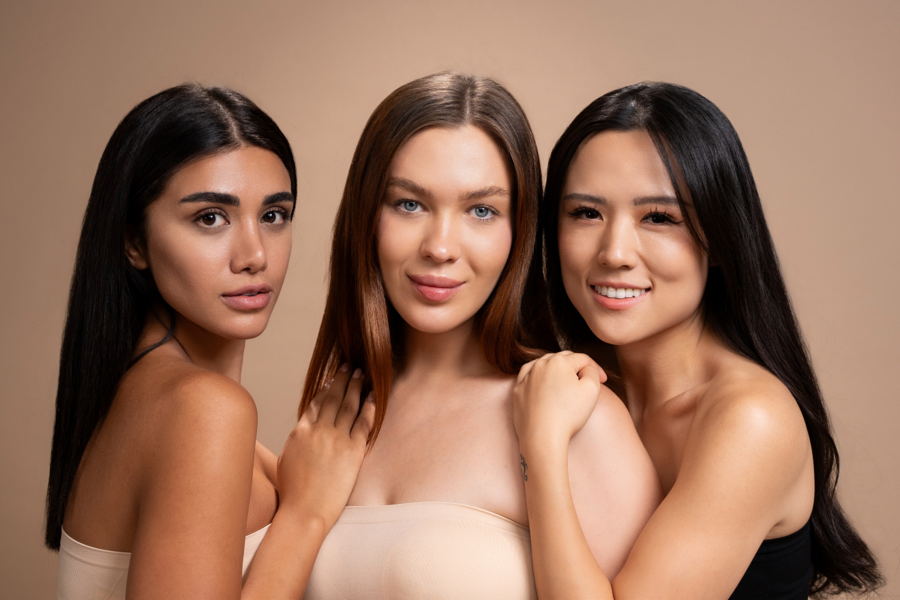
The abdomen remains one of the most commonly requested areas for contouring and sculpting, followed closely by the waist and flanks. Patients are also frequently interested in refining the thighs, upper arms, back, and under-chin area.
There has also been growing interest in body-shaping procedures that enhance overall proportions, such as creating a more defined waistline or improving the contour of the hips and buttocks. What is particularly notable today is that patients increasingly view the body as a whole, seeking balanced and harmonious results rather than focusing on a single area in isolation.
How has the conversation around targeted fat reduction evolved, particularly among patients who are looking for definition rather than significant weight loss?
The conversation has shifted considerably over the past few years. Patients are now much more informed and understand that body contouring is not a substitute for weight loss. Instead, they are seeking targeted refinement and improved definition.
Many patients are already close to their ideal weight and simply want to address stubborn pockets of fat that obscure muscle definition or affect body proportions. The focus has moved toward precision, customization, and natural-looking outcomes. Today’s patients often ask how they can achieve a more sculpted appearance while maintaining a healthy, authentic look, and treatment plans are increasingly tailored to support those goals.
In modern aesthetic practice, body contouring is less about reducing size and more about enhancing shape, proportion, and confidence through personalized treatment strategies.
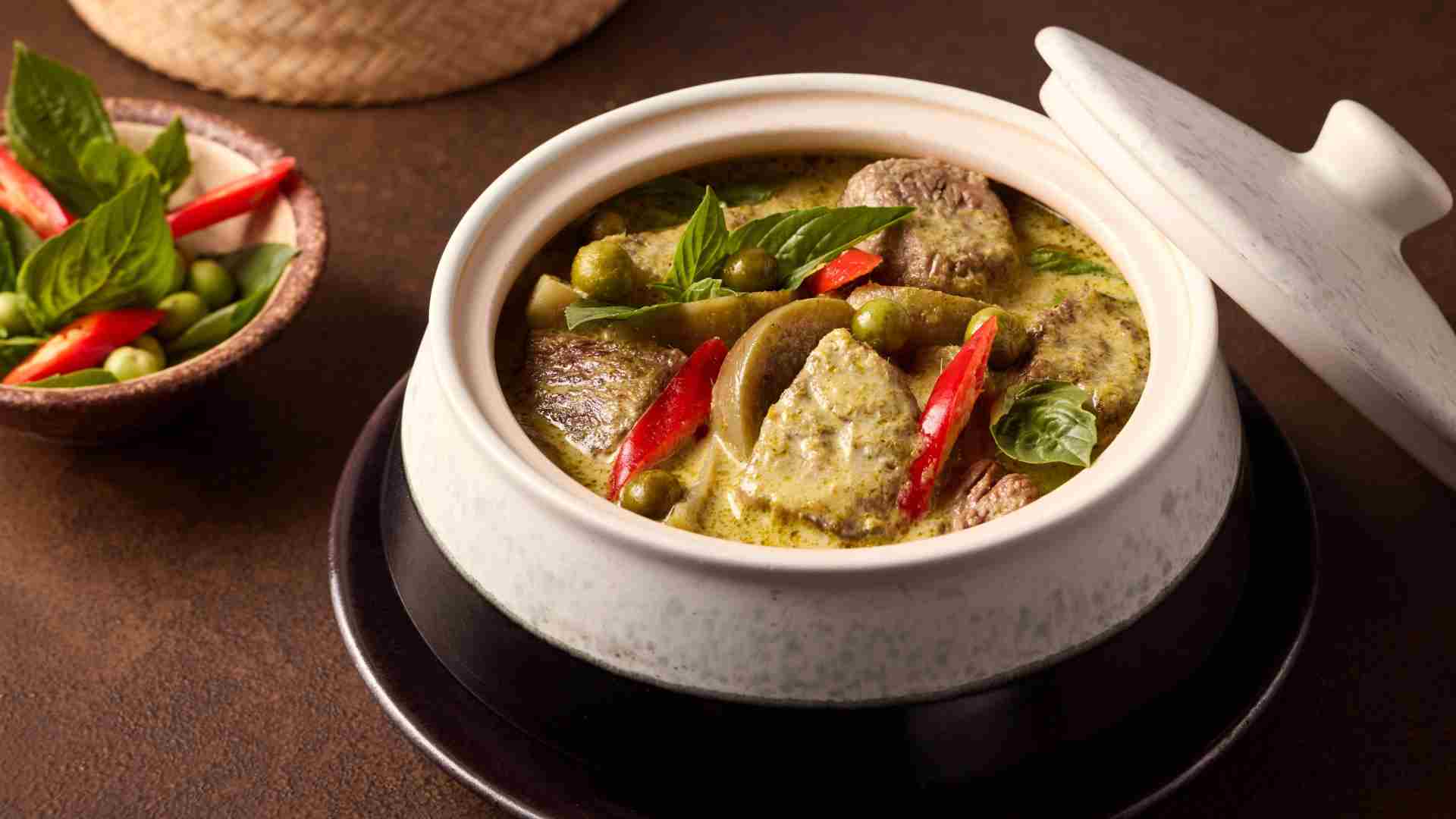
This October, Pai Thai at Jumeirah Al Qasr invites guests to an exceptional weekend of Thai gastronomy. On 16 and 17 October, the award-winning dining destination welcomes Blue Elephant founder, Master Chef Nooror Somany Steppe to Dubai, where she joins Head Chef Amara Mahayothee for a limited series of four-hands dinners and an intimate culinary masterclass.
Across two evenings, the chefs will present three- and five-course menus combining dishes from Pai Thai and Blue Elephant. Among the highlights are “Naam Dokmai” green mango lobster salad, prepared with mango from Master Chef Nooror Somany Steppe’s native province; organic green chicken curry with Thai sweet basil and kaffir lime leaves; and ribeye with Blue Elephant Black Diamond garlic, GI pepper and a hint of truffle.
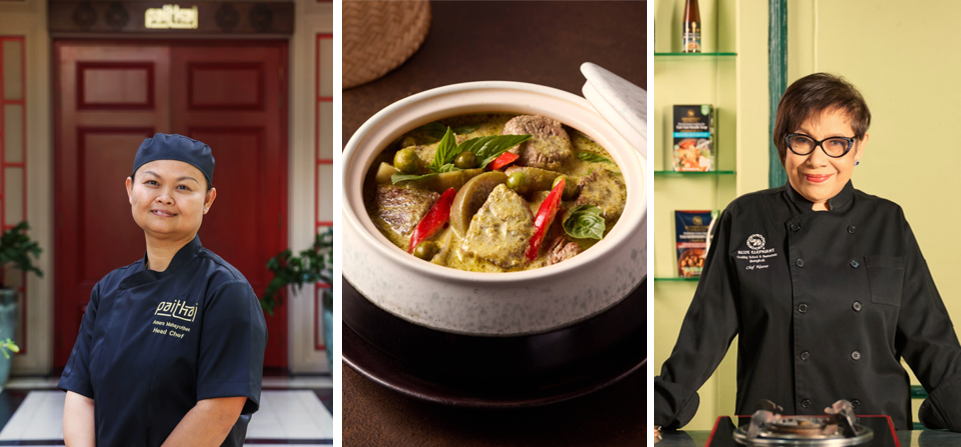
The dinner menu draws upon recipes with personal and historical significance. The jumbo river prawn tom yum replicates the traditional version served during the period of King Rama V in the late nineteenth century. Uniting Emirati dates with Thai mung bean and jasmine essence, the date cake dessert is inspired by a recipe from Master Chef Nooror Somany Steppe’s late mother. These stories bring the collaboration’s wider narrative of heritage and tradition to the table while connecting Thai culinary techniques with its Dubai setting.
On Saturday 17 October, the chefs take guests beyond the dining room with a hands-on masterclass exploring four Thai favourites: Yam Som O, Chor Muang, Gaeng Phed Goong and Khao Niew Ma Muang. Participants will discover the techniques and cultural stories behind each recipe before enjoying a seated three-course lunch at Pai Thai.
Event details:
Four-Hands Thai Dinner
Dates: 16 and 17 October 2026
Time: 18:00 onwards
Price: AED 395 per person for the three-course set menu; AED 695 per person for the five-course set menu. Beverages are available à la carte.
Four-Hands Thai Masterclass
Date: 17 October 2026
Time: 11:00 to 14:30
Price: AED 695 per person, including a three-course lunch and soft beverages; AED 895 per person, including a three-course lunch with wine pairing
Beyond the collaboration, Pai Thai continues to bring the flavours of Thailand to the enchanting setting of Jumeirah Al Qasr, inviting guests to savour a refined expression of Thai cuisine over dinner daily from 18:00 to 22:30, or during Kin Samrap Lunch, served Friday to Sunday from 12:30 to 14:30 and extending to a daily lunch offering from November.
By Samuel Hosker, Founder, North End Design
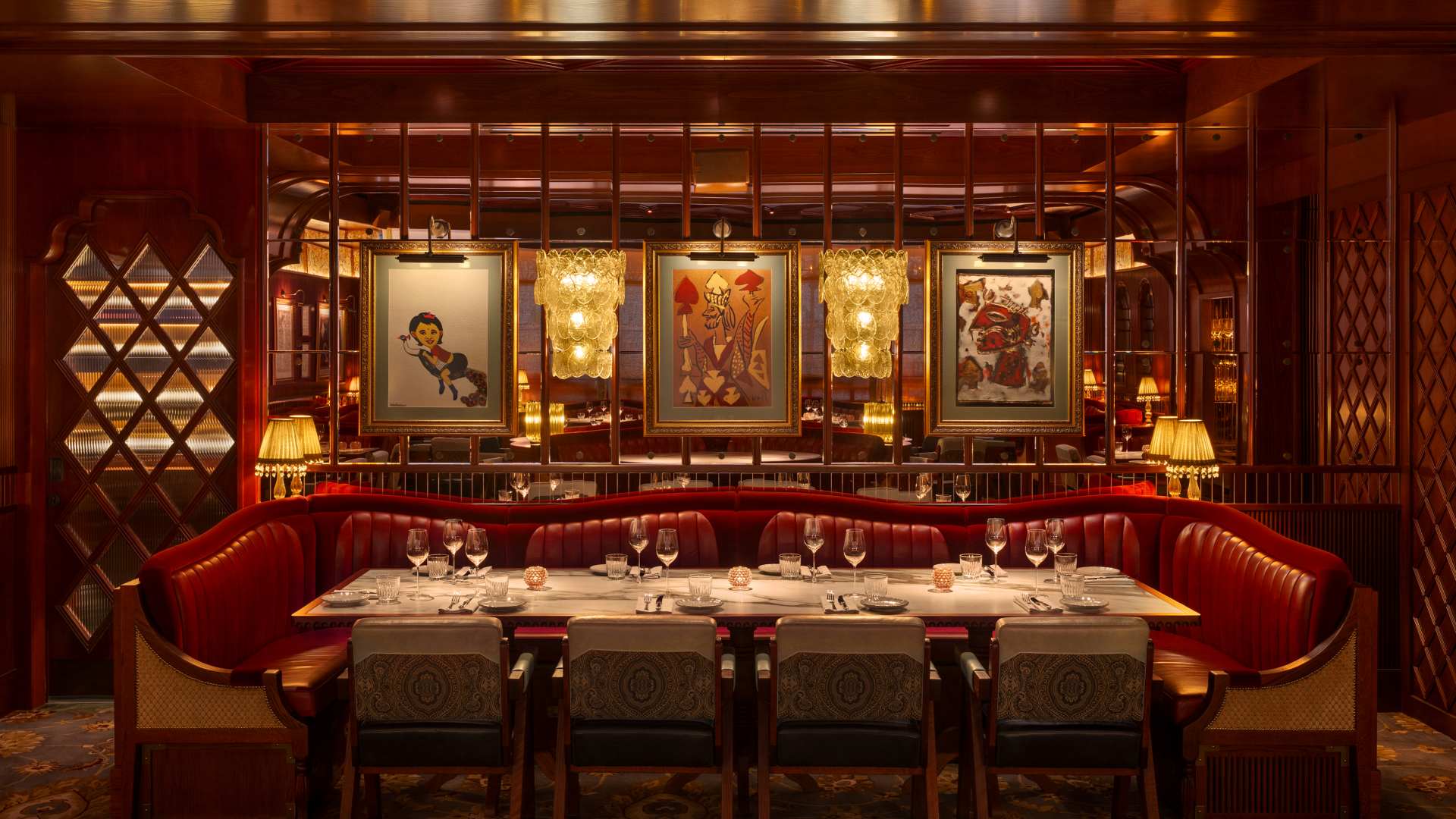
The design of Gymkhana Dubai began with a question we have been exploring with the team behind the restaurant for several years – how do you continue to evolve a successful and recognisable design identity without simply replicating what has come before?
Our relationship with Gymkhana now spans seven years, beginning with the redesign of the London restaurant in 2019 and continuing as the brand has expanded internationally. With each location, we have looked at how we can retain the character and identity that makes Gymkhana distinctive, while introducing new layers of detail and creating something that feels relevant to its setting. For Dubai, the ambition was to create the most complete expression of Gymkhana to date.
A journey through India
The starting point for the design was the architecture and interiors of Northern Indian residential properties, alongside the richness of Indian fashion and bridal couture. The intricate detailing and opulence of designers such as Sabyasachi, as well as the theatricality of traditional Indian wedding celebrations, informed our approach to pattern, texture, ornament and colour.
Travel has always been an important part of my design process. Visits to Chandigarh and Pondicherry helped shape a broader and more contemporary interpretation of India, moving away from the more familiar visual language associated with the British Raj.
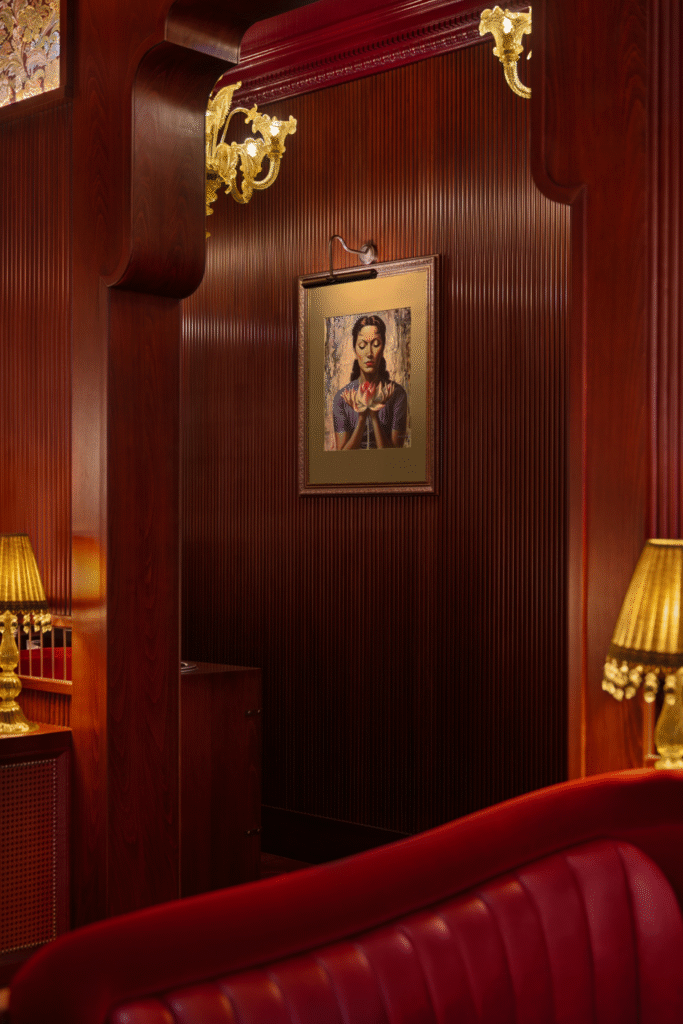
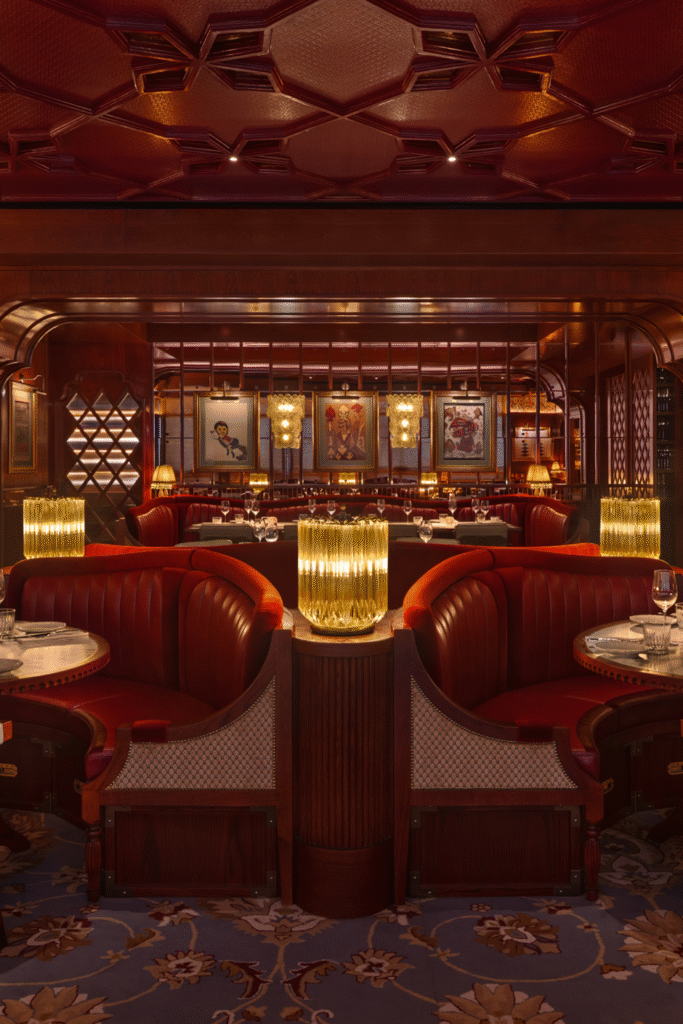
Chandigarh was particularly influential. Its modernist architecture offered a very different perspective on Indian design and informed elements of the furniture and proportions within the restaurant. Elsewhere, references to Rajasthani architecture, the Red Fort in Old Delhi and buildings encountered in Kolkata have been translated into timber arches, decorative rosettes and floral stained-glass detailing.
These Indian influences sit alongside references from Europe. Northern Italian design, particularly the architecture and interiors of Venice, inspired elements including Murano-style lighting and marble detailing, while Antoni Gaudí’s Casa Vicens in Barcelona influenced the expressive pattern, geometry and ornament of the dining room ceiling.
Furniture adds another layer through references to Edwardian campaign furniture manufactured in India, using materials such as cane, rosewood and teak to bring together British-Indian heritage and Indian craftsmanship.
The artwork continues the narrative, combining bespoke oil paintings of native Indian animals and equestrian events with 55 contemporary Indian artworks reinterpreting traditional playing cards – all subtle references to the sporting clubs of India from which Gymkhana takes its name.
Designing a restaurant that works
While the visual experience is important, successful hospitality design has to work operationally.
The Dubai site was previously another restaurant, and its existing layout presented several challenges. We remodelled the space to maximise covers while creating dining rooms that still feel intimate and purposeful, alongside two separate staircases to improve front- and back-of-house circulation.
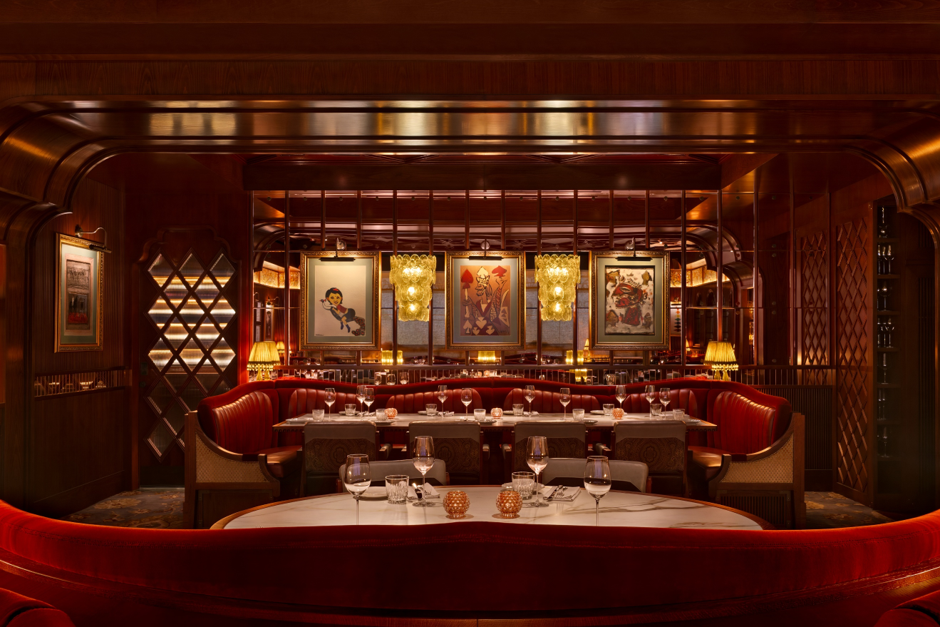
We work closely with Gymkhana’s operations and kitchen teams because seemingly small design decisions can have a significant impact on the guest experience. A dish coming from the tandoor, for example, should reach the guest within a minute of leaving the pass. Understanding that journey influences how we plan circulation, service routes and the relationship between the kitchen and dining spaces.
That operational understanding has developed considerably through our long-term relationship with the client.
Seven years of evolution
For us, one of the most rewarding aspects of Gymkhana has been demonstrating what can happen when the relationship between client and designer continues long after a project opens.
Over the course of seven years, we have been able to challenge, refine and evolve the design together. Crucially, our involvement doesn’t stop at handover. We remain close to the operations team after opening, learning how spaces perform in practice, what works and what can be improved before applying those lessons to future projects.
That continuity has allowed North End Design to operate almost as an in-house design consultancy – an extension of the client team with a deep understanding of the brand, its operations and its ambitions.
For me, that is ultimately what a successful hospitality design relationship should look like. It isn’t simply about delivering a beautiful restaurant and moving on. It’s about understanding a client’s business, growing alongside them and continually finding ways to make the next project better than the last.
Gymkhana Dubai is the culmination of that process so far – but, importantly, it is also another step in an ongoing relationship.


From AMAYA to MYA: Dubai Mall Dining Destination Refines Its Global Identity
WHAT’S HAPPENING AT MOON BY SANA THIS WEEK

NetApp to Showcase AI-Ready Data Infrastructure as CEO George Kurian Takes the Stage at Ai Everything Abu Dhabi 2026



-

 Trending11 months ago
OPPO A6 Pro 5G Review: Reliable Daily Driver
-

 Tech News2 years ago
Denodo Bolsters Executive Team by Hiring Christophe Culine as its Chief Revenue Officer
-
 VAR1 year ago
Microsoft Launches New Surface Copilot+ PCs for Business
-

 Automotive2 years ago
AGMC Launches the RIDDARA RD6 High Performance Fully Electric 4×4 Pickup
-
Tech Interviews3 years ago
Navigating the Cybersecurity Landscape in Hybrid Work Environments
-

 Tech News1 year ago
Nothing Launches flagship Nothing Phone (3) and Headphone (1) in theme with the Iconic Museum of the Future in Dubai
-

 VAR2 years ago
Samsung Galaxy Z Fold6 vs Google Pixel 9 Pro Fold: Clash Of The Folding Phenoms
-

 Hospitality2 years ago
Gulfood 2025 30th Edition Kicks Off Today, Setting New Benchmarks in F&B Growth and Innovation