
 Have a question? +971 56 404 0503





Home Integrator
The Connected Home Is Evolving into an Intelligent Ecosystem


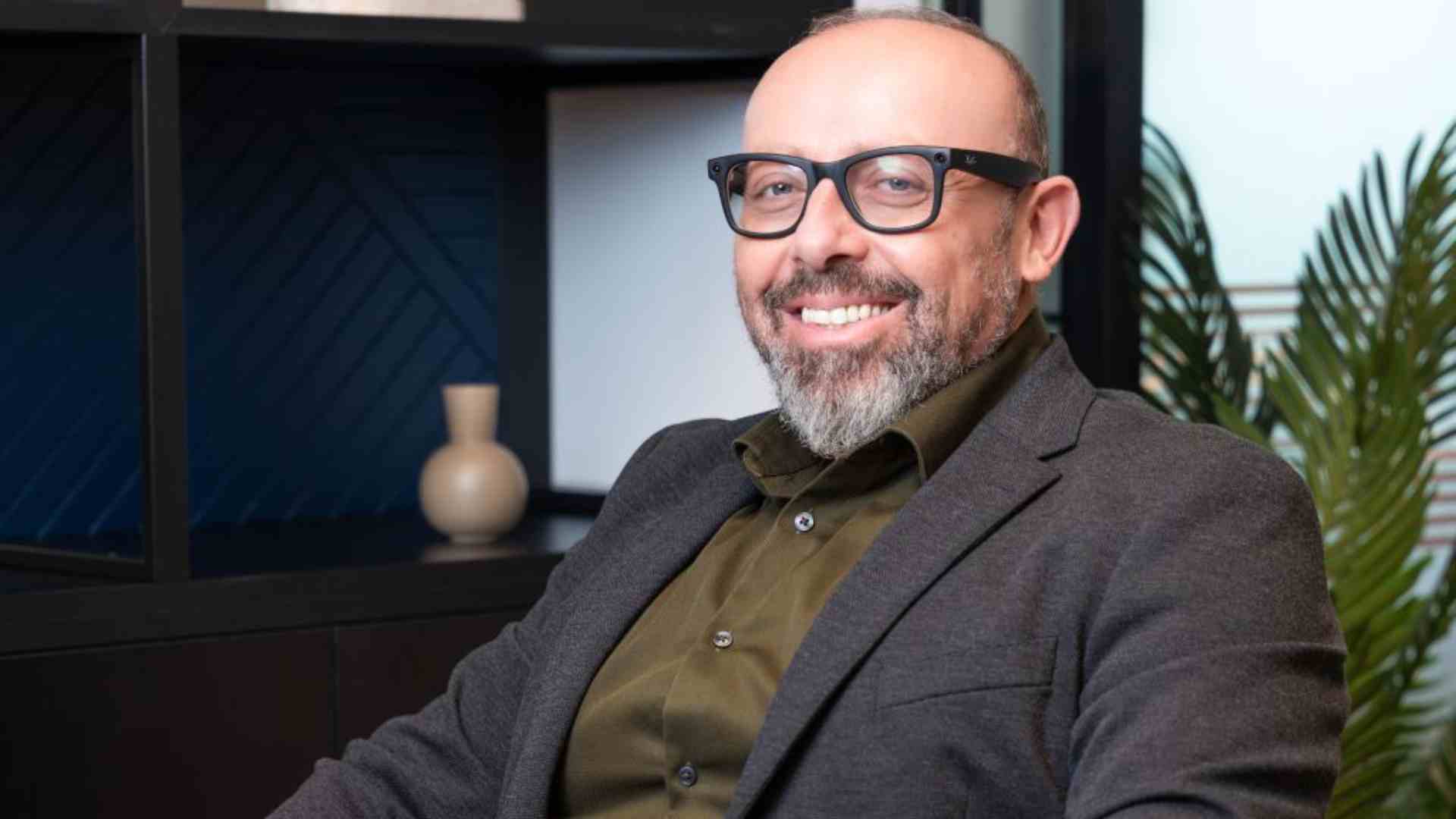
Exclsuive interview with Jason Ou President, Hisense Middle East. Africa, and India
Smart homes are moving beyond individual connected devices towards more integrated living experiences. How is Hisense approaching this shift, and what role do you see the brand playing in the evolution of connected homes across the Middle East?
At Hisense, we recognized early that the future of the smart home isn’t simply about connecting devices, it’s about creating intelligent companions that understand and anticipate how families live. Our vision has evolved from “connected life” to “smart connection powered by AI,” where every device in the home becomes part of an intelligent, communicative ecosystem.
This is the foundation of our ConnectLife platform, which unifies Hisense refrigerators, washing machines, TVs, dishwashers, and air conditioners into one seamless ecosystem. But connectivity alone is no longer enough. Our global vision is to transform home appliances into AI companions, moving toward what we call Artificial Super Intelligence (ASI) in the home, where devices don’t just respond to commands but actively partner with consumers to enhance their daily lives.
At IFA Berlin, we showcased this AI companionship philosophy across our product range. Our smart refrigerators, powered by AI and voice control, manage food inventory and suggest recipes. Our air conditioners intelligently adapt to preferences and environmental conditions. The award-winning X-zone Master washer dryer, which claimed the CES 2026 Best of Innovation Award, uses AI Assist to detect fabric types and optimize cycles automatically. These are household companions that learn, adapt, and improve over time.
The Middle East, with its strong appetite for premium technology and its culture centred on family gatherings and hospitality, is ideally positioned to lead this evolution. Hisense is committed to shaping the connected home experience across the region, not by adding more devices, but by transforming them into intelligent companions that enhance how families live together.
UAE consumers are increasingly looking for homes that combine convenience, energy efficiency, entertainment, and intelligent technology. How are these changing expectations influencing Hisense’s product development and regional strategy?
The UAE stands as the most digitally advanced market in the region, with consumers who are early adopters of technology and innovation. The fast-paced lifestyle here means UAE consumers actively seek products powered by AI that simplify their lives while delivering premium experiences. This market insight directly shapes our regional strategy and product development.
Convenience through intelligent technology: UAE consumers don’t have time for manual adjustments. Our ConnectLife ecosystem and AI-powered automation address this, whether it’s a washing machine that intelligently selects the optimal cycle or an air conditioner that anticipates comfort needs before you even think about it. AI transforms everyday tasks into seamless, automated experiences.
Energy efficiency as intelligent innovation: Sustainability matters to UAE consumers, but not at the expense of performance. Our U8 air conditioner, recognised with a Red Dot Award, exemplifies how AI can optimise energy consumption while maintaining exceptional comfort. The X-zone Master washer dryer uses heat pump technology for gentle, low-temperature drying at 50°C, protecting fabrics while significantly reducing energy use, intelligence that benefits both households and the environment.
Entertainment reimagined: This is where Hisense has established clear leadership. As the originator of RGB MiniLED technology, our flagship displays deliver cinema-grade experiences that discerning UAE consumers demand. The UR9 Series achieves 100% BT.2020 colour coverage, while our laser display portfolio redefines home entertainment possibilities.
Intelligent technology is the thread connecting all three pillars. Our localised R&D centre in Dubai ensures products are tailored to regional requirements, while our manufacturing facilities across the region demonstrate our commitment to serving this market with agility and precision.
Interoperability remains a key challenge in smart-home adoption, with consumers often managing devices across different platforms and ecosystems. How is Hisense addressing this challenge to make connected living more practical and accessible?
Interoperability is one of the greatest barriers to smart home adoption, and addressing it has been central to our strategic vision for the connected home. ConnectLife is Hisense’s answer to ecosystem fragmentation, but we’ve designed it to go far beyond simple device management. It serves as a unified platform where our full range of products don’t just connect, they communicate, analyze, and optimize experiences together. Refrigerators, washing machines, televisions, dishwashers, and air conditioners become nodes in an intelligent network that understands household patterns and preferences.
The PureFlat Smart Series refrigerator exemplifies this vision. Through ConnectLife, it transforms from a kitchen appliance into a connected hub for household life, enabling meal planning, content sharing, and family communication. The X-zone Master washer dryer integrates seamlessly, with AI Assist optimizing every cycle based on real-time data from across the ecosystem.
What distinguishes our approach is the shift from devices you control to devices that learn from each other. When our appliances analyze your patterns, your preferred temperatures, your viewing habits, your food consumption, they collectively optimize energy usage, suggest improvements, and anticipate needs. The home becomes an intelligent environment that adapts to how each family actually lives.
Rather than locking consumers into proprietary systems, we focus on creating seamless experiences that feel natural. When a large-format display delivers cinema-grade visuals, an air conditioner maintains the ideal viewing environment, and a refrigerator keeps refreshments ready, all coordinated intelligently, the home truly becomes greater than the sum of its parts.
Artificial intelligence is becoming a defining feature of next-generation home appliances and entertainment systems. Where do you see AI delivering the most meaningful improvements to everyday living, beyond simply adding more features to connected devices?
The meaningful impact of AI lies in transforming appliances from devices you control into intelligent companions that understand you. This represents a shift, from smart appliances that respond to commands to AI-powered systems that connect with each other, communicate, analyze patterns, and proactively optimize your home experience.
In home entertainment, our Hi-View AI Engine RGB processor works in real time, analyzing content to optimize color accuracy, contrast, and motion handling. It learns your viewing preferences and adapts, sport, film, and gaming are each rendered with the precision they deserve, without requiring manual adjustment.
In laundry care, the X-zone Master’s AI Assist represents a leap forward in intelligent companionship. The system doesn’t just follow instructions, it detects fabric types, analyses soil levels, and optimizes washing and drying parameters automatically. It learns from each cycle to deliver better garment care with less effort over time.
In climate control, AI enables our air conditioners to become environmental companions. They learn household patterns, analyze preferences, and adjust temperature proactively, maintaining comfort without constant input, particularly valuable in the Gulf region’s demanding climate.
In kitchen appliances, AI-powered refrigerators track food inventory, analyze consumption patterns, suggest recipes based on available ingredients, and even optimize energy usage based on household routines.
The transformative element is when these AI companions work together, sharing data, analyzing collective patterns, and optimizing the entire home environment. This is the vision Hisense is building: homes where AI doesn’t just add features, but genuinely understands and enhances how families live.
Hisense has recorded significant growth in the Middle East and Africa under your leadership. Which shifts in consumer behaviour, distribution, or product demand have contributed most to this momentum, and how are these insights shaping the brand’s next phase of growth?
Our growth across this diverse region is driven by a combination of key factors: a strong and innovative product portfolio, deep understanding of local market dynamics and consumer preferences, strategic partnerships, and our ability to deliver tailored solutions that meet evolving needs across different markets.
Strong product innovation: Our leadership in RGB MiniLED technology and large-format displays, Hisense ranks No. 1 globally in the 100-inch and over TV segment according to Omdia (2023-Q3 2025), reflects our commitment to genuinely differentiated products. The recognition of our X-zone Master at CES 2026 and IFA Berlin validates our approach to scenario-based innovation. Euromonitor International has certified Hisense as the fastest-growing brand among the world’s top 10 washing machine manufacturers over the past five years, momentum we’re building across all categories.
Deep market understanding: Consumer behavior across the region has shifted decisively toward premium, integrated solutions. Families want ecosystems that work together intelligently. In the GCC, the cultural emphasis on hospitality and shared experiences aligns naturally with our whole-home technology philosophy. We’ve invested in understanding what each market needs and tailoring our approach accordingly.
Strategic partnerships and localization: Our partnerships across retail and distribution channels have been crucial in reaching consumers effectively. Our manufacturing facilities in South Africa and Algeria, with a major facility under development in Egypt, bring production closer to consumers and demonstrate long-term regional commitment. Our R&D centre in Dubai ensures products address local requirements.
Looking ahead, these insights shape a strategy focused on deepening ecosystem connectivity, expanding our premium portfolio, and leveraging our position as official sponsor of the FIFA World Cup 2026™ to strengthen brand resonance with families across the region.
Hisense has expanded its television portfolio with technologies such as Mini-LED and larger-screen displays. How are these innovations shaping the brand’s premium home entertainment strategy in the UAE, and what can consumers expect next?
Display technology is at the heart of our premium entertainment strategy, and RGB MiniLED represents the future of television, a future Hisense originated and continues to lead.
We developed RGB MiniLED technology with three fundamental advantages that give us a clear edge over competition:
True colours: Unlike conventional displays that use blue LEDs with colour filters, RGB MiniLED uses dedicated red, green, and blue LEDs for the purest, most accurate colour reproduction possible. Our UR9 Series achieves 100% BT.2020 colour coverage, delivering what the content creators actually intended.
Eye protection: The natural light spectrum produced by RGB technology is gentler on eyes, reducing strain during extended viewing, particularly important for families in the UAE who value premium entertainment experiences at home.
Energy efficiency: RGB MiniLED delivers superior brightness and colour with lower power consumption than traditional technologies, intelligent innovation that doesn’t compromise on performance.
We’ve deployed this technology across our flagship lineup, the UX, UR9, and UR8 Series, paired with our Hi-View AI Engine RGB processor and native 180Hz refresh rates for exceptional precision in sport, gaming, and fast-paced content.
According to Omdia, Hisense ranks No. 1 globally in the 100-inch and over TV segment (2023-Q3 2025), reflecting both consumer demand for immersive screens and our ability to deliver at scale.
Our laser display portfolio extends this vision further. The L9Q Laser TV delivers cinema-grade screens up to 200 inches, while the Laser Projector XR10 offers 6,000 lumens brightness, 60,000:1 contrast ratio, and projection capability up to 300 inches, fundamentally dissolving the distinction between television and home cinema.
UAE consumers can expect continued innovation at the intersection of display technology and AI, screens that not only deliver exceptional picture quality but adapt intelligently to content, lighting conditions, and preferences. Combined with premium audio partnerships like our collaboration with Devialet, we’re building complete entertainment experiences, not simply selling screens.
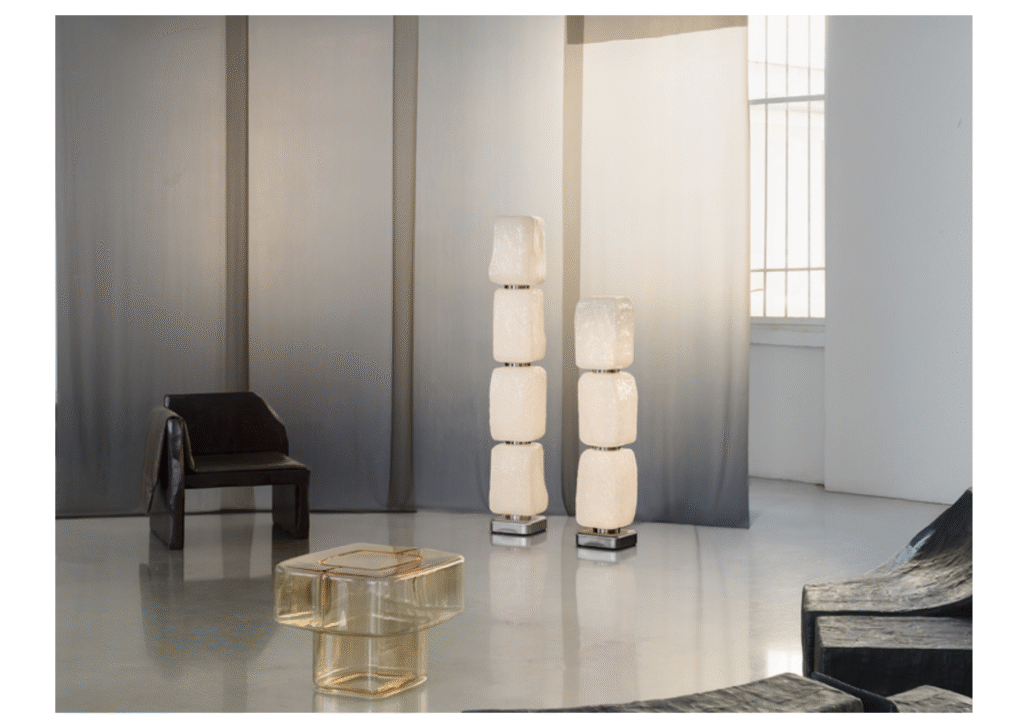
Linde Freya Tangelder’s sculptural touch defines Cassina’s new Fluid Joinery Light, now arriving in Dubai stores. A poetic object in which material and light are expressed as a single gesture, the lamp transforms mouth-blown glass into a lens that modulates its glow, creating a visual harmony that gently envelops the space.
Poised between sculptural solidity and luminous transparency, Fluid Joinery Light reinterprets the Fluid Joinery Side Table – I, presented in 2025. It preserves the original’s formal essence while transforming it into a striking lighting piece. The proportions are scaled down and the volume becomes a source of light, with smooth, organic curves remaining central to the design.
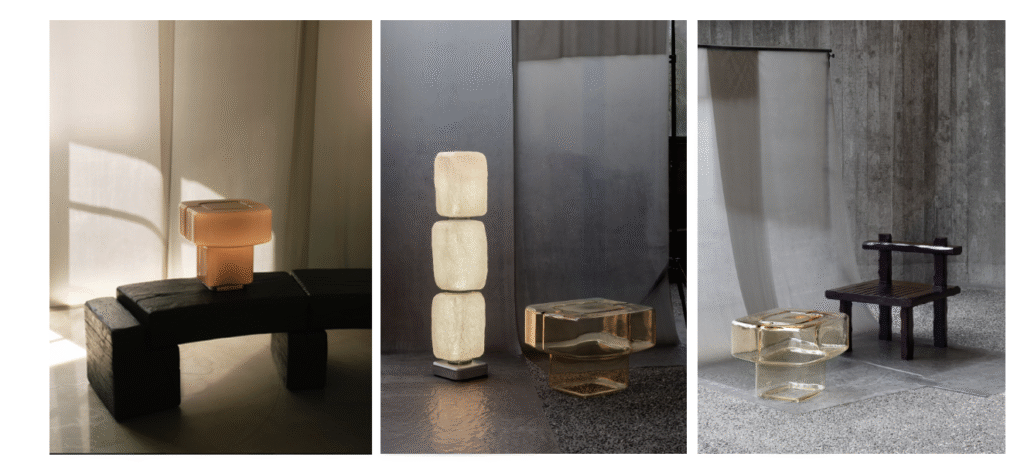
Like the side tables, Fluid Joinery Light is the result of complex, highly refined craftsmanship. The lamp is produced from a single volume of glass, mouth-blown into a cast iron mould and hand-finished. The technique is even more sophisticated for the lamp, using three layers of cased glass: transparent, opal white and tinted transparent. Together, these layers diffuse the light to create a tactile and evocative aesthetic, intensified by the Fumé green and Bronze yellow tones. Subtle engraved grooves punctuate the surface, suggesting the fusion of multiple elements into a single, continuous form.
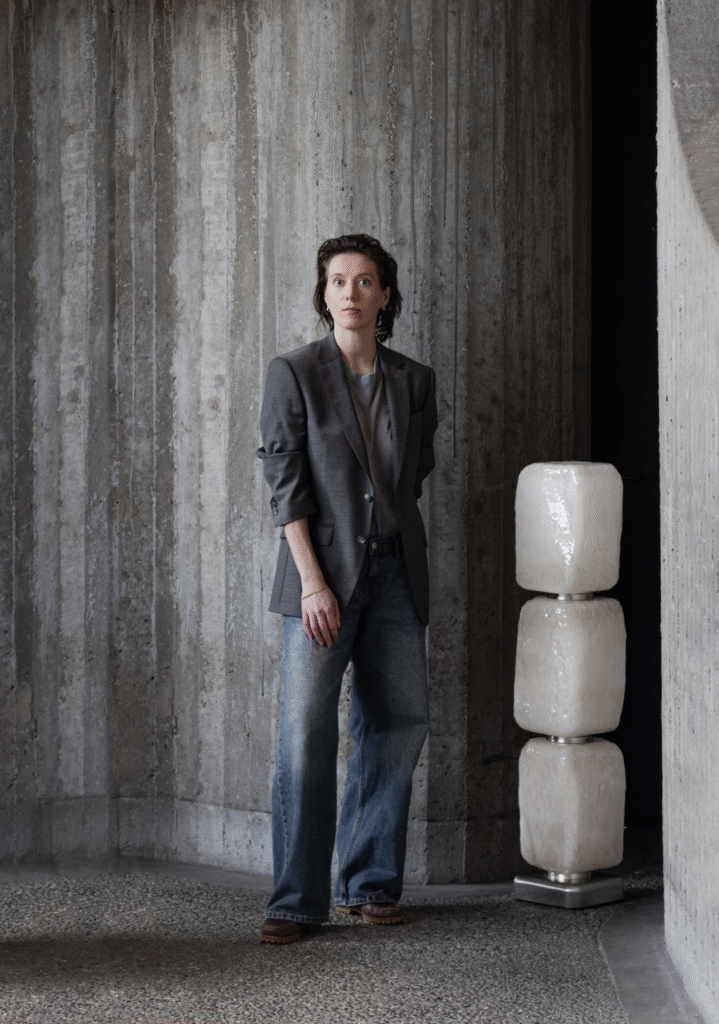
Cassina’s collaboration with Linde Freya Tangelder began in 2022 through its Patronage programme, supporting emerging international design talent. This partnership was celebrated in April 2026 with “Fluid Re-Collection” at 10 Corso Como in Milan, the designer’s first solo exhibition in Italy, supported by Cassina. The exhibition explored the relationship between her handcrafted limited editions and her designs for Cassina, including Fluid Joinery Light, which now arrives at the brand’s Jumeirah showroom in Dubai.
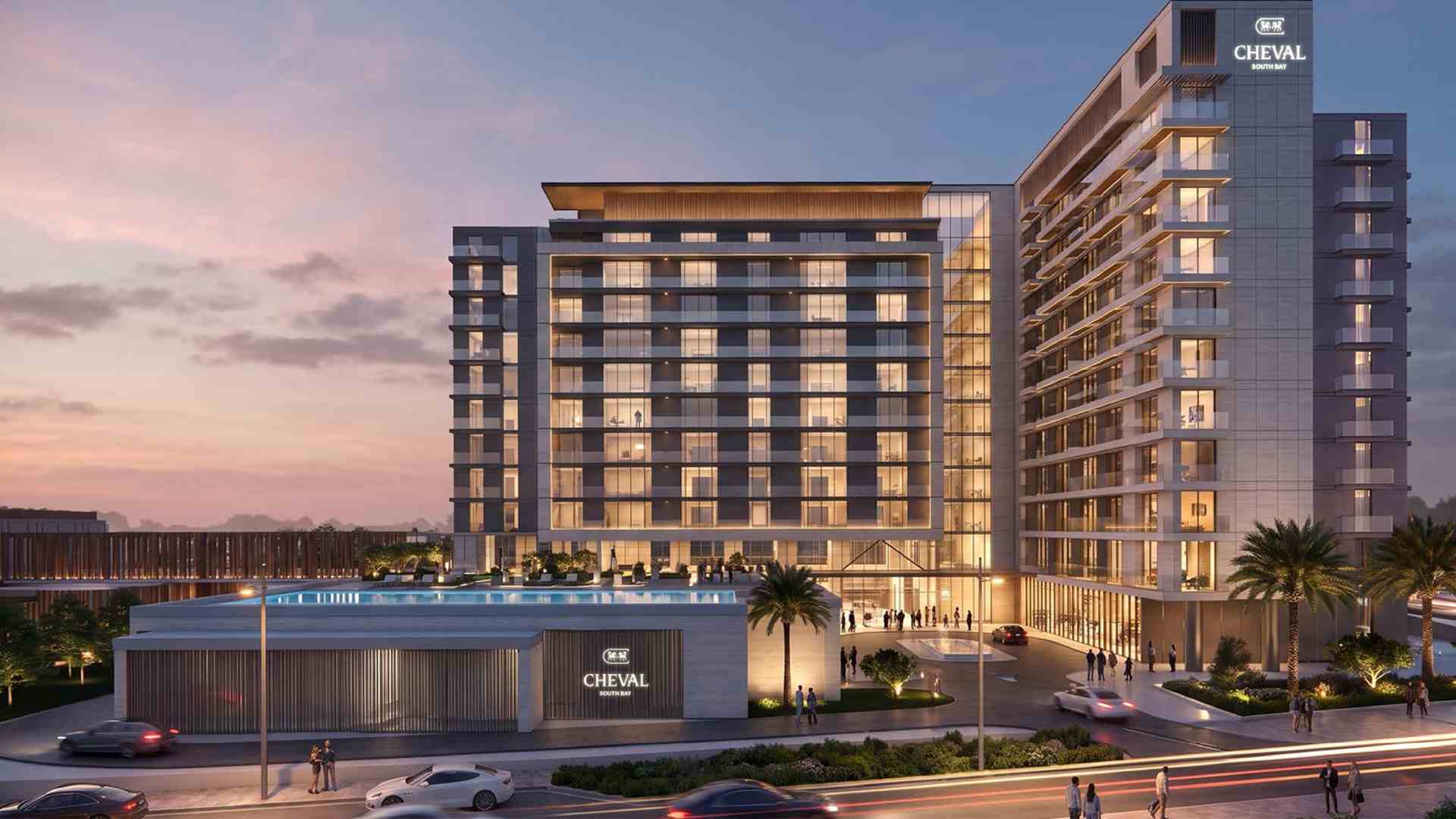
Dubai South, the largest single-urban master development focused on aviation, logistics, and real estate, and Cheval Collection, an award-winning, UK-based luxury hospitality company, have signed an agreement to launch Cheval South Bay.
The development will bring a first-of-its-kind luxury serviced apartments and branded residences to Dubai South, as part of Cheval Collection’s continued Middle East expansion. Scheduled to open in 2030, the project will comprise 98 serviced hotel apartments, ranging from studios to three-bedroom units, and 95 one-, two- and three-bedroom branded residences.
The agreement was signed at Dubai South HQ in the presence of Nabil Al Kindi, Group CEO of Dubai South and Mohammed Alawadhi, CEO, Cheval Collection, alongside senior executives from both entities.
Nabil Al Kindi, Group CEO of Dubai South, said: “Our agreement with Cheval Collection marks an important step in Dubai South’s expansion into hospitality developments, bringing a renowned, experienced international operator to our growing residential offering. As Dubai South continues to develop, hospitality will play an increasingly important role in serving the growing needs of the vibrant businesses ecosystem and visitors to the community. Cheval South Bay will support this growth while strengthening Dubai South’s appeal as an integrated master development.”
Mohammed Alawadhi, CEO, Cheval Collection, said: “Cheval Collection is firmly established as a global leader in luxury accommodation, including serviced hotel apartments and now branded residences, too. The Middle East is pivotal to our expansion, and the addition of Cheval South Bay in Dubai marks a major milestone in our continued growth in the region. This stunning new complex bears all the hallmarks of any Cheval property: a convenient location, beautiful residences, great amenities and impeccable service, which all add up to unrivalled standards of living where residents have the luxury of time, space and attention – be they long term guests, short-stayers or owners of their own Cheval branded home.”
The development will offer furnished apartments and residences with high-quality finishes, fully equipped kitchens and private balconies. Amenities at the pet-friendly property will include a swimming pool, gym, residents’ lounge and dining outlets.
Cheval South Bay will be located at South Bay, a premium waterfront community at the heart of Dubai South’s Residential District, which features a kilometre-long lagoon. Connected to the announced South Bay Mall, Cheval South Bay will offer direct access to this premium retail and lifestyle destination.
Cheval South Bay, which comes hot on the heels of Cheval’s recent brand refresh, Cheval Collection’s fourth property in the UAE and sixth in the Middle East. With the addition of the Cheval South Bay, Cheval Collection’s regional portfolio now exceeds 800 units, with more in the pipeline.
Buyers at Cheval South Bay will benefit from the Cheval DISCOVERY loyalty programme, offered in partnership with the Global Hotel Alliance. Member privileges include rewards and benefits, alongside elite status for branded residence buyers.
By Amir H. Greiss, Founder and Chief Executive Officer, SharpMinds Consulting Engineers
When a new building opens, attention naturally falls on what can be seen – whether its the form, the facade, or the quality of the public spaces. Yet the true measure of a building only becomes clear after it has been occupied for a year or two. By then, it has been through a full cycle of seasons and daily use, and its performance can be judged on facts rather than first impressions.
Those facts are practical ones. Are the spaces thermally comfortable throughout the day? Do people move through the building easily at peak times? Are energy and maintenance costs in line with what was forecast? Can equipment be serviced and replaced without disrupting occupants?
The answers are rarely down to a single design decision. They reflect how well the different disciplines involved in a project worked together, and how early they started doing so. Understanding that process explains why some buildings perform well for decades, while others struggle soon after handover.
Vision is the starting point, not the finished product
Every successful building begins with a clear architectural vision. It defines how the building relates to its context, how people will experience it, and what it aims to achieve. But a vision on its own is not a building. It has to withstand the realities of structure, climate, budget, regulation and the way people actually behave.
A useful way to manage this is to distinguish between design intent and design form. The form is the specific solution shown in the drawings. The intent is the outcome that solution is meant to deliver.
Consider a design that features a large, fully glazed atrium. The form is the glass. The underlying intent may be that occupants feel connected to daylight and to one another. If analysis shows the glazing would create an excessive cooling load, a team that understands the intent can deliver it differently, through roof lights, shaded courtyards or a more open circulation core. A team focused only on the form tends either to defend it at any cost or to remove the idea altogether. Clearly stated intent gives a project room to adapt without losing its purpose.
Why integration must begin at concept stage
In a traditional, linear process, the architect develops the design and engineers are brought in afterwards to make it work. The approach appears orderly, but it often produces compromises that nobody deliberately chose.
The symptoms are familiar across the industry. A structural grid conflicts with the parking layout below. Ceiling voids prove too shallow for mechanical services, so finished ceiling heights are reduced. A facade is finalised before its solar exposure has been properly analysed, leaving the cooling system to compensate.
These issues share a common thread where they are inexpensive to resolve at concept stage and costly to resolve on site. The ability to influence a building’s cost and performance is greatest at the start of a project and declines steadily as the design is fixed.
That is why integrated design, in which architects, structural engineers, mechanical, electrical and plumbing engineers and cost consultants work together from the outset, has become best practice. Early collaboration is not a constraint on creativity. Structural engineers can propose systems that free up floor space or create column-free public areas. MEP engineers can recommend orientation and massing adjustments that reduce energy demand without altering the building’s character. When engineering is treated as part of the design process rather than a correction applied afterwards, it strengthens the architectural vision instead of diluting it.
Project planning where vision meets time and cost
Project planning is often viewed as an administrative function covering programmes, procurement and site logistics. In reality, it has a direct influence on design quality, because it determines which elements of the original vision are actually delivered.
Procurement is a clear example. Major equipment such as chillers, lifts and specialist facade systems can have long lead times and varying availability. If they are not identified and ordered early, delays can force late substitutions with whatever is available. Each change may seem minor, but together they can gradually erode the performance and quality the design was intended to achieve.
Realistic budgets and programmes play a similar protective role. When time or budget runs short late in a project, the elements most likely to be cut are often those that gave the building its distinctive value, from material quality to sustainability features.
Effective planning also involves knowing when key decisions need to be fixed. Choices such as the structural system or the location of major plant become very expensive to revisit beyond a certain point, while others can safely remain flexible for longer. Clarity about this sequence reduces late-stage redesign, protects the programme and gives the whole team a more stable basis for coordination. Constructability belongs here too, a design must be buildable on its specific site, with the available workforce and supply chain, and within the realities of the local climate.
Designing for the operational life of a building
A building may take a few years to design and construct, but it will be operated for decades. Over that lifespan, the combined cost of energy, maintenance and periodic upgrades typically far exceeds the original construction cost. Decisions made during design therefore have long-term financial and environmental consequences for owners.
Despite this, facility managers and maintenance teams are rarely involved in early design discussions. Their input can be invaluable. They understand which plant rooms are difficult to access, which control systems are hard to operate and which finishes deteriorate quickly under daily use. Involving them early leads to practical improvements: clear routes for replacing large equipment, metering that supports meaningful energy monitoring, and building controls that can be operated without specialist knowledge.
Occupant experience deserves equal attention. Thermal comfort, natural light, acoustics and intuitive wayfinding directly affect wellbeing and productivity. Post-occupancy evaluation, the structured process of assessing how a building performs once in use, is one of the most reliable ways to verify whether these goals have been met and to inform future projects.
Adaptability is the final consideration. Few buildings are used in exactly the same way for their entire life. Generous floor-to-floor heights, structural capacity for future loads and flexible building services allow a building to accommodate new uses as needs change, extending its useful life and reducing the case for early demolition.
Protecting design intent across the project lifecycle
When buildings underperform, the cause is rarely one poor decision. More often, important information is lost as a project moves between stages from concept to detailed design, from design team to contractor, and from contractor to operator. At each transition, some of the original intent can be diluted or misunderstood.
Digital tools have significantly improved coordination. Building Information Modelling allows clashes between structure and services to be identified virtually rather than on site. However, a model records what has been decided, not why. Technology supports collaboration, but it cannot replace professional judgement or clear communication between disciplines.
Two practices help close this gap. The first is documenting the reasoning behind major design decisions, so that those who inherit the project understand what they are expected to protect. The second is ensuring clear accountability for the performance of the building as a whole, rather than only for individual packages of work. Without it, each party can complete its own scope successfully while the overall outcome still falls short.
Clients also have an important role. Projects tend to be most successful when the client defines at the outset what success means in practical terms, including expected energy performance, operating costs, occupant comfort and flexibility, and keeps those measures in view throughout delivery.
What a successful building ultimately delivers
A successful building is often one that occupants barely notice, because it simply works. Spaces are comfortable and easy to navigate. Maintenance teams can operate and service it efficiently. Running costs align with expectations, and the building can evolve as the needs of its users change.
Achieving that outcome depends less on any single discipline than on the quality of collaboration between them. Architecture provides the vision and the human experience. Engineering ensures the building is safe, efficient and resilient. Project planning makes sure both are delivered within the realities of time, cost and construction.
A design vision is only as strong as the process that carries it into the real world. The drawings are where that process begins, but a building’s performance over the decades that follow is where its success is truly measured.

PEAQ Brings a New Era of Social Wellness to Dubai

2026 in Review: Is AI Becoming More of a Management Problem Than a Technology Problem?

MidChains and Standard Chartered establish strategic banking partnership

OPPO A6 Pro 5G Review: Reliable Daily Driver

Denodo Bolsters Executive Team by Hiring Christophe Culine as its Chief Revenue Officer

Microsoft Launches New Surface Copilot+ PCs for Business
2026 in Review: Is AI Becoming More of a Management Problem Than a Technology Problem?

Inside XPENG Brand Night: AI Mobility Lands Centre Stage in Dubai

Chinese Cars Are Reshaping the GCC Market, but Resale Value Could Be the Next Battleground

-
 Trending1 year ago
OPPO A6 Pro 5G Review: Reliable Daily Driver
-
 Tech News2 years ago
Denodo Bolsters Executive Team by Hiring Christophe Culine as its Chief Revenue Officer
-
VAR2 years ago
Microsoft Launches New Surface Copilot+ PCs for Business
-

 Automotive2 years ago
AGMC Launches the RIDDARA RD6 High Performance Fully Electric 4×4 Pickup
-

 VAR11 months ago
Huawei Nova 14 Pro Review: Where Camera Excellence Meets Ecosystem Evolution
-
Tech Interviews3 years ago
Navigating the Cybersecurity Landscape in Hybrid Work Environments
-

 Hospitality2 years ago
Gulfood 2025 30th Edition Kicks Off Today, Setting New Benchmarks in F&B Growth and Innovation
-

 Tech News1 year ago
Nothing Launches flagship Nothing Phone (3) and Headphone (1) in theme with the Iconic Museum of the Future in Dubai